

General News
One SA Bank Equals Nigeria’s Entire Banking Sector – Why Recapitalisation Is Critical for Global Competitiveness

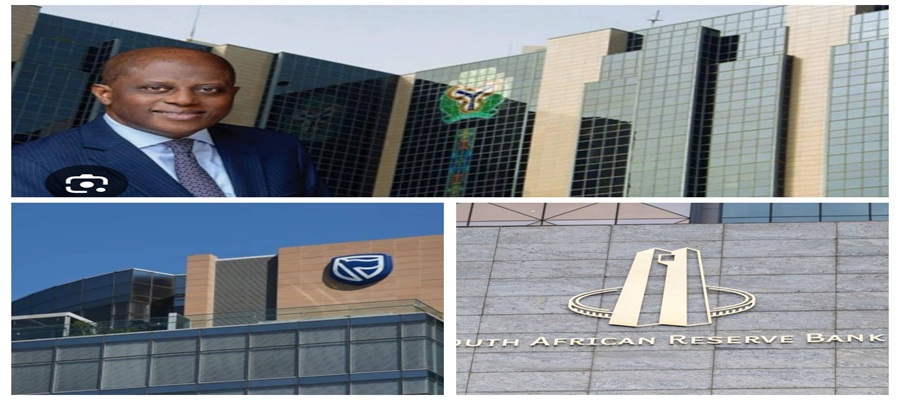
By Blaise Udunze
Nigeria has always prided itself as Africa’s largest economy and most populous nation. Currently, its banking sector is confronting a moment of truth that should send shockwaves. Today, a single South African bank, Standard Bank Group, commands a market value at roughly $21-22 billion that rivals and, in some comparisons, exceeds the entire Nigerian banking industry. Though it may seem to be unbelievable, it is real. This striking imbalance is not merely about market valuations for individuals who are perturbed by this alarming revelation. Hence, it must be known that this reflects deeper structural challenges in Nigeria’s financial system and underscores why the Central Bank of Nigeria’s recapitalisation drive has become essential for restoring competitiveness, resilience, and global relevance.

Without any iota of doubt, for a nation of over 200 million people and Africa’s largest economy by several metrics, this reality is more than an uncomfortable statistic. This is truly a reflection of deeper structural weaknesses within the financial system. It highlights the urgent need for reform and explains why the ongoing recapitalisation drive by the Central Bank of Nigeria has become one of the most consequential policy interventions in the country’s banking industry in two decades.
Recapitalisation is not merely a regulatory exercise. If, genuinely, the key stakeholders consider this exercise as an attempt to reposition Nigerian banks to compete with global peers, strengthen financial stability, restore investor confidence, and enable the banking sector to support economic transformation, they must not handle this report with bias.
The disparity between Nigerian and South African banks illustrates the scale of the challenge.

While Standard Bank Group, the largest by assets, has a market capitalization of roughly R372 billion ($21-22 billion = N32.66 trillion). Similar whooping amounts valued in the multi-billion-dollar range as of 2025 apply to several other South African banks, including FirstRand, Absa Group, and Nedbank. For apt juxtaposition from what is obtainable with the South African bank, the combined market capitalisation of 13 Nigerian banks listed on the Nigerian Exchange (NGX) stood at about N16.14 trillion ($10.87 billion) as of 2025-2026. However, the earlier benchmarks show that around May 2025, it was about N11.07 trillion. The current valuation of N16.14 trillion is a result of the funds tapped by some banks from the capital market through rights issues and public offerings.
Nigeria’s largest banks tell a different story. Guaranty Trust Holding Company, widely regarded as one of Nigeria’s most efficient banks, is valued at less than $2 billion (N3.3 trillion). Access Holdings, despite managing assets exceeding $70 billion, carries a market capitalisation of under $1 billion.
To further buttress Africa’s largest financial institution’s position, as of June 30, 2025, Standard Bank Group of South Africa reported total assets of R3.4 trillion. This amount is equivalent to $191.8 billion, and it points to the fact that it is at the top in Africa’s financial space. The equivalent in naira at Nigeria’s exchange rate of N1,484.50 to $1. Hence, $191.8 billion translates to approximately N284,983 trillion, or roughly N285 trillion. This means a single South African bank now outvalues the entire Nigerian banking industry, when compared to the 10 largest lenders collectively holding N218.99 trillion in assets. Though Nigerian banking industry assets were projected to reach N242.3 trillion ($151.4 billion) by 2025-2026.
The obvious and alarming disconnect between asset size and market value signals a deeper crisis of confidence as enumerated thus far. One underlying mistake is to understand that investors are not merely assessing balance sheets; they are evaluating governance standards, currency stability, regulatory predictability, and long-term growth prospects, as these remain their focal interests. The market’s verdict is clear: Nigerian banks remain undervalued because investors perceive higher systemic risks.
It would be recalled that Nigeria has travelled this road before, in 2004-2006, which didn’t end as planned. The then-governor of the Central Bank, Charles Soludo, launched a bold consolidation reform that reshaped the banking industry. Also, it would be recalled that Nigeria, in numbers, had 89 banks, which were more than what is in operation today, and many of them were small, fragile, and undercapitalised.
Similar steps are being witnessed today, as Soludo then raised the minimum capital base from N2 billion to N25 billion, triggering a wave of mergers and acquisitions that reduced the number of banks to 25. The industry witnessed the emergence of champions as the reform produced stronger institutions, such as Zenith Bank, United Bank for Africa, Guaranty Trust Bank, and Access Bank.
For a period, the experience was that Nigerian banks expanded aggressively across Africa and emerged as formidable competitors on the continent, but unfortunately, the momentum gradually faded because of certain missing pieces, and this must be addressed if the industry is ready for economic relevance.
The global financial crisis of 2008 exposed weaknesses in risk management and regulatory oversight. With the industry reacting, several banks were heavily exposed to the stock market and the oil sector. This led to another wave of reforms under former CBN governor Sanusi Lamido Sanusi in 2009.
Although one would say that those interventions stabilised the system. But more harm than good, they also ushered in a more conservative banking culture, as witnessed in the system, where many institutions prioritised survival over innovation.
Two decades after the Soludo reforms, Nigeria’s financial landscape has changed dramatically.
The size of the economy has expanded, inflation has eroded the real value of bank capital, and global regulatory standards have become more demanding. Banks that once appeared adequately capitalised now find themselves operating with limited buffers against economic shocks.
Recognising these vulnerabilities, the CBN introduced a new recapitalisation framework requiring banks to raise their capital bases to the following thresholds: N500 billion for international banks, N200 billion for national banks, and N50 billion for regional banks.
As has always been the case, these requirements are designed to ensure that Nigerian banks possess the financial strength required to compete with institutions in advanced economies.
The Nigerian banking sector should take a new leaf as the recapitalization exercise comes to an end, with the understanding that capital adequacy is not merely a regulatory metric; it determines how much risk banks can absorb, how much they can lend, and how resilient they remain during economic crises, which must be accompanied by innovation.
In developed financial systems, banks operate with deep capital buffers, which is common with South African banks that allow them to finance infrastructure, industrial projects, and large corporate investments. Without similar capital strength, Nigerian banks cannot effectively support large-scale economic development.
One of the most persistent obstacles facing Nigeria’s banking sector is currency volatility. The Nigerian naira has experienced repeated devaluations in recent years, eroding investor returns and weakening confidence in local financial assets.
When the currency depreciates sharply, equity valuations expressed in dollars decline even if banks report strong profits in local currency. This dynamic partly explains why Nigerian banks appear profitable domestically yet remain undervalued in international markets.
In contrast, South Africa’s financial system benefits from a more stable currency environment and deeper capital markets.
The strength of the Johannesburg Stock Exchange allows South African banks to attract large pools of institutional capital from pension funds, asset managers, and international investors. Nigeria’s financial markets, though improving, remain comparatively shallow.
Another irony in Nigeria’s banking sector is the difference between reported profits and genuine productivity within the economy, and the contradiction is glaring. Though it is known that many Nigerian banks recorded extraordinary profit growth in recent years, partly driven by foreign-exchange revaluation gains following the depreciation of the naira but the contradiction is that such gains do not necessarily reflect improvements in efficiency, innovation, or lending performance.
One measure the apex bank adopted was recognising the risks and restricting banks from paying dividends derived from these gains, insisting they be retained as capital buffers.
This intervention revealed how much of the apparent profitability was linked to currency fluctuations rather than sustainable business growth.
True banking strength lies not in accounting windfalls but in the ability to finance real economic activity, and this should be one of the ongoing recapitalisation targets.
The core function of banks in any economy is to channel savings into productive investment. Yet Nigerian banks have increasingly shifted toward safer and more profitable activities, such as investing in government securities, which has continued to weigh negatively on the growth of the real economy.
Other mitigating headwinds, such as high interest rates, regulatory uncertainty, and credit risks, discourage lending to manufacturing firms and small businesses. The result is a financial system that often prioritises short-term returns over long-term economic development.
By contrast, South African banks play a more significant role in financing infrastructure projects, corporate expansion, and consumer credit.
Recapitalisation aims to address this imbalance by strengthening banks’ capacity to support the real economy. The fact is that stronger balance sheets will allow Nigerian banks to finance large projects in sectors such as energy, transportation, agriculture, and manufacturing; alas, the narrative is totally different, going by what is obtainable in the Nigerian finance sector when compared to others.
Investor perception is shaped not only by financial performance but also by governance standards. International investors place significant emphasis on transparency, regulatory stability, and corporate accountability.
While Nigerian banks have made relative progress in improving governance frameworks, concerns remain about insider lending, regulatory inconsistencies and complex ownership structures, as these issues have continued to weigh on the industry, while some of these obvious factors may have contributed to the challenges observed in the operations of institutions such as First Bank Plc and another example is the liquidation of Heritage Bank.
Recapitalisation provides an opportunity to strengthen governance by attracting new institutional investors and enforcing stricter disclosure requirements and not mainly dwelling on the pursuit of bigger capital because capital alone does not guarantee resilience, as it would be recalled that Nigeria has travelled this road before.
Larger, better-capitalised banks tend to operate with more robust governance systems because they face greater scrutiny from regulators and shareholders.
The global banking industry has become increasingly competitive, which should be a wake-up call for the Nigerian banking industry.
Technological innovation, cross-border expansion, and regulatory harmonisation have transformed how financial institutions operate and this means that African banks, especially Nigeria known as the economic giant of Africa, must therefore compete not only with regional peers but also with global players.
Recapitalisation is essential if Nigerian banks are to participate meaningfully in this evolving landscape. On this aspect, it must be emphasised that stronger capital bases will enable banks to invest in digital infrastructure, expand internationally, and develop sophisticated financial products.
Besides, they will also enhance the ability of Nigerian banks to participate in large syndicated loans and international trade financing.
Without adequate capital strength, Nigerian banks risk being marginalised in the global financial system and for this reason, the CBN must ensure that every dime injected or raised for recapitalisation is genuinely devoid of any form of irregularities.
At the same time, traditional banks face increasing competition from financial technology companies. Nigeria has emerged as one of Africa’s leading fintech hubs, attracting billions of dollars in venture capital investment. These companies are reshaping payments, lending, and digital banking services.
While fintech innovation presents opportunities for collaboration, it also poses a competitive threat to traditional banks. To remain relevant, banks must invest heavily in technology and digital transformation.
The CBN must ensure that the ongoing recapitalisation provides the financial capacity needed to support such investments, just like its counterpart in South Africa’s banking sector, which operates with a large pool of capital.
The success of Nigeria’s recapitalisation programme will depend on more than regulatory mandates, which is a fact that must be taken into cognizance. Since banks must demonstrate a genuine commitment to transparency, innovation, and long-term economic development.
Policymakers must also address the broader macroeconomic environment. Of a truth, the moment Nigeria maintains a stable exchange rate, lower inflation, and predictable regulatory policies, it will be essential to restoring investor confidence and if aptly implemented effectively, recapitalisation could usher in a new era for Nigeria’s banking sector.
The country does not necessarily need dozens of weak banks competing for limited opportunities. What Nigeria truly needs are just fewer, stronger institutions capable of financing industrialisation, supporting entrepreneurs, and competing globally.
Nigeria often describes itself as the giant of Africa. But size alone does not determine financial strength. The comparison with South Africa’s banking sector serves as a sobering reminder that institutional quality matters far more than population size.
The ongoing recapitalisation exercise which is due March 31, 2026, represents an opportunity to rebuild Nigeria’s financial architecture and position its banks for global competitiveness.
If the reforms succeed, Nigerian banks could once again emerge as powerful players on the African stage. If they fail, the uncomfortable reality will persist, one South African bank standing taller than an entire Nigerian banking industry.
Blaise, a journalist and PR professional, writes from Lagos and can be reached via: [email protected]



Federal government recently received a proposed protocol agreement from India that could pave the way for agricultural cooperation between the two countries.

Abishek Singh, India’s high commissioner to Nigeria, announced the proposal recently n Abuja during the India-Nigeria Business Forum on Agriculture and Allied Sectors.
New Delhi’s proposed cooperation would support Nigeria’s food security efforts, with the goal of reducing post-harvest losses by nearly 50% and expanding agricultural processing.
It would also cover technology transfers, mechanization, financing solutions and capacity building.
Abuja has opened similar discussions with China.
Only recently, Mukhtar Muhammed, permanent secretary at the Ministry of Innovation, Science and Technology, said Nigeria wanted to deepen scientific and technological cooperation with Beijing in agriculture.
The discussions with China have focused on developing low-cost, solar-powered cold storage facilities and transferring food-processing technologies.
Nigeria, also wants to work with Chinese research institutes to develop infrastructure that can improve the preservation of perishable products.
Nigeria’s outreach to its Asian partners addresses a major problem for the agricultural sector.
The Bank of Agriculture (BoA) estimates that Africa’s most populous country loses 30 million to 40 million tons of food each year before it reaches consumers.
Those losses are worth an average of about N3.5 trillion ($2.5 billion) annually, according to data the institution presented at a workshop in Kaduna in July 2026.
Perishable products are particularly vulnerable, according to local media reports, with fruits and vegetables accounting for an estimated 40% to 50% of total losses.
The government has already launched its own response to the problem.

Independent Corrupt Practices and Other Related Offences Commission (ICPC) indicted the National Information Technology Development Agency (NITDA) and other ministries over administrative lapses that allowed the fictitious Presidential Foreign Investment Promotion Council (PFIPC) to operate.

Musa Aliyu, chairman, ICPC, stated that NITDA, alongside the Office of the Secretary to the Government of the Federation (OSGF), the Budget Office, and other bodies, failed to carry out adequate due diligence and standard operating procedures.
ICPC said however, clarified that the findings pointed to severe internal control weaknesses and administrative negligence rather than active official complicity by NITDA and the other affected agencies.
The briefing followed a 30-day investigation ordered by the president on July 7 into allegations surrounding the purported presidential council.
The commission also cleared the presidency and the Central Bank of Nigeria (CBN) of any wrongdoing but blamed institutional lapses in several ministries, departments and agencies (MDAs).
Aliyu said investigators established that Adeniyi Adeyemi, the director-general, was never appointed by the federal government and that the PFIPC had no legal existence.
“As you may recall, on the 7th of July, Mr. President directed the ICPC to conduct an investigation into the fake Presidential Foreign Investment Promotion Council and submit a report within 30 days,” he said.
“Today, exactly within the stipulated period, we have submitted an interim report based on our interactions with all stakeholders involved.”
According to Aliyu, Tinubu directed the commission to make its findings public in the interest of transparency and accountability.
He said the investigation found that Adeyemi’s purported appointment letter was forged.
“It has been established that Adeniyi Adeyemi Matthew was never appointed by the Federal Government or any authority whatsoever,” he said.
“The Presidential Foreign Investment Promotion Council, which sometimes they called the Presidential Foreign Intervention Promotion Council, was never established by any law, executive order or any valid instrument of government.
“The appointment letter presented by Adeniyi Adeyemi Matthew was completely forged alongside similar documents used to perpetuate the illegal activities of the fake agency.”
Aliyu stated that a purported government gazette used to legitimise the organisation was also fabricated.
“If you recall, there was a gazette which he used to support the fake agency. That gazette is an illegal document that never passed through the processes prescribed by law,” he stated.
“Our investigation found that the office used by the fake agency was the office of the Presidential Economic Advisory Council. The office was broken into and access was gained illegally. That was how he was able to operate from there.”
Aliyu also revealed that investigators uncovered two additional fictitious government agencies allegedly created by the suspect — the FCT Investment Promotion Agency (FIPA) and the Foreign Investment Promotion Agency/Public-Private Partnership (FIPA-PPP).
According to him, fake legislative instruments were used to create the agencies and open bank accounts.
Despite the elaborate scheme, the ICPC chairman said the investigation found no evidence that federal government funds were disbursed to the fake council.
“Our investigation found that no funds of the federal government were approved or disbursed to the fake PFIPC,” he said.
“We also discovered no weaknesses in the systems of the State House or the Central Bank of Nigeria during our investigation. The fake appointment letter did not originate from the presidency.
“Our investigation found that some public officers failed to carry out due diligence and failed to comply with standard operating procedures in their ministries and departments. That gave him the opportunity to carry out these illegal acts.”

Nigeria tax system is build on taxing prosperity not poverty, according to Dr. Zacch Adedeji, executive chairman, Nigeria Revenue Service (NRS).

Dr. Zacch Adedeji, executive chairman, Nigeria Revenue Service
Adedeji, also dismissed the insinuation that the government’s tax reform is aimed at extracting money from Nigerians .
He said the essence of reform is creating an economic environment where individuals and businesses can prosper.
Dr. Adedeji made the clarifications on Sunday night while appearing on Channels Television’s Politics Today, where he defended the administration’s tax reforms and addressed concerns over rising government revenue amid the economic hardship facing Nigerians.
According to him, the government’s objective is to tax the fruits of investment rather than the investment itself.
“For us at Nigeria Tax, we are not there to extract. Our focus is not revenue. I don’t want to tax poverty. I’m to tax the fruit, not the seed, and I’m to tax the return, not investment.”
Adedeji explained that the government would generate more revenue as businesses became more profitable, without necessarily increasing the tax burden on individuals and companies.
He said a company that made N100 in profit could generate N30 in tax revenue for the government, but if its profit increased to N200 or N300, government revenue would rise accordingly.
“So, if I want to make more, I must work for you to make more. And that is why it is in the best interest of us in Nigeria Revenue Service that businesses are doing well, individuals are doing well,” he said.
He said the approach was consistent with President Bola Tinubu’s economic agenda, which seeks to remove barriers to investment and create a more conducive environment for businesses to operate and expand.
Adedeji cited reforms in the electricity sector as part of the government’s efforts to stimulate economic activity.
He noted that the Electricity Act had devolved powers to state governments to generate, transmit and distribute electricity, arguing that improved power supply would boost production and productivity across the economy.

Affordable, Flexible Streaming Platforms May Kill PAYtv – Report

FG Suspends NAICOM’s N680m Insurance Recapitalisation Fees

FG Taps Indian, Chinese Technologies to Tackle $2.5Bn in Food Losses

MTN Nigeria Clocks 25, Connects over 90m People

Subscribers to Seek Legal Redress if Poor Quality of Service Continue in September

EFCC Busts NIS Visa Overstay Racket, Uncovers N700m in an Account

Fact-Check: Elon Musk’s “Tesla Pi Phone” is Internet Rumor

NBC Tasks Broadcasting Stations over 2028 DSO Global Deadline

NBC Scraps Annual Digital Access Fee on DSO

Glo Sponsored African Voices to Feature Netflix’s “The Polygamist” Stars




 Telecom2 days ago
MTN Alerts Subscribers over Fake 25GB Anniversary MTN Data Giveaway

 E-Business2 days ago
X Replaces Revenue Sharing wit New Creator Rewards Programme

 E-Financial2 days ago
Interswitch, Temenos Commit to Advancing Nigeria’s Digital Banking Technology

 General News2 days ago
Fake Agency: ICPC Indicts NITDA, Others over Inadequate Due Diligence

 E-Financial2 days ago
FG Spent N3.1 Trillion on Domestic Debt Servicing in Q1- DMO

 General News2 days ago
UNESCO Taps Oguamanam,Nigerian Scholar to Advisory Body on Science, Tech Ethics

 General News2 days ago
Tax Reform Built on Taxing Prosperity, Not Poverty– Adedeji

 Broadcasting2 days ago
Awba-Ofemili Unveils 2026 Health Campaign, Offers Free Medical Screening