

General News
East Africa Going Cashless: Lessons for Nigeria


Last month at the Open Africa Innovation summit in Nairobi which was hosted by Nokia and World Bank group, subject matter experts, innovators, technology providers ,policy / regulators and other stakeholders gathered at the Safari Park Hotel to evaluate the challenges of mobile innovation in Africa ,celebrate the success stories and work towards replicating the same across Africa.
Despite the good country delegate representations across many African nations, Europe and Asia, all the participants agreed that indeed mobile innovation has taken root in East Africa and most especially Kenya.
It is beyond doubt that mobile based programs and innovations are opening opportunities for cross selling opportunity for Kenya as a Nation.
Kenya is attracting tech investments, hubs, researchers and also MPESA tourist to the country on a consistent basis.
MPESA is indeed a phenomenal and worth taking a look at.
It is available everywhere and anywhere. There is even a joke that the policemen now receive their brides via mobile money in Nairobi.
I visited a midsized shopping complex about eight months ago in Kenya and it had only 2 agents that were transacting MPESA but on the recent visit, the service is now available in 38 stores in same shopping complex with only 2 stores left! That is contagion effect of mobile financial services in Nairobi.
While mobile money is Kenya’s wild child, use and adoption of card is also on the rise.
The Central Bank of Kenya data showed that the value of transactions made through plastic cards rose by 12 per cent last year, driven by rising consumer preference for cashless transactions with automated teller machine (ATM) cards accounted for transactions worth Sh577.9 billion last year, up from Sh517.3 billion between January and December 2010 while 2.5 million new cards were issued to Kenyans in 2011 to take the total in circulation to 10.1 million.
Incentive to go cashless
For customer to go with less cash, he must understand the value proposition, experience the convenience and be well educated about the services so that His attempt to go with less cash will not result to lost cash.
Merchants’ transactions may hold the key to unleashing the potentials of e-money in any economy but the merchants must see value in terms of turnaround time to get the physical cash to restock or ability to spend same e-money to stock inventory.
Transaction cycle time
The spread, use of service and ecosystem development will determine how successful e-money adoption will be in any country.
If a quick serve restaurant collects e-money at Point of sale but will require to wait for 2 -3 days for the amount to get to his account and withdraw cash to restock, then e-money adoption will be limited to merchants that are able to afford the 2- 3days transaction date cycle time.
These are underlying issues that were dealt with in the early days of less cash in East Africa.
Reporting customer adoption
East African mobile money providers consistently provided the primary data of customer base, frequency of use, adoption rate and other information to enable further study of the ecosystem.
While some Nigerian financial institutions and licensed mobile money providers are making strides in signing customers and improve transaction volumes in the early days of slow moving and low value mobile money services, almost all the providers are shy to declare customer base and frequency of use aside Pagatech that celebrated crossing the 100,000 customers some days ago.
According to The GSM Association (GSMA) 80 percent of global transactions originated from East African countries, Several factors can explain the success of mobile payment systems in East Africa, including a legal frame supporting innovation and a powerful distribution network.
This trend can be noticed in Kenya, Tanzania, Uganda and Rwanda. Moving into ‘Less Cash’ economy can only be a function of innovation and not legislation.
Promoting less cash in Nigeria and imposing penalties at certain transaction threshold will not deter people that do not understand other options that are available which are more secured than carrying cash.



President Bola Ahmed Tinubu has directed the immediate installation of 5,000 CCTV cameras across identified flashpoints in Plateau State as part of urgent measures to address the worsening security situation in the state.

The President gave the directive during an emergency visit to Plateau on Thursday, where he held a brief stakeholders’ meeting at the Yakubu Gowon Airport following the recent killings in Angwan Rukuba, Jos, where at least 28 persons were killed by unidentified gunmen.
Tinubu also approved the formation of a delegation of key stakeholders to engage in further deliberations on lasting solutions to the security challenges in the state.
He condoled with families of the victims and directed that support be provided to cushion their losses.
President Bola Tinubu while expressing deep sympathy to families of victims said the installation of surveillance cameras was part of a deliberate move towards addressing the kind of attacks that befell residence of the recent attack in the State.
In his remarks, Governor Caleb Mutfwang appreciated the President’s visit and show of concern, but expressed worry over the recent wave of attacks in the state, describing the situation as disturbing and requiring urgent attention.
The meeting had in attendance, former Governors, serving and former National and State Assembly members, traditional rulers, government appointees as well as relatives of those killed in the Angwan Rukuba attack.


Federal Government yesterday unveiled a N12 billion investment in digital economy research, marking a strategic shift towards knowledge-driven development as Nigeria positions itself as a key player in the global digital landscape.

Declaring the launch of the National Digital Economy Research Clusters under the Building Resilient Digital Infrastructure for Growth (BRIDGE) project, Minister of Communications, Innovation and Digital Economy, Dr Bosun Tijani, said the initiative mobilises over 200 researchers from universities and research institutions nationwide to produce data-driven solutions for pressing national challenges.
Speaking at a press conference in Abuja, Tijani described the programme as an essential complement to infrastructure expansion, including the ongoing deployment of 90,000 kilometres of fibre optic cable across the country.
He stressed that sustainable growth in the digital sector now hinges on robust research, innovation and evidence-based policies rather than infrastructure alone.
“As Nigeria expands its digital economy, attention is shifting from infrastructure to the knowledge that drives it,” the minister stated, adding that the sector was emerging as a major contributor to national GDP.
The research clusters will tackle critical areas including connectivity, digital public infrastructure, skills development, job creation, online safety and emerging technologies such as artificial intelligence.
Tijani explained that the project aims to bolster Nigeria’s research capacity while ensuring local insights guide policy and technology adoption.
The Federal Ministry of Education is collaborating to synchronise academic research with national priorities and advance specialised training.
Minister of Education, Dr Tunji Alausa, underscored universities’ evolving role as hubs of innovation and problem-solving beyond traditional learning.
The BRIDGE project aligns with broader government strategies to promote digital inclusion, spur economic growth and elevate Nigeria’s competitiveness in the global digital economy.
Observers note that the programme’s impact will depend on effectively converting research findings into implementable policies across sectors.
For the administration, the message is clear: a resilient digital economy demands not just infrastructure, but the intelligence to power it.

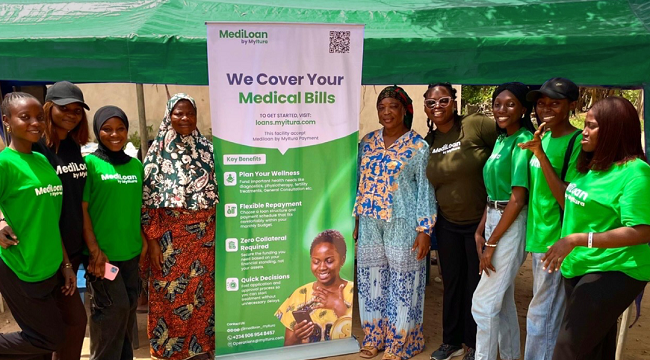
In commemoration of Women’s Month, health-tech platform Myitura has released a new white paper addressing the critical gaps in healthcare financing for women in Nigeria.

Titled “Closing the Gap: Healthcare Financing for Women in Nigeria,” the report highlights how high out-of-pocket costs, limited insurance coverage, and socio-economic factors continue to prevent women from accessing timely healthcare.
According to the report, over 70% of healthcare expenses in Nigeria are paid out-of-pocket, disproportionately affecting women who often delay care due to financial and social constraints.
“When women can afford to take care of their health early, we don’t just save lives; we strengthen families, communities, and the economy,” said Chialuka Kelechi, MyItura’s Chief of Staff.
Key Insights from the White Paper:
- Preventable conditions often escalate due to delayed care
- Women are more likely to deprioritize their own health
- Affordable, structured healthcare financing can significantly improve outcomes
Introducing a Women’s Health Initiative
As part of its commitment, Myitura is launching affordable women-focused health packages (powered by Mediloan), starting at ₦58,180, designed to encourage preventive care and early detection.
The package provides access to:
- Fasting/Random Blood Sugar
- Urinalysis
- Electrolytes
- Urea
- Creatinine
- Pap Smear Submitted slides
- HIV I & II Rapid (Qualitative)
- Hepatitis B Surface Antigen Screening (Rapid)
- Hepatitis C Virus Screening (Rapid)
- Abdominopelvic Ultrasound
- Ongoing support via the Myitura platform
Access:
Women can access these packages by downloading the Myitura app, which makes healthcare more accessible and convenient.
Myitura is a health-tech platform focused on improving access to healthcare through financing, technology, and preventive care solutions.

UBA Beefs Up Mobile App Security to Stop Fraudulent Debits, Withdrawals

Bharti Airtel Crosses 650m Users

FG Orders Installation of 5000 CCTV Cameras for Surveillance in Plateau

CBN Plans New Payment Systems Vision

Ghana Makes History as First African Country to Integrate Payment National Identity Card

Spotify’s Loud & Clear Report Reveals Over ₦60Bn Revenue for Nigerian Artists in 2025

Madonna University Taps Tech Guru Adote for Strategic Board Role

China Threatens to Shut Nigeria’s Satellite Over $11.44m Unpaid Debt

FCCPC Bans Lagos ‘No Refund’ Policy, Vows Fines and Shutdowns for Traders

Healthcare Under Attack: Why Cybersecurity is Now Critical Care




 News2 days ago
Microsoft Revamps Copilot in Workplace AI Push

 E-Business2 days ago
Kaspersky Warns of a New Phishing Technique Leveraging Bubble, a no-code AI Platform

 Telecom2 days ago
How Recycled SIM Card Linked to N50m Kidnapping Nearly Landed me in Jail – Businesswoman

 E-Financial2 days ago
CBN Directs Banks, Fintechs to Complete Cybersecurity Audit Tool

 Telecom2 days ago
Ouranos Technologies Strengthens Board with Key Leadership Appointments

 General News2 days ago
Senate Gives Tinubu Nod to Borrow Fresh $6Bn

 E-Financial1 day ago
CBN Says 33 Banks Raise Fresh N4.65 Trillion in Recapitalisation Exercise

 General News2 days ago
FG Launches CLHEEAN to Streamline Access to Government Services