

E-Financial
Ecobank Group Announces 2020 Winners of Fintech Challenge

Ecobank Group has announced the winners of its Ecobank Fintech Challenge after an exciting virtual event streamed live from Accra Ghana.
Nokwary, Ukheshe and Growth Factor wowed the jury to claim the three prizes on offer on the day; as all 10 finalists were officially inducted into the Ecobank Fintech Fellowship programme to explore commercial partnerships with the pan-African banking giant.
Nokwary Technologies, edged out the rest of the finalists to emerge winner of the competition.
The first and second runner up spots were taken by Ukheshe Payment and Solutions Growth Factor Technologies respectively.
The 1st to 3rd place winners will receive cash prizes worth US$10,0000, $7,000 and US$5,000 respectively.
Nokwary, from Ghana, is a fintech that uses AI to promote financial inclusion. Its AI Powered banking solution offers an opportunity for users to carry out transactions in a language to which they are familiar to using popular social media channels like Whatsapp.

South Africa based Ukheshe, which came in second, provides a bridge between the card and the cash economy.
It has created the world’s first card acceptance platform that allows unbanked merchants/traders to accept and make digital payments.
In third place, Growth Factor is a fintech company that provides trade financing solutions designed for Micro-Small/Medium Entities (MSMEs) in order to encourage financial inclusion and growth.
Its Nvoicia solution solves cash flow issues caused by delayed payments for SMEs, by enabling them to get paid in 24hrs when dealing with credit clients.
Ade Ayeyemi, group ceo, Ecobank congratulated the winners for their innovation and welcomed all the 2020 fellows: “The quality of the products and pitches we saw in the final this year were amazing.
“Clearly it is evident that Banking in Africa is moving onto a new dimension with these Fintechs leading the way.
“That is why we are so proud to have had them in this year’s competition and are excited to engage further with them over the next year.
“It is our expectation that we will build a few lasting partnerships which will help improve the lives of Africans all over the continent.”
Dennis Asamoah Owusu, ceo and co-founder of Nokwary Technologies commented on his victory: “I was beyond excited. Our company is rather young and to be recognized like this on such a stage was really exciting as well as a validation for our focus on creating inclusive technology right from the start.
“It is also very encouraging to note that a major bank like Ecobank places such a premium on inclusion and is willing to back and promote innovative and cutting-edge technologies towards that purpose.
“We are looking to work together with Ecobank to bring an AI-first digital banking platform over WhatsApp, as well as other innovative solutions to Ecobank’s customers.”
This year’s Finalists made it through an extremely competitive pool of over 600 applicants across Africa, Europe, North America and Asia.
All ten (10) finalists have officially been inducted into the Ecobank Fintech Fellowship, a one-year program which will give them the opportunity to explore opportunities for commercial partnerships with the Ecobank Group, and to possibly launch and scale products across Ecobank’s 33 country markets in the continent.



Kuda Microfinance Bank partnered with Lovers & Frnds for a Valentine’s edition event on Sunday, February 15, at Space Hub Lekki, Lagos, redefining celebrations around love, friendship, and social connections beyond romance.

Kuda Bank
The R&B-themed gathering drew couples, friend groups, and solo attendees with music sets from DJs like TGarbs, games, gift exchanges, and colour-coded tags—red for relationships, yellow for mingling singles, orange for non-minglers—to spark easy interactions.
Kuda activated a branded photo booth, merchandise giveaways, prize activities, and complimentary drinks for Premium loyalty tier customers, while vendors used Kuda Business POS terminals for seamless cashless payments.
Senior Brand Manager Emmanuel Femi-Adejobi said: “We partner with experiences matching our customers’ lifestyles in music and entertainment, creating spaces they genuinely connect with—we’ll keep supporting how they live and celebrate.”
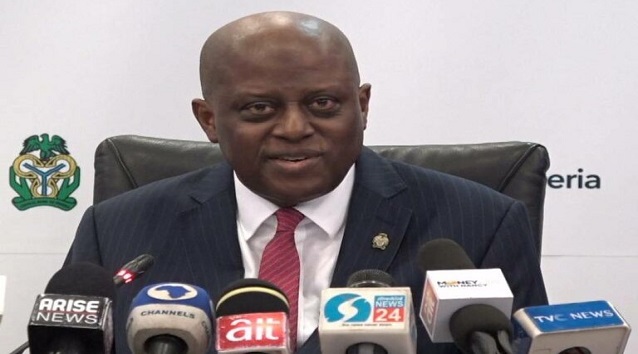
Central Bank of Nigeria (CBN) has lowered its Monetary Policy Rate (MPR) by 50 basis points to 26.50 percent from 27 percent, a unanimous decision announced by Governor Olayemi Cardoso at the end of the 304th Monetary Policy Committee (MPC) meeting in Abuja on Tuesday.

CBN
Cardoso cited 11 straight months of decelerating headline inflation—reaching 15.10 percent in January 2026 per National Bureau of Statistics—as key, driven by prior tightening lags, naira stability, food supply gains, steady petroleum prices, export earnings, remittances, and balance of payments strength.
Liquidity ratio stays at 30 percent, CRR unchanged at 45 percent for commercial banks (16 percent merchant banks) and 75 percent non-TSA public deposits; standing facilities corridor now +50/-450 basis points around MPR.
The MPC retained other parameters, welcoming Executive Order 09 redirecting oil/gas revenues to the federation account for fiscal boost, last cutting rates in September 2025 after November’s hold.


Abiodun Olokunjuwon, a retired civil servant based in Ibadan has instituted a N50 million lawsuit against Moniepoint Microfinance Bank at the Oyo State High Court, alleging that the fintech company opened unauthorized bank accounts in her name without her knowledge or consent.

Filed in February 2026, the suit is among the first significant cases testing the enforcement of the Nigeria Data Protection Act 2023 against a Nigerian fintech institution.
According to the statement of claim, the plaintiff became aware of the alleged unauthorized accounts only after her legitimate bank account was restricted pursuant to a garnishee order linked to a debt she denies incurring.
The restriction reportedly prevented her from accessing funds needed for essential transactions.
The claimant alleges that Moniepoint opened two separate accounts in her name using her National Identification Number (NIN) and Bank Verification Number (BVN) without proper authorization or verification.
Following the discovery, she submitted a Data Subject Access Request (DSAR) under the NDPA 2023. Documents allegedly provided by the bank, according to the suit, revealed significant verification lapses.
The plaintiff claims the accounts were opened using falsified documents, including what she describes as a fake NIN slip and contact information unrelated to her.
She further alleges that the accounts listed a Lagos residential address where she has never lived.
The suit contends that Moniepoint failed to implement adequate identity verification and address confirmation procedures before creating and operating the accounts. It further alleges breaches of statutory obligations under the NDPA 2023, including:
- Failure to ensure personal data processed was accurate and lawfully obtained
- Failure to implement appropriate technical and organizational security measures
- Failure to prevent unauthorized or fraudulent processing of personal data
The claimant maintains that these alleged lapses resulted in serious personal and financial harm.
The plaintiff is seeking N50 million in damages for emotional distress, health complications, and disruption to her financial life.
She is also asking the court to order the permanent closure of the allegedly unauthorized accounts.
No date has been fixed for hearing on the matter.

Lotus Bank, REA Seal N100bn Deal to Power Rural Nigeria

DG NITDA Reaffirms FG Commitment to Responsible, Inclusive AI

AfDB, UNDP Launch $10Bn AI Initiative for Africa

Kaspersky Enhances Network Detection and Response Capabilities with KATA 8.0 Release

Kuda Bank Teams Up with Lovers & Frnds for Inclusive Valentine’s R&B Bash
Nigeria’s 9 Top FinTech Firms Valued at $10.6Bn in January 2026

CBN Upgrades Licences of Opay, Moniepoint, Kuda, Palmpay, Paga to National Status

NITDA, NBC Explore Strategic Collaboration on Digital Transformation, Media Regulation

Kaspersky Launches OT Calculator to Align Cybersecurity Investments with Business Goals

Accidental Billionaire Opts for Jail Instead of Returning Money Credited Him by Mistake




 General News2 days ago
Zinox Technologies and TD Africa Forge Strategic Partnership to Revolutionize African Tech Ecosystem

 Telecom3 days ago
Uwaje Pays Tribute to Leo Stan Ekeh @70

 E-Financial2 days ago
$214Bn Missing, Institutions Silent: Is Accountability Dead in Nigeria?

 Telecom2 days ago
Cyber Immunity Emerges as Shield for Nigerians Amid Rising Scams

 General News2 days ago
NITDA, Abia Partner on Enterprise Architecture Reform

 E-Business2 days ago
Interswitch Partners Abia to Digitise Public Hospitals

 E-Business2 days ago
WIEG 2026 Summit Shifts to April 22-23 for Maximum Impact

 News1 day ago
NITDA Urges Stronger State Partnerships as Key to Digital Economy Goals @ South-South Stakeholders Forum