

General News
EFCC Boss, Others Corner 500 FG Houses in Lagos, Abuja

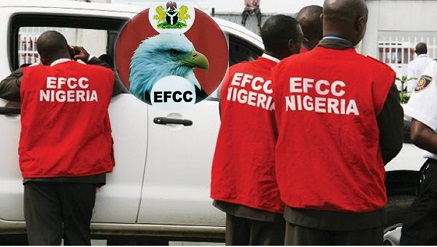
Influential ministers and aides of former President Goodluck Jonathan were among those who allegedly shared over 500 Federal Government houses located in highbrow areas of Abuja and Lagos as parting gifts from the immediate past administration, according to Sun Newspapers.
Beside the influential ministers and top presidential aides, heads of some powerful federal agencies like the Economic and Financial Crimes Commission (EFCC) and the armed forces as well as top military officers are also beneficiaries of the last minute largesse of the Jonathan’s administration, as documents sighted in the office of the Secretary to the Government of the Federation (SGF) have revealed.
Curiously, most of the beneficiaries have one common feature; the allocation of the houses to them was not done in their individual names but in the names of front-companies and/or faceless companies.
Another interesting development is that with the decision of President Muhammadu Buhari to probe the Jonathan administration with a view to recovering billions of public funds and assets illegally taken by top officials of the immediate past government, many of the beneficiaries of the last minute sharing of public assets have abandoned the properties, most of which are now under lock and key and overgrown with weeds while others have refused to pay for the properties to avoid losing their money in the event that the Buhari government choses to revoke the sales.
A source in the SGF office told Sun that properties whose owners are now scared to take possession of them are scattered all over Asokoro and Maitama areas of Abuja as well as Ikeja GRA, Ikoyi, Victoria Island and Apapa areas of Lagos.
Investigations by Saturday Sun revealed that the abandoned properties are more in Lagos.
They litter Emotan road, Apapa GRA; Liverpool road, Apapa, Marine road, Apapa; Park lane and Child avenue, both also in Apapa. In Ikoyi, they are located at Oyinkan Abayomi (Former Queen’s Drive) and Bourdillion road where the EFCC boss, Ibrahim Lamorde has his allocation; a mansion and two bungalows on a large expanse of land.
It was also gathered that while some of the former ministers and presidential aides have their allocations in Abuja, top military officers and some heads of government agencies have theirs in Lagos. Further investigations show that the former ministers, presidential aides and Heads of Departments and Agencies were allocated Guest Houses and other buildings owned by their MDAs at ridiculous prices.
The source, who is a top official of the SGF office, however, told Saturday Sun that most of the houses were abandoned because “the owners are obviously looking for private sector individuals that can buy them as many of them didn’t really get the allocations to live in the houses, they only want to sell them off and make profit.”
When asked why the allocations were done in the names of companies rather than the names of the actual beneficiaries, the top official said: “Most of the owners got the houses while still in government and they wouldn’t like to disclose such huge assets in their assets declaration forms with the Code of Conduct Bureau because of the questions on the source of the funds used to pay for such. We’re only the ones who knows who owns what but if you follow the table of allocations, you will only find names of companies as beneficiaries.”
The source, however, exonerated the committee in charge of the houses which is directly in charge of some of the sales of any complicity, adding: “Decisions and approvals more often than not, come from the Presidency.”
“The committee also has no control over which name will be used for the purpose of allocation and what such beneficiaries do with the properties afterwards”, the official added.
Beside the sales done by the committee, it was also learnt that some public institutions like the NNPC, PHCN, NPA and CBN handled the sales of some of their properties based on approval from the Presidency. It was said that some of the controversial sales could have been done by the ministries and agencies that have presidential approval to dispose of their own assets.
Another source in the Ministry of Lands and Housing however said that the number of houses allocated was far lower than 500. The source, who is an official of the ministry, disclosed: “It is true that some requests for allocation came towards the end of the last administration but the real allocation was tactically delayed by some officials to avoid running into trouble with the then in-coming Buhari administration.”
Reacting on behalf of the Chairman of Economic and Financial Crimes Commission (EFCC), the commission’s spokesman, Mr. Wilson Uwujaren said he was not at liberty to comment.
Although he did not deny the claims, he insisted on sighting the document wherein Lamorde was named as one of the beneficiaries. He maintained that his reaction would be based on what the document alleged, rather than reacting in a vacuum.
He further insisted that the claims could have emanated from anybody who might be out to smear the image of the EFCC chairman.
“I cannot just react to your claims. At least, it is only fair that I see the document you are relying on. I need to study the contents of the document and then react accordingly. You know too well that anybody can make such a weighty allegation just to smear the image of the chairman of EFCC,” Uwujaren added.
But the presidency in its reaction vowed to investigate the development. Special Adviser to the president on Media and Publicity, Mr Femi Adesina said the Buhari administration “will investigate such deals.”
President Buhari has said he will not extend his corruption probe beyond the administration of former President Goodluck Jonathan.
The President had said during his recent visit to the US that he would arrest and prosecute past ministers and other officials who stole Nigeria’s oil and diverted government’s money into personal accounts.
But the President’s Special Adviser on Media and Publicity, Femi Adesina, said the President will limit his anti-corruption war to the immediate past administration.
He said even before he was inaugurated on May 29, the President had categorically stated that he would not extend his corruption probe beyond the Jonathan government.
“If you recall, that was already settled before he got inaugurated as President. He has said he will not waste time digging into the far past,” Adesina said.
“The far past will include Obasanjo and others. But the President has said he will not waste time to go that far.”
Before leaving office, Jonathan had said any probe by the new government would be seen as a “witch-hunt” if it fails to go beyond his administration.


Socio-Economic Rights and Accountability Project (SERAP) has filed a lawsuit against the Code of Conduct Bureau (CCB) over its failure to investigate an alleged abuse of office in the National Assembly regarding the amendments to the Electoral Act and tax reform laws.

“Public officers hold their offices in trust for the people and must not deploy official power for personal or sectional advantage,” SERAP said in a statement on Sunday.
In the suit marked FHC/ABJ/CS/634/2026, SERAP is seeking an order of mandamus to compel the CCB to immediately probe lawmakers and executive officials involved in the processes.
SERAP specifically wants the CCB to investigate claims that critical provisions on electronic transmission of election results were secretly removed from the Electoral Act Amendment Bill, as well as alleged discrepancies between the tax reform bills passed by the National Assembly and the versions signed into law.
The group is also asking the CCB to refer any public officers found guilty of violating the Code of Conduct to the Code of Conduct Tribunal for prosecution.
No date has been fixed for the hearing.
The statement reads, “We’re also seeking an order of mandamus to direct and compel @CCBNigeria to probe the allegations that certain lawmakers and officers of the executive branch unlawfully altered some aspects of the tax reform bills, which resulted in differences between the tax laws passed by lawmakers and the gazetted copy available to the public.”
SERAP emphasised that granting the reliefs sought would help address critical concerns relating to conflict of interest, abuse of office, non-disclosure of interests, and reinforce adherence to due process.
The group added that, “It would serve to curb the erosion of the Code of Conduct for Public Officers in the exercise of legislative powers.”
“Where lawmaking is shaped by abuse of office and conflict of interest, it ceases to be a legitimate exercise of constitutional and fiduciary responsibility and becomes a legal and ethical infraction prohibited under the Code of Conduct for Public Officers,” the statement concluded.
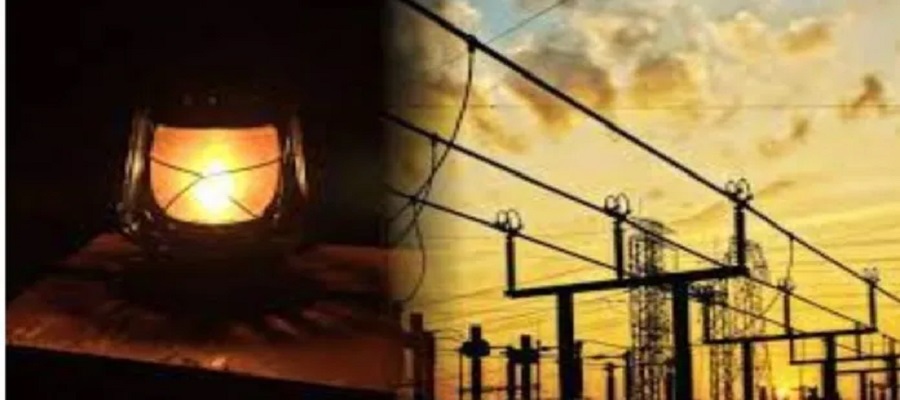
President Bola Tinubu has approved a N3.3 trillion payment plan aimed at settling long-standing debts in Nigeria’s power sector, in a move expected to improve electricity supply and restore investor confidence.

The development was disclosed in a statement issued on Sunday by Bayo Onanuga, special adviser to the President on Information and Strategy.
According to the statement, the approval followed a final review of legacy debts accumulated under the Presidential Power Sector Financial Reforms Programme over 10 years, spanning February 2015 to March 2025.
“Following verification, ₦3.3 trillion has been agreed as a full and final settlement, ensuring a fair and transparent resolution,” the statement partly read.
The government noted that implementation of the repayment plan has already commenced, with 15 power generation companies signing settlement agreements valued at ₦2.3 trillion.
It added that the Federal Government had so far raised ₦501 billion to fund the initiative, out of which ₦223 billion had already been disbursed, while further payments are ongoing.
Explaining the significance of the programme, Olu Arowolo-Verheijen, special adviser on Energy to the President, said the initiative goes beyond debt clearance.
“This programme is not just about settling legacy debts. It is about restoring confidence across the power sector, ensuring gas suppliers are paid, power plants can keep running, and the system begins to work more reliably,” she said.
She added that the plan formed part of the sector reforms, including improved metering and the introduction of service-based tariffs.
“It is part of a broader set of reforms already underway, including better metering and service-based tariffs that link what you pay to the quality of electricity you receive.
“The government is also prioritising power supply to businesses, industries, and small enterprises because reliable electricity is critical to creating jobs, supporting livelihoods, and growing the economy.
“The goal is simple: more reliable power for homes, stronger support for businesses, and a system that works better for all Nigerians,” she added.
The presidency stated that the settlement of the debts was expected to enhance liquidity across the power value chain, leading to more stable electricity generation and improved service delivery.
President Tinubu also commended stakeholders for their roles in resolving the long-standing issues and confirmed that the next phase of the programme, known as Series II, will commence within the current quarter.
Nigeria’s fragile power supply has been marked by frequent grid collapses, low generation levels, and persistent outages affecting homes and businesses.
A 2024 report by Africa Trade Barometer disclosed that Nigeria loses an estimated $26 billion yearly to power failures.
It said businesses spend about $22 billion annually on off-grid fuel to offset the impact of power shortages. This further pushes operational costs.
“Economic losses arising from Nigeria’s electricity shortages are estimated to be USD 26 billion annually, without accounting for spending on fuel for off-grid generators, which is estimated to be a further USD 22 billion,” the report by Standard Bank said.
“In Nigeria, surveyed businesses must contend with a national grid that frequently collapses as it fails to meet a daily peak demand which is nearly four times its generation capacity,” it added.
General News
Union Bank Looted: How Former Directors Gambled with Billions and Nearly Destroyed a National Bank


The former directors and owners of Union Bank did not just fail, they engineered a financial disaster. They manipulated reports, hid massive losses, diverted foreign loans and treated depositors’ money like a private wallet.

Union Bank
Investigators uncovered billions of dollars in misconduct. These directors buried over ₦250 billion in losses, piled a $300 million foreign loan onto the bank without protection and then forced Union Bank to carry the burden. They even used the bank’s own funds to buy its shares, an outrageous betrayal of trust.
It didn’t stop there. Over $100 million was pulled out improperly, leaving the bank exposed and struggling. Loans meant for customers were secretly diverted into shady transactions. False reports were sent to lenders. The system was deliberately deceived.
This was not incompetence. It was exploitation.
By 2025, their actions had created nearly ₦400 billion in losses and over ₦147 billion in unpaid charges. The bank was on the edge.
The Central Bank of Nigeria (CBN) stepped in just in time. Without that intervention, Union Bank could have collapsed, dragging others down with it.
Now, the bank is stabilising. But let’s be clear: this recovery is happening in spite of those former directors, not because of them.
They didn’t build value. They destroyed it.
And Nigerians deserve to never forget who was responsible.

Offset Communications Slams N50m Suit against Qore Technologies for Alleged Copyright Infringement

Compensation for Poor Service Quality is Automatic- NCC

SERAP Sues CCB over Electoral Act, New Tax law

Tinubu Approves N3.3 Trillion Payment Plan to Boost Power Supply

NDPC Investigates Remita, Others over Alleged Data Breaches

Spotify’s Loud & Clear Report Reveals Over ₦60Bn Revenue for Nigerian Artists in 2025

Madonna University Taps Tech Guru Adote for Strategic Board Role

China Threatens to Shut Nigeria’s Satellite Over $11.44m Unpaid Debt

Healthcare Under Attack: Why Cybersecurity is Now Critical Care

Why JustMarkets Is a Strong Choice for Gold Trading




 General News3 days ago
FG, Others Say Nigeria Wastes 38m Tonnes of Food Annually

 E-Financial3 days ago
CBN, Banks, Fintechs Launch PSPC to Boost Nigeria’s Payment System

 News3 days ago
NITDA Strengthens Collaboration with NIPSS to Drive Digital Innovation, Orange Economy Growth

 E-Financial3 days ago
CycleFlow, IFC Launch Supply Chain Finance Platform in Nigeria

 E-Financial3 days ago
Anchor Gets Nigerian, Canadian Licences as Transactions Crosses $2.5Bn

 E-Financial3 days ago
Ecobank Assures of Seamless Easter Banking Services

 News3 days ago
NRS Takes Over Mineral Royalties Collection Under New Tax Laws

 E-Financial2 days ago
N4.65 Trillion in the Vault, but is the Real Economy Locked Out?