

E-Business
eGovernance Helping us Transform Oyo — Makinde

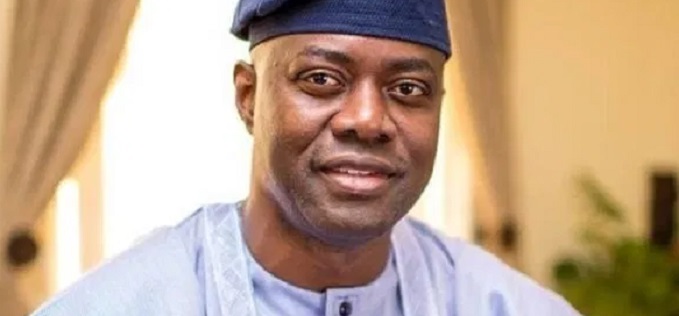
Governor ‘Seyi Makinde of Oyo State has revealed that the introduction of e-governance to the running of government in the state has contributed immensely to the on-going massive development and transformation in the state.

Governor ‘Seyi Makinde of Oyo State
The governor stated this while addressing the Institute of Chartered Accountants of Nigeria (ICAN) 50th Annual Accountants Conference in Abuja, with the theme: “Achieving Sustainable Leadership Through E-government in the 4th Industrial Revolution.”
Maakinde stated that the openness and transparency engendered by the introduction of e-governance initiative has helped the government to fund infrastructure and ensure smooth and full payments of salaries and pensions as and when due, stating that his government has been able to block leakages and save massive resources.
A statement by Taiwo Adisa, chief press secretary to the governor, indicated that Makinde equally said that for the country to experience sustainable development and not to be left behind in the fourth industrial revolution, it needs focused leadership, which will be able to harness its potential to “pick up and catch up with the rest of the world”.
The governor stated that upon the realisation that the state has limited resources for all the things that needed to be done and that there were many loopholes through which resources were siphoned, it quickly took action to block those leakages by creating an E-governance Plan.
He noted that the plan entailed digitising all government processes and services in order to raise the coverage and quality of information and services that are provided to the general public, stating, however, that a lot of people misunderstood that period of laying a solid foundation for development and tagged him an audio governor.
According to the governor, the introduction of the e-governance initiatives across different sectors including budgeting, contracting, public procurement, job recruitment, land and housing, among others, has now paid off for the state, as, according to him, apart from saving huge resources which are now being channeled to development, it has also made governance more efficient.
He said: “You may wonder, what has been the result of our installing e-governance processes? In what way has e-governance benefited the people of Oyo State? Massive savings. Let me share one example. When we came in, we got consultants to look into the processes in our tertiary institutions and make things more transparent. We created a database of all staff and did identity management for them.
“We also put the prices of all items that a university needs for day to day running in a database. And so, when a requisition is made, the price has to tally with that in the database. In just one school, The Polytechnic Ibadan, we got a savings of N1 billion by following this process.
“When people ask, where is the Oyo State government getting money to pay salaries when other states are struggling to pay percentages? Is he borrowing money to fund recurrent expenditure? The answer lies in openness and transparency with which we have approached leadership and governance. Especially with the use of technology.
“I have heard people say that Oyo State has been turned into a massive construction site. We are building a state that everyone should be proud of. And technology is playing a huge role in our work. “We know that the foundation is very important. When the pioneers of the first industrial revolution started work in the 1750s, they could not have imagined how their work would be built on. 270 years down the line we are talking about a fourth revolution. This is what focused governance entails. Looking beyond one’s tenure in government.
“What I have learnt so far in Oyo State is that e-governance is possible. The transparency and openness it offers is desirable. But there are challenges. Aside from the initial cost of building the infrastructure which might appear restrictive if a leader is not looking at the bigger picture, there is also the loss of political capital that comes with it. And I must say, the latter is a bigger reason why governance in Nigeria has remained in an analogue state.
“Recently, Oyo State has been in the news. The perception that has been created in some circles is that the state is insecure. Some people have even gone to town with claims of cannibalism. But when you dig deeper, you will find that sponsors of these messages are people who no longer have access to the state’s coffers. They are people who believe that it will be business as usual. These days you see them gathering to talk about how their political age confers on them some superior level of thinking or how they will be taking over in 2023.”
The governor admonished that for individuals thinking of making changes in governance in the country, they must be ready to embrace transparency and openness, saying: “So, for any of you here thinking of making changes in governance in the next few years, you must think in terms of bringing the transparency and accountability that digitisation and setting up processes have given to the private sector into the public sector.
“This is how Nigeria can really benefit and become a leading voice in this fourth industrial revolution.”



Federal Government has unveiled plans to establish a National Cybersecurity Coordination Council, signaling a shift toward a more unified, intelligence-driven approach to defending the country’s rapidly expanding digital economy.

Conceived as a non-statutory, multi-stakeholder body, the proposed Council will enhance coordination, enable trusted information sharing, and guide government strategy on cybersecurity, risk management, and national response amid increasingly complex cyber threats.
The initiative, championed by Bosun Tijani, minister of communications, innovation and digital economy, is designed to bring together government institutions, private sector players and technical experts into a single collaborative platform to strengthen the country’s cyber resilience.
Tijani noted that this initiative comes in response to a wave of recent cyber incidents that have disrupted operations across key private institutions and public sector.
In recent times, Nigeria’s financial system has faced mounting cyber pressure, reflecting global trends as cybercrime is projected to cost the world over $10.5 trillion annually, according to Cybersecurity Ventures.
Analysts say these attacks are increasingly coordinated and sophisticated, prompting the government to recognise that fragmented, institution-specific approaches can no longer manage systemic cyber risks effectively.
Under the new framework, the government aims to promote a “collective defence” model, an approach widely adopted in advanced digital economies where threat intelligence is shared in real time across institutions.
The Council is expected to include chief information security officers, cybersecurity associations, the Nigerian Computer Society, global technology providers, researchers, law enforcement agencies and civil society groups, ensuring a broad-based and technically grounded response architecture.
Key priorities will include developing national threat intelligence-sharing systems, harmonised cyber defence protocols, and coordinated incident response, while strengthening capacity to close Nigeria’s cybersecurity talent gap.


Oracle, US-based technology giant, has initiated a sweeping round of layoffs affecting thousands of employees globally, with India among the worst-hit regions, according to multiple reports.

The job cuts, which began on March 31, are part of a broader restructuring exercise that could impact between 20,000 and 30,000 employees worldwide, making it one of the largest workforce reductions in the company’s history.
While the exact number remains unconfirmed, multiple reports suggest that around 12,000 employees in India have been affected,
Employees across several geographies, including India, the United States, Canada, and Mexico, reported receiving termination emails early in the morning, informing them that their roles had been eliminated with immediate effect.
“Today is your last working day,” the email stated, citing “organisational change” as the reason for the decision. Access to company systems, including email and internal platforms, was revoked shortly thereafter.
The communication, according to Business Insider, described the move as part of a broader “reduction in force and other terminations,” and said affected employees would be eligible for severance benefits subject to company policy.
The email also instructed employees to share personal contact details to receive separation documents.
In India, impacted employees have reportedly been offered severance packages that include 15 days’ salary for each completed year of service, notice period pay, leave encashment, gratuity where applicable, and an additional two-month salary top-up in cases of voluntary separation.
The layoffs are linked to Oracle’s strategic shift towards artificial intelligence (AI) and cloud infrastructure.
The company has announced plans to invest approximately USD 50 billion in AI infrastructure and has reportedly raised an equivalent amount in debt to fund its expansion.
In a recent regulatory filing, Oracle said it expects restructuring costs for fiscal 2026 to reach up to USD 2.1 billion, largely driven by severance payouts and related expenses.
The move comes as Oracle looks to strengthen its position against global cloud competitors such as Amazon and Alphabet.
Uncertainty continues to loom over employees, with reports indicating that another round of layoffs could follow in the coming weeks. Employees who were affected described the layoffs as abrupt, with little prior indication.
Some former staff members have taken to social media to share their experiences.
Tricia S Marsh, a former Senior Principal at Oracle, said the layoffs marked the end of an important chapter in her career while urging affected colleagues to remain hopeful.
As of May 2025, Oracle had around 162,000 full-time employees globally.
Kaspersky Global Research & Analysis Team (GReAT) has uncovered an active malicious campaign distributing a previously undocumented RAT with a very broad feature set. Beyond the standard remote access trojan functionality, it combines stealer, keylogger, clipper, and spyware capabilities.

Cybercriminals are selling it to third parties as MaaS (malware-as-a-service) promoting it on YouTube and Telegram, increasing the likelihood of its use across a wider range of actors, including less-skilled operators.
Due to its stealer functionality, the malware can collect a wide range of data about its victim: it gathers system information, extracts credentials for Steam, Discord and Telegram, and also harvests data from web browsers. It also poses a threat to cryptocurrency users, as it includes a browser-based clipper that replaces crypto wallet addresses.
Beyond data theft, CrystalX RAT is capable of full-scale surveillance, with the ability to take screenshots, record audio from the microphone, and capture video from both the webcam and the victim’s screen.
Particularly notable is the CrystalX RAT “playful” Prankware feature set, which is actively promoted by the developers. These capabilities allow operators to visibly interfere with the victim’s system by shaking the mouse cursor, setting wallpapers on the victim’s screen, changing screen orientation, hiding desktop icons, forcing system shut downs, and even delivering real-time pop-up notifications and messages to the victim.
While seemingly trivial, these features introduce a disruptive and psychological dimension to the attack, making the attack both visible and distressing for the victim.
Kaspersky reports attacks targeting users in Russia, but the trojan has the potential to spread to other countries due to its sales and distribution model.
“Such a diverse feature set effectively enables a 360-degree compromise of the victim and a complete loss of privacy. Beyond gaining access to account credentials, the stolen data could potentially be used for blackmail.
“At the moment, the initial infection vector is not precisely known, but it is already affecting dozens of victims. Our telemetry is already detecting new versions of the implants, indicating that this malware is still actively developed and maintained.
“We expect the number of victims to grow significantly and its geographic spread to expand in the near future,” says Leonid Bezvershenko, senior security researcher at Kaspersky GReAT.

FG, Others Say Nigeria Wastes 38m Tonnes of Food Annually

Ecobank Assures of Seamless Easter Banking Services

Anchor Gets Nigerian, Canadian Licences as Transactions Crosses $2.5Bn

CycleFlow, IFC Launch Supply Chain Finance Platform in Nigeria

NITDA Strengthens Collaboration with NIPSS to Drive Digital Innovation, Orange Economy Growth

Spotify’s Loud & Clear Report Reveals Over ₦60Bn Revenue for Nigerian Artists in 2025

Madonna University Taps Tech Guru Adote for Strategic Board Role

China Threatens to Shut Nigeria’s Satellite Over $11.44m Unpaid Debt

FCCPC Bans Lagos ‘No Refund’ Policy, Vows Fines and Shutdowns for Traders

Healthcare Under Attack: Why Cybersecurity is Now Critical Care




 E-Financial2 days ago
CBN Says 33 Banks Raise Fresh N4.65 Trillion in Recapitalisation Exercise

 Telecom2 days ago
NCC Insists Telcos Must Compensate Subscribers for Poor Quality of Service

 Telecom2 days ago
NITDA Urges Joint Action to Drive Nigeria’s Digital Innovation

 E-Business2 days ago
Cybersecurity Firm Uncovers CrystalX RAT which Steals Data, Mocks its Victims

 E-Business2 days ago
Oracle Sacks 12,000 in India, Begins Shift to AI

 Telecom2 days ago
Oracle Corporation Axes 30,000 Workers in Brutal AI Shake-Up

 E-Financial2 days ago
Nigeria, Others Lose $88bn Yearly to Illicit Flows —Edun

 General News2 days ago
DBI Unveils Nigeria Digital Economy Outlook 2026: Q1 Report Highlights Strategic Trends, Risks