

News
eHealth Africa, NPHCDA Unveil Digital Innovation to Boost Planning of Polio Vaccination

A Non-governmental organization, eHealth Africa in partnership with the National Primary Health Care Development Agency (NPHCDA) has piloted a new digital innovation to ensure accurate and effective planning of polio vaccination and other routine immunization activities in Nigeria.

Speaking at the pilot workshop in Kaduna State, the Program Manager of eHealth Africa, Abubakar Shehu, said the name of the digital innovation is Planfeld. He demonstrated the innovation to primary healthcare workers and stakeholders showing how the Planfeld application can be used to develop accurate micro plans and monitor vaccination activities.
Shehu said: “Planfeld application will help develop a micro plan which enables us to know the number of settlements that we are targeting, the number of children in those settlements and what quantity of vaccine we need to plan for that activity.
“Previously, developing a micro plan manually, especially for polio vaccination activities usually takes at least four days but with the digitization of micro plan using technology, it will take only less than 30 minutes.”
According to Shehu, the digitization of micro-planning for vaccination activities will ensure that more settlements are reached with public health interventions. “For immunization to achieve the desired objective, it needs to reach at least 80 per cent of the target population.
“Thus, we decided to develop such an application using technology that can accurately derive a microplan within a very short time.”
The pilot workshop, according to him, will be conducted in Kaduna, Niger, Katsina, Kebbi, Sokoto and Zamfara states. While appreciating the National and State Primary Healthcare Development Agencies, he said the organisation looks forward to comments and feedback on how to further optimize the Planfeld solution to revolutionize the planning and execution of vaccination efforts.
Also speaking during the workshop, the Kaduna state Team Leader Polio Outbreak Project for SOLINA, Mr Victor Obagunlu Adeleke, from SOLINA Center for International Development and Research, said, the micro plan digitization will save time while ensuring proper resource allocation.
Adeleke said: “Primarily, the fact that there’s going to be a great reduction in time and energy spent in developing micro-plan and considering also the fact that it is not a capital intensive project, makes it easier.
“When you look at the micro-plan development process currently, starting from the settlement down to the ward, to the LGA, to the state, it takes a lot of time to aggregate data from all of these levels.
“This digitization offers real-time analysis where you can know as they are entering the data from the settlement or the ward and you are getting the feedback even at the state level.”
On his part, the Incident Manager Polio Emergency Operations Center EOC, Kaduna State Primary Health Care Development Agency (SPHCDA), Dr Abdullahi Musa Garba, said the digitization process promotes accuracy and improvement in terms of Polio immunization and other related diseases while also minimising errors compared to the manual process conducted in previous activities.
“Currently conventional planning or the system for micro-plans is not an easy process. “So by the time we deploy the use of this digitized micro plan, it will make the work easier for the technical people and the teams that are doing the immunization.”



As Africa stands at the threshold of a digital revolution, Carbon AI has officially announced the AI in Action 2026 conference, scheduled for January 22, 2026, at the Lagos Oriental Hotel.

In a statement in Lagos, Debola Ibiyode, Convener of AI in Action 2026 and CEO of Carbon AI, disclosed that the AI in Action 2026 conference aims to move beyond the typical industry hype to focus on practical, homegrown innovation under the theme: “Driving Productivity, Innovation, and Sustainability—Building the Future in AI Together.”
“AI in Action 2026 is designed as a high-impact platform where deep-tech innovation meets real-world application. The conference will specifically explore how Large Language Models (LLMs), Agentic AI Frameworks, and Generative AI can be harnessed to power Africa’s transformation,” she noted in the statement.
Debola also emphasizes that the time for mere discussion has passed, stressing that AI in Action 2026 is for people who want to do more than just talk about AI; it’s for those ready to build, apply, and lead.
“We aren’t chasing hype or funding; we are chasing real impact. Our mission is to empower budding founders to turn ideas into deployable solutions while championing responsible AI adoption that creates measurable social and economic change across the continent,” she added.
The statement explains that the conference features a curated experience designed to foster genuine collaboration. It includes keynote speeches and panels that offer deep dives into Generative AI, Agentic Frameworks, and their intersection with global sustainability.
Attendees can participate in practical workshops with hands-on sessions focused on building, deploying, and scaling AI tools. The event also features a startup and product showcase that highlights cutting-edge, African-built AI solutions.
Additionally, dedicated mentorship and networking sessions will connect early-stage founders with seasoned practitioners and industry leaders.
The event is a call to action for a diverse cross-section of the ecosystem, including Software and AI Engineers, Data Scientists, Business Leaders, Educators, Policymakers, Students, and ICT Infrastructure companies, enabling AI deployment, including datacenter providers. By bringing these groups together, the conference seeks to ensure the AI revolution is inclusive, ethical, and sustainable.
AI in Action 2026 Now offers tiered sponsorship packages for organizations looking to position themselves at the forefront of Africa’s technological future. Sponsors will gain direct access to a unique demographic of decision-makers and the next generation of AI talent.
“Africa’s digital revolution must be homegrown. Whether you’re building solutions, shaping policy, or mentoring young innovators, this is your platform. Together, we’re not just discussing the future, we’re building it,” she concluded.

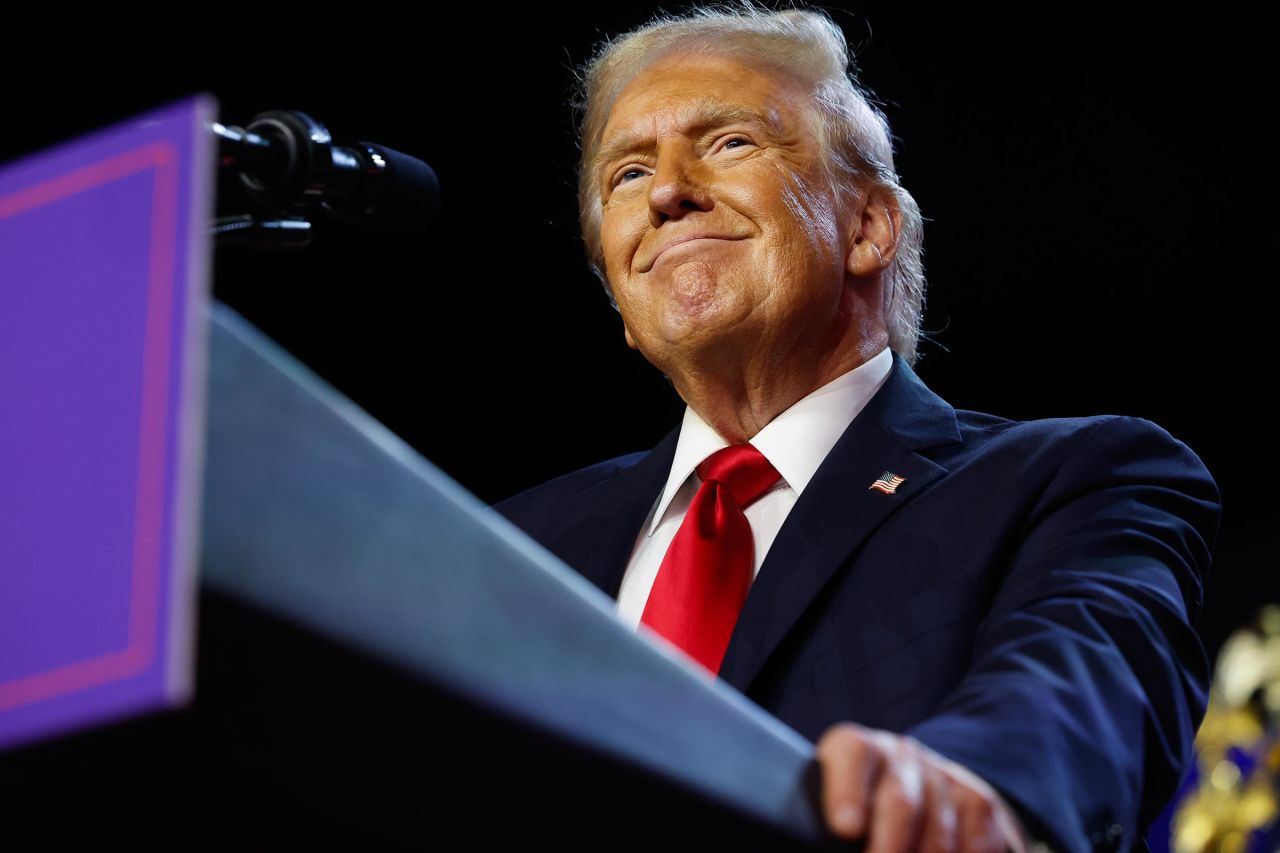
President Donald Trump has warned that the United States could carry out further military strikes in Nigeria if Christians continue to be killed, reigniting a sensitive debate over religious violence and foreign intervention in Africa’s most populous nation.

President Donald Trump
Trump made the remarks in an interview with The New York Times, published on Thursday, while responding to questions about a US military strike carried out in Nigeria on Christmas Day.
At the time, the US military said the operation targeted Islamic State militants in north-west Nigeria and was conducted at the request of the Nigerian government.
Nigeria, however, described the operation as a joint counterterrorism effort, stressing that it was aimed at armed groups designated as terrorists and “had nothing to do with a particular religion”.
“I’d love to make it a one-time strike,” Trump was quoted as saying. “But if they continue to kill Christians, it will be a many-time strike.”
Pressed on comments by his own Africa adviser that extremist groups such as Islamic State and Boko Haram have killed more Muslims than Christians in Nigeria, Trump acknowledged that Muslims were also victims but insisted that Christians were being targeted disproportionately.
“I think that Muslims are being killed also in Nigeria. But it’s mostly Christians,” he said.
Trump has repeatedly raised alarms about the safety of Christians in Nigeria, beginning in late October when he warned that Christianity faced what he described as an “existential threat” in the country. He has accused Nigerian authorities of failing to adequately protect Christian communities and has openly threatened US military intervention if the violence continues.
Nigeria has firmly rejected claims of systematic persecution of Christians. The government maintains that the country’s security challenges are complex and largely driven by insurgency, banditry and criminal violence rather than religious targeting.
With a population of more than 230 million people, Nigeria is almost evenly divided between Christians, who are concentrated mainly in the south, and Muslims, who predominate in the north. Islamist insurgencies, particularly Boko Haram and its offshoots, have plagued parts of northern Nigeria for more than a decade, killing thousands and displacing millions.
Nigerian authorities have repeatedly pointed out that militant attacks have claimed the lives of both Muslims and Christians, arguing that framing the violence along religious lines oversimplifies the crisis and risks inflaming tensions.
Following Trump’s earlier threats, the Nigerian government said it was willing to continue cooperating with Washington in combating terrorism but rejected language suggesting that Christians alone were under threat.
The latest comments are likely to strain diplomatic relations further, as Nigeria balances its partnership with the United States against concerns over sovereignty, security cooperation and the portrayal of its internal conflicts on the global stage.
OpenAI maker of ChatGPT is rolling out a health-focused feature to the generative artificial intelligence (AI) tool that’s used by nearly a billion users.

Named ChatGPT Health, the new feature aims to provide users with health and wellness information. This, as health is one of the most common ways people use ChatGPT, according to OpenAI.
In a blog post, Microsoft-backed OpenAI says de-identified analysis of conversations show that over 230 million people globally ask health and wellness-related questions on ChatGPT every week.
ChatGPT Health will also “securely” connect medical records and wellness apps to ground conversations with a user’s own health information, making responses more relevant and useful.
“Designed in close collaboration with physicians, ChatGPT Health helps people take a more active role in understanding and managing their health and wellness – while supporting, not replacing, care from clinicians.”
According to OpenAI, health information is often scattered across portals, apps, wearables, PDFs, and medical notes making it hard to see the full picture, and people are left to navigate a complex healthcare system on their own.
“ChatGPT Health builds on these so responses are informed by your health information and context. You can now securely connect medical records and wellness apps – like Apple Health, Function, and MyFitnessPal – so ChatGPT can help you understand recent test results, prepare for appointments with your doctor, get advice on how to approach your diet and workout routine, or understand the trade-offs of different insurance options based on your healthcare patterns.”
According to the company, ChatGPT Health is designed to support, not replace, medical care, adding that it is not intended for diagnosis or treatment. “Instead, it helps you navigate everyday questions and understand patterns over time – not just moments of illness – so you can feel more informed and prepared for important medical conversations.
“To keep your health information protected and secure, Health operates as a separate space with enhanced privacy to protect sensitive data. Conversations in Health are not used to train our foundation models. If you start a health-related conversation in ChatGPT, we’ll suggest moving into Health for these additional protections.”
OpenAI adds that access to ChatGPT Health has started with a small group of early users to learn and continue refining the experience, adding that users with ChatGPT Free, Go, Plus, and Pro plans outside of the European Economic Area, Switzerland, and the UK are eligible.
“As we make improvements, we plan to expand access and make Health available to all users on web and iOS in the coming weeks.
“Medical record integrations and some apps are available in the US only, and connecting Apple Health requires iOS.”

Ministry of Finance Leads FG-Backed Deal to Deliver Quality Homes and Boost Agriculture in Niger State

FG Plans to Invest $460m World Bank Loan in Fibre Infrastructure

AI Founders and Developers to Converge in Lagos for AI in Action 2026 conference

CBN Projects Petrol to Hover around N905/Litre this Year

Court Dismisses N1Bn Suit against MTN, Awards N3m Costs

Banks quietly move to enforce new ₦50 transfer levy from Jan. 1

FIRS says NIN, CAC Numbers to Serve as Tax IDs from 2026

PalmPay Launches N400 Million World Travel Carnival, Rewarding Users with Free Global Trips

Nigeria Takes the Lead in the Global WSIS+20 Digital Agenda

Check Point Reveals Nigeria as Second Most Targeted African Country for Cyberattacks in November




 E-Financial2 days ago
19 Nigerian Banks Meet CBN Recapitalization Targets Ahead of March Deadline

 E-Financial2 days ago
KPMG Identifies ‘Flaws, Inconsistencies, and Omission’ in New Tax Law

 General News2 days ago
Bill Gates Pays Ex-Wife $8Bn Charity Payout in Divorce Settlement

 General News2 days ago
FG to Empower Artisans for Global Value

 Telecom2 days ago
Nigeria, Egypt to Lead Africa’s Data Center Boom

 General News2 days ago
FG Introduces Reusable Textbooks, Uniform School Calendar to Cut Education Costs
 Telecom2 days ago
Court Dismisses N1Bn Suit against MTN, Awards N3m Costs
 General News2 days ago
CBN Projects Petrol to Hover around N905/Litre this Year