

News
Ekeh, Zinox Boss Urges Nigerian Youths to Take Advantage of Digital Economy

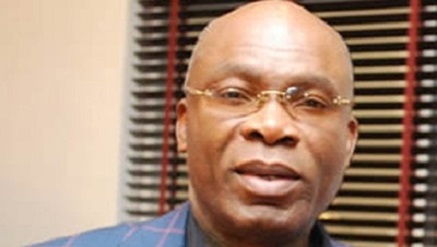
Leo Stan Ekeh, chairman, Zinox Group, has challenged thousands of Nigerian youth, professionals, students and entrepreneurs to embrace the numerous opportunities for wealth creation which abounds with the growing pace of digital revolution and the knowledge economy, noting that wealth has become a right for all in the 21st Century.
He made this call at a mega entrepreneurship summit with the theme – The ABC of wealth creation and sustenance in the 21st Century – organized by the Imo State University and the Alumni Association in partnership with pioneer composite e-commerce outfit Yudala which held at the University Auditorium on Monday December 12.
In attendance was the Executive Governor of Imo State represented by Acho Ihim, speaker, Imo State House of Assembly; Prof. Mrs. Adaobi Obasi, Vice Chancellor, Imo State University, other principal officers of the University as well as several first class traditional rulers and other dignitaries.
Ekeh who featured as the Guest Speaker at the event decried the attitude to quality education among many Igbo youths – a generational problem which he traced to parents who erroneously assumed that education delays the progress of a man.
“The political leadership of the South East for decades has bemoaned the falling enrolment in schools. However, the mindset among many seems to be: Why do we need formal education when all we have to do is find the fastest way of making clean money? ‘Make ye wealth first and all the rest shall be added unto you’ or drawn straight from the Bible in the book of Wisdom – ‘money answereth all’.
“This mindset should change to ‘knowledge answers all’. In the 21st Century knowledge is your right and is the most important capital before cash.
“Wealth creation would always be about generating material values and accumulating same but the knowledge economy says to us that the processes must change. These tools are to be used to reorganize society and fire innovation. The knowledge economy has shrunk the global village even further and our aspirations must rise above the tripod of Hausa, Yoruba and Igbo battle for supremacy. The globe must be the platform for our operations and it has been since 1859 but we need to look inwards if we are to take advantage of the knowledge era.
“The Igbo entrepreneur would have to take quality education more seriously as deficiency in this is already a minus to her intellectual capacity to sustain her enterprise.”
Ekeh, a globally renowned digital entrepreneur whose Zinox Group ranks as arguably Africa’s biggest Information and Communication Technology (ICT) conglomerate, disclosed that building a successful business requires a mix of ingredients including humility, focus, determination to take pains before pleasure, identification of one’s passion and making it commercially viable, constant innovation and a deep relationship with God.
In his opinion, innovation – which he defined as when an invention meets a customer – represents one key success factor for many budding entrepreneurs who seek to enjoy digital wealth.
“There are Igbo entrepreneurs, including my humble self who have made huge investments in Lagos, Abuja, the UK, along the East and West Coast of Africa who would have no choice other than make investments at home given the qualified manpower and irresistible innovations. The 21st Century venture fund would be delivered to innovations no matter where they are found – China, Indonesia, South Africa, Israel, Brazil, name it.
“The point being made here is that the world needs innovations – answers to challenges confronting humanity – and the 21st Century Igbo aspiration should be to provide these innovations that are technology driven so that the products would be cost efficient and cost effectively reach more consumers world over.
Urging the audience in the packed auditorium to embrace the revolution in ICT, Ekeh noted that there is a clear and urgent need for training and re-training in a bid to reveal the potentials of ICT to all.
“It is important that I make it quite clear that what I am advocating is not that everyone must be an ICT professional. What I am saying is that every professional or entrepreneur at least for selfish reasons must be ICT literate enough to ensure that every sector of the economy is ICT driven. It is accepted globally that only ICT can catalyze national development at the pace that satisfies the high expectations in good living of the 21st Century.”
The event which featured the official presentation of YUBOSS – a wealth creation platform set up by Yudala in partnership with Airtel, Access Bank and the Leo Stan Ekeh Foundation, also witnessed the donation of books to the Imo State University and extension of soft loans to a few deserving entrepreneurs.



EFCC


The African Development Bank Group last week approved an investment of €6.5 million in the Saviu II fund in order to support technology start-ups through their seed phase and first institutional fundraising, mainly in French-speaking Central and West Africa.

The Bank will invest €4.5 million as equity and €2 million as a first-loss hedging tranche on behalf of the European Commission, under the Boost Africa Programme.
This participation of the Bank Group will enable the Saviu II fund to give priority to companies with a strong technological or digital component.
Saviu II, the second investment vehicle of Saviu Partners, plans to invest between €500,000 and €3 million in about 20 technology or technology-oriented business-to-business start-ups in the seed phase or carrying out first institutional fundraising.
The Saviu II venture capital fund aims to make at least 60% of its commitments in the French-speaking countries of West and Central Africa: Côte d ‘Ivoire, Cameroon, Benin, Senegal, Togo, Burkina Faso and Mali.
The fund can also co-invest in promising technology companies in East Africa that have a strong team and business model, and whose strategy includes entering the market in French-speaking West African countries and establishing a strong presence there.
In addition, the fund will devote a dedicated envelope to pre-seed investments, focusing on minority equity investments, usually in co-investment with studios, incubators or other ecosystem partners.

Nigerian Government has signed a $1.3 billion Memorandum of Understanding (MoU) with Africa Finance Corporation (AFC) via the Solid Minerals Development Fund (SMDF) to fund an alumina refinery, national geoscience mapping, and a strategic investment vehicle for mining growth.

Special Assistant to the Minister of Solid Minerals Development, Segun Tomori, said the refinery will process one million tonnes of bauxite yearly using a modern Bayer process, powered by an on-site gas-fired cogeneration plant.
Minister Dele Alake called it a transformative milestone boosting GDP, aligning with reforms that improve investment climate, regulations, and licensing to attract private capital. He directed agencies to fast-track permits.
The 20-year project at 95% utilization eyes 19 million tonnes total output, $1.2 billion annual GDP addition, $25 billion economic impact, and $8 billion forex earnings, per feasibility studies.
SMDF Executive Secretary Fatima Shinkafi termed it the agency’s biggest funding deal, supporting value-addition policy.
The partnership extends to geoscience mapping for mineral data, de-risking exploration, and a joint vehicle for mining assets.
Permanent Secretary Engr. Farouk Yabo praised the reforms. Shinkafi signed for government; AFC’s Franklin Edochie for the corporation, witnessed by AFC CEO Samaila Zubairu.
Tomori positioned it as Nigeria’s largest private mining investment and FDI magnet.

NAICOM Signs MoU with BPP to Deepen Insurance Compliance in Public Procurement

FG Approves GIS-enabled Digital Postcode to Tackle Logistics Gaps, Boost E-commerce

Firm Enhances its Security Awareness Platform with SCORM and PDF Support

AfDB Approves €6.5m for Tech Startups

GSMA, African Operators, Others to Launch Low-cost 4G Devices

Dr. Cairo Ojougboh Foundation Bolsters Nigeria’s Education Drive with ₦2.7m Student Support
Kaspersky Brings more Transparency to Threat Detection with New Hunt Hub

NDPC Commits to Balancing Data Privacy, Protection Information

OADC Lagos Reinforces Commitment to Local Data Hosting and Digital Transformation @ NDPC’s National Privacy Week Summit

PwC Reveals AI Scaling Gap Slows Africa’s Digital Transformation




 Telecom3 days ago
Sunil Bharti Mittal Conferred GSMA Lifetime Achievement Award for Transforming Global Telecommunications

 Telecom3 days ago
Why Digital Trust Matters: Secure, Responsible AI for African SMEs?

 E-Business3 days ago
Jumia Tech Week 2026 Begins with Tech Deals on Smartphones, Electronics, and Everyday Technology

 General News3 days ago
Krishnan Exits Africa Data Centre to Embark on Professional Chapter

 E-Financial2 days ago
NRS Targets N40trillion in Tax, Royalty Revenue in 2026

 Telecom3 days ago
House Probes Fintech Regulation via Public Hearing on New Commission Bill
 News3 days ago
AfDB Supports Francophone Africa Start-ups with €6.5M

 E-Financial2 days ago
SEC Revokes Registration of Kensington Agro Trading Limited