

E-Business
Ekeh, Zinox Chief Tells Reps Nigeria is Ripe for eVoting


Dr. Leo Stan Ekeh, chairman of Zinox Group, Sub-Saharan Africa’s biggest integrated Information and Communication Technology (ICT) conglomerate, has declared that the time is ripe for Nigeria to deepen its democratic culture through the full deployment of electronic voting during elections.
He made the call at a retreat organized by the House of Representatives Committee on Electoral and Political Parties Matter as the country marked the 17th anniversary of its transition to democracy last week in Abuja.
In attendance at the retreat were Yakubu Dogara, speaker, House of Representatives; Prof. Mahmood Yakubu, chairman, Independent National Electoral Commission (INEC); Senator Abubakar Kyari, Senate Committee chairman on INEC; was represented by Senator Abu Gumel; Chairperson of the House Committee on Electoral and Political Parties Matter, Mrs. Aisha Dukku as well as other distinguished members of the committee.
Ekeh, who featured as the keynote speaker at the retreat, disclosed that with the rapid pace of global technological advancements, Nigeria stands to reap a lot of benefits from the deployment of e-voting, stressing that the initiative will go a long way in reducing litigations and strengthening the faith of Nigerians in the electoral process.
While delivering a paper titled – New thoughts, ideas and innovations on use of ICT in elections – Ekeh affirmed that the gains recorded with the use of the card readers in the 2015 general elections goes a long way to show that with the adoption of e-voting, the country will take a huge leap towards sound democratic governance.
“In your life, there must be a little bit of disruption for you to move forward. The country is ripe for transition to electronic voting. A lot of us are in this business because technology does not lie – it’s either you are right or you are wrong. With the use of the card readers in the last general elections, we saw a significant reduction in electoral fraud and other electoral malpractices. However, a few challenges were also encountered as no technology can be said to be 100% perfect.
“A country cannot move forward where the elected leaders who take decisions are not the choice of the people. It’s like running a company and you are a shareholder in that company. If your son is not qualified to lead, you will be destroying that company by manipulating the system to favour that son. So, this was the essence of our submission to INEC on the adoption of electronic voting – that things should be done professionally with your support and that of the entire nation.
“Today, there are about 774 local governments in the country and each one with about 10, 800 polling units, some of which are in the riverine areas. Even if INEC purchases 1000 vehicles, it will still find it difficult logistics-wise to cover all the areas and this leaves the process open to manipulation by emergency contractors as INEC lacks the requisite man-power.
“If finally adopted and implemented, electronic voting will ensure that you now have reasonable infrastructure to handle this. While you have the mobile units and active screens at the polling units, the database of registrants or eligible voters is sitting at the national database of INEC. Once a voter’s number is entered at the polling unit, it pulls up the details of the voter from the list of registered voters. Verification will no longer be a problem and during voting, once a voter clicks on the icon of a chosen party, the same information hits the INEC back-end. This will go a long way in reducing litigations as INEC can provide verifiable evidence in court.
“With this technology in place, voters will no longer have to travel back to their wards to cast their votes. Furthermore, INEC can also monitor the entire process easily as each electronic voting device is equipped with a tracker and can be configured to shut down immediately voting ends.”
Tracing the country’s march and transition towards electronic voting, digital ICT entrepreneur Ekeh examined the benefits and challenges of the Direct Data Capture (DDC) machines used during the 2007 elections and the painstaking process which eventually culminated in the use of the card readers for the 2015 general elections.
“When Prof. Jega came on board, a decision was made to do a proper data capturing of eligible voters. We started the process and I must thank the National Assembly as they supported us despite being a local company. We designed the technology and ended up working for everybody in deploying the Direct Data Capture (DDC) machines nationwide including the 600 servers. These helped promote the concept of one man, one voter card, streamlined the electoral process and also reduced multiple registration, ineligible and under-age registrants – we did a lot of these from the back-end. As a result, we were able to deliver a strong database which reduced arguments and other related issues.
“From there, we moved to the use of card readers. Back then, there were calls for proposals for electronic voting which the National Assembly to a large extent didn’t consider as the country was seen as not ripe to embrace the technology then. Most of the issues encountered with the card readers had to do with the National Assembly and the budget for INEC as well as the late release of funds after election dates had been set, among other disruptions. So, INEC had no time to conduct a mock election using the card readers. I had recommended a regional mock then as this would have helped smoothen the process.
“I would like to plead with the National Assembly to support INEC in its effort to adopt electronic voting. Until we embrace this disruption, the nation will not move forward in this regard because the government is the decider of the future of the people. If you appoint a CEO who cannot read a balance sheet, it’s impossible for that company to grow. This is the crisis the country is currently facing in the knowledge business.”
Also speaking at the event, Mahmood, INEC chairman, disclosed that one of the major cost of elections being borne by the Commission was as a result of the numerous litigations which were a recurrent feature of conducted elections in the country.
Mahmood further noted that INEC’s case is not helped by the fact that it is always joined in suits or petitions arising from elections for which it has to pay lawyers to represent the Commission in court. According to the chief electoral umpire, apart from the over 700 court cases it has had to appear in, the Commission has been dragged to court a whopping 12 times in the past one week.
Reiterating the Commission’s commitment to the conduct of credible elections, Mahmood affirmed that the journey to electronic voting is a gradual one which will undoubtedly go a long way in strengthening the nation’s democracy.
The retreat, which was supported by the Policy and Legal Advocacy Centre (PLAC) and the United Kingdom Department for International Development (DFID), also featured a review of current electoral laws in Nigeria and a status report on amendment bills before the committee.
***


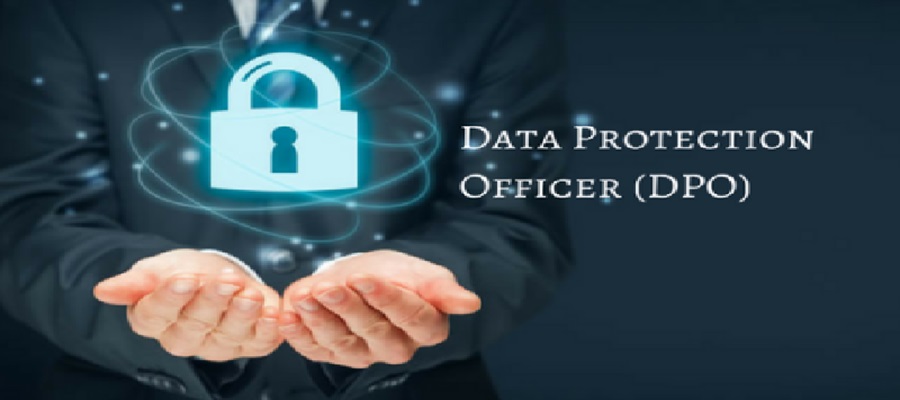
Nigeria needs some 480,000 data protection officers (DPOs), to develop, implement, and oversee organizations’ data privacy strategy to ensure compliance with laws like the GDPR and the Nigeria Data Protection Act (NDPA).

Currently only about 10,000 individuals possess the necessary certification highlighting a major skills gap, according Vincent Olatunji, national commissioner, Nigeria Data Protection Commission (NDPC).
Olatunji spoke on Monday at the second edition of its Data Protection Officers training and certification programme in Abuja and Lagos.
He said that the NDPC has domesticated the certification of data protection officers (DPOs) to address the widening gap in certified DPOs, despite steady growth in the number of trained professionals over the past three years.
“At the moment, we have about 10,000 certified DPOs to work in that space. The gap of about 480,000 still exists,” he said.
The shortfall reflects rising demand for data privacy skills as more businesses, government agencies and digital platforms process personal data under the Nigeria Data Protection Act.
Olatunji said the number of certified DPOs has grown from fewer than 1,000 three years ago to over 10,000, while more than 27,000 professionals now operate within Nigeria’s wider data protection ecosystem.
He said the commission is scaling up training and certification efforts to close the gap and position Nigeria as a leading source of data protection talent in Africa.
“Our goal is to make Nigeria the go-to country when it comes to sourcing qualified data protection officers in Africa,” he said, adding that the certification meets global standards.
The NDPC said expanding the talent pool could also support job creation and strengthen trust in Nigeria’s digital economy.
Tolu Fadipe, head of research and development at the commission, said data protection is becoming critical as the country moves deeper into digital systems and emerging technologies.
“As we move towards a digital economy, data becomes central and protecting that data is essential,” she said.
Adeola Sopade, lead trainer, said participants in the programme would be trained on global best practices, including data protection principles, compliance requirements and handling user data requests.
The training also includes practical exposure and internships with organisations to improve job readiness.
Participants said the programme offers opportunities for young Nigerians to build careers in technology and prepare for emerging fields such as artificial intelligence.

Federal government has inaugurated the Electronic Pharmacy Regulation Platform (E-Pharmacy) to enhance the safety of online healthcare services.

Pic credit….healthreporters.info
The platform, championed by the Pharmacy Council of Nigeria (PCN), is designed to regulate digital pharmaceutical services and improve public health outcomes.
Inaugurating the platform, Prof. Ali Pate, coordinating minister of Health and Social Welfare, said the initiative signified Nigeria’s commitment to building a world-class regulatory environment.
Pate noted that pharmacy regulation had faced significant challenges for over three decades but expressed optimism that the new platform would strengthen oversight and accountability.
He said the initiative would enable evidence-based monitoring of pharmaceutical practices while supporting innovation and investment in the health sector.
“This launch is a testament to our collective commitment to advancing technology in the service of health, safety and human dignity.
“It is a decisive step to ensure that pharmaceutical practice in Nigeria aligns with national and global health priorities, reflecting the realities of the 21st century.
“It enables the country to adopt evidence-based approaches to monitoring and protecting public health while supporting innovation and investment,” he said.
The minister added that the platform would help establish a safe, accessible and well-regulated national e-pharmacy ecosystem driven by digital technology.
Earlier, Alhaji Ibrahim Ahmed, registrar/chief executive officer of PCN, said the need to regulate online pharmacy operations became more urgent during the COVID-19 pandemic.
Ahmed said the pandemic accelerated the adoption of digital tools and e-commerce in healthcare, exposing longstanding inefficiencies in pharmaceutical supply chains, particularly in Africa and Nigeria.
“This has led to the increasing adoption of digitised distribution of essential medicines through cost-effective and technology-enabled models.
“For decades, PCN has regulated pharmacy education, training, practice and business in Nigeria. However, as the world shifts towards digital solutions, access to medicines has evolved.
“The Electronic Pharmacy Regulations 2026 provide a comprehensive legal and technical framework for the registration, licensing, operation and oversight of digital pharmaceutical services,” he said.
He added that the framework would ensure that ethical standards and patient safety are not compromised in the delivery of online pharmaceutical services.


Olugbenga Agboola, CEO, Flutterwave, has announced plans to establish Anambra State as the company’s hub for Nigeria’s South East, leveraging a fresh banking license from the Central Bank of Nigeria (CBN) to boost local fintech and businesses.

Flutterwave
Agboola made the disclosure yesterday in Awka during a meeting with Anambra tech community leaders, hosted alongside Dr. Stanley Uzochukwu, CEO, Stanel Group and proprietor, Delborough Hotel.
He highlighted Flutterwave’s status as Africa’s leading payment system, born in Nigeria, with infrastructure powering companies nationwide.
“We want Anambra to be our hub for the entire South East,” Agboola said. “We’ll deploy our systems, fees, infrastructure, and POS terminals to every small business and large firm here, making our services the top consumer choice.”
Agboola pledged a massive impact program for Anambra entrepreneurs to foster global platforms from the state, enabled by the new license for faster growth.
For a decade, Flutterwave has facilitated payments, but now aims to empower South East businesses through partnerships, POS access, loans, and value for SMEs.
“We’re partnering on a huge impact program launching soon—impacting the tech community with technology, financing, and lending to create more millionaires from this city,” he added.

FG Investigates ‘Sharp Sharp’ Loan Operators over Alleged Privacy Violations

CISA Asks NDPC, Police to Act on Alleged Data Breach by NIPSS

Fela Makes History as First African to be Inducted into Rock and Roll Hall of Fame

Lawmakers Ask CBN to Suspend Payment to ZTE for Failed $460m CCTV Project

Ecobank Delivers Strong Results, Posts $801m in Pre-Tax Profit for 2025

Spotify’s Loud & Clear Report Reveals Over ₦60Bn Revenue for Nigerian Artists in 2025

Kuda MFB Increases Kuda for Her Business Grants to ₦10 Million

Canal+ to Cut Jobs as Part Sweeping Restructuring

Nigeria tops global rankings for USDT, USDC ownership

NBC Boss Urges Content Ceators to Participate in DSO




 Telecom3 days ago
SpaceX Hints at Home‑Built Chip Module for Starlink Mobile

 E-Financial2 days ago
Fidelity Surges Ahead in Recapitalisation Drive with ₦564bn Capital

 General News3 days ago
Teenager Hacks Celebrities Whatsapps, Sells Adult Content in Delta

 Telecom3 days ago
Digital Realty, IXPN Expand Peering Network with New Internet Exchange Point of Presence in Nigeria

 Telecom3 days ago
Elon Musk Accuses South Africa of Racism over Starlink Licence Block

 E-Financial3 days ago
Lawyers Sue CBN over One-Time BVN Phone Number Change

 News3 days ago
Meta Files Appeal over $25,000 Damages Awarded to Falana

 E-Business3 days ago
FG Unveils ePharmacy Platform to Regulate Digital Pharmaceutical Services