

E-Financial
Emefiele, CBN Gov. Under Fire over Cash Crunch, Hardship

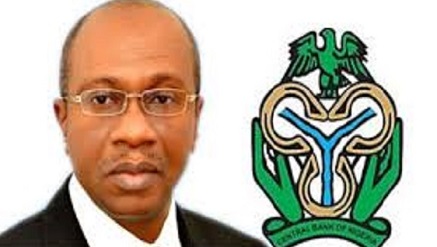
Godwin Emefiele, governor, Central Bank of Nigeria (CBN) is coming under fire from economists and investors as Nigeria, Africa’s top crude producer reels from the collapse in oil prices.
The governor has reportedly introduced a range of currency controls in recent months to try to halt the decline of the naira which has lost about 22 per cent of its value since the oil price collapse began in July 2014, according to Financial Times.
But critics say the measures are inflicting pain at the worst time for Nigeria. They fear that Mr Emefiele is jeopardising the hard-won credibility of the country as an attractive frontier market.
More than a dozen Lagos- and London-based economists, investors and analysts told the Financial Times last week they thought the central bank should allow the currency to find its market value. They estimate this should be between 10 and 20 per cent lower than the official interbank rate, which is between 197 and 199 naira per dollar.
President Muhammadu Buhari, who took office in May, has yet to outline a fiscal policy and observers say this has increased Emefiele’s influence.
“The new administration has not been engaging at the macro level in the past three months or so and this has caused this pressure on the naira and on the central bank,” said Ayodele Teriba, chief executive of Economic Associates, a consultancy in Lagos.
“Rather than comforting us, this has rather made us more worried,” he added.
Emefiele defends the new measures, which include the effective banning of 41 imports including key goods such as rice and steel pipes. He says the currency is appropriately priced and argues that “people are expecting the abnormal to happen in Nigeria.
“We can’t continue to pursue a policy of indeterminate depreciation of our currency,” he says, noting that fellow African oil producers, Angola and Ghana, have devalued by slightly more than Nigeria — 23 per cent and 25 per cent respectively.
Tony Elumelu, a prominent Nigerian businessman, agreed. He advocated conserving foreign reserves by removing fuel subsidies that cost the government an estimated $3 billion a year — a move Buhari has for now ruled out.
Emefiele’s predecessor, Lamido Sanusi, was widely praised for reforming Nigeria’s banking sector and increasing transparency at the central bank. He was suspended by former President Goodluck Jonathan just days after he exposed an alleged $20 billion in ‘missing’ oil revenues.
There are concerns that the central bank may be influenced by the presidency. Mr Buhari last week commented that he did not think the naira should be devalued further.
“The central bank needs to be seen as an institution which is operating with the very highest global standards, to reassure investors that the path of the bank is in keeping with the best practices in central banking,” said Charles Okeahalam, a Nigerian economist and chief executive officer of AGH Capital Group.
Sarah Alade and Joseph Nnanna, deputy governors of central bank, have publicly stated that there is insufficient liquidity in the market to meet dollar demand and say the bank needs to allow freer currency trading.
“The issue of obtaining dollars has become ludicrously difficult. If he is right that the price [of the naira to the dollar] is right, then there should not be a shortage,” said Paul Clark of Ashburton Investments in South Africa.
Mr Clark and other investors predict the impact of the central bank’s policies will be long lasting and fear that the ejection this month of Nigeria from JPMorgan’s influential emerging markets bond index will be the first of a number of blows to the country’s reputation.
The governor’s policies have been tried before in other emerging markets, and they ‘buy time, but they always fail,’ said Jan Dehn, head of research at emerging markets-focused asset manager, Ashmore.
“And as they do so, they create serious reputational damage that can take years to live down.”


E-Financial
UBA launches instant digital platform for seamless account opening across Africa, diaspora


United Bank for Africa (UBA) Plc, Africa’s leading financial institution, on Tuesday unveiled a groundbreaking instant account opening platform, revolutionising banking access for millions across the continent and diaspora communities worldwide.

UBA
The fully digital innovation, accessible at ubagroup.com, empowers prospective customers to complete account onboarding online in minutes, bypassing paperwork, branch visits, and lengthy processes that have long hindered financial inclusion. Supporting Naira and Diaspora accounts with multi-language options, the platform operates seamlessly on computers, tablets, and smartphones, catering to UBA’s diverse pan-African footprint spanning 20 countries, the UK, US, France, and UAE.
Shamsideen Fashola, Group Head of Retail and Digital Banking, described the launch as a pivotal step in democratising finance. “At UBA, we are committed to redefining the customer experience through innovation and simplicity,” Fashola said. “This fully digital solution underscores our belief that banking should be accessible, secure, and truly borderless.”
The seven-step process is intuitive: customers select “Open a Savings Account,” input their Bank Verification Number (BVN), undergo facial verification, confirm an OTP, update details, upload documents, add a digital signature, and receive an instant account number. This bridges traditional banking rigour with fintech speed, incorporating digital KYC while upholding stringent security.
Built with compliance at its core, the platform adheres to Nigeria’s Data Protection Act (NDPA) and Europe’s GDPR, safeguarding user privacy amid cross-border operations. Unlike conventional methods requiring physical biometrics, it enables immediate enrolment in UBA’s digital channels, blending convenience with regulatory depth.
Alero Ladipo, Group Head of Brand, Marketing, and Corporate Communications, highlighted customer-centric design. “Today’s customers expect speed, convenience, and compliance without compromise,” Ladipo stated. “We have blended industry-leading digital onboarding with robust standards for a seamless experience matching global best practices.”
The move reinforces UBA’s dominance in technology-driven inclusion, serving over 50 million customers with 30,000 employees and pioneering retail, commercial, and institutional services. Analysts view it as a strategic edge over fintech rivals, accelerating Africa’s digital economy amid rising diaspora remittances and intra-continental trade.
As Nigeria and Africa push financial digitisation, UBA’s platform positions the bank to capture untapped markets, fostering economic growth through barrier-free banking

Kuda Microfinance Bank (Kuda MFB) has received a license from the Central Bank of Nigeria (CBN) to operate as a National Microfinance Bank, which means that it can now have a physical presence across Nigeria.

Musty Mustapha, MD/CEO of Kuda MFB
With the Unit Microfinance Bank licence it held until December 2025, Kuda MFB’s physical operations were limited to a specific location. The national licence removes those geographic restrictions, allowing the bank to open customer experience centres in multiple parts of the country. It also regularises Kuda MFB’s licensing status in line with the Central Bank’s framework for microfinance banks.
According to the bank, the national licence is about regulatory alignment and operational flexibility rather than a shift away from its digital-first model, so it will continue to lead with digital banking services, offering Nigerians the convenience of making transfers and payments, saving, and accessing instant credit through the Kuda app.
Musty Mustapha, MD/CEO of Kuda MFB, said, “Securing a national microfinance banking licence is an important step for us as a regulated institution. It strengthens our relationship with the Central Bank and affirms our commitment to operating at the highest standards of compliance as we scale. While we remain digital at our core, this licence gives us the flexibility to create more physical touchpoints where customers want in-person support or engagement, allowing us to serve Nigerians across the country in whichever ways are most convenient for them.”
Subject to regulatory approval, Kuda MFB plans to open more experience centres designed for customer support and community engagement, in the style of its existing experience centre in Yaba, Lagos, where customers and the general public can speak directly with the Kuda team to get help and learn about the microfinance bank’s products and services.
Kuda MFB’s national licence does not change its existing product offerings or transaction capabilities, but it provides the regulatory backing for a nationwide presence.


Nigeria Deposit Insurance Corporation (NDIC) and the Economic and Financial Crimes Commission (EFCC) have agreed to strengthen collaboration to enhance the investigation and prosecution of offences that lead to bank failures, while also improving the recovery of assets and debts of failed banks.

Thompson Oludare Sunday, managing director and chief executive of the NDIC, made this known during a courtesy visit by the Corporation’s management team to Olanipekun Olukoyede, executive chairman of the EFCC, at the Commission’s headquarters in Abuja.
In a statement issued on Sunday by the NDIC’s Hawwau Gambo, head of Communication and Public Affairs, Sunday said robust partnership with the EFCC is critical to the effective liquidation of failed banks, a process that involves asset realisation and debt recovery, with proceeds used to settle uninsured deposits.
He noted that cases of asset stripping and concealment require coordinated efforts, particularly in asset tracing, recovery and enforcement, adding that the EFCC’s expertise is vital in achieving these objectives.
Sunday also identified banking fraud investigations and the prosecution of individuals whose actions contribute to bank collapses as key areas where both institutions can further strengthen their cooperation.
He stressed that NDIC plays a vital role in maintaining financial system stability through the execution of its four statutory mandates in deposit guarantee, bank supervision, distress resolution and bank liquidation.
According to him, the Corporation’s overarching goal is to safeguard depositors’ funds, ensure prompt compensation when banks fail, and sustain public confidence in the financial system.
He also observed that both institutions share common values of integrity, professionalism and accountability, describing the visit as a step towards reinforcing institutional partnership, especially in areas where EFCC’s investigative and prosecutorial capacity is essential to NDIC’s mandate.
“We aim to further strengthen our collaboration, deepen institutional synergy and explore additional avenues for mutual support in the pursuit of national financial system stability.
“The EFCC has been our partner and we want this to continue. We look forward to an expanded and more impactful partnership between our two esteemed institutions.
“Your experience has and will continue to greatly enhance our recovery efforts. Additionally, we have that strategic responsibility for prosecuting individuals whose actions contribute to the failure of banks. We therefore seek closer collaboration with the Commission in this critical area”
Responding, the EFCC boss, Olukoyede, reiterated the Commission’s commitment to its longstanding working relationship with the NDIC in tackling financial crimes within the banking sector.
He acknowledged the history of cooperation between the two agencies, particularly in investigations and capacity development related to banking operations.
Olukoyede also briefed the delegation on key departments within the EFCC, including the Bank Fraud Section, which handles matters related to the NDIC.
He encouraged the Corporation to submit any outstanding cases for prompt assessment, noting that this would enhance tracking, accountability and case resolution.
The EFCC Chairman further highlighted the role of the Commission’s Fraud Risk Assessment and Control Department, which focuses on proactive monitoring, compliance, sound risk management and internal controls in both public and private sector institutions.
He described these efforts as part of the EFCC’s broader mandate to protect and strengthen the Nigerian economy.
Olukoyede assured the NDIC of the EFCC’s continued support in deepening institutional synergy to combat financial crimes, improve asset recovery, and ensure that offenders who undermine the banking sector are brought to justice.

Firms Commit to Boost African Robotics Market

Kaspersky Reveals How Digitalisation is Influencing Family Life

NCC Slaps ₦250,000 Fee on Trial Licences to Spur Telecom Innovation

Amazon Axes 16,000 Jobs Worldwide in Major Restructuring Push

UBA launches instant digital platform for seamless account opening across Africa, diaspora

19 Nigerian Banks Meet CBN Recapitalization Targets Ahead of March Deadline

Jumia CEO says Black Friday Signals Nigeria’s E-Commerce Maturity

Galaxy Backbone Celebrates the Federal Government’s Paperless Civil Service Milestone

DStv Offers Instant Package Upgrade for Customers from January to February

Banks to Impose N50 Stamp Duty on Transfers of N10,000 and Above from January 1




 E-Financial3 days ago
CBN Upgrades Licences of Opay, Moniepoint, Kuda, Palmpay, Paga to National Status
- E-Financial3 days ago
Nigeria’s 9 Top FinTech Firms Valued at $10.6Bn in January 2026

 News3 days ago
Tech Executives Double Down on AI, Talent and Adaptive Strategies to Lead in the Intelligence Age

 E-Financial3 days ago
NIBBS to Boost Financial Inclusion with Offline Payment Solutions

 News3 days ago
DHQ Indicts Brigadier General Abubakar Sadiq, 15 Others in Alleged Coup Plot againt Tinubu

 E-Business3 days ago
Firm Identifies AI as Common Denominator in Entertainment Industry’s 2026 Security Threats

 E-Financial2 days ago
PayPal Goes Live in Nigeria through Paga

 News3 days ago
Court Fines Airtel N210m for Unauthorised Use of ‘Nigeria Go Survive’ Song