

General News
Emirates Deploying Larger Boeing to Uganda


Emirates, a global connector of people and places is set to upgrade its services to Uganda with the deployment of larger Boeing 777-200LR on the daily Dubai to Entebbe route from 1 October 2015.
The Boeing 777-200LR will replace the current Airbus A330-200 used on the route, and increase the total number of seats across all cabin classes by 12 percent, offering eight private suites in First Class, 42 lie-flat seats in Business Class and 216 seats in Economy Class.
“The upgrade to a Boeing 777 reinforces our commitment to Uganda and offering travellers world class products and services. The aircraft provides an enhanced product offering, such as the First Class private suites which have electrically operated doors to ensure privacy, a flat bed, including a mini-bar and work desk, while Business Class has sleeperettes and Economy Class comfortable, spacious seats”, said Orhan Abbas, Emirates Senior Vice President, Commercial Operations, Latin America, Central and Southern Africa.
The Boeing 777 is the backbone of the Emirates fleet and very popular with customers. Ugandan travellers can look forward to the same world famous service from Emirates’ multi-national cabin crew, including Ugandan nationals, enjoy over 2000 channels of on demand audio and visual entertainment on the ice entertainment system across all cabin classes, from the latest movies and music to games and audio books, as well as gourmet cuisine and generous baggage allowances, with 50 kilograms for First Class, 40 kg for Business Class and 30 kg for Economy Class customers.
Emirates started services to Uganda in March 2000, with a thrice weekly service linked with Nairobi, and later with Addis Abba, until it was delinked in 2007 and became a direct daily service between Dubai and Entebbe.

“Besides the enhancement to the product offering, the increase in capacity to Entebbe is also to meet growing demand for our services in Uganda and the East Africa region. This year we’ve increased our capacity to the region by adding more seats to both our Dar es Salaam and Nairobi service, giving us the ability to meet growing demand in this vibrant tourism and business region of Africa,” he added.
Ugandan travellers can access more than 140 destinations around the world through a single and convenient stop in Emirates’ Dubai hub, offering multiple connections and frequencies to key destinations in Europe, the Americas, the Middle East and the Asia Pacific region, with many key points being served by Emirates flagship A380 aircraft. Popular destinations for Ugandans are Dubai, Guangzhou, Ahmedabad, Beijing, Hyderabad, Mauritius, London, Bangalore and Bangkok, while inbound passengers are mainly from the United States, UK, India, Australia, China, Germany and Jordan.
Emirates flight EK 729 departs Dubai at 0920hrs and arrives at Entebbe at 1330hrs. The return flight, EK 730, departs Entebbe at 1610hrs and arrives in Dubai at 2230hrs



Economic and Financial Crimes Commission (EFCC) has arraigned four persons before the Federal High Court in Lagos over an alleged money laundering scheme involving $5.3 million.

The defendants — Bamidele Ayodele Emmanuel, Abdullah Oriyomi, Garuba Fathiat Funmilayo and Gbenro Victor Ademola — were arraigned before Justice F. N. Ogazi of the Federal High Court sitting in Ikoyi on separate two-count charges bordering on money laundering.
According to the anti-graft agency, the alleged offence involved a total of $5,296,691 and contravenes the provisions of the Money Laundering (Prevention and Prohibition) Act, 2022.
One of the charges against Emmanuel alleged that between January 1 and 31, 2025, he retained $826,691 in a Wema Bank account, which he allegedly ought to have known formed part of the proceeds of unlawful activities.
The EFCC alleged that the act was contrary to Section 18 of the Money Laundering (Prevention and Prohibition) Act, 2022.
All four defendants pleaded guilty when the charges were read to them.
Following their pleas, Bilkisu Buhari, prosecution counsel, told the court that investigations showed the defendants admitted handing over their personal details to one Afeez Animashaun, who allegedly approached them at Mushin Market in Lagos, where they carried out their businesses.
According to the prosecution, the personal information was used to register several companies, including College Compass Eduguide Nigeria Limited, Hortifresh Solutions Nigeria Limited, Eduboost Innovation Nigeria Limited and Fixit Hardware and Tools Nigeria Limited.
The EFCC further alleged that corporate bank accounts were opened in the names of the companies and used to receive millions of dollars within January 2025.
Buhari told the court that the arrangement enabled the actual operators of the companies to remain anonymous while facilitating the movement of suspicious funds through Nigeria’s financial system.
She urged the court to convict the defendants based on their guilty pleas and impose appropriate sentences.
Justice Ogazi ordered that the defendants be remanded in a correctional facility and adjourned the matter until August 4, 2026, for judgment.

Dele Oye, chairman, Alliance for Economic Research and Ethics (AERE), has raised the alarm that an estimated eight million micro, small and medium enterprises (MSMEs) shut down across Nigeria between January 2023 and June 2024, representing about 20 per cent of the country’s estimated 40 million SMEs.

Dele Oye, chairman, Alliance for Economic Research and Ethics
He also warned that the scale of the collapse exposes a deepening crisis in the sector, describing it as an existential threat to Nigeria’s economic foundation.
He disclosed the figures in a policy brief titled “The Gap: Nigeria’s Industrial Policy 2025 vs. The Lived Reality of SMEs.”
According to Oye, research consistently shows that as many as 95 per cent of Nigerian SMEs fail within their first five years of operation, highlighting the urgent need for policies that go beyond design to effective implementation.
Quoting Femi Egbesola, national president of the Association of Small Business Owners of Nigeria (ASBON), Oye described the situation as a humanitarian crisis.
“Many businesses simply cannot cope with the harsh economic environment. Owners are closing their shops, unable to meet loan obligations or manage skyrocketing operational costs. Several people have died under the pressure; others are in the hospital. It’s a humanitarian crisis,” Egbesola said.
Oye identified three major factors driving SME failures: macroeconomic instability, limited access to affordable finance and soaring energy costs.
He, however, commended the Federal Government’s newly introduced Nigeria Industrial Policy 2025 (NIP2025), describing it as an ambitious framework designed to reposition the country’s manufacturing sector.
On the policy championed by the Federal Ministry of Industry Trade and Investment, Senator John Owan Enoh, minister of State for Industry, explained that it seeks to raise manufacturing’s contribution to Nigeria’s Gross Domestic Product (GDP) to 15 per cent by 2030 and 25 per cent by 2035, while boosting exports, creating jobs and positioning Nigeria as Africa’s leading industrial hub.
Oye noted that the policy rightly recognises MSMEs as central to achieving those objectives, pointing out that the sector contributes 46.32 per cent of Nigeria’s GDP and accounts for about 87.9 per cent of total employment.
He said the policy promises single-digit loans, industrial clusters, technology incubation centres, skills development programmes and fiscal incentives aimed at supporting businesses.
Despite these commitments, Oye argued that there remains a wide gap between policy intentions and the realities confronting entrepreneurs.
“For millions of Nigerian entrepreneurs struggling to survive, the NIP2025 reads less like a practical roadmap and more like a distant promise,” he said.
According to him, inflation, which climbed to 33.4 per cent in July 2024, persistent naira depreciation and the removal of fuel subsidies have sharply increased production and transportation costs, forcing many SMEs to downsize their workforce by as much as 70 per cent.
He also lamented the limited access to affordable financing, noting that only between 15 and 20 per cent of SMEs have access to formal bank credit. Where loans are available, he said, lending rates now exceed 35 per cent, making borrowing unsustainable for most small businesses.
Energy shortages remain another major burden, with businesses enduring prolonged power outages and relying heavily on generators.
Oye noted that diesel costs alone consume as much as 30 per cent of revenue for many SMEs.
He argued that previous industrial policies failed largely because of weak implementation rather than the absence of good ideas.
According to him, although government interventions have increased credit availability over the years, most SMEs use borrowed funds to cover operational expenses such as rent, inventory and energy costs instead of expanding production because of the difficult business environment.
To reverse the trend, Oye called on the Federal Government to declare an SME emergency and introduce targeted measures, including genuine single-digit interest loans, energy support for productive sectors and a moratorium on multiple taxation by state and local governments.
He also recommended loan products that align with SME cash flow cycles through longer repayment periods, revenue-based financing and appropriate grace periods.
In addition, he urged the government to prioritise the development of SME industrial clusters by providing reliable electricity, water, roads and security in selected locations within one year.
Oye further called for greater transparency through the National Industrial Development Monitoring System (NIDMS), recommending quarterly publication of detailed data on SME financing, beneficiaries, sectors and employment outcomes.
While describing Senator Enoh’s advocacy for NIP2025 as commendable, Oye stressed that Nigeria’s entrepreneurs need effective implementation rather than another policy document.
He said the policy would only succeed if it delivers tangible benefits to business owners, including bakery operators struggling with rising costs, transport operators forced to cut jobs because of higher diesel prices and artisans fighting to keep their businesses afloat.
“The ambition is right, the execution must now match it.”

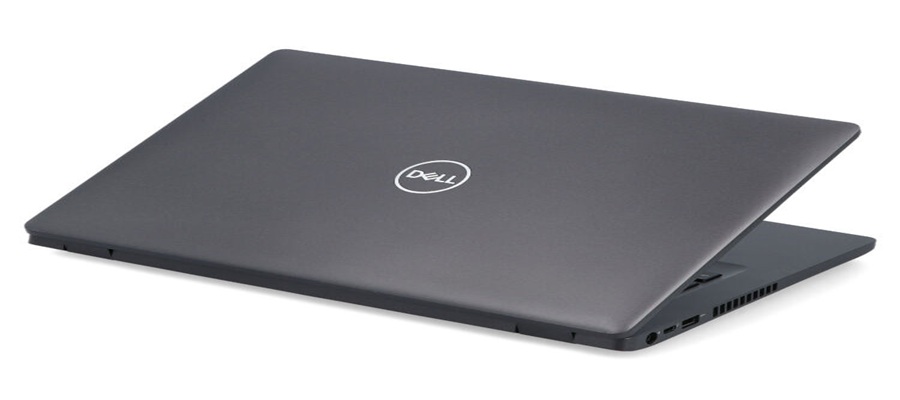
MENXTT TECH NG, a Lagos-based technology company, has launched an initiative to make quality Dell laptops more affordable for Nigerians through flexible payment plans and extended warranty support.

The company said the initiative was aimed at helping students, entrepreneurs, professionals and small businesses acquire reliable computing devices despite rising technology costs.
According to the company, customers can now purchase premium pre-owned Dell Latitude, Dell Precision and Dell Inspiron laptops at competitive prices, with selected models available under staggered payment arrangements.
The laptops, it said, are designed to meet the needs of users ranging from students and office workers to architects, engineers, software developers, graphic designers and video editors.
Speaking on the initiative, the Co-Founder of MENXTT TECH NG, Mr Anthony Emeka Nwosu, said access to quality technology should not be limited by financial constraints.
“A laptop is no longer a luxury; it is an essential tool for education, business and career development.
“Unfortunately, many people are forced to settle for unreliable devices because of the high cost of new laptops.
“At MENXTT TECH NG, we want to bridge that gap by providing durable Dell business laptops at affordable prices, backed by a full one-year warranty and flexible payment plans.
“We want every student, entrepreneur, freelancer and business owner to have access to technology that helps them succeed,” he said.
Nwosu explained that every laptop undergoes comprehensive testing before delivery and comes with a one-year warranty, an original charger, a complimentary laptop bag, Windows 11 operating system and Microsoft Office Suite pre-installed.
He added that the company, an authorised Bitdefender Antivirus reseller in Nigeria, also installs genuine Bitdefender security software on every system to protect customers against cyber threats.
According to him, customers requiring additional productivity tools can also have licensed Foxit PDF software installed on their devices.
Nwosu said the flexible payment option was introduced in response to prevailing economic realities, enabling customers to spread payments over an agreed period.
He noted that the arrangement would make it easier for students, startups and growing businesses to acquire quality computers without placing excessive pressure on their finances.
Beyond laptop sales, the company provides information technology consultancy, computer repairs, software licensing, cybersecurity solutions and digital transformation services to organisations across Nigeria.
He reaffirmed the company’s commitment to supporting Nigeria’s digital economy by making dependable computing devices and enterprise technology solutions more accessible to individuals and businesses.
According to him, the initiative reflects MENXTT TECH NG’s vision of combining affordability, quality products and professional after-sales support to help more Nigerians participate in the country’s expanding digital ecosystem. (NAN)

EFCC Arraigns 4 over Alleged $5.3m Fraud Scheme

CBN Orders N19Bn Refunds to Customers as Complaints Rise

Access Bank Debunks Shutdown Report, Vows Action against Perpetrators

Oye, AERE Raises Alarm as 8m MSMEs Collapse in 18 Months

Kaspersky Uncovers Cyber Threats Defining the First Half of 2026 in Nigeria, Others

NRC, Ponzi Scheme Collapses Resulting Loss of Billions of Naira

EFCC Busts NIS Visa Overstay Racket, Uncovers N700m in an Account

From Scarcity to Scale: What Africa Can Learn from India’s Agricultural Transformation

Tokenization, Blockchain Technology will Transform Financial Institutions – IMF

BON Establishes Six Ad Hoc Committees to Modernize Broadcasting




 Telecom2 days ago
Fact-Check: Elon Musk’s “Tesla Pi Phone” is Internet Rumor

 E-Financial2 days ago
Malpass, Ex World Bank Chief Raises Alarm over Nigeria’s Secretive Debt Structures

 Telecom2 days ago
How and Why Apps Deplete Data – ALTON

 News2 days ago
CIBN, ACAMB Push for Financial Inclusion, Women Empowerment

 E-Financial2 days ago
S&P Global Acquires Agusto & Co. to Strengthen Credit Ratings Across Africa

 Telecom2 days ago
Galaxy Backbone Soft Launches Government Service Portal to Simplify Access to Public Services

 E-Business2 days ago
NDPC Directs DCPMIs to Register with Agency or Face Legal Consequences

 Broadcasting2 days ago
Africa Prudential Posts N1.59bn Profit in H1 2026, Reaffirms Digital Growth Strategy