

E-Business
Encomiums for TD Africa as Nigeria Prepares for Tech Experience Centre Launch

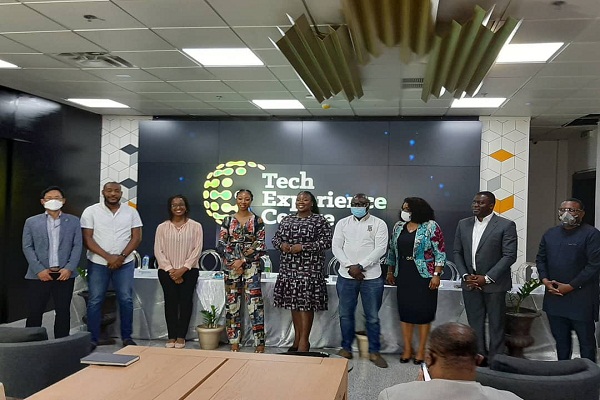
A number of globally renowned Original Equipment Manufacturers (OEMs) in the technology space have commended TD Africa, Sub-Saharan Africa’s leading technology, lifestyle and solutions distributor for successfully birthing the continent’s first Tech Experience Centre.

The commendations come ahead of the October 1st launch of the centre located in the high-rise Yudala Heights on 13 Idowu Martins, Victoria Island, Lagos.
Equally important, the Minister of Communications and Digital Economy, Dr. Isa Ali Pantami is expected in Lagos to commission the Centre, with the Lagos State Governor, BabajideSanwo-Olu, alongside a number of other high profile dignitaries, expected in attendance. The event will be streamed live to millions across the world from 5pm.
In a chat with newsmen, Chidalu Ekeh, head of the Tech Experience Centre, stated that aside reducing the decision making cycle for Chief Executive Officers (CEOs), Chief Information Officers (CIOs), Chief Technology Officers (CTOs), as well as other technology consumers, the Centre will also serve as a training centre for young Nigerians on latest technology.
“We are creating a path in this country where state-of-the-art technology will be accessible to CEOs, CIOs, CTOs and others technology consumers, so that they can make prompt decisions without leaving the country,” Chidalu said.
“What we have on board is a tech genius area where our customers will be able to take advantage of the partnerships that we have with the various OEMs on board.
“The Centre will afford young Nigerians the opportunity to receive world-class training on the latest technology.”
Also speaking on the reason for mobilising other tech giants to bring the massive project to life, Mrs. Gozy Ijogun, managing director (Sales) TD Africa, explained that the centre is aimed at adding value to the technology space in Nigeria in particular and Africa in general.
Ijogun said: “I am sure everyone is wondering what TD Africa is doing with the Tech Experience Centre. At TD Africa, we consider ourselves value added distributors.
“We are not just here to buy and sell. We add value to the economy. For that reason, we came up with the Tech Experience Centre so that Africans can experience technology the way it should be in this part of the world.
“No other distributor can do this. TD Africa is here to add value to the Information and Communication Technology (ICT) ecosystem.”
The Centre, housed within an impressive eight-floor edifice, will play host to tech giants, such as Cisco, Microsoft, Dell Technologies, HP, Schneider Electric, Zinox, Philips, Samsung, Apple and Bosch, among others.
“The structure also houses a cutting-edge gaming arena, lifestyle and smart home area, café, training centre, conference rooms and expansive office spaces, among others.
Olakunle Oloruntimehin, general manager, Cisco, West Africa, expressed delight with the concept behind the Tech Experience Centre, adding that it would be a great opportunity to offer latest technologies to consumers under the same roof with other tech giants.
“It is a good opportunity to collaborate with TD Africa and other OEMs under one roof. Technology is being democratised and it is important that people come together to take this outcome forward.
“Cisco is excited not only to partner with TD Africa but also to work with other OEMs under one space to make this work,” Oloruntimehin said.
Chioma Iwuchukwu-Nweke, country manager (Nigeria), Philips, also expressed excitement with the expected launch of the project. She revealed that Philips would delight tech customers at the Centre with latest health-driven home appliances.
Nweke said: “This is a dramatisation of the phrase ‘think global, act local.’ This is what TD Africa is doing with the Tech Experience Centre, by bringing lots of multinationals in the technology space in one place so that customers will experience latest technology.
“Before now, people always take technology to be something they have to travel outside the country to experience.
“We are sure that the Centre is going to change this narrative, especially at this time when the thought of travelling is a little bit scary for a lot of people. For us at Philips, customers should expect total innovative home appliances.”
On her part, Vivian Mike-Eze, marketing communication manager, Schneider Electric, commended the vision behind the initiative.
She urged tech consumers to be ready for an immersive experience with smart home concepts at the Tech Experience Centre.
“There has not been such a centre that gathers all the tech giants together in one place here in Nigeria. So, TD Africa has really set a precedent.
“I believe that people visiting the Tech Experience Centre expect to experience technology. In Nigeria, there is really a market for advanced technology that has been ignored for too long.
“This vision by TD Africa to bring the latest technology and get customers to experience it live is a fantastic opportunity to tap into. Because of the Centre, customers do not need to travel to the US or UK to actually see latest technology.
“Schneider Electric promises customers home automation, using the smart phone concept, when they walk into the Tech Experience Centre.
“This involves having the ability to control the temperature and ambience in their homes, with just a voice command. It is easy to talk about it, but there is no better idea than experiencing it by testing the controls and seeing it live.”
In addition, Microsoft Senior Partner, Specialist-Modern Work, Josh Adekeye, appreciated TD Africa, noting that the Centre will promote customer immersive experience. He promised that Microsoft would always support the Centre, which will reduce the burden for Microsoft to fly its customers to other countries to see its latest technological rollouts.
Adekeye said: “For us at Microsoft, when we heard about the Tech Experience Centre, we knew that it was something we needed to participate in. Before now, we usually fly our customers to Microsoft Technology Centre either in Dubai or in the US.
“However, when this opportunity came, we indicated interest and supported TD Africa to achieve it. We will always support the Centre. The beauty of technology is in seeing it.
“What Microsoft brings to the table is customer immersive experience. It means the customer will see the technology, feel the impact and make their decision easily and quickly.”
Lending his voice, Managing Director, Samsung (Nigeria), CadenChiyeon Yu hailed TD Africa for galvanising other tech giants to bring the Tech Experience Centre to life, adding that the Centre will afford Samsung a great opportunity to expose customers to its latest offerings in Internet of Things (IOT), Artificial Intelligence (AI) and other innovations shaping the global tech ecosystem.
Meanwhile, Ayokunmi Solesi, Country Manager (Nigeria), Bosch, described the Centre as a huge landmark on the African continent, adding that Bosch was ready to bring modern kitchen appliances to the delight of customers at the Centre.
Solesi said: “This is live experience. When you see big OEMs like Bosch, Schneider Electric, Samsung, Cisco, Microsoft, among others coming under a platform, you will realise that something great is about to be born.
“This is a huge landmark, not just in Nigeria, but also in Africa. For us at Bosch, this is a very commendable initiative,” Solesi said.
The Tech Experience Centre is an ambitious project, the first of its kind in Africa, to house global technology giants under one roof, with the aim of making latest and cutting-edge technology easily accessible to Nigerians and other nationals.
Experts and economic watchers have hailed the expected launch of the centre as a major development that will shore up Nigeria’s relevance in the global technology space, while also boosting the nation’s economy.


E-Business
Study Reveals 83% of Employees Stay Connected to Work During Time Off, Fuelling Digital Anxiety


A new Kaspersky survey undertaken in the Middle East, Turkiye and Africa (META) region reveals that digital anxiety is becoming a defining feature of modern work culture, as employees don’t disconnect even during their free time and vacations.

According to the findings, 83% of respondents keep an eye on work tasks outside working hours. An overwhelming 85% reply to all work-related messages in instant messaging apps, while the same share (85%) check work emails during their time off – and 81% admit they are responding to work emails while on vacation or in their personal time.
The pressure to remain constantly available is contributing to heightened stress levels in the workplace. Other sources of stress include work issues, for example, 43% experience anxiety after accidentally sending a random message to a work chat.
Interestingly, not all digital mishaps are perceived equally: 40% report that they take it calmly when they send an unfinished email, proving that some mistakes are considered less damaging than others.
Blurred boundaries between professional and personal life, combined with instant communication tools, are intensifying feelings of constant monitoring and fear of making digital errors.
More than a third (36%) of respondents say they feel extremely uncomfortable or even scared if their boss notices them scrolling through social media at work instead of working. The “always-on” culture may undermine employee well-being, increase burnout risks, and reduce overall productivity in the long term.
“Digital anxiety doesn’t just affect employee well-being – it can also increase cybersecurity risks for organisations. When people feel constant pressure to respond immediately to messages and emails, they are more likely to act impulsively, without carefully verifying links, attachments, or sender identities.
This urgency can make employees more vulnerable to phishing, and other scams using social engineering techniques,” comments Brandon Muller, Technical Expert at Kaspersky.
Kaspersky recommends employees to follow the below tips to avoid digital anxiety and associated cyber risks:
- Slow down before clicking or replying. Digital anxiety can trigger automatic reactions. A short pause to check sender details, URLs, or attachments can prevent security breaches.
- Treat urgency as a red flag. Cybercriminals often exploit pressure and fear. Always verify unexpected or urgent requests before responding.
- Avoid handling sensitive information on unsecured networks. Public Wi-Fi, often used when working outside regular hours, increases exposure to cyber threats. Mobile network and VPN should be applied in such cases.
- Use technologies that will help reduce risks. For example, Kaspersky Premium offers AI-powered anti-phishing features designed to help warn of potential threats.
Businesses can reduce cybersecurity risks related to employees’ digital anxiety by providing regular cybersecurity training that helps staff recognise threats and respond correctly even under stress.
At the same time, organisations should use robust cybersecurity solutions to minimise the impact of human error. Kaspersky Next’s adaptable and robust cloud-native protection, underpinned by an unequalled cybersecurity track record, is one of such products.
Protection solutions for mail servers, such as Kaspersky Security for Mail Server, with anti-phishing capabilities, help to additionally decrease the chance of infection through a phishing email.

Federal Government of Nigeria has approved the acquisition of electric buses for civil servants as part of efforts to promote cleaner transportation and boost local vehicle manufacturing.

The development was disclosed in Abuja by Joseph Osanipin, Director-General of the National Automotive Design and Development Council (NADDC). Osanipin said the buses would be sourced from local assemblers to strengthen domestic production and stimulate growth in Nigeria’s automotive sector.
He stated: “The initiative is aimed at encouraging the transition to cleaner mobility while creating opportunities for local manufacturers.” According to him, the government has also procured charging infrastructure that will be deployed across parts of the country to support the adoption of electric vehicles.
As part of broader efforts to develop the sector, the council is establishing the Nnewi Automotive Development Park in Anambra State. Osanipin explained: “We are developing the Nnewi Automotive Development Park where we will provide the necessary infrastructure so that users of the park can share facilities.”
He added that the shared infrastructure model would enable investors and manufacturers to operate without bearing the full cost of setting up independent facilities. The council is also seeking additional investment to accelerate the development of the park and attract more industry participants.
Osanipin urged Nigerians to support locally assembled vehicles, noting that increased patronage would help create jobs and drive economic growth. He said the council is providing training to manufacturers and stakeholders to enhance local production of vehicle components such as batteries and tyres.
“The move will reduce import dependence, create employment opportunities, and contribute to the country’s Gross Domestic Product,” he said. The NADDC is also working with the Bank of Industry Nigeria to facilitate the disbursement of the National Automotive Development Fund to qualified stakeholders.

As the global community commemorates World Consumer Rights Day, Jumia Nigeria joined industry leaders, regulators, and consumer advocates at the Lagos Marriott Hotel, Ikeja, for a high-level panel session hosted by the Lagos State Consumer Protection Agency (LASCOPA) on Tuesday, March 17, 2026.

Speaking during the session, Peters Afebuame, Group Head of Content and Production at Jumia, highlighted Jumia’s comprehensive approach to protecting consumers from counterfeit or adulterated products on its marketplace, noting that the company has implemented structured checks and technology-driven systems across the entire product lifecycle, from seller onboarding to post-listing monitoring, to safeguard product authenticity.
“Ensuring product authenticity on our platform requires a combination of technology, policy enforcement, and continuous seller engagement,” he stated.
“At Jumia Nigeria, we have implemented a multi-layered process that begins with rigorous seller onboarding and policy agreements, followed by catalogue configuration controls, AI-driven product attribute verification, and the use of global product identification standards. These systems are reinforced by ongoing quality moderation, brand protection mechanisms, and strict enforcement actions, including product and seller delisting, ensuring that customers can shop on our platform with confidence.”
Central to Jumia’s consumer protection framework is a rigorous seller verification process designed to ensure marketplace integrity. Vendors are required to provide proof of legal and regulatory compliance before gaining access to the platform. This vetting process is reinforced by a strict quality control system that monitors products listed on the platform, backed by a zero-tolerance policy toward counterfeit or substandard goods. Non-compliant sellers face penalties and permanent delisting from the marketplace.
Transparency also remains a core priority in helping customers make informed purchasing decisions. Product listings across the platform feature clear specifications, verified descriptions, and detailed images, enabling shoppers to understand exactly what they are purchasing before completing a transaction.
Recognising that digital literacy plays a critical role in online safety, Jumia continues to invest in consumer education initiatives through instructional “how-to” videos, platform guides, and social media campaigns that equip Nigerian shoppers with practical knowledge to navigate online shopping securely and confidently.
To further strengthen transaction security, Jumia leverages its proprietary payment solution, JumiaPay, which provides a secure and encrypted payment infrastructure designed to protect customer financial data. The company also adheres to internationally recognised data protection standards such as the General Data Protection Regulation (GDPR) and local regulatory frameworks established by the Nigeria Data Protection Commission (NDPC), ensuring responsible handling and protection of user information.
Beyond the point of purchase, Jumia reinforces consumer protection through a customer-centric return and refund policy designed to ensure seamless resolution when issues arise. A dedicated customer service team also provides support through multiple channels, including phone and social media, enabling swift response to consumer inquiries and complaints.
As e-commerce continues to expand across Nigeria, Jumia reaffirmed its commitment to building a marketplace that prioritises fairness, transparency, and consumer safety. Through continuous investment in technology, strong policy enforcement, and ongoing consumer engagement, the company aims to strengthen trust and confidence in Nigeria’s growing digital commerce ecosystem.

Tech Firms Sack over 45,000 so Far in 2026

CBN Wins Central Bank of the Year Title @13th Global Awards

Jury Finds Elon Musk Liable for Misleading Twitter Investors

FG Taps Quest Merchant Bank for Advisory on 90,000km Fibre Project

TEF-Backed Entrepreneurs Generate $4.2Bn, Create 1.5m Jobs across Africa

Kaspersky Discovers New Phishing Campaign Exploiting Google Tasks Notifications to Steal Corporate Credentials

esentry 2025 Report Shows Healthcare, Financial Services and Telecoms as Staging Grounds for Increased Cyberattacks in Africa

AfDB, UNDP Launch $10Bn AI Initiative for Africa

MultiChoice Suspends Yearly DStv Price Hike as Canal+ Pushes Growth

MTN Nigeria Posts Record N1.70 Trillion Pre‑Tax Profit, Declares N20 Dividend for 2025




 News2 days ago
African Tech Start-ups to Receive $46m of Speedinvest Africa Fund

 Telecom2 days ago
Court Bans Kenyan Telcos from Recycling SIM Cards

 E-Financial2 days ago
Providus Bank Fully Meets CBN Capital Requirement, Sets Record Straight

 E-Financial2 days ago
UBA UK, BII Sign Letter of Intent to Slash Africa’s $80Bn Trade Finance Gap

 Telecom2 days ago
Binance Earn: Simple Way to Earn Rewards on Idle Crypto Holdings

 News2 days ago
UK, Nigeria Unveil Three-Year Plan to Combat Immigration Crime

 News2 days ago
U.S. Charges Three in $2.5 Billion Plot to Smuggle Nvidia AI Chips to China

 General News2 days ago
Court Jails ‘Colonel’, ‘Major’ of Global Money-Laundering Ring