

Telecom
Enhancing Internet Penetration in Nigeria Using KA-Band Broadband Satellites


By Andrew Aroh
For a start, what is the classical definition of true broadband. Broadband is generally triple play data, voice and video access link, especially an internet access link, usually defined in terms of the minimum amount of bandwidth to which the enduser has access, and whose characteristics facilitate the use of advanced telecommunications applications and services.

Some definitions fix broadband access threshold at 1.5Mbps (T-1) speed in North America and at 2Mbps (E-1) speed in Europe, including Nigeria.
There are two important questions to address:
- Why is it that the high penetration of GSM in Africa and Nigeria in particular the issue of digital divide is still prevalent?
- How can Africa and Nigeria in particular secure sustainable universal access but affordably?
Recall that according to the broadband commission for digital development, the issue of Universal service for broadband, which is vitally important in ensuring that citizens in remote and rural areas can have access even though they live outside more profitable urban areas.
This is important because in this age of Information and Communications Technology (ICT). It is crucial to reach the rural and remote areas as well or Nigeria as a whole will fall further behind and the digital divide between “the haves and the have not” will remain divergent.

This underscores the New Roles for the Space & Satellite industry on Digital Economy, especially financial services now emphasized by the United Nations (UN) through the ITU-T.
So, is it not time for Nigeria to make a Legislation enabling HOME BUILDERS to include INTERNET CONNECTIVITY as part of the bargain for Social and Economic Welfare?
Government of Nigeria has included broadband as part of universal services obligations, regarding access to the internet as a utility and an essential tool for social and Economic Welfare. We recall that Nigeria planned big for the ITU Telecoms World 2016. Among the topics for the forum was:
New approaches to connectivity; re-imaging the satellite industry: How demand for always-on connectivity is leading to innovative connectivity solutions, new players and new markets for the satellite industry.
The topic underscores the way broadband is defined classically by ITU telecommunications monitory process (as distinct by ICT professionals) which usefully emphasize:
- Broadband’s always-on (dedicated access) character
- The user ability to upgrade her or his access bandwidth as the need arises
- The consideration that the local link be neither a limiting factor in deploying existing applications or a bottleneck in encouraging new ones.
These factors justifies the use of the phrase “Anywhere, Anytime” for true broadband connectivity and access.
- True Broadband performance shows up with the satellites that use Ka-band (20-30GHz) for satellite to-and-from ground transmission.
- The higher frequency of Ka-band system allows easy implementation of satellite spot beams, which when combined with channelized switching provides a capacity of a single Ka-band that can easily exceed that of Ku-band satellite by a factor of four or more.
With such systems, Ka-band allows satellites to provide access-oriented circuits to an entire continent at prices comparable to terrestrial delivery in cities. This will find broad residential applications where access services are more price sensitive.
However, flexibility defines the coming generation of broadband satellites. This is because by the long life and broad geographic scope, a satellite must be able to shift capacity among beams through onboard processing and space switching.
In the wake of COVID-19 pandemic, SSPI NIGERIA has identified growth in the following area:
- Education: Online teaching via satellite/distance learning via satellite
- Management: Video conferencing for management meetings
- Direct-To-Home Broadband Internet Access/Connectivity via Satellite.
The above applications have become very essential and are in high demand in Nigeria.
Note that the above applications demands: Two-way Satellite Internet access service with broadband consumer VSAT/other innovative products in personal connectivity, M2M and GLOBAL BROADBAND.
We are looking at the Satellite Networking Technology Solutions and Services that have the following features:
- A modern, technological product that provides subscribers with access to high-speed internet even in regions where the use of alternative access methods to the network are difficult
- High-quality and affordable broadband access to the internet
- Low-cost residential kits
- Supports automatic services activation-indoor or outdoor
- Where broadband consumer or professional VSAT is required:
- It is an innovative VSAT-in-a-Box
- Availability of the required capacity is guaranteed
- Reliability, Availability, & Flexibility of installation receiving equipment
- Broadband consumer VSAT terminal which can be self-installed.
- All outdoor solution, which further simplifies self-install, maintenance and easy mounting or placement.
Because of the issue of rain fade, the African region has seen a predominant of C-band satellites. However, the development of smart adaptive technologies on ka-band transmission is winning.
Although few African satellite operators are beginning to ramp up their strategies in this area, more African region operators will need to develop services in ka-band.
Satellite broadband via ka-band remains a key issue for a number of operators. In fact many global satellite operators are already playing a key role in satellite delivered broadband applications.
From corporate private networks to consumer connectivity, this is one business segment that remains strong on the industry’s revenue growth plans.
Major broadband service providers are ready to offer commercial internet services via satellite and ka-band satellites will be vital to their success.
I do think ka-band satellite will do certain things very well.
- Ka-band satellites are by nature very high-capacity.
- They have much more capacity per dollar of capital investment than any other satellite.
- It is very well suited for unicast applications were each user is doing something different and very cost-effective for that i.e. low-cost broadband service offering to consumers.
- It is a mass market and that branding could be the catalyst for its service success.
- The market opportunity in remote and rural areas is considerable
- Ka-band has better economics than Ku-band and C-band.
The order of magnitude of improvement in economics is what is necessary to compete with fiber or terrestrial services. You couple that with standardized low-cost consumer equipment and all of sudden you have a pretty compelling offering.
- What are major challenges:
- Negative perception in the marketplace of broadband offering i.e. lack of awareness partly because of price and partly because there is not enough capacity available today for the existing providers to get super aggressive from a market perspective.
- Learning lessons from the past i.e. becoming more realistically cautious with incremental implementation approach for provision of satellite – based two-way broadband.
- The cost factor. Costs need to come down. We need achievable low price point. With the advent of one or two operators launching major initiative requiring large scale ka-band CPE and GMPCS production, this should effectively improve.
- Encouraging a healthy growth driver:
Satellite broadband is certainly an important growth driver for major satellite operators. However, a healthy enterprise services growth for the next few years predates mass market of satellite broadband. To sustain this growth, major operators need to install broadband two-way hubs covering a large part of their satellite fleet connectivity around the world.
- Doing satellite business to succeed in Nigeria:
Experience has shown that the business people who succeed in Nigeria are those who have tangible prospects, not those with high flying business plans. “Do not think about what satellites can do, and then look for customers. Instead, Look for people with communications issues, and ask how satellites can help!!”. Satellites can help Nigerians solve the problem of internet connectivity.
The key desirability of any good technology are:
- Allows customers to generate new revenue
- Enhance network performance
- Reduce operating cost
Today, ka-band has crossed the chasm from Risk to mainsteam; the ka-band evolution is not only underway in the space segment but also on the ground as manufacturers and developers race to produce technology that fully leverage the high performance bandwidth.
The ka-band service means one is always connected. So what makes an ISP better than others?
- Efficient and reliable service.
- Internet speed, reasonable and competitive pricing and packages to choose from
- Mobility and high uptime.
On mobility, the customers need to have:
- The connectivity for browsing within coverage areas
- Seamless roaming
- Developing the satellite broadband business for critical mass
Even the uptake of terrestrial cellular phones are not closing Africa’s digital divide. This is because internet penetration is still low. African countries as a whole and Nigeria in particular have the terrain, geography, tradition, history and politics that requires internet penetration with interactive broadband applications through the use of global mobile personal communications by satellite (GMPCS) to truly drive and close the digital divide. Thus we need to facilitate rapid expansion of the use of GMPCS for internet applications and services using IP technologies.
Ka-band services are targeted to densely populated areas, which are real market for these services.
The challenge is really to get the critical mass of subscribers as broadband is becoming a mass market product. The dynamics seems to be in favour of satellite operators.
The satellite – based companies are part of a broader trend in the corporate sector in Nigeria. They want the best equipment available and they want to have it all tied together using the most reliable and highest quality satellite feeds in the region.
Industry officials and investors both are far sarvier about the technologies and business approaches today as a result of the difficulties of the past years.
A smarter industry combined with a better-developed user community for broadband could help satellite broadband operators make their marks in the months ahead in Nigeria.
In terms of deployment of ka-band satellites, the positive characteristics are:
- Use of smaller antennas
- Operate with higher power
- Operate in less congested frequency bands where you don’t have to share with terrestrial services.
- With satellite broadband via ka-band it is possible to have a series of smaller spotbeams, reuse the same frequencies and therefore have more capacity per satellite which if and only if, you use all the capacity results in a lower cost per subscriber.
As major service providers rolls out their services all eyes on the satellite industry will be on how quickly it can build a profitable business with prices comparable to terrestrial and fiber offerings. With lower cost of equipment, as well as broadband now being accepted medium, there really can be no excuse to profitable business. Rolled out broadband success could provide the impetus for other operators.
As broadband becomes mass market, the time may finally be right for ka-band satellites to become a key part of the equation for satellite operation within the African region and in particular Nigeria.
In the United State since 2001, satellite has been accepted as a viable medium for IP access by businesses, leading the rest down the path of satellite. Broadcasters started putting broadband overlays on their networks in 2002. Outside U.S.A. India and China are good broadband markets due to their changing regulatory regimes. We expect that in the next few months, satellite-based internet will transform into booming broadband business services. We expect the growth rate will pick up more than before because the cost of user terminal is dropping and demand for high-speed internet access is growing. What is quite clear, though, is that satellite communications have emerged from a relatively Limited niche technology to a mainstream service providing cost-effective IP-based broadband point – to – multipoint solutions.
In all, we must have in mind that the space & satellite industry has slowly, surely and with its usual lack of flair gone to the “next level” universally. We are olive branches with on-board processing transponders and switching technology that the UN commission for digital development has in mind when it reports that broadband will be and should be a basic name digital right. We have our own innovators. We have stars on the satellite field that are moving quickly in constellations (and without flair) having been crowned the queen of the future, enabling full 5G system which includes: Enhanced Mobile Broadband (eMBB); Ultra Reliable Low Latency Communications (URLLCs); and Massive Machine type communications (mMTCs)
But in the final analysis, why is satellite an effective medium for Africa and Nigeria in particular?
- Can be rolled out easily without environmental disturbances and rapidly, and offer attractive costing
- Offer ubiquitous coverage meaning that no matter where you are on the continent or the earth you can have access to satellite communication
- Can be positioned to cover high and low density areas at cheaper cost
- With the advent of Ka-band, high density coverage and mass market with satellite technology is now growing fast.


MTN Nigeria is accelerating investments in network expansion and modernization to address rising demand for mobile and data services across the country.

The operator is deploying additional base stations, upgrading existing infrastructure, and expanding fiber connectivity to improve network capacity, coverage, and service quality.
The investments are designed to support increasing smartphone adoption, higher data consumption, and the growing use of digital services by consumers and businesses.
MTN said the expansion aligns with its long-term strategy to enhance customer experience while strengthening Nigeria’s digital infrastructure.
The company expects the ongoing upgrades to improve connectivity, support economic growth, and enable broader access to reliable telecommunications services as demand for high-speed broadband continues to increase.
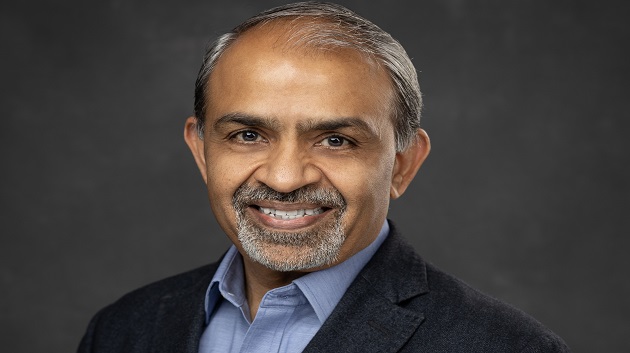
Airtel Africa’s CEO, Sunil Taldar, has announced the telco’s commitment to connecting 5,000 schools across its operating countries in Africa to the internet by 2027 through its philanthropic arm, Airtel Africa Foundation, in partnership with the United Nations Children’s Fund (UNICEF).

So far, the $57m partnership, which was launched in 2021, has cumulatively connected 3,296 schools and provided access to over 2 million learners and about 40,000 teachers. 64 digital learning platforms have been zero-rated thereby enabling more than 11m users to access educational content at no cost.
Speaking during a visit to St. Monica’s Girls School in Lusaka, which is one of the 300 schools already connected to the internet in Zambia, the Airtel Africa CEO stated that the initiative is having a profound impact on the quality of education by expanding access to digital learning resources for African children, in collaboration with governments.
Mr Taldar added: “Students are accessing best-in-class education from the curriculum developed by UNICEF in partnership with various Ministries of Education and provided through Airtel’s connectivity.
“We are also training teachers, so that they deliver digital education effectively. We aim to continue deepening meaningful connectivity in schools by providing free internet access, zero‑rated platforms and training teachers across the continent”.
Expressing her appreciation, the Headmistress of St. Monica’s Girls’ School, Sr Matilda Soloko said: “Being among the first schools connected in the initial stage, our learners have been able to study using the learning portal and their studies have been intensified. We remain grateful to Airtel and UNICEF.”
UNICEF’s Country Representative for Zambia, Dr Saja Farooq Abdullah said: “What this partnership has brought is really bridging the equality gap and the digital divide. It is making sure that every child learns wherever they are. It was exciting and interesting to see and hear from the girls how they can learn at their own pace, how they can review the materials, and how they do their homework with comfort.
The Director of Secondary Education in Zambia’s Ministry of Education, Yvonne Mwemba Chuulu lauded UNICEF and Airtel for the partnership saying: “At the Ministry of Education, we cannot do it alone, and we are grateful for the partnership that we have today.
“Our children are able to learn in a blended fashion, where we have a teacher who is also employing digital devices. We have also heard from the learners that they are able to access the portal when they are at home, which is a good thing because our learners continue to learn in the comfort of their homes”.
The School Connection programme is expanding digital learning to learners in 13 countries: Chad, Congo, Democratic Republic of Congo, Gabon, Kenya, Madagascar, Malawi, Niger, Nigeria, Rwanda, Tanzania, Uganda, and Zambia. By equipping these schools with internet connectivity and training teachers on using the digital tools, it is providing children, particularly in underserved and remote regions, with the digital tools and skills they need to thrive.
Airtel Africa Foundation is advancing inclusive development across four strategic pillars, Financial Inclusion, Education, Environmental Sustainability and Digital Inclusion.


MultiChoice has officially become a wholly owned subsidiary of French media company Canal+, marking the completion of one of the largest acquisitions in Africa’s media and entertainment industry.

The integration brings the South Africa-based pay television operator under the full ownership of Canal+, a global media group with operations in 70 countries.
Announcing the completion of the transaction on Thursday, Chief Executive Officer of Canal+ Africa and MultiChoice, David Mignot, described the development as the beginning of a new phase of growth for the broadcaster.
“MultiChoice is now a full subsidiary of a truly international media group operating in 70 countries.
“The group was founded in France, is listed in London and Johannesburg, and has a strong African presence with operations in more than 45 countries,” Mignot said.
The acquisition combines Canal+’s international operations with MultiChoice’s extensive footprint across sub-Saharan Africa, where it serves millions of households through its DStv and GOtv platforms, as well as the Showmax streaming service.
According to Canal+, the integration will strengthen MultiChoice’s competitive position by giving it access to broader financial resources, technology, content partnerships and operational expertise.
The company said the combined business would increase investment in local content production, sports broadcasting and streaming services as competition intensifies from global platforms such as Netflix, Amazon Prime Video and Disney+.
The transaction is also expected to provide MultiChoice with greater access to international markets at a time when traditional pay television operators are adapting to changing consumer viewing habits and the rapid growth of digital streaming platforms.
Canal+ has expanded steadily across Africa over the past decade and now assumes full control of a business operating in more than 45 African countries, further strengthening its position in the continent’s media and entertainment sector.
The acquisition followed Canal+’s gradual increase in its shareholding in MultiChoice, which began in 2024.
After exceeding the regulatory threshold, the company launched a mandatory offer in April 2024 to acquire the remaining shares of the Johannesburg-listed broadcaster.
Following regulatory approvals and shareholder acceptance, Canal+ secured control of MultiChoice in 2025 before completing the process that has now made the company a wholly owned subsidiary.
Industry observers describe the acquisition as one of the most significant media transactions involving an African company, reflecting a broader trend of consolidation as global entertainment firms seek greater scale to compete in the streaming era.

Police Busts Syndicate Who Allegedly Stole N3Bn from Financial Institution

MTN Accelerates Network Expansion to Meet Surging Telecom Demand

Court Remands Akujobi, Ex Access over alleged Theft of N294.5m

TeKnowledge, Equinix Partner to Advance Nigerian Digital Infrastructure

NSIB Faults Runway Identification, Reveals Cockpit Disagreement in Asaba Jet Incident

NASENI Moves to Digitize CCB’s 5m Assets Declaration and Operations

Mobile Internet Gender Gap Widest in Africa – GSMA

Nigeria Launches FreeTV Nationwide

CANAL+ Partners Samsung to Pre-Load DStv Stream on New Samsung TVs In Nigeria, Other African Countries

Lebara Nigeria Launches Lebara Play, Africa’s First Telecom-Owned Micro-Drama Platform




 Telecom2 days ago
NCC Seeks Cost-Based Pricing Framework for Ducts

 E-Financial2 days ago
CBN Warns against Rejection of N100 Banknotes

 Telecom1 day ago
Fixed Wired Internet Market Lags as Mobile Gains Ground

 News2 days ago
Flutterwave Secures Circle Ventures Investment to Deepen USDC Payment

 Telecom2 days ago
Meta Introduces Muse Image With Advanced AI Image Editing Across WhatsApp and Instagram

 News2 days ago
How EFCC Turned Recovered Loot Into School Supplies for Thousands of Nigerian Students

 E-Financial2 days ago
BVN Enrollments Hit 69.55m- NIBSS

 News1 day ago
Study Reveals How Moniepoint is Powering Nigeria’s $11Bn Food Service Sector