

E-Business
Enrolling for NIN, a National Call – Aziz, NIMC Boss

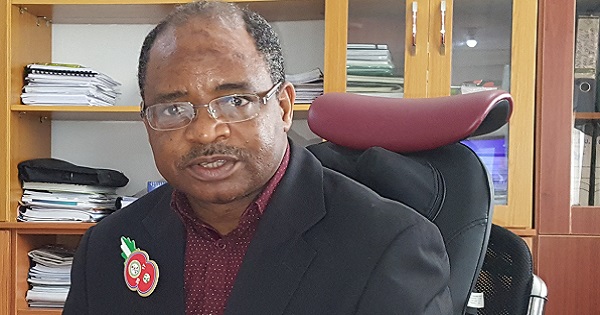
Perhaps never before in the history of nations has the issue of identity been as crucial as it is today. From Africa to America, Australia to Asia and Europe, how well or badly each country in each region has fared has depended largely on citizenship identity management. Stressing that Nigeria stands on the threshold of a new epoch in its identity management, ALIYU ABUBAKAR AZIZ, director-general, National Identity Management Commission (NIMC), responded to journalists’ questions on the Commission’s current focus aimed at delivering a world-class identity ecosystem for Nigeria:
Why is NIMC pushing the National Identification Number now more than the ID card?
Aziz: The focus of the National Identity Management Commission (NIMC) for the next three to five years is on the National Identification Number and not on the National e-ID Card.
We want to make the NIN understandable, acceptable, applicable and appreciated by Nigerians, as an important and intrinsic aspect of their entire life, rather than a physical card, which can be discarded while the number is for life.

Before now, we were focused on the Card but after the country went into recession, we decided to emulate other developed countries like the United States, which issues the Social Security Number, the United Kingdom, with the National Insurance Number; and India where they recently enrolled about 1.4 billion people, and issued them the Aadhaar.
In all these cases, the emphasis – or perhaps I should say the only thing in focus – is the number.
However, this does not mean that we won’t issue the cards, because it is there in our Act (NIMC Act, 2007) that we should issue a general multipurpose card to all registered Nigerians; therefore, we recently gazetted some regulations that will ensure participation of private partners in the Card personalisation services in order to handle the printing of the outstanding cards; but funding is a challenge.
Also, the intention of the Commission is to develop the identity ecosystem with all data collecting government agencies and licensed private agencies, in order to capture additional 50 million records by the end of 2018.

What advantages, if any, does having the NIN confer on a citizen?
Aziz: The NIN bequeaths citizens with a lot of privileges and benefits. And like most modern economies where the national identity number is a national token that gives citizens access to government social interventions, the NIN also grants citizens certain rights as regards financial access, credit facilities etc. Mind you, in the case of the US, UK and India I mentioned earlier, like other advanced economies, a citizen can’t access any social services such as health, insurance and so on, without the requisite social security number; the number is indispensable.
So, here in Nigeria, the NIN facilitates interactions between citizens, the Government and private sector institutions thereby promoting socio-economic and political development.
Since citizens enjoy a “one-person-one-identity” for life, the NIN therefore enhances citizens’ participation in the political process, enables citizens to exercise their rights, facilitates management of subsidies and safety net payments, Internally Displaced Persons (IDPs) management and facilitates service delivery in Ministries, Departments and Agencies.
It also enhances the work of law enforcement agencies, e.g. public safety, policing, national security and border protection, and eliminates ghost and multiple identities, etc.
It also enhances the ability of citizens to assert their identity, have access to credit from financial institutions, protects citizens from identity theft – an antidote to identity theft driven frauds which expands access to other financial services including insurance.
The NIN enhances e-commerce by providing a means of payment as it is a tool for non-repudiation and security for financial transactions. It facilitates financial inclusion, hence the advancement of a cashless economy.
In security circles, the NIN is an important tool for the fight against corruption and terrorism; and finally helps launder Nigeria’s image abroad, amongst many others. So you can see that the NIN is multifaceted in utility.

What role does the NIN play in Nigeria’s planning and security situation?
Aziz: With the NIN, all citizens enjoy a “one-person-one-identity”, which allows the government to search for an individual and all of his/her details either for planning and or for security purposes.
Government can query the database to ascertain how many unemployed individuals are in the system at Federal and State levels, the genders of those individuals, their occupation, skillset, age bracket, location, etc.
This will assist in planning for resources and benefit administration. As you know President Muhammadu Buhari has just signed the 2018 Appropriation Bill into Law; the NIN is a very useful and powerful instrument in assisting the governments – at all levels – budget appropriately for the citizenry, in the proper and effective allocation and spread of scarce resources.
On security, the relevant government security agencies are part of the National Identity Management System (NIMS) project from inception and have access to query the system using biometrics, etc to confirm individual’s identity.
Therefore, as soon as the National Identity Database is fully populated, all federal, state, and local government agencies as well as the private sectors can access the verification platform of the Commission, for different purposes, depending on the level of access granted to them by NIMC.
With the national elections of 2019 almost here, how useful will the NIN be for INEC and the electorate?
Aziz: As I said earlier, we are still harmonising data with all data collecting government agencies, as well as concluding plans to start the ecosystem approach which will see all government agencies and some licensed private sector companies collecting data and sending to the NIMC as the sole repository of biometric data.
This is expected to shoot up the record in the NIMC database by a huge percentage. Once we have a good figure, then INEC can leverage on the NIMC Database for electoral purposes.
The plans already on ground for this year include accelerated deployment of enrolment Centres in all Local Government Areas across the 36 States and the Federal Capital Territory, and enrolment of all Nigerians and legal residents including children.
Perhaps you know that children from birth can now be enrolled; this is a point that Nigerians should be aware of, especially with several babies being born across the country daily.
Parents will do well to avail themselves for the benefit of the new-borns of this window of enrolment opportunity that is now uniquely available.

What are those social services that the NIN has become mandatory for?
Aziz: Pursuant to section 27 (1) and (2) of the NIMC Act, 2007, transactions including, applications for, and issuance of an International Passport; opening of individual and/or group bank accounts, all consumer credits; purchase of insurance policies; the purchase, transfer and registration of land by any individual; National Health Insurance Scheme, such transactions that have social security implications, registration of voters, payment of taxes, and pensions, etc., will be done with the NIN.
With the recent gazette and publication of the Mandatory Use of the National Identification Number (NIN) Regulations, 2017, the Commission will on a later date, begin enforcement of the NIN for these transactions and more.
Our advice to Nigerians is: do not wait till you have to, go out there and be enrolled before you have to through enforcement, because then you will have to experience crowds and delays.
NIMC has enrolled just 30 million Nigerians so far; with a population of 180 million to 198 million, what is NIMC doing to fast track enrolment?
Aziz: We currently have about 30.5 million data in the database with the figures growing daily. The gradual acceptance of the NIN as a means of identification by our partners and stakeholders is also driving up the numbers by the day.
For examples, organisations like the Federal Road Safety Corps (FRSC), Nigerian Immigration Service (NIS), National Hajj Commission of Nigeria (NAHCON), Federal Capital Territory Administration (FCTA), etc have all made the NIN a mandatory requirement for service delivery. Others are expected to follow suit.
On our part however, we have commenced aggressive and massive awareness campaign in all the states and the FCT to mobilise people for enrolment.
We are also working closely with the National Orientation Agency (NOA), the Federal Radio Corporation of Nigeria (FRCN) and other media partners with a special target on the grassroots, and it will continue for a long time, particularly with the ecosystem approach being canvassed by the World Bank and its allies.
Also, we have the mobile enrolment equipment which goes to some of the riverine and difficult terrains in the grassroots areas; and a good number will be rolled out by the end of this year.
Is there any hope that the entire Nigerian population will be enrolled into the National Database?
Aziz: Yes, of course! However, enrolment of eligible citizens and legal residents into the National Identity Database (NIDB) is an on-going and continues process.
In other words, there is no limited or specific time frame for all citizens to be enrolled and issued the NIN, because even after enrolling all citizens, there will always be new ones such as new born babies, etc.
According to a recent World Bank report, Nigeria adds seven million into the population every year; that is the size of Rwanda as a country. This means that there will always be enrolment year in, year out. So it is a continuous exercise and the Commission is poised to carry out its mandate to the letter.
NIMC, by design has offices in all the 774 Local Government Areas (LGAs) and maintains active presence with enrolment centres in over 930 locations across these LGAs. More so, we are working to open more enrolment centres and take enrolment closer to the people, especially the grassroots.
What are the challenges that could delay the quick enrolment of the remainder of the population which is obviously the greater number?
Aziz: Well, the cynicism from the experience of the past was/and is still a big challenge.
However, we are gradually moving away from that problem as more Nigerians understand the difference between Card issuance and Identity Management.
Secondly, the high cost of opening and managing the Enrolment Centre because of needed stable power supply, active internet connection, low morale on the part of staff because of poor salary structure, the ‘expectation gap’ of “Card” issuance, are other challenges.
However we are slowly moving past these challenges as we ramp up more data into the database.
As citizens, what is the responsibility of Nigerians in ensuring they are enrolled?
Aziz: It is a National call, and all Nigerians are obliged to respond. The government has provided the opportunity, this platform for enrolling into the National Identity Database, to make life better in a modern, well managed and planned manner; the NIN gives the citizens that assurance.
So, if the government has done so much, and all the citizens are required to do is to go out and answer the national call, does anyone have any excuse not to answer the call?


E-Business
Kaspersky Uncovers New Mirage Kitten Malware Used in Cyber-espionage Campaign Across Africa, Others


Kaspersky Global Research and Analysis Team (GReAT) has discovered a previously undocumented malware set used by Mirage Kitten APT. The findings were revealed at its annual Kaspersky Cyber Security Weekend for the Middle East, Turkiye and Africa (META).

The malicious tools were used in a targeted campaign aimed at maintaining long-term access to victim networks and stealing sensitive data.
The company’s researchers have identified victims of this campaign across the Middle East and Africa, including organisations in Egypt, small and medium-sized businesses and government entities in Jordan and Tanzania, aviation organisations in Pakistan, telecommunications companies in Ethiopia and financial-sector entities in Burkina Faso.
The toolset consists of three custom programs. At its core is NightLedger, a newly discovered Windows backdoor attributed to the group based on code and behavioural similarities to its previously known malware, which gives the attackers remote control over infected machines: they can run commands, explore and transfer files and capture screenshots.
It is complemented by two covert tunneling tools, ArcBridge and BridgeHead, which effectively turn a compromised computer into a relay node: the attackers run their tools on their own servers, while all the resulting traffic is quietly funneled through the victim’s machine, as if it originated from inside the victim’s network.
This lets them slip past network defences and preserve long-term access without drawing attention. The first of these tools was identified in April 2026 in activity targeting victims in the Middle East.
While the initial access vector remains unclear in most cases, Kaspersky GReAT researchers observed BridgeHead being deployed during post-compromise activity in victim environments in Egypt and at an aerospace and aviation organisation in Pakistan. In those cases, the intrusion activity followed targeted spear-phishing attempts consistent with the group’s known methods.
The lures were highly tailored including recruitment-themed messages impersonating trusted brands and hiring platforms, as well as fake videoconferencing pages that redirected victims to malicious archive files hosted on third-party file-sharing services.
“Based on our latest findings, we conclude that Mirage Kitten continues to evolve its malware arsenal in support of targeted cyber-espionage operations across the Middle East and Africa.
“Another notable aspect of the campaign is the group’s continued reliance on tunneling utilities as part of its operational toolkit: in practice this enables attackers to bypass network controls, maintain covert access to compromised environments and significantly complicate detection efforts.
“Given the persistence and sophistication of these techniques, organisations and defenders should incorporate these findings into their threat assessments and strengthen their detection and response capabilities accordingly,” says Omar Amin, senior security researcher at Kaspersky GReAT.


Nigeria Data Protection Commission (NDPC) has directed all Data Controllers and Data Processors of Major Importance (DCPMIs), yet to register with the commission to do so immediately.

This followed a Federal High Court judgment affirming NDPC statutory powers to designate and register such entities.
DCPMIs are entities operating in Nigeria that handle sensitive personal data or large volumes of information, requiring mandatory registration with the NDPC under the Nigeria Data Protection Act (NDPA).
In a statement issued on Tuesday by Babatunde Bamigboye, head of Legal, Enforcement and Regulations at the NDPC, described the judgment as a major milestone for data accountability and regulatory oversight in Nigeria.
The commission said the ruling arose from a suit filed by Emmanuel Harunna against the NDPC in Emmanuel Harunna v. NDPC (FHC/L/CS/1116/2024), in which the applicant sought a declaration that Point of Sale agents were not Data Controllers or Processors of Major Importance under the Nigeria Data Protection Act and requested a perpetual injunction restraining the commission from registering them.
According to the statement, Justice F.N. Ogazi examined the commission’s Guidance Notice on Registration alongside Sections 5(d), 6(c), 44, 45 and 65 of the Nigeria Data Protection Act before concluding that the commission acted within its statutory powers in designating entities under the Major Data Processing – Ordinary High Level category as Data Controllers and Processors of Major Importance.
Quoting the judgment, the statement read, “The Nigeria Data Protection Act was enacted to promote accountability, transparency and responsible data governance. Registration enables the Respondent to identify entities engaged in significant data processing activities, monitor compliance.”
It added that the court held that, “Far from undermining the constitutional right to privacy, the registration framework is one of the statutory mechanisms designed to safeguard that very right by subjecting data controllers and data processors to effective regulatory oversight.”
The statement further quoted the court as saying, “Looking at the recitals of the Guidance Notice, there is every indication that the Guidance Notice is also aimed at protecting the privacy and security of data subjects, thus bringing the registration requirement of the Guidance Notice within the protective shield of Section 45 of the 1999 Constitution.”
According to the commission, the court also held that, “Remarkably, Section 63 of the Data Protection Act provides that the provisions of the Act shall prevail over any other law inconsistent with its provisions on matters relating to the processing of personal data.”
Reacting to the judgment, the commission described the decision as a significant boost to Nigeria’s data protection regime.
“The Commission appreciates the ground-breaking efforts of the court towards the advancement of the jurisprudence relating to data accountability in Nigeria, as eloquently demonstrated in this case,” the statement read.
Following the ruling, Vincent Olatunji, national commissioner and chief executive officer, had directed every Data Controller and Processor of Major Importance that had yet to comply with the registration requirement to register without delay.
The commission warned that entities failing to comply with the registration requirement could face legal consequences.
“Failure to register creates serious legal liabilities under the law, while compliance with registration requirements builds public trust and safeguards the fundamental rights and freedoms of data subjects in Nigeria,” the statement added.

The University of Nigeria (UNN) is set to partner with The Roxettes Group to establish a research and innovation centre focused on artificial intelligence (AI), smart and green mobility, and digital technologies, in a move aimed at strengthening research, entrepreneurship and technology-driven industrial development.

Chairman of The Roxettes Group, Arc. Dr. Kaycee Orji-Kelechi, announced the proposed partnership while delivering his acceptance speech after receiving an Honorary Doctor of Business Administration (Honoris Causa) during the university’s convocation ceremony.
The proposed facility, to be known as the Dr. Kaycee Orji Centre for Artificial Intelligence, Smart/Green Mobility and Digital Innovation, is expected to provide a platform for research, innovation and collaboration between academia and industry, with a focus on developing commercially viable solutions to local and continental challenges.
Orji-Kelechi said the initiative was conceived as a long-term investment in human capital and technological advancement rather than simply another physical infrastructure project.
He said the vision was to position the University of Nigeria among Africa’s leading institutions in artificial intelligence, smart mobility and digital innovation through research, entrepreneurship and technology development.
According to him, the centre will house five specialised laboratories covering artificial intelligence and machine learning, smart and green mobility, robotics and the Internet of Things (IoT), digital finance and financial technology, as well as cloud computing and advanced data centre technologies.
He also announced plans for the proposed Kaycee Orji Founders Innovation Challenge, an annual programme intended to identify, mentor and support innovative ideas from students, researchers and academic staff with the potential to become scalable businesses.
“Every student of this University should know that a great idea conceived in a classroom should have a pathway to becoming a patent, a startup, a global enterprise, and a solution that transforms society,” he said.
Orji-Kelechi disclosed that preliminary conceptual work on the project had commenced, with architectural and engineering designs being prepared by K.KH Contractors Ltd., a subsidiary of The Roxettes Group.
He added that discussions with the university would begin on identifying a suitable site for the project, while a comprehensive proposal containing architectural drawings, engineering designs and an implementation framework would be submitted after completion of the design phase.
Reflecting on his career, Orji-Kelechi said Africa must move beyond consuming innovation to creating it through investment in manufacturing, technology and entrepreneurship.
“We have pursued one simple vision: that Nigeria and Africa must move from consumption to production; from importing innovation to creating it; and from waiting for opportunities to building them,” he said.
He urged graduating students to see their education as a foundation for solving societal challenges through innovation, leadership and enterprise, adding that he remained committed to promoting industrial development, youth empowerment and sustainable economic growth.
The proposed collaboration forms part of broader efforts to strengthen university-industry partnerships, which are increasingly seen as critical to improving research commercialisation, innovation capacity and technology-led economic development in Nigeria.

Nwokolo, Nollywood Actor Claims Internet Fraud is “Keeping Economy Afloat’

SEC Begins Full e-Registration for Capital Market Operators

Elon Musk Launches Invite-only X Money with Visa Debit Card

CBN Fines Banks N430m for Ignoring Customers’ Complaints

Kaspersky Uncovers New Mirage Kitten Malware Used in Cyber-espionage Campaign Across Africa, Others

NRC, Ponzi Scheme Collapses Resulting Loss of Billions of Naira

EFCC Busts NIS Visa Overstay Racket, Uncovers N700m in an Account

From Scarcity to Scale: What Africa Can Learn from India’s Agricultural Transformation

Tokenization, Blockchain Technology will Transform Financial Institutions – IMF

BON Establishes Six Ad Hoc Committees to Modernize Broadcasting




 Telecom2 days ago
Fact-Check: Elon Musk’s “Tesla Pi Phone” is Internet Rumor

 News3 days ago
History as Lagos Becomes First Nigerian State to Launch Greenhouse Gas Registry

 E-Business3 days ago
UNN to Partner Firm on AI, Smart Mobility Innovation Centre

 Telecom3 days ago
AI Investment Gap Threatens Africa’s Future Growth

 Telecom3 days ago
AMCON Puts ntel Up for Sale, Seeks Investors

 E-Financial3 days ago
Remita Raises Alarm Over Nigeria’s Digital Divide, Calls for More Investment

 E-Financial2 days ago
Malpass, Ex World Bank Chief Raises Alarm over Nigeria’s Secretive Debt Structures

 Telecom2 days ago
How and Why Apps Deplete Data – ALTON