

Telecom
Ensuring Effective Service Delivery with NP

Nigerian Communications Commission (NCC) has made several efforts in addressing quality of service and anti competitive behavour in the country’s telecommunications space without the desired result. The commission had sanctioned operators, issued guideline on benchmark of expected level of service quality thereafter publish operators performance in this regard all these seem not to address the problem of poor quality of service.
However, operators have blamed the situation harsh operating environment where instead relying on public power supply have had to install generating sets in all their base stations, and are facing challenges of theft of these generators, vandalization and frivolous demands from host communities. These NCC partly acknowledged but are insisting that congestion on the networks form greater percentage of causes of poor quality of service to this end has indicated its intension to introduce Number portability in the telecommunications sector as a move to check problem as well as ensure economic growth through telecommunications service delivery.
Number portability is a circuit-switch telecommunications network feature that enables end users to retain their telephone numbers when changing service providers, service types, and or locations. Wireless number portability (WNP) when fully implemented nationwide by providers, will remove one of the most significant deterrents to changing service, provide unprecedented convenience for consumers and encourage unrestrained competition in the telecommunications industry. Observers believe that, this is the best method to increase the efficiency of the service provider by increasing the competition, thereby ensuring better services in all respect.
From the subscribers’ perspective, this is a simple and very welcome change, because they can change mobile service providers without worrying about notifying friends, family and business contacts that their wireless number is changing. In addition, being able to ‘port’ a number from one provider to another eliminates the hassle and expenses of changing business cards, stationery, invoices and other materials for business.
From the wireless carrier’s perspective, the change is anything, but simple. Virtually all of wireless carriers’ systems are affected. Especially any system that relies on mobile identity numbers (MINs) or mobile directory numbers (MDNs); will be affected such as: billing, customer service, order activation, call delivery, roamer registration and support, short messages service center, directory assistance, caller ID, calling name presentation, switches maintenance and CSC systems, home location register (HRLs), and visiting location registers (VLRs).
Number Portability types includes, location portability which is the ability for end users to retain the same geographic telephone number as they move from one permanent physical location to another, while service portability refers to the ability for end users to retain the same geographic or non-geographic telephone number as they change from one type of service to another.
Key driver for number portability are deregulation and introduction of competition globally, enhanced competition among operators, introduction of new bundles of services as well as creation of downward pressure on prices.
The system makes it easier for newer entrants to gain market share and also enhance the concept of personal mobility like personal terminal.
Dr. Bashir Gwandu, acting executive vice chairman, Nigerian Communication Commission (NCC) said that number portability will empower subscribers to manage their “personal brand” with freedom to change operators, enables fair competition amongst operators and allow innovation to flourish with greater return on investment.
“It will reward creative marketing, service features, prices models, and high quality with growth in subscriber numbers, revenue, and ARPU,” he added.
Overview
Though it was introduced as a tool to promote competition in the heavily monopolized wireline telecommunications industry, number portability became popular with the event of mobile telephones, since in most countries different mobile operators are provided with different area codes and, without portability, changing one’s operator would require changing one’s number. Some operators, especially incumbent operators with large existing subscriber base, have argued against portability on the grounds that providing this service incurs considerable overhead, while others argue that it prevents vendor lock-in and allows them to compete fairly on price and services. Due to this conflict of interest, number portability is usually mandated for all operators by telecommunications regulatory authorities. In the US, LNP was mandated by the FCC in 1996. The mandate required all carried in the top 100 metropolitan statistical areas (MSAs) to be “LNP-capable” and port numbers to any carrier sending a bonafide request (BFR). The ability to keep a number while switching providers is thought to be attractive to consumers. It was also a major point made by competitive local exchange carriers (CLECs) preventing customers from leaving incumbent line exchange carriers (ILECs), thus hindering competition. In the U.S., the Federal Communication Commission (FCC) mandated this in order to increase competition among providers. As of late November 2003, LNP was required for all landline and wireless common carriers, so long as the number is being ported to the same geographical area or telephone exchange. This latest mandate included carriers outside the top 100 MSAs that therefore enjoyed a rural carrier exemption.
In the United States and Canada, mobile number portability is referred to simple as WNP or WLNP (Wireless LNP). In Japan and Pakistan it is referred to as mobile number portability, (MNP). Wireless number portability is available in some parts of Africa, such as Kenya and South Africa which is the fourth-fastest growing mobile communications market in the world. The country’s three cellular network operators – Vodacom, MTN and Cell C provide telephony to over 39 million subscribers or nearly 80% of the population. The introduction of number portability as well as the arrival in 2006 of Virgin Mobile, a virtual network service provider that operates in partnership with Cell C, has helped enhance competition. South African mobile companies are making inroads into Africa and the Middle East, with MTN leading with over 20 operations in these emerging markets. Egypt commenced the implementation of number portability on April 7, 2008.
Implementation Issues
Huge cost is one of the most common barriers in MNP implementation, within any country. Service providers have been constantly bargaining for time, based on the cost factor, from their respective governments. Referring to the example of the US, where each of the large carriers would need to spend $5.1 million to institute the service and an equivalent sum to maintain it. The FCC on this plea gave wireless carriers in the US a year to resolve implementation issues. The cost estimate for the implementation of WNP in developed nations like the US can be very helpful for the other countries, who wish to think on the lines of number portability.
Infrastructure upgrade: to support MNP, a company has to upgrade both its hardware and software capabilities, which will amount to some cost. Software need to be upgraded to provide proper routing of calls. The carriers need to upgrade their networks to handle portability requests. The provider, which has its portability compatible would be expected to attract maximum customers and will emerge the winner.
Cost recovery, bill reconciliation and query processing: when a customer plans to shift the old service provider (OPS) has to perform a query to identify if there are any billing amounts pending, which they need to recover before the subscriber moves to the new service provider (NSP).
Engr. Gbenga Adebayo, chairman, Association of Licensed Telecommunications Operators of Nigeria (Alton) said that number portability is a common practice all over the world; it is a feature that can be supported by networks. But he said that the regulatory authority has not done enough in its approach to introducing number portability as it has not carried operators along.
This, some industry watchers attributed to refusal by operators to be part of a forum organized by NCC to educate operators on implementation of number portability held 2007.
Although some sections of stakeholders have attributed the uninteresting attitude of operators especially Global System for mobile communications (GSM), to fear of losing subscribers in view of poor quality of service by such operators.
They argued that most Nigerian subscribers don’t want to change their mobile phone which their friends and business associates have known them with, which is responsible for them not willing to move o other service providers even when their network operator’s service delivery is poor.
Adebayo urged for stakeholders’ involvement to determine the commercial, engineering and administrative implication of number portability implementation.
As mobile subscribers in the country are anxiously waiting for the commencement of the implementation of number portability which will ensure an improve quality of service, observers caution that operators be carried along to ensure it smooth implementation so as to achieve the desire result like in other countries.
Against these backdrops that NCC constituted a committee on the implementation of the policy which has since concluded its assignment and is most likely to introduce it this year having concluded the necessary steps in this regard.
Moreover, Manoj Kohli, chief executive officer, Bharti Airtel, which recently bought over Zain Africa, expressed the company’s support for the implementation of number portability in Nigeria as one way of redefining service delivery.
Elsewhere, the European Court of Justice last week has ruled that telecoms regulators can set the maximum retail price for porting mobile numbers between networks at a rate that is below that which it costs the mobile networks.
The decision stemmed from a fine imposed by the Polish telecoms regulator in 2006 against Polska Telefonia Cyfrowa (PTC) for imposing a PLN122 charge for porting numbers – which the regulator felt was sufficiently high as to dissuade customers from using the service.
Taking the view that the amount of the one-off fee relating to porting a number – the facility that permits a telephone subscriber to retain the same number when changing operator could not be calculated without taking account of the costs incurred by the operator in providing that facility, PTC brought an appeal against that decision.
The Court drew the conclusion that the costs for interconnection incurred by an operator and the amount of the direct charge to the subscriber are in principle connected. That connection makes it possible to reach a compromise between the interests of subscribers and those of the operators. The Court emphasises that the method chosen by the regulator to assess whether the direct charge has a dissuasive effect must be consistent with the principles governing the pricing for interconnection and thus serve to ensure the objectivity, full effectiveness and transparency of that pricing.
Therefore, the regulator has the task, using an objective and reliable method, of determining both the costs incurred by operators in providing the number portability service and the level of the direct charge beyond which subscribers are liable not to use that service.


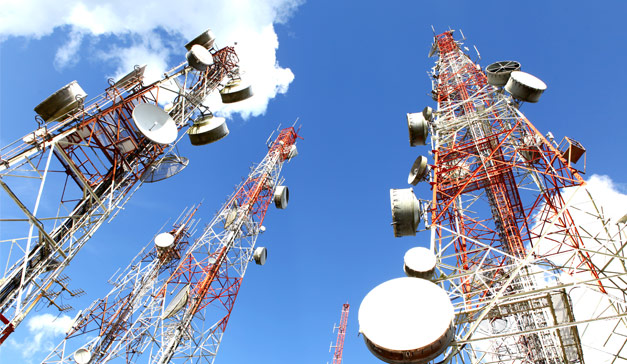
Clean and reliable power for telecom networks in Ethiopia, Liberia, and Sierra Leone will be expanded following a $45 million investment by the International Finance Corporation (IFC) in IPT PowerTech.

The investment targets countries where limited power supply continues to slow digital connectivity and broader economic participation, the institution stated earlier this week.
To enable this expansion, the IFC is providing a $45 million corporate financing package consisting of an A-loan of $27 million and $18 million in blended finance.
The blended portion is sourced from the Canada-IFC Blended Climate Finance Programme and the IDA20 Private Sector Window Blended Finance Facility.
The initiative marks the IFC’s first direct infrastructure engagement in Liberia in a decade and in Sierra Leone in six years.
It will help scale solar- and battery-based power systems that reduce reliance on diesel and support greener, more resilient telecom networks.
By improving the quality and stability of power to telecom towers, the initiative will strengthen mobile coverage and ensure that households, schools, health centres, and small businesses can depend on consistent digital services, said the IFC.
The funding supports the modernisation, operation, and maintenance of 2 235 telecom sites across the three nations. More than 90% of these are located in off-grid or weak-grid locations.
With new solar and battery systems powering these sites, mobile networks will experience fewer outages and improved service quality.
Optimising the energy mix is estimated to reduce power costs for operators by up to 30% in Liberia, 26% in Sierra Leone, and 52% in Ethiopia.
This transition is also expected to cut emissions by more than 10 624 tonnes of carbon dioxide annually. Furthermore, the partnership will promote gender inclusion by expanding opportunities for women in technical, operational, and leadership roles within the sector, says the IFC.
This agreement reflects a shared vision for a greener telecom industry and empowers the company to scale its innovative energy platforms, according to Nabil Haddad, CEO of IPT PowerTech Group.
Reliable and affordable power for telecom networks is a cornerstone of Africa’s digital transformation, said Nathalie Kouassi-Akon, IFC regional director for West Africa and the Gulf of Guinea.
Through this partnership, the institution is supporting a scalable, private sector-led solution that enables mobile operators to reach underserved and fragile communities more sustainably, added Kouassi-Akon.
The project advances the World Bank Group and African Development Bank’s Mission 300 initiative, which aims to provide electricity to 300 million Africans by 2030.


Expedier has unveiled “Expedier for Business,” an online pro-banking platform to simplify global payments, multi-currency transactions, and financial operations for expanding companies.

Kingsley Madu
The tool centralizes payments, invoicing, payroll, and treasury into one secure dashboard, tackling challenges like fragmented systems and poor visibility that hinder international scaling.
Kingsley Madu, Co-Founder and CEO of Expedier, said: “African businesses are increasingly global… Expedier for Business was built to simplify how companies manage money across borders while maintaining visibility, control, and compliance.”
Key features include customizable dashboards for payments, invoices, and workflows; support for USD, CAD, GBP, EUR, and more; virtual cards; automated payroll/invoicing; currency swaps; and real-time tracking.
Security measures cover two-factor authentication, KYC/KYB verification, and team access controls.
As cross-border trade and remote work boom in Africa, the platform aids firms dealing with international suppliers, teams, and customers. It is now available for organizations scaling globally.
Nigerian Communications Commission (NCC) has launched the Telecoms Identity Risk Management System (TIRMS) to enhance digital security and fight telecom fraud.

NCC
Dr Aminu Maida, Executive Vice Chairman, represented by Executive Commissioner Rimini Makama at an Abuja stakeholders’ forum, stressed mobile numbers (MSISDNs) as vital for banking, authentication, and services—but vulnerable to misuse via recycled, churned, or barred SIMs.
“The TIRMS Platform is a secure, regulatory-backed, cross-sectoral solution… to provide a uniform approach for managing risks relating to the integrity and utilisation of registered MSISDNs,” Maida said.
Objectives include better MSISDN access for accountability, fraud checks on dormant/suspicious numbers before service access, and proactive verification across sectors.
Proposed rules mandate 14-day churn notices, seven-day data submission to TIRMS, and blocking of fraudulent lines. Success hinges on telecoms, banks, security agencies, and others.
Maida highlighted NCC’s collaborative rulemaking for a “One Government” approach.
Cybersecurity Director Olatokunbo Oyeleye called digital trust an “operating licence” for growth: “Every mobile number in Nigeria [must] be trusted… TIRMS will safeguard users, reduce fraud, and reinforce confidence in our digital economy.”
TIRMS bridges gaps with CBN, NIMC, CAC, SEC, and PENCOM, aiming to cut fraud and boost trust.

NCC to Curb SIM Fraud, Strengthen Digital Security with New Platform

NBC Boss Urges Content Ceators to Participate in DSO

Kidnappers Now Use Banks to Collect Ransoms — Expert

CBN Says Bank Customers Won’t Lose Deposits because of Recapitalisation

Jury Finds Meta, Google Liable for Woman’s Social Media Addiction

Kaspersky Discovers New Phishing Campaign Exploiting Google Tasks Notifications to Steal Corporate Credentials

esentry 2025 Report Shows Healthcare, Financial Services and Telecoms as Staging Grounds for Increased Cyberattacks in Africa

Spotify’s Loud & Clear Report Reveals Over ₦60Bn Revenue for Nigerian Artists in 2025

MTN Nigeria Posts Record N1.70 Trillion Pre‑Tax Profit, Declares N20 Dividend for 2025

China Threatens to Shut Nigeria’s Satellite Over $11.44m Unpaid Debt




 E-Financial2 days ago
CBN Directs IMTOs to Open Naira Settlement Accounts

 Telecom2 days ago
Nigerians Lose N12.5Bn to AI-Driven Scams- PwC

 General News2 days ago
Court Remands Hacker for Allegedly Stealing N3.09Bn from FCMB

 Telecom2 days ago
Airtel Africa, Starlink Mobile Data and Messaging Testing Take off in Kenya

 E-Financial2 days ago
DLM Capital Group’s AAA-Rated Sovereign Bond-Backed Composite Notes (“SBCNS”) Strengthens Investor Confidence with Successful First Principal & Interest Payment

 E-Business2 days ago
AU Sees AI Adoption Evolving to Boost Economic Growth in Africa

 Telecom2 days ago
GATEWAY Programme Opens Doors for 340,000 Nigerian Youths to Tap into $1.85trn Global Gig Economy

 News2 days ago
Kaspersky, AFRIPOL Conduct Joint Cybersecurity Training for African law Enforcement