

E-Financial
Ericsson Says Airtime Incentives Can Boost Mobile Money

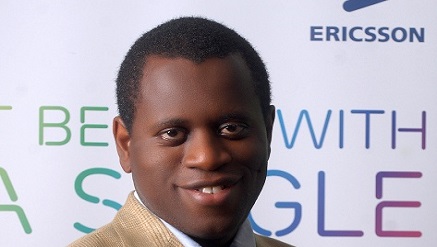
Rajiv Bhatia, head, Ericsson Mobile Commerce Sales EMEA, said that airtime could be used as an incentive to drive the uptake and usage of mobile money services in countries where its growth has been sluggish.
Bhatia, who was speaking at a mobile money conference held recently in Johannesburg, further explained that operators and financial institutions could replicate the loyalty programme of credit card providers, through the use of airtime to encourage consumers to use mobile money.
“There is an untapped opportunity to drive activity and loyalty in mobile money using mobile prepaid airtime. Airtime can be used to incentivize usage in several ways such as encouraging people to have a minimum amount of money in their wallets and rewarding them with better data and airtime bundles for usage of their mobile money wallets,” said Rajiv.
Rajiv stated that Africa is a leading market for mobile money and that millions of people without access to banking services were signing up to use mobile money services.
Operators and financial institutions are battling to trigger activity in dormant wallets.
In this context, Rajiv explained that the slow growth of mobile money in South Africa was a result of the expansive ATM and bank infrastructure available, and how this network had done much to address the needs of the population to access and remit cash.
“Yet there are millions more, who are still unbanked. There are fantastic opportunities to grow this business especially among the migrant population, which still uses informal means to remit cash. Banks should forge closer ties with operators, who have an expansive distribution network to encourage adoption and drive usage,” said Bhatia.
He emphasized that transparency, education and trust were key to growing the mobile money ecosystem in Africa.
According to the World Bank, almost half the world’s adult population – some 2.5 billion people – are unbanked, the majority in emerging markets.
For countries where financial inclusion is low, mobile money solutions such as e-money accounts and e-mobile wallets offer a fast way to improve financial inclusion and close the gap.
“We estimate that by 2016, the m-commerce market is expected to reach USD 800 billion worldwide. Countries such as Kenya, Uganda and Tanzania are already feeling the impact of greater financial inclusion. Today, around nine million Ugandans use mobile banking to exchange, save and spend money, instead of handling cash, reducing both the risk of theft and the need to travel,” Rajiv added.
Ericsson believes that an enabling environment needs to be put in place for m-commerce to thrive.
This includes implementing a requisite regulatory framework, driving consumer education and augmenting the local ecosystem capacity.


Taiwo Oyedele, chairman of the Presidential Fiscal Policy and Tax Reforms Committee, says land, buildings and rent are now fully exempted from Value Added Tax under the Nigeria Tax Act 2025.

He explained that the law, which has commenced, aims to lower housing costs, encourage real estate investment and provide relief for tenants and small businesses nationwide.
According to him, buyers of land or completed buildings will no longer pay VAT on such transactions, while both residential and commercial rent are also exempt.
Oyedele said the measure would reduce property transaction costs and ease financial pressure on Nigerians seeking accommodation.
He added that contractors can now recover VAT paid on certain construction materials and services through input VAT credit, helping developers manage project expenses more efficiently.
Dismissing claims circulating online about new taxes, he wrote on his X platform: “Contrary to the misinformation seeking to create fear, panic and disaffection, the Nigeria Tax Act 2025 has already commenced and does not impose a 25 per cent tax on construction funds, bank balances, or business expenses.”
He said the law does not tax money kept in bank accounts, impose levies on transfers used to buy building materials or introduce any 25 per cent construction or business cost tax, adding that implementation has not been postponed until 2027.
Oyedele stated that the law focuses on making housing affordable and stimulating growth in the property sector.
On construction contracts, he disclosed that Withholding Tax has been reduced to two percent to help developers retain more working capital and reduce reliance on borrowing.
He added: “Mortgage interest is tax-deductible for individuals developing an owner-occupied residential house,” explaining that the provision encourages home ownership.
For landlords, he said rental income earners can deduct expenses such as repairs, insurance and agency fees before tax assessment, which may promote better building maintenance.
He also noted that tenants can claim rent relief of up to N500,000, capped at 20 percent of annual rent, to improve disposable income.
Lease agreements valued below N10 million, or ten times the annual minimum wage, are exempt from stamp duty, reducing the cost of formal tenancy agreements.
Oyedele further said individuals will no longer pay Capital Gains Tax when disposing of a dwelling house or interest in one, while Real Estate Investment Trusts will enjoy Companies Income Tax exemption if they distribute at least 75 percent of dividends or rental income within 12 months.
Companies producing building materials such as iron, steel and domestic appliances may qualify for tax exemptions for up to 10 years under the economic development incentive scheme.
He added that there is also provision to reduce Companies Income Tax for large businesses from 30 percent to 25 percent to improve competitiveness and attract investment.
The chairman said the tax framework protects workers and small businesses, noting that employer-provided accommodation will be taxed only on rental value capped at 20 percent of annual gross income.
Small companies, he added, will benefit from zero percent Companies Income Tax and will not charge VAT or have Withholding Tax deducted from payments.
“Claims suggesting a new tax on building materials or bank funds are false and misrepresent the law,” Oyedele said.
He maintained that the law aims to make housing affordable, support real estate development and strengthen local manufacturing.
Concluding, he said, “Fact not fear, evidence beats emotion. If anyone makes an alarming claim or tries to misinform you, ask them, ‘Where is it in the law?’”
He added that with the reforms in place, housing costs and rent should decline rather than increase.

Central Bank of Nigeria (CBN) has introduced stricter penalties for banks and accredited cheque printers that breach the Nigeria Cheque Standard and the Cheque Printers Accreditation Scheme, with fines now reaching N10 million per violation.

In a circular dated February 10 and signed by Hamisu Abdullahi, director of Banking Services, the regulator said the revised sanctions are designed to strengthen the safety and reliability of the country’s clearing system.
The new framework replaces the 2019 guidelines and applies a graduated penalty structure based on the nature and frequency of offences.
Banks that fail to submit personalised cheques for mandatory testing risk an initial fine of N5 million.
Institutions found using unapproved seals or engaging unaccredited operators could face penalties starting from N1 million, with higher fines for repeat breaches.
Cheque printers are also under tighter scrutiny.
Producing cheques that fall short of required security standards may attract fines, while the use of unapproved security features could draw a N10 million penalty for each infraction.
The persistent violations could result in suspension or withdrawal of its licence for up to three years, as well as possible criminal proceedings under banking regulations.
The apex bank directed all deposit money banks and accredited printers to comply immediately, underscoring its resolve to safeguard the integrity of Nigeria’s payment system and align local practices with global standards.


By Blaise Udunze
Nigeria is no longer flirting with deficit financing. As a country, it is living with it, not occasionally but structurally, routinely, almost comfortably. It became evident when the National Assembly rose to defend the proposed N25.91 trillion deficit in the N58.47 trillion 2026 budget that it did more than justify another year of borrowing. It normalised it. Again, the message had been clearly defined that deficit financing is no longer a temporary response to shocks; it is now a structural feature of Nigeria’s fiscal architecture.

President Bola Tinubu
This was confirmed by the Senate, which, led by Senator Solomon Adeola, who defended continued borrowing as inevitable. In agreement with his defence, Senator Olamilekan Adeola argued that borrowing is inevitable in the face of unpredictable revenue and vast development needs. He is not wrong. No modern economy runs without deficits. The United States borrows. European economies borrow. Even fast-growing Asian Economies have used deficits strategically.
The real issue, as Adeola himself admitted, is how Nigeria borrows and what it borrows for.
That is where the debate becomes uncomfortable. Looking at it objectively, in a plain calculation, almost half of what the federal government hopes to earn will go straight to creditors. The chronic issue is that Nigeria’s projected revenue for 2026 stands at N33.19 trillion, while expenditure is estimated at N58.47 trillion, leaving a yawning gap of over N25 trillion. Debt service alone is expected to gulp nearly N15.9 trillion. In other words, before roads are built, before hospitals are equipped, before schools are renovated, almost half of the projected revenue is already committed to servicing yesterday’s loans.
Of paramount concern is that the action being discussed does not serve as a policy that supports the economy; it is a counter-cyclical stimulus during downtime to stabilise growth. It is a structural dependence. This is to say that at the core of Nigeria’s deficit dilemma lies revenue weakness. Despite the much-touted diversification of the economy, the country remains heavily dependent on crude oil for foreign exchange and for a significant share of public revenue. The fearful part is that when oil prices fall, when production drops due to theft or quotas, or when global demand weakens, government revenue collapses. Expenditure, however, does not fall with oil prices. Salaries must be paid. Pensions must be honoured. Political offices must function. Debt must be serviced. Borrowing fills the gap.
Beyond oil, the non-oil tax base remains shallow. Nigeria’s tax-to-GDP ratio lags far behind peer economies. One of the challenges is that, as a vast informal sector, weak tax administration, compliance gaps, waivers, and leakages mean that even in years of non-oil growth, revenue does not rise proportionately. One truth the country must yield to is the advice of Minister of Finance, Wale Edun, who rightly warned that Nigeria must reduce its dependence on debt and build a stronger domestic revenue base. This stems from his understanding that in a world of high global interest rates and retreating multilateral support, borrowing is becoming more expensive and less forgiving. Yet the borrowing continues.
One troubling fact from the disclosure of the Debt Management Office, is not that Nigeria’s public debt stood at over N152 trillion by mid-2025 but it is projected to climb further. What makes this figure more of a trouble is not just its size, but its purpose. Historically, Nigeria once escaped the weight of unsustainable debt through the Paris Club exit negotiated under President Olusegun Obasanjo. Two decades later, the country finds itself in a far more complex web of domestic and external obligations. The question is simple in the sense of what has the borrowing built?
If deficits finance productive infrastructure that expands the economy’s capacity, power plants that reduce production costs, rail lines that ease logistics, digital infrastructure that boosts exports, then borrowing can be justified. Future growth will expand the tax base and service the debt. Hence, it will be agreed that deficits, in that scenario, become bridges to prosperity.
But if deficits finance recurrent expenditure, salaries, overheads, fuel subsidies, political patronage, interest payments, then borrowing becomes a treadmill. The country runs harder each year, yet moves nowhere.
Nigeria’s fiscal pattern increasingly resembles the latter. Recurrent expenditure consumes a significant portion of revenue. In some years, debt service has exceeded the federal government’s retained revenue. This forces further borrowing simply to keep government machinery running. Borrowing to service old debt is the classic signature of a fiscal trap.
Meanwhile, the crowding-out effect is becoming pronounced. With the government aggressively issuing domestic debt instruments, over 70 percent of risk assets in the financial system are reportedly tied to government securities. Banks prefer lending to the government at high yields rather than financing private businesses. Lending rates, influenced by a high monetary policy rate, hover between 35 and 40 percent. For manufacturers, farmers, and tech entrepreneurs, such rates are prohibitive.
In effect, the state is absorbing liquidity that could otherwise power private-sector growth. The engine of sustainable revenue, the productive economy, is being starved.
Supporters of the current approach argue that deficits are necessary to close Nigeria’s massive infrastructure gap. Contrary to their argument, the roads are dilapidated. Power supply remains unreliable. Security spending has ballooned in response to persistent threats. With a fast-growing population, social spending pressures are immense. In such a context, refusing to borrow would mean freezing development.
That argument carries weight. Nigeria cannot austerity its way to prosperity. While slashing expenditure indiscriminately could worsen unemployment and deepen poverty.
However, borrowing without institutional reform is a lot more dangerous. Economist Adi Bongo has warned that asset sales, privatisations, and new borrowing will fail without strong oversight and accountability. Nigeria’s history of public-private partnerships and sectoral reforms, particularly in the power sector, offers cautionary tales. Assets sold to politically connected entities without capacity did not deliver efficiency gains. Institutions were created but not empowered. Data was published but not interrogated. Borrowing into weak institutions is like pouring water into a leaking basket.
There is also the issue of political budgeting. Election cycles often bring expanded spending and proliferating projects. Revenue does not necessarily rise in tandem. Structural deficits become politically convenient. Once normalised, they are difficult to reverse.
The Senate President, Godswill Akpabio, who recently framed the 2026 budget as a “moral document,” said it must therefore be judged not by its size, but by its outcomes. The question that should follow such a comment is, will the N26 trillion capital allocation translate into completed roads, functional health centres, and reliable electricity? Or will delayed releases, procurement bottlenecks, and weak oversight roll projects into yet another fiscal year?
Nigeria’s history of overlapping budgets and low capital implementation rates raises legitimate skepticism. Economists have cautioned that attempting to execute multiple large budgets concurrently strains administrative capacity and encourages rushed, low-value spending. When execution falters, the borrowed funds do not generate returns. Yet the interest meter keeps running.
Subsidy reform illustrates both the promise and the risk. The removal of fuel subsidy under President Bola Tinubu was described as a turning point, which was commended by an international organisation. In theory, eliminating subsidies should free fiscal space for productive investment like infrastructure, health, or education, as expected. But transparency in how those savings are redeployed remains crucial, especially in how the subsidy removal is being used. The truth remains that trust erodes if citizens do not see tangible improvements in infrastructure and services to showcase how the money realized from subsidies is being expended. Compliance weakens because once trust and fairness decline, people will easily default or be less willing to obey rules (like paying taxes or following regulations). Revenue mobilisation becomes harder. Trust is the invisible currency of fiscal reform.
Exchange rate pressures add another layer of complexity. When the naira weakens, external debt servicing costs rise in local currency terms. Import-related spending increases. Even if reserves appear strong, they are not freely spendable funds; they are buffers against external shocks. Mistaking reserves for budgetary liquidity is a dangerous illusion.
The global context is also less forgiving. Developing countries now pay far more in debt service than they receive in aid. Capital flows are volatile. In such an environment, fiscal discipline is not optional; it is survival.
So, are Nigeria’s deficits building future revenue capacity or merely financing present consumption?
The evidence is mixed, but the tilt is worrying. There are genuine reform efforts underway, such as tax administration overhaul, digitised revenue monitoring, electricity sector reforms, and efforts to attract capital importation. There are signs of macroeconomic stabilization that are moderating inflation, improving reserves, and modest GDP growth. These are not trivial.
Yet the scale and persistence of deficits, the heavy burden of debt service, the crowding-out of private credit, and the lack of transparency around execution suggest that borrowing is increasingly funding continuity rather than transformation or driving meaningful structural change.
Deficit financing becomes a growth strategy only when three conditions are met, such as when borrowed funds are channeled into productivity-enhancing investments (such as infrastructure, energy, manufacturing, education, and these things must expand the economy’s capacity to produce); institutions ensure transparency and value for money; and economic growth outpaces debt accumulation, so the country can comfortably service and repay what it has borrowed. When those conditions weaken, deficits mutate into a fiscal trap.
Nigeria stands at that junction. The Senate is right that borrowing in itself is not evil. But normalising structural deficits without tightening or simultaneously enforcing expenditure discipline, expanding revenue beyond oil, strengthening institutions, and reducing the cost of governance, then the country is taking a significant risk.
A nation can borrow to build bridges. Or it can borrow to pay salaries. The former compounds growth. The latter compounds debt.
If Nigeria’s deficits do not translate into visible infrastructure, expanded industrial capacity, thriving private enterprise, and rising tax revenues, history will record this era not as bold reform, but as deferred reckoning.
Deficits are not destiny. But when they become routine, they stop being temporary tools, unexamined, and politically convenient; they shape the destinies of Nigerians. From today, as a sovereign nation, Nigeria must decide whether it is borrowing to survive the present or to secure the future. The choice Nigeria makes about how it uses deficit financing will determine whether it becomes a growth ladder or locks it into a worsening cycle of debt that becomes harder and more expensive to escape over time, while it grows costlier each year.
Blaise, a journalist and PR professional, writes from Lagos and can be reached via: [email protected]

UBA Unveils Diaspora Platform to Connect Global Africans with Investment, Wealth Opportunities

BOI, MTN Foundation Unveil N1Bn Fund for Women Entrepreneurs

No VAT on Land, Buildings and Rent Under New Tax Law — Oyedele

CBN Slams Up to N10m Fine on Banks and Cheque Printers for Security Breaches

Jumia Targets Break-even in 2026 After Strong Q4 Surge

Firm Detected a Fivefold Surge in QR Code Phishing Attacks in the Second Half of 2025
Nigeria’s 9 Top FinTech Firms Valued at $10.6Bn in January 2026

DG NCC Tasks University Dons on Research Commercialization, IP Management to Build Global Competitive Ecosystems

Firm Detected a Scam Exploiting OpenAI’s Teamwork Features

Kaspersky Launches OT Calculator to Align Cybersecurity Investments with Business Goals




 E-Financial2 days ago
NAICOM Targets Resilient, Global Competition Market in Insurance Sector Consolidation

 News2 days ago
NITDA Explores Partnership with Trust Stamp on Digital Trust and Innovation

 Telecom2 days ago
NCC Orders Telcos Inform Subscribers of Data Breach within 48 Hours

 E-Financial2 days ago
IGP Designates Banks National Security Asset, Orders Crackdown on Cyber Frauds

 General News2 days ago
Cybersecurity Firm Warns Against Gift Card Scams @ Saint Valentine’s Day

 E-Financial2 days ago
Rashidat Adebisi Unveils Strategic Roadmap for Nigeria’s Insurance Sector under NIIRA 2025

 Telecom2 days ago
Globacom Promotes Valentine Gifting with Huge Discounts on Smartphones

 Telecom2 days ago
MTN Backs Bosun Tijani’s Vision for Africa’s AI Leadership