

Broadcasting
Etisalat-Sponsored Nigerian Idol 4 Kicks-off with Auditions in 5 Cities


All is set for the nation-wide search for the brightest music talents to grace the stage of one of the biggest reality music competitions, the Nigerian Idol.
The fourth season of the Etisalat–sponsored Nigerian Idol show will hold auditions in the cities of Lagos, Port-Harcourt, Benin, Calabar and for the first time Makurdi from January 25th till February 23rd 2014.
The audition train will move from the ancient city of Benin at the Excalibur Hotel on January 25th to Port-Harcourt at the Presidential Hotel on February 1.
Monty Suites will be the location in Calabar on February 8th, while Makurdi will play host on February 15th at Smileview Hotel Extension.
The final stage of the auditions will hold in Lagos at Dream Studios, Omole on the 22nd and 23rd of February.

Speaking on the start of the auditions, Enitan Denloye, Etisalat’s director of Brands and Communications, said the company was excited to be a part of the show for the fourth time running.
According to him, Etisalat has identified the competition as a platform that recognizes and celebrates music talent among the youth.
“The Nigerian youth community is dynamic. However, music still remains a huge part of their culture. At Etisalat, the youth segment is one of our major markets, and that is why we are continuing our sponsorship of the Nigerian Idol competition to connect with them in a way they can easily relate with,” he said.
On the choice of Makurdi as an audition location this season, Head, Events and Sponsorships, Etisalat Nigeria, Modupe Thani said it was necessary to spread the reach to other parts of the country. According to her, there is an abundance of talent in the country and Etisalat through the competition, is giving them a chance to voice their dreams.
Meanwhile, Rotimi Pedro, chairman of Optima Media Group, organizers of the show restated the organisation’s commitment to ensure that the standards from the past three seasons in terms of content, production and interactivity are surpassed with Season four.
Nigerian Idol, a franchise of the internationally acclaimed Idol music series, is a nation-wide hunt for talented singers to compete and be discovered as Nigeria’s biggest music star.
The show has produced Yeka Onka, Mercy Chinwo and Moses “Teddy bear” Adigwe as winners in the first, second and third Seasons respectively.
Following auditions, the show will air on select terrestrial and cable television stations with the winner announced at a grand gala on the 1st of June.
The winner of the show will get N7.5 million, a brand new SUV car, a Galaxy Tab, a Blackberry, and iPod.
The first runner up gets N1.5 million, a Galaxy Tab, Blackberry and iPod while the 2nd runner up will receive N1million, a Galaxy Tab, a Blackberry and an iPod.
In addition, each of the finalists from 4th to 10th place will receive N100, 000, a Galaxy Tab, a Blackberry and an iPod.


Broadcasting
NBC Files Fresh Appeal against Judgment Barring it from Imposing Fines on Broadcast Stations

National Broadcasting Commission (NBC) has filed an application seeking the permission of the court of appeal to file a fresh appeal against the judgement of the federal high court in Abuja barring it from imposing fines on erring broadcast stations.

In the application filed at the court of appeal in Abuja by Dapo Akinosun, counsel to the NBC, the commission argued sanity in Nigeria’s broadcasting sector is under threat and that the public interest would be better served if the court grants the application.
On January 17, 2024, Rita Ofili-Ajumogobia, a judge at the federal high court in Abuja, restrained the NBC from imposing a N5 million fine on broadcast stations sanctioned in 2022 over allegations of “undermining Nigeria’s national security by broadcasting documentaries on banditry in Nigeria”.
The affected broadcast stations were Multichoice Nigeria Limited, owners of DSTV; TelCom Satellite Limited (TSTV); Trust-TV Network Limited; and NTA StarTimes Limited.
The suit was filed by Media Rights Agenda (MRA).
Dissatisfied with the ruling, the NBC appealed the judgement filed an appeal at the court of appeal in Abuja.
In June, the court of appeal dismissed the commission’s appeal, holding that it was “fundamentally defective” and incompetent.
Jane Inyang, lead judge of the panel, held that the parties before the lower court were identified as “Incorporated Trustees of Media Rights Agenda (as applicant) and National Broadcasting Commission (as respondent)” but in the notice of appeal the purported appellant was described as the “Nigerian Broadcasting Commission”,
The judge held that the discrepancy was significant and that the court lacked jurisdiction to entertain the commission’s appeal.
In the application, the NBC urged the court to grant it leave to raise and argue a fresh issue on appeal relating to the legal capacity of MRA to institute and maintain the original suit before the lower court.
The commission argued that the defect in the earlier notice of appeal, which resulted in the dismissal of its appeal, arose “solely from an inadvertent misdescription” of its name by its lawyer.
The NBC told the court that the subsisting judgement raises questions on the commission’s statutory powers to regulate broadcasting and enforce compliance with broadcasting standards in Nigeria.
The commission argued that the subsisting judgment is capable of creating uncertainty regarding its regulatory powers if it is allowed to stand.
The NBC also argued that without the pronouncement by the appellate court on the issues raised in the appeal, its regulatory framework would be weakened.
“A weakened regulatory framework may embolden non-compliance with established broadcasting standards, thereby increasing the dissemination of false, misleading and unverified information capable of causing unnecessary public anxiety, panic and social unrest,” the NBC said.
“Absence of effective regulatory oversight may further encourage irresponsible broadcasting practices and the misuse of broadcast and digital media platforms by persons who deliberately publish sensational, inaccurate or inflammatory content to intimidate, harass or unduly influence individuals, institutions and public discourse.”
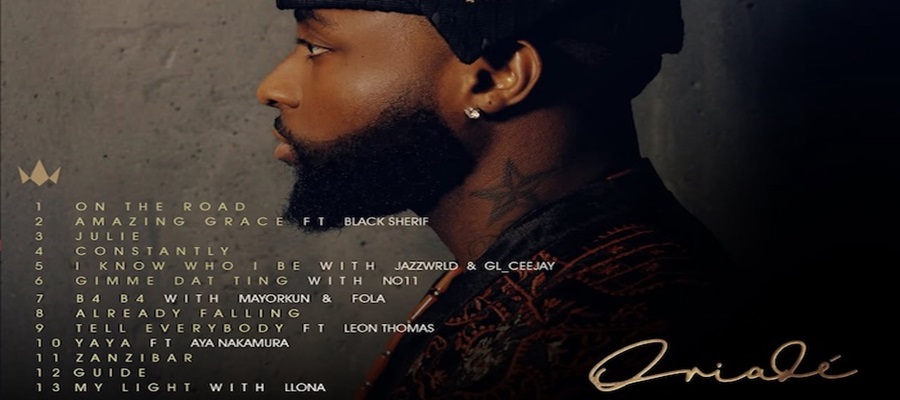
David Adedeji Adeleke, known professionally as Davido, has shared his past suicidal thoughts as he dropped Oriadé, his sixth studio album yesterday.

Davido
Davido said he chose the date on purpose as it marks exactly 15 years since he began his professional music career.
Oriadé is a Yoruba word combining “Ori,” meaning destiny, and “Adé,” meaning crown.
It translates to “the crowned head.” The album has 13 tracks and features Black Sherif, Aya Nakamura, Leon Thomas, Mayorkun, and Llona.
It follows his 2025 project, 5ive, which reached number two on the Billboard World Albums chart.
Davido also announced an international tour to support the new record.
In the days leading up to the release, Davido gave interviews that revealed personal details about his past and his current life.
Speaking to Vibe Magazine on Thursday, he described a 2014 incident in Ghana that left him feeling suicidal.
He said he invited a woman back to his hotel room after a show, and she later posted a photo of him sleeping online.
He said the fallout overwhelmed him.
“My daddy was calling me. My sisters were calling me. If I saw the balcony that day, I would have jumped,” he said.
He said he was young at the time and did not fully understand the consequences of his actions.
He described the experience as a turning point that changed how he thinks about privacy and fame.
In the same interview, he explained why he often dresses down in public despite his wealth.
He recalled a trip to the South of France where he went out in shorts and slippers without his watch.
“I’ve been on jets, I’ve been flying, I’ve been in all these places since I was a baby. I’ve been seeing money since I was a baby. So all these things don’t really excite me,” he said.
He added that he sometimes prefers to drive a Toyota to the supermarket in Atlanta instead of one of his luxury cars.
In a separate livestream with Davrel, Davido spoke about how his life has changed since marrying his wife, Chioma, and becoming a father.
He said his home no longer holds the large crowds it once did.
“I can no longer have 100 people in my house like before,” he said.
He said he speaks to Chioma every day regardless of his schedule.
He also disclosed that he spends between $200,000 and $300,000 a month on himself, not including costs for his wife, children, jewelry and cars.
He said the amount is lower when he is in the United States, where he described his lifestyle as quieter.

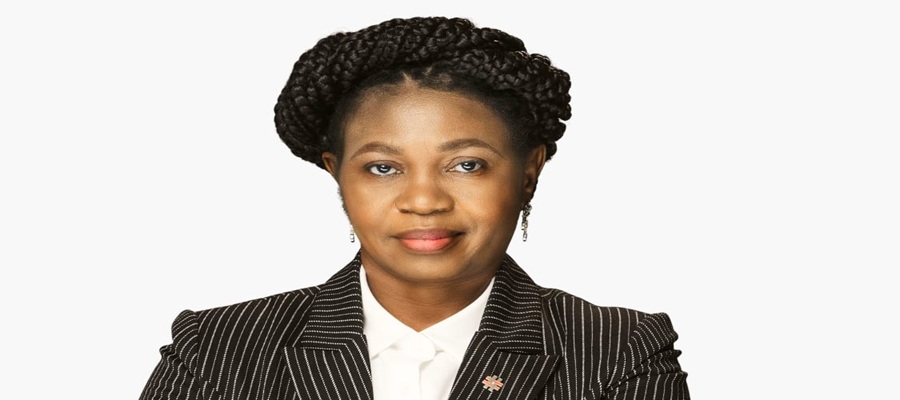
Africa Prudential Plc has reaffirmed its commitment to digital transformation, revenue diversification and sustainable growth after reporting a strong financial performance for the first half of 2026.

Dr Catherine Nwosu
The company made this known during its H1 2026 Investor Call, which brought together institutional investors, shareholders, investment analysts, regulators and other stakeholders to review its financial performance and strategic outlook.
Dr Catherine Nwosu, managing director and Chief Executive Officer of Africa Prudential, said the company’s performance reflected the resilience of its business model and the effectiveness of its long-term growth strategy despite prevailing macroeconomic challenges.
According to the company’s financial results, gross earnings rose by 27 per cent year-on-year to N4.28 billion, from N3.34 billion recorded in the corresponding period of 2025.
Profit before tax increased by 22 per cent to N2.41 billion, while profit after tax grew by 18 per cent to N1.59 billion.
The company also reported a 27 per cent rise in net operating income to N4.21 billion, while total assets increased by 13 per cent to N46.53 billion.
Shareholders’ funds equally rose by 13 per cent to N12.52 billion, reflecting continued financial strength.
Management attributed the performance to sustained growth in its core registrar business, increased corporate action activities in the Nigerian capital market, improved treasury earnings and rising adoption of its technology-driven solutions.
The company said it was steadily transforming from a traditional share registrar into a broader technology and business solutions provider serving Nigeria’s capital market ecosystem.
During the interactive session, investors sought clarification on the sustainability of earnings, particularly as interest rates are expected to moderate.
Responding, Nwosu said the company was deliberately expanding its recurring fee-based revenue streams to reduce dependence on treasury income.
“Interest rates influence our treasury income positively, but that is why we are deliberately diversifying our revenue streams.
“Our strategy is to grow recurring fee-based business lines such as our digital solutions, Know Your Customer (KYC) services, Annual General Meeting (AGM) technology, probate services and the SabiVest mobile app.
“Over time, this will reduce our reliance on interest income and create a more balanced and resilient earnings mix,” she said.
Nwosu noted that increasing capital market activities had created stronger demand for seamless digital investor experiences, improved operational efficiency and enhanced compliance solutions.
She said the company would continue investing in technology-enabled products capable of delivering long-term value to shareholders while strengthening its competitive position.
According to her, Africa Prudential has identified five strategic priorities for the second half of 2026.
The priorities include driving sustainable growth across its core registrar and emerging business lines, accelerating technology-led product innovation, strengthening brand leadership, investing in talent development and deepening corporate governance.
She said the investor engagement demonstrated the company’s commitment to transparency, accountability and regular engagement with shareholders and the investment community.
Africa Prudential reaffirmed its commitment to leveraging innovation, operational excellence and sound financial management to sustain growth and strengthen its leadership position in Nigeria’s capital market.

ITUC-Africa Faults FG’s Plans to Remove Electricity Subsidy

SEC Begins Full e-Registration for Capital Market Services

NAICOM Revokes Nigeria Reinsurance’s Licence over Failure to Meet MCR

Many Nigerian Airlines May Collapse within 30 Days – Onyema

Ogbaga, Abuja Lawyer to Sue Telcos, DStv over Alleged Unfair Practices

NRC, Ponzi Scheme Collapses Resulting Loss of Billions of Naira

From Scarcity to Scale: What Africa Can Learn from India’s Agricultural Transformation

EFCC Busts NIS Visa Overstay Racket, Uncovers N700m in an Account

BON Establishes Six Ad Hoc Committees to Modernize Broadcasting

How EFCC Turned Recovered Loot Into School Supplies for Thousands of Nigerian Students




 E-Business3 days ago
Kaspersky Identifies Cyberespionage as a Growing Threat Across Africa, Others

 Broadcasting3 days ago
NBC Files Fresh Appeal against Judgment Barring it from Imposing Fines on Broadcast Stations

 News3 days ago
INTERPOL Report Shows AI Powers 55% of Cybercrimes in Africa Amid $484m Losses

 E-Financial3 days ago
Nigerians Lost N25.85Bn to Digital Payment Fraud in 2025 –CBN

 Telecom3 days ago
Why Strong Institutions Remain Africa’s True Growth Engine

 News3 days ago
Nigeria Expands Deep-tech Skills Pipeline

 E-Financial3 days ago
NRS Announces 30 Percent Tax on Corporate Crypto Income

 E-Business2 days ago
Kaspersky Reveals a New Malicious Framework Targeting Cryptocurrency Users with the Use of OkoSpyware