

Telecom
Etisalat Woes Deepens over $1.2Bn Debt

The fate of Etisalat Nigeria, the fourth largest telecommunications network operating in the country, hangs in the balance as the telecom giant battles to pay its creditors, according to the Nation.
Etisalat Nigeria had in 2013 obtained a seven-year loan facility of $1.2billion from 13 local banks and their foreign counterparts to refinance a $650 million loan as well as the expansion of its network but the company had missed the payment due to dollar shortfall in Nigeria’s financial system.
The loan, which involved a foreign-backed guaranty bond, was for Etisalat to finance a major network rehabilitation and expansion of its operational base in Nigeria.
The 13 local banks involved in the loan deal include: Zenith Bank, GT Bank, First Bank, UBA, Fidelity Bank, Access Bank, Ecobank, FCMB, Stanbic IBTC Bank, and Union Bank.
According to the Nation, Abu Dhabi state investment fund Mubadala, the second-largest shareholder in the business, had in April presented a final restructuring plan to the banks which they flatly rejected. The banks further gave a one month window for repayment which lapsed in May 31st, 2017.

The telecoms company unable to redeem its payment, the banks have since issued Etisalat a default notice.
This is just as The Nation learnt at the weekend that Etisalat Nigeria is working with its lenders and Abu Dhabi state investment fund Mubadala, the second-largest shareholder in the business, to resolve debt woes it said were caused by a devaluation of the naira currency.
Mubadala spokesman Brian Lott told Reuters on Friday that a local media report saying that the fund has pulled out of Etisalat Nigeria was wrong and that several proposals are under discussion.
He declined to elaborate on the options being considered but said he will know more next week.
The Nigerian affiliate of Abu Dhabi-listed Etisalat has said it is in talks to restructure a $1.2 billion loan after missing a repayment, though sources have said that talks reached a deadlock on April 28.
In a statement by Ibrahim Dikko, Vice President, Regulatory & Corporate Affairs, Etisalat Nigeria, the company described as spurious news report that Mubadala Development Company, the majority shareholder of the company is exiting the business.
In the statement which reads in part, Dikko said: “Whilst it is premature at this stage of the ongoing discussion to affirm that this is the conclusive option, Etisalat Nigeria considers it pertinent to state that parties in the negotiation are considering a number of options and discussions are at an advanced stage regarding the syndicated loan agreement with the banks. It will therefore be presumptive and in bad faith to begin to predict the outcome.”
Etisalat Nigeria, he stressed, “Can confirm that negotiations with the consortium of banks regarding the syndicated loan agreement signed in 2013 have reached an advanced stage. As noted in an earlier statement, we are considering a number of options and are not taking anything off the table at this time.”
Etisalat, he further emphasised, “Remains a viable business, having recorded its best financial year in 2016. So parties are keen to ensure that the ongoing discussions and eventual outcome do not affect the day to day operations of the business whether now or after the announcement of our agreement. All parties have continually demonstrated an interest in the continued operations of Etisalat as a business as it remains a backbone of millions of small business owners; multinationals, government and indeed Nigerian subscribers in general.”
However, it does appear that the apex bank and the regulatory agency in charge of the telecoms sector are not willing to stick their necks out for Etisalat again judging by their mute indifference to the lingering crisis involved the embattled telecom company and the banks.
When our correspondents broached the subject before the CBN spokesman, Isaac Okoroafor, Acting Director of Corporate Communications at the weekend, his rather terse response spoke volumes. “Call the Etisalat people please. We have nothing to say on that.”
His counterpart at the NCC, Tony Ojobo, informed our correspondent that he was going to get back soon but never did as at the time of filing in this report.
In the view of industry experts, the future of the telecoms sector looks bleak without Etisalat. One of those who share this sentiment is Mr. Olusola Teniola, National President, Association of Telecommunications Companies of Nigeria (ATCON), the umbrella body of telecoms companies.
Speaking with our correspondent at the weekend, Teniola said the issue of Etisalat leaving is a very complex question, as the insinuation describes a scenario whereby the subscribers on their network can be easily accommodated by other networks, which is not necessarily the case.
According to him: “No single network as currently configured and engineered can provide the requisite capacity to cater for any additional traffic burden a collapse of any single mobile network operator with over 20million subscribers will cause. It is more feasible that a more likely scenario of a merger or acquisition will occur in the form of an international player coming in to ensure continuity of Etisalat’ operations. This is more of a preferred scenario that should occur anything else will be disastrous for the consumers’ choice.”
Options before Etisalat, banks
Among the many options before Etisalat is to sellout its entire equity. The telco also ran into problem in Tanzania when the owners refused to put in more money. Specifically, United Arab Emirates telecom operator Etisalat had in 2015 sold its 85 percent stake in Zanzibar Telecom Limited (Zantel) to Sweden’s Millicom.
Zantel, which has struggled against larger rivals Vodacom and Bharti Airtel, got up to $32million in net current liabilities at close of the deal, Etisalat said in an emailed statement.
Etisalat received $1 in cash while Millicom assumed the total debt obligations of $74million under the terms of the agreement subject to regulatory approval by the Tanzanian Communication Regulatory Authority.
According to a source in one of the dealing banks who asked not to be named, one of the options the banks proposed to Etisalat management as a middle way out of the crisis was for it to request for a bankruptcy status.
The official, who requested that his name should not be revealed, since he was not authorised to speak on behalf of the consortium, said the bankruptcy option would require having receivership management appointed by the banks to oversee its operations.
The other option before Etisalat is to go into a merger with the existing telcos operating in the country. Already MTN had in the past signified interest to buy Etisalat but had to back pedal following its trouble with the NCC over unregistered sims.
However, reliable sources say Globalcom may also be interested in Etisalat buyout but the telecom giant is said to be keeping its plan under wraps.
One of the options before the banks is to approach the court and get the board dissolved and take the company into receivership. But the challenge however is that the banks can’t run the firm because they don’t have operating license neither do they have the technical knowhow to do so.
But, the NCC appears not to be favourably disposed to the takeover proposal, the source said, as it believed that Etisalat is not only a viable going concern but also willing and able to negotiate the servicing of its loans.
Etisalat has the option of running to NCC for help but informed sources say Etisalat has not been carrying them along. But the NCC sources say they are ready to protect the over 21million subscribers on the network.


MTN Nigeria has alerted the public to a fraudulent 25GB anniversary data offer currently circulating across social media and messaging platforms.

In an official advisory published on its support handle on X at the weekend, the telco warned customers against interacting with unverified links, sharing private credentials, or making payments to access the supposed anniversary promotion.
According to MTN, the official 25GB anniversary freebie is only accessible via the MTN eShop and the MyMTN NG App.
In the post, the company said, “Please beware of fake MTN 25th Anniversary 25GB giveaway offers circulating online.
“The official MTN 25GB Anniversary Giveaway is available ONLY via the MyMTN NG App and MTN eShop.
“Do not click on links, share your personal information or make payments on any other platform claiming to offer the giveaway.
“Only trust official MTN channels.”
In a different post, the provider explained how eligible subscribers could access the legitimate MTN data giveaway.
The company said, “Log in to the MyMTN App and tap ‘Redeem Now’ on the anniversary banner or via the MTN eShop.
“To access the 25GB offer, kindly visit the MyMTN App or the MTN E-Shop and follow the prompts to activate the bundle, if you are eligible for the offer.
“You may also click on the link contained in the SMS notification you received regarding the offer.”
To safely claim the reward, the telecom operator advised subscribers to rely strictly on details published through its official communication channels.
MTN added that the complimentary 25GB data allocation remains valid until 11:59 p.m. on the designated expiration date, urging eligible customers to redeem the package before it expires.
The warning follows a wave of viral posts and link-sharing schemes falsely offering free data under the guise of the company’s 25th-anniversary celebration.
Consequently, users are strongly cautioned against engaging with unauthorized platforms or providing sensitive personal information and fees to third-party sites claiming to offer the promotional data.

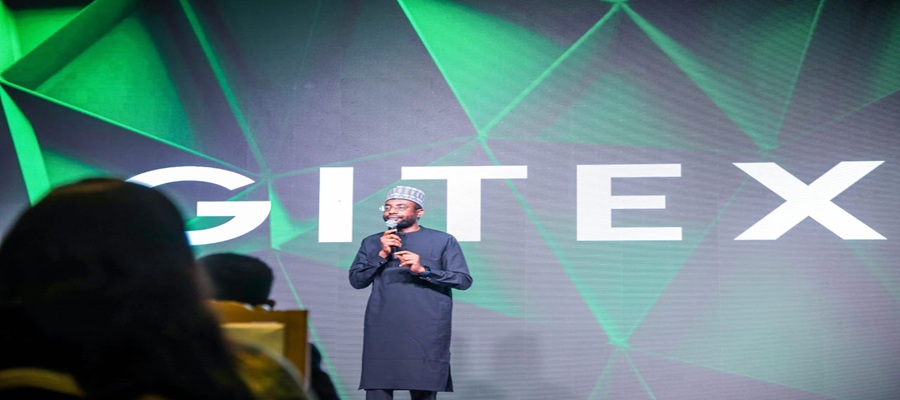
Nigeria is strengthening its position as a leading digital economy in Africa as it prepares to host the second edition of GITEX Nigeria, against projections that the continent’s artificial intelligence (AI) economy could generate up to $1 trillion in economic value by 2035.

GITEX Nigeria
GITEX Nigeria, described as West Africa’s largest technology, AI and startup event, is scheduled to hold in Abuja and Lagos from Aug. 31 to Sept. 3, under the patronage of President Bola Tinubu.
The event is supported by the Federal Ministry of Communications, Innovation and Digital Economy in collaboration with the National Information Technology Development Agency (NITDA), endorsed by the Lagos State Government and organised by KAOUN International.
With the theme, “Beyond Connectivity: The Bridge to Sovereign Innovation,” the 2026 edition is expected to bring together global technology companies, investors, policymakers, regulators, startups and other stakeholders to advance Nigeria’s digital transformation agenda.
According to the organisers, the event will focus on strengthening digital resilience, scaling AI infrastructure, attracting strategic investments and building partnerships to support digital sovereignty across Nigeria and West Africa.
Nigeria’s progress in digital skills development is expected to feature prominently at the event, with the Federal Government’s 3 Million Technical Talent (3MTT) programme highlighted as a major intervention.
The programme has recorded 1.87 million registrations across all 774 local government areas, while more than 135,000 Nigerians have been trained through three cohorts.
The programme has also extended learning opportunities to more than 300,000 people through community resources and created 15,000 job and opportunity pathways, according to figures released by the organisers.
Another key initiative, Project BRIDGE, is aimed at expanding Nigeria’s national ICT backbone and improving connectivity in underserved communities.
The project is expected to create up to 20,000 direct jobs and more than 150,000 indirect jobs, train 5,000 Nigerian youths, raise internet penetration above 70 per cent and extend high-speed connectivity to millions of households, businesses, schools and hospitality establishments.
Dr Bosun Tijani, Minister of Communications, Innovation and Digital Economy, said Nigeria’s objective was to build the foundations for digital sovereignty and a globally competitive AI-powered economy.
“Building on the momentum forged through the implementation of Project BRIDGE, our national blueprint for expanding digital infrastructure and connecting communities across Nigeria, our aspiration ahead of this year’s edition is clear: to solidify the foundations Africa needs for digital sovereignty, technological self-determination, and a globally competitive AI-powered economy,” Tijani said.
He said Nigeria was seeking to promote equitable access, accelerate cross-continental progress and position the country as a producer and exporter of digital technologies and AI solutions.
The GITEX Nigeria Government Leadership and AI Summit will open in Abuja on Aug. 31, bringing together ministers, governors and regulators to discuss digital public infrastructure and other issues shaping West Africa’s digital economy.
The GITEX Nigeria Tech Expo and Future Economy Conference, as well as the Startup Festival, will also return for the second consecutive year.
A new component, FDX Nigeria by GITEX, will focus on finance and digital asset exchange, with the organisers describing it as a platform designed to promote financial inclusion and connect emerging technology with global capital.
Gov. Babajide Sanwo-Olu of Lagos State said the state remained central to Africa’s digital transformation, noting its role in attracting talent, capital and innovation.
He said hosting GITEX Nigeria would further support Lagos’ ambition of becoming a smarter, more connected and globally competitive economy.
Kashifu Inuwa Abdullahi, Director-General of NITDA, said Nigeria’s digital future would depend not only on technology adoption but also on resilience, trust and effective governance frameworks.
“GITEX NIGERIA seamlessly complements this mandate, creating a unique environment for the dialogue needed to accelerate responsible AI adoption, develop a secure digital economy, and unlock new opportunities for innovation and economic growth,” Abdullahi said.
He said the expertise, investment and partnerships generated through the event would contribute to building an AI ecosystem that was secure, inclusive and capable of supporting Nigeria and West Africa’s long-term competitiveness.
The organisers said Nigeria’s National AI Strategy, 3MTT programme and Project BRIDGE were among initiatives strengthening the country’s capacity in talent development, digital infrastructure, investment attraction and responsible AI adoption.
They said GITEX Nigeria would provide an avenue for global stakeholders to establish partnerships and develop solutions capable of accelerating the region’s digital transformation.
Trixie LohMirmand, CEO of GITEX, said the event was intended to demonstrate that West Africa was ready to convert technological ambition into economic growth, resilience and global competitiveness.
She said GITEX Nigeria would facilitate strategic conversations and partnerships aimed at strengthening regional competitiveness and unlocking scalable growth across Nigeria and West Africa.
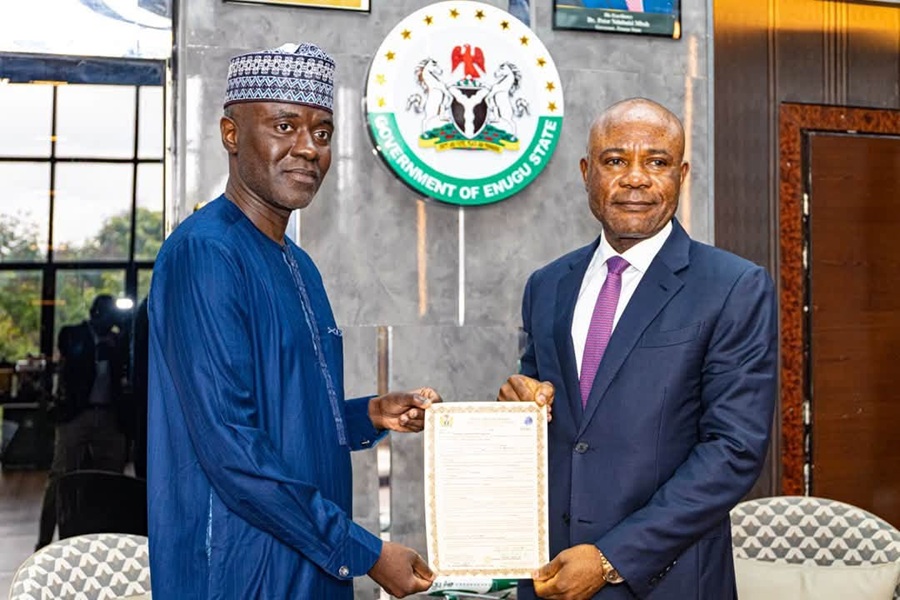
Nigerian Communications Commission (NCC) and the Enugu State Government have signed an agreement for the operational lease of the NCC Digital Industrial Park and NCC Learning Centre in Enugu.

The agreement was witnessed by Dr Aminu Maida, Executive Vice Chairman and Chief Executive Officer of the NCC, alongside members of the Commission’s Board and Management.
The development is expected to strengthen digital innovation, skills development and technology-driven opportunities in the state.
As part of the engagement, the NCC delegation also visited the Enugu Smart School Initiative, where technology is being integrated into teaching and learning.
The initiative is aimed at equipping young Nigerians with relevant digital skills and preparing them for future opportunities in an increasingly technology-driven economy.
The NCC said it remained committed to supporting initiatives that expand digital inclusion, strengthen innovation and develop the talent required to drive Nigeria’s digital transformation.
The Commission said partnerships with state governments and other stakeholders were critical to creating an enabling environment for digital skills development and technology adoption across the country.

Fake Agency: ICPC Indicts NITDA, Others over Inadequate Due Diligence

Tax Reform Built on Taxing Prosperity, Not Poverty– Adedeji

UNESCO Taps Oguamanam,Nigerian Scholar to Advisory Body on Science, Tech Ethics

MTN Alerts Subscribers over Fake 25GB Anniversary MTN Data Giveaway

X Replaces Revenue Sharing wit New Creator Rewards Programme

EFCC Busts NIS Visa Overstay Racket, Uncovers N700m in an Account

Fact-Check: Elon Musk’s “Tesla Pi Phone” is Internet Rumor

NBC Tasks Broadcasting Stations over 2028 DSO Global Deadline

NBC Scraps Annual Digital Access Fee on DSO

Glo Sponsored African Voices to Feature Netflix’s “The Polygamist” Stars




 General News2 days ago
Guinness Rewards Consumers with ₦17 Million in First Week of ‘Open for More’ Promo Draw

 News3 days ago
Glovo Pioneers AI Quick-Commerce

 News2 days ago
World Bank Debars United Aviation Services, Owner over Fraudulent Activities

 E-Business2 days ago
NITDA Introduces Cloud Certification Boost Data Localisation Compliance

 Telecom2 days ago
NCC, Enugu Sign Deal to Operate Digital Industrial Park, Learning Centre

 E-Financial2 days ago
BOI Opens N250Bn Bond Offer to Fund Businesses

 News2 days ago
Enugu State Approves Land for ITF’s Digital Fabrication Centre

 Telecom2 days ago
GITEX Nigeria to spotlight Africa’s $1trn AI economic potential