

General News
EU Aims to Remove Barriers to AI Development


The European Commission (EU) said it had launched a strategy on Wednesday to remove barriers to the use of Artificial Intelligence (AI) and better equip Europe’s companies for global competition.

At the presentation of its new AI strategy, the Brussels authority announced that it would simplify rules, promote investment and massively expand the establishment of its own data centres.
The aim of the AI Continent Action Plan was to “transform Europe’s strong traditional industries and its exceptional talent pool into powerful engines of AI innovation and acceleration,’’ according to a statement released.
There has been criticism from the tech industry that European regulations such as the AI Act were too bureaucratic and hostile to innovation.
One focus of the new strategy is on infrastructure and data centres.
The commission called on member states to apply for the construction of so-called AI gigafactories to train particularly powerful AI models.
A total investment of 20 billion euros (22 billion dollars) is to be earmarked for this purpose.
According to the Brussels authority, only 13.5 per cent of companies in Europe currently use AI technologies, a figure the commission wants to increase significantly.
So far, the EU has lagged behind China and the U.S. in AI technologies, for example. Germany’s outgoing digital minister, Volker Wissing, welcomed the plan and called for less bureaucracy and better investment conditions.
The German AI Association on the other hand said the strategy had little new substance.
“The European AI sector does not need any more announcements regarding previously known measures and small-scale individual strategies.
“But it’s functional funding and award procedures that can keep pace with the speed of technological development,’’ said association head Jörg Bienert.



African Development Bank Group (AfDB) has approved a €6.5 million investment in the Saviu II venture capital fund to boost technology start-ups across Francophone West and Central Africa.

The Bank Group will contribute €4.5 million as equity investment and an additional €2 million as a first-loss hedging tranche on behalf of the European Commission under the Boost Africa Programme.
The investment is expected to strengthen early-stage financing for innovative businesses with strong technological and digital components, particularly in French-speaking countries.
Saviu II, the second investment vehicle managed by Saviu Partners, plans to invest between €500,000 and €3 million in about 20 seed-stage or early institutional fundraising start-ups. The fund will primarily target B2B technology-oriented companies with scalable models.
At least 60 per cent of the fund’s commitments will focus on French-speaking countries in West and Central Africa, including Côte d’Ivoire, Cameroon, Benin, Senegal, Togo, Burkina Faso and Mali.
The fund may also co-invest in promising East African technology firms seeking expansion into Francophone markets.
In addition, Saviu II will dedicate a special funding envelope for pre-seed investments, mainly through minority equity stakes, often in collaboration with incubators, venture studios and other ecosystem partners.
Industry observers say the AfDB’s backing is expected to de-risk early-stage investment and crowd in more private capital into Africa’s growing digital economy.
Saviu Partners previously launched Saviu I in 2018 with a capitalization of €10 million.
The first fund invested in 12 start-ups, mainly based in French-speaking West Africa, offering not just funding but hands-on support in business development, recruitment, international expansion and fundraising.

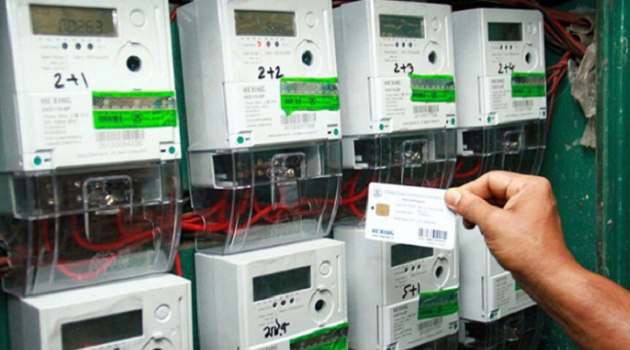
Nigerian Electricity Regulatory Commission (NERC) has ruled in favor of electricity consumers, directing distribution companies (DisCos) to refund ₦20.33 billion in outstanding costs for meters bought under the Meter Asset Provider (MAP) framework.

NERC
Signed on February 27, 2026, by Musiliu Oseni, chairman,NERC and Dafe Akpeneye, commissioner Order No. NERC/2026/025 amends a 2023 directive.
It requires DisCos to disburse the funds via energy credits over 12 months starting March 1, 2026, addressing years of slow refunds.
As of December 31, 2025, DisCos owed this amount due to delays in reimbursing prepaid customers who funded their own meters.
DisCos must automate credits for the full MAP meter cost upon activation, disbursed monthly over 120 months based on the customer’s tariff—credits cannot offset legacy debts.
Prepaid customers will receive a monthly token by the 4th day equivalent to the reimbursement value; for arrears, they’ll get two tokens per month.
Postpaid customers will see a distinct credit line on bills subtracted from totals, with two line items monthly for arrears.
NERC mandates monthly reports on reimbursement values using an approved template, plus dedicated email channels for complaints with resolution status included.
The order aims to end delays, improve notifications, and boost sector trust. DisCos must accelerate arrears recovery over 12 months without further excuses.
This follows NERC’s February 2026 compliance review, amid ongoing power sector challenges highlighted by Power Minister Adebayo Adelabu.

Nigeria Centre for Disease Control and Prevention (NCDC) has raised alarm over ravage of Lassa fever cases across 18 states and 67 Local Government Areas (LGAs) of the country.

Dr Jide Idris, director-general of NCDC, in statement yesterday, said that Bauchi, Ondo, Taraba, Edo and Benue accounted for more than 80 per cent of confirmed cases recorded during the 2026 peak transmission season.
Idris, described as particularly worrisome the growing infections among healthcare workers, with 28 confirmed cases and three deaths reported so far this season.
NCDC attributed the sustained transmission and rising fatalities to operational gaps at the state level, urging urgent action to strengthen outbreak response and control measures.
According to Idris, field investigations showed most transmissions were occurring in known endemic areas, but weak implementation of established response frameworks had contributed to the continued spread and higher case fatality rate.
He said that gaps identified include infections in general outpatient and maternity settings, poor adherence to Infection Prevention and Control (IPC) protocols, and inadequate pre-positioning of Personal Protective Equipment (PPE).
He added that delayed patient presentation due to financial barriers, inconsistent activation of State Incident Management Systems, weak contact tracing, persistent stigma and poor isolation centre standards were also driving transmission.
Idris emphasised that outbreak response implementation and health service delivery fell primarily under state governments within Nigeria’s federal structure, urging them to strengthen accountability and resource allocation.
He called on affected and high-risk states to urgently activate and closely monitor their Incident Management Systems, ensuring timely coordination and efficient outbreak response at all levels of healthcare delivery.
He also urged the immediate release of response funds, strict enforcement of Infection Prevention and Control (IPC) compliance in public and private health facilities, and continuous availability of PPE and other critical supplies.
The NCDC boss also advocated accelerated financial protection mechanisms to reduce late presentation and high fatality rates, alongside institutionalised rodent control and environmental sanitation measures under a One Health approach.
He advised healthcare workers to maintain a high index of suspicion and adhere strictly to IPC guidelines.
He also urged the public to keep environments clean, prevent rodent entry into homes, store food safely and seek early medical care when symptoms appeared.
Idris noted that Lassa fever was treatable, with improved outcomes when detected early, adding that Nigeria was also responding to other epidemic-prone diseases including Cerebrospinal Meningitis, Diphtheria, Mpox and Cholera.
He reiterated NCDC’s toll-free emergency line, 6232, for reporting suspected cases and obtaining further information

NAICOM Signs MoU with BPP to Deepen Insurance Compliance in Public Procurement

FG Approves GIS-enabled Digital Postcode to Tackle Logistics Gaps, Boost E-commerce

Firm Enhances its Security Awareness Platform with SCORM and PDF Support

AfDB Approves €6.5m for Tech Startups

GSMA, African Operators, Others to Launch Low-cost 4G Devices

Dr. Cairo Ojougboh Foundation Bolsters Nigeria’s Education Drive with ₦2.7m Student Support
Kaspersky Brings more Transparency to Threat Detection with New Hunt Hub

NDPC Commits to Balancing Data Privacy, Protection Information

OADC Lagos Reinforces Commitment to Local Data Hosting and Digital Transformation @ NDPC’s National Privacy Week Summit

PwC Reveals AI Scaling Gap Slows Africa’s Digital Transformation




 Telecom2 days ago
Sunil Bharti Mittal Conferred GSMA Lifetime Achievement Award for Transforming Global Telecommunications

 Telecom2 days ago
Why Digital Trust Matters: Secure, Responsible AI for African SMEs?

 General News2 days ago
Krishnan Exits Africa Data Centre to Embark on Professional Chapter

 E-Business2 days ago
Jumia Tech Week 2026 Begins with Tech Deals on Smartphones, Electronics, and Everyday Technology

 E-Financial1 day ago
NRS Targets N40trillion in Tax, Royalty Revenue in 2026

 Broadcasting2 days ago
NCAA Orders Overland Airways to Refund VAT Charged on 2025 Tickets

 Telecom2 days ago
House Probes Fintech Regulation via Public Hearing on New Commission Bill

 E-Financial1 day ago
SEC Revokes Registration of Kensington Agro Trading Limited