

E-Financial
EU Threatens to Regulate Crypto-currencies Over Risk


The European Union stands ready to regulate crypto-currencies if risks from the sector are not tackled at the global level, the bloc’s financial services chief said on Monday.
A global investment craze over bitcoin BTC=BTSP and other virtual currencies in the last year has seen wild gyrations in their valuations, making fortunes for some investors while others have lost heavily.
“This is a global phenomenon and it’s important there is an international follow-up at the global level,” Valdis Dombrovskis told reporters.
“We do not exclude the possibility to move ahead (by regulating crypto-currencies) at the EU level if we see, for example, risks emerging but no clear international response emerging.”
Dombrovskis was speaking after hosting a roundtable attended by the European Central Bank, industry bodies, and the Financial Stability Board, which writes and coordinates regulation for the Group of 20 Economies.
G20 finance ministers and central bankers meet in Buenos Aires in March, with crypto-currencies set to be on the agenda. The EU will decide how to address the issue later this year or early in 2019, the financial services commissioner said.
Germany and France said this month that, while new opportunities arose from crypto-currencies, they could also pose substantial risks for investors and be vulnerable to financial crime without safeguards.
But given they represent just a tiny part of the financial system, so far there appears to be no strong consensus among G20 countries to regulate them closely.
Policymakers worry about losing jobs and growth to other regions if they crack down hard on innovation in the sector, especially stemming from the blockchain technology that underpins crypto-currencies, which Dombrovskis said holds strong promise.
Markus Ferber, a center-right member of the European Parliament, said a quick EU regulatory response was needed, rather than waiting years for international rules to trickle through.
“In order to make sure that retail investors do not fall prey to market manipulation and fraud, virtual currencies should be regulated as other financial instruments,” Ferber said in a statement.


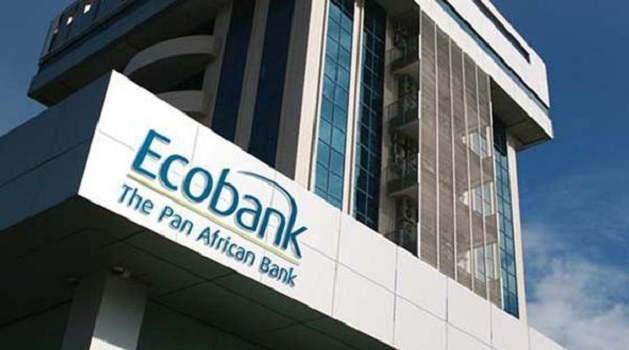
Ecobank Nigeria has moved to retire the remaining part of its $300 million Eurobond before maturity. The bank has launched a tender offer for holders of its 7.125% senior notes due February 2026.

The bank announced the offer on Friday, 28 November 2025, inviting investors to tender their holdings ahead of schedule. Of the original $300 million issuance, $150 million remains outstanding.
Under the terms, investors whose notes are accepted for repurchase will receive $1,000 for every $1,000 in principal, plus accrued and unpaid interest up to, but not including, the settlement date. The transaction is expected to be completed on or before 31 December 2025.
Ecobank said the early repayment move is part of a broader strategy to optimise its balance sheet and strengthen capital planning flexibility. The lender added that the tender offer gives investors an opportunity to exit the instrument ahead of the original February 2026 maturity.
In a statement, the bank said the initiative underscores its “commitment to transparent engagement with funding partners and investors,” stressing that the offer supports its long-term goal of maintaining a well-structured debt profile.
Participation in the programme is voluntary, and investors will make decisions based on their individual considerations, the bank added.
Ecobank emphasised that the announcement is for information only and does not constitute an offer to buy or sell securities. Eligible noteholders are expected to rely on the formal tender documents when deciding whether to take part.
The Securities and Exchange Commission (SEC) has asked the Investments and Securities Tribunal (IST) to order the freezing of all bank accounts belonging to Crypto Bridge Exchange (CBEX) and other defendants held in commercial banks and financial institutions across Nigeria.

The request was made in Suit No. IST/OA/02/2025: Securities and Exchange Commission & Anor v. Crypto Bridge Exchange (CBEX) & 25 Others, the first case before the 6th Tribunal presided over by Hon. Aminu Jinaidu, Chairman of the IST.
SEC also urged the Tribunal to seize houses and other assets allegedly acquired by the defendants using proceeds obtained from the public through the CBEX investment scheme, which it said falsely operated as a digital assets platform and capital-market operator.
The Commission argued that CBEX, which is not registered with SEC, unlawfully promised investors a 100 percent return on investment within 30 days—conduct it said is in violation of Section 3(b) of the Investments and Securities Act, 2025.
SEC further disclosed that the Securities and Futures Commission of Hong Kong had, on April 23, 2024, issued an advisory warning against CBEX, describing it as a suspicious virtual-asset entity. According to the advisory, CBEX adopted a name resembling that of a Chinese property-rights trading organisation to give investors false assurance, despite having no connection with the legitimate entity.
At Tuesday’s sitting, the Tribunal ordered that hearing notices be served on the defendants through national newspapers, as CBEX failed to appear and was not represented in court.
CBEX launched in Nigeria in July 2024, operating through a website and mobile app. It claimed to use advanced artificial intelligence to generate unusually high profits from cryptocurrency trading, promising returns of up to 100 percent within a 40- to 45-day lock-in period. The scheme later collapsed and was exposed as a Ponzi operation that reportedly defrauded investors of more than N1.3 trillion (about $800 million).
Hon. Jinaidu also presided over several other matters on the tribunal’s docket, including Benue Investments Property Co. Ltd & Anor v. Securities and Exchange Commission & 6 Others; Maven Asset Management Ltd v. Securities and Exchange Commission; John Makinde Onade & Anor v. First Registrars & Investors Services Ltd & Anor; and Securities and Exchange Commission & Anor v. Tourist Company of Nigeria PLC & 6 Ors. All the cases were adjourned to January 27, 2026.
Philip Ikeazor, the Central Bank of Nigeria’s Deputy Governor for Financial System Stability, said financial inclusion must remain a core priority in the nation’s economic transformation agenda, reaffirming that the next phase of CBN reforms will be crucial for driving growth, stability, and poverty reduction.

Represented by Aisha Issa Olatinwo, director of consumer protection and financial inclusion at the 9th Annual Financial Markets Conference organised by the Financial Markets Dealers Association, Ikeazor noted that the connection between financial inclusion, economic stability, and national growth is now clearer than ever, describing inclusion as a fundamental pillar for improving livelihoods.
“Every individual should be able to access secure and reliable financial services with the potential to increase prosperity, reduce poverty, and enable social well-being,” he said.
Despite progress over the past decade, particularly the rising adoption of digital wallets, bank accounts, and formal financial channels, he acknowledged that key barriers persist. Rural and low-income populations still face challenges such as limited access points, low financial literacy, infrastructure gaps, and regulatory constraints.
Ikeazor highlighted improvements recorded between 2012 and 2023, including declines in the number of adults depending solely on informal financial systems, but warned that more work is required to close remaining access gaps.
He reaffirmed the apex bank’s commitment to accelerating reforms under the National Financial Inclusion Strategy, which is currently being updated to its next phase, NFIS 4.0.
The revised framework, he said, will focus on strengthening digital channels, deepening credit access, and ensuring underserved groups are better supported.
“Policy remains at the heart of our efforts,” he noted. “We have implemented a range of initiatives from the original strategy to the current version under review, which will come out as NFIS 4.0.”
According to Ikeazor, technology remains the most powerful driver of inclusion. Digital financial services ranging from mobile wallets to fintech-enabled credit are breaking old barriers and enabling millions to access services previously out of reach.
He added that the CBN is working to ensure a safe digital environment by prioritising cybersecurity, consumer protection, and responsible innovation.
He also outlined how financial inclusion fuels economic expansion: improved credit access, greater participation in the economy, increased savings and investment, stronger resilience to shocks, and more opportunities for job creation and poverty reduction.
“Financial inclusion can help reduce income inequality and grow the economy to its full potential,” he said.
The Deputy Governor stressed that collaboration across stakeholders, regulators, financial institutions, fintech innovators, civil society, and development partners will determine the success of Nigeria’s inclusion agenda.
“Achieving our vision requires collaboration across governments, regulators, financial institutions, technology developers, civil society and the public,” he said, urging stakeholders to recommit to building a resilient and future-proof financial system.
He added that Nigeria’s youthful demographics and rapid digital adoption present a significant opportunity to achieve near-universal financial inclusion in the coming years.

Ecobank Nigeria to Fully Repay $300 million Eurobond Ahead of Schedule

PalmPay MD Seeks Deeper Financial Inclusion @ CeBIH Annual Conference 2025

Airtel Africa Foundation Opens Undergraduate Scholarship Portal in Nigeria

YouTube Nigeria Unveils 2025’s Top Lists and Launches New YouTube Recap Feature

Reps Give Banks Four-Day Ultimatum on Tax Deductions, Charges

Kaspersky Introduces Cyber Pathways to Support Career Development in Cybersecurity

NITDA DG Tasks Youths to Drive Africa’s Digital Transformation

Firm Urges Organizations to Check Protection of their Websites Amid Search Engine Optimisation Attack Schemes

Hackers Breach Phones of Dangote and Otedola, Demand Ransom

FCCPC Sets Deadline for Digital Lending Regulatory Compliance




 News3 days ago
Lagos Launches Tele-Vet, Nigeria’s First Veterinary Call Centre

 E-Business2 days ago
Report Reveals Half of 2025’s Compromised Passwords were Already Leaked

 Telecom2 days ago
Nigeria Dominates 2025 TikTok Sub-Saharan Africa Awards with Six Wins

 E-Financial2 days ago
FG, SEC, NGX Group Agree on Capital Gains Tax Reform

 Broadcasting2 days ago
EFCC Arik Case: Witness Testifies on Receiver Manager Nominee’s Role in NG Eagle Shareholding

 E-Financial2 days ago
A Nation on Alert: Is FIRS’ Xpress Payments Move Consolidating a Revenue Cartel?

 E-Business2 days ago
UBA Wins Africa’s Bank of the Year for Third Time in Five Years

 Telecom2 days ago
Airtel Africa Foundation Celebrates International Volunteer Day, Honours Employee Volunteers