

Telecom
FG Allowed Telcos to Hike Tariffs to Avert Massive Job Losses – Minister


Dr. Bosun Tijani, minister of Communications and Digital Economy, has said that the federal government approved a 50 per cent tariff hike for telecommunications services to avert job losses and prevent multinational firms from leaving the country.

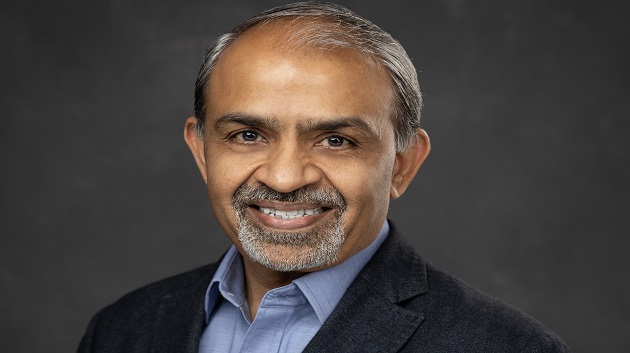
Dr. Bosun Tijani, minister of Communications and Digital Economy
Tijani, provided this clarification on Thursday, shortly after leading the management of Airtel Nigeria to the Presidential Villa in Abuja for a meeting with President Bola Tinubu.
He explained that the decision aligns with the need to ensure the sustainability of foreign investment amidst rising operational costs and inflationary trends.
“If we chose not to allow the increase in tariffs, we would be at risk of losing jobs, as some of these companies could shut down, and when you weigh that, it’s also not the best outcome for the economy,” the minister said.
Tijani noted that the government carefully considered the decision, given the critical role the telecoms sector plays in the country’s economy.
He highlighted that the sector, including its entire value chain, employs nearly half a million Nigerians, making it a significant contributor to national development.

He further revealed that the request for a tariff increase had been pending before the current administration took office, but President Bola Tinubu insisted on a thorough evaluation before approving any adjustments.
“This is a government that is extremely conscious of the state of the economy, and Mr. President consistently takes into consideration each and every citizen before making decisions. Some of these decisions are difficult, but we have to balance the interests of individuals and businesses alike,” he said.
“To determine the optimal rate for the adjustment, the government commissioned a study led by KPMG, which provided insights into the most sustainable tariff increase.”
Tijani emphasised that the government’s focus extends beyond affordability to ensuring “meaningful access” to telecommunications services.
This involves not only providing connectivity but also guaranteeing high-quality service delivery, ensuring that Nigerians receive the full benefits of digital connectivity.
“The NCC has been working to shift the focus not just to quality of service but to quality of experience. Now that the MNOs have the opportunity to increase tariffs, they must ensure that quality remains a priority,” he stated.
To achieve its objectives, Tijani highlighted the government’s continued investment in telecommunications infrastructure, aiming to enhance connectivity and support economic growth across Nigeria.
“This includes the expansion of Nigeria’s fibre-optic network by 90,000 kilometres and the recent approval by the Executive Council for the construction of 7,000 additional telecom towers in rural areas.”
The minister affirmed that while private sector investment in the telecoms industry remains crucial, the government is actively intervening to guarantee universal access to high-quality connectivity across Nigeria.
This collaborative approach aims to bridge connectivity gaps and improve service quality nationwide.



Senate has moved closer to making it mandatory for global social media companies operating in Nigeria to establish physical offices in the country following widespread support for the proposal at a public hearing in Abuja.

The proposed legislation, sponsored by Sen. Ned Nwoko (Delta North), seeks to amend the Nigeria Data Protection Act, 2023, to require social media platforms providing services to Nigerians to maintain operational offices within the country.
The public hearing, organised by the Senate Committee, also received support for a separate bill seeking the establishment of an Artificial Intelligence (AI) Academy in Omuo-Ekiti, Ekiti State.
Representing Senate President Godswill Akpabio, Deputy Senate Leader Sen. Lola Ashiru said the proposed legislation was not intended to discourage technology companies from investing in Nigeria but to strengthen accountability, engagement and regulatory cooperation.
According to him, the objective is to ensure that global technology companies have a stronger presence in Nigeria’s digital ecosystem.
Speaking during the hearing, Nwoko said the bill was designed to deepen the relationship between technology companies and Nigeria rather than create obstacles for innovation.
“This bill is neither punitive nor hostile to innovation. It is not designed to frustrate investment or discourage technology companies from operating in Nigeria.
“On the contrary, it seeks to deepen their engagement with Nigeria by encouraging them to become true corporate citizens of our country,” he said.
The lawmaker argued that several countries had successfully attracted major technology companies to establish local operations by adopting similar policies.
He listed the United Kingdom, India, the United Arab Emirates, South Africa and Brazil as countries that have secured local offices from global technology firms, resulting in increased employment opportunities, improved tax revenue and stronger innovation ecosystems.
According to him, those countries recognised early that the digital economy has become as important as the traditional economy.
“The question, therefore, is simple: if countries with significantly smaller populations and digital markets than Nigeria have secured these investments and benefits, why should Nigeria continue to stand on the sidelines?
“Why should Africa’s largest digital market not enjoy the same opportunities?” Nwoko asked.
He maintained that requiring global social media companies to establish local offices would enhance regulatory engagement, improve service delivery, stimulate job creation and strengthen Nigeria’s digital economy.
The Senate committee said it would review memoranda and submissions received from stakeholders during the public hearing before preparing its report for consideration by the Senate.
If passed and signed into law, the amendment would require major social media companies operating in Nigeria to maintain a physical corporate presence within the country.


The GSM Association (GSMA) has urged African governments to reduce taxes and levies on entry-level smartphones as part of efforts to accelerate digital inclusion and ensure millions of Africans are not excluded from the emerging artificial intelligence (AI) revolution.

The association warned that about 961 million Africans who are currently covered by mobile broadband networks are not using the services due to affordability challenges, particularly the high cost of smartphones.
The call was made at the Digital Africa Summit, organised by GSMA in partnership with the African Telecommunications Union (ATU), which brought together regulators, policymakers and industry stakeholders to discuss strategies for improving connectivity and driving digital transformation across the continent.
Speaking at the event, Caroline Mbugwa, senior director, Public Policy and Communications, GSMA Africa, said affordable smartphones and reliable connectivity were essential for unlocking the benefits of AI across sectors including healthcare, education, transport and commerce.
Mbugwa noted that while mobile broadband coverage has expanded significantly across Africa, a large number of people remain unable to access digital services because they cannot afford smartphones.
She stressed that fiscal reforms, particularly the removal of taxes on entry-level devices, were urgently needed to make smartphones more accessible to low-income users.
According to her, South Africa’s decision to remove a nine per cent luxury goods tax on entry-level smartphones helped accelerate adoption of smart devices and reduce dependence on feature phones.
“We are now entering what we call the era of intelligence, and the era of intelligence requires that we have an already existing robust infrastructure, robust connectivity that can support the growth of artificial intelligence on the continent.
“We have a whole 961 million Africans that are covered by mobile broadband services but are not using the service. This is what we refer to as a usage gap. If this remains unaddressed, it means that this number will be left behind when it comes to the adoption of AI.
“This signals that there is demand for adoption of smart devices. Customers are willing to actually use the service. Affordability is the challenge,” she said.
Also speaking, Michaela Angonius, head of Global Policy and Regulatory Team at GSMA, said African countries must adopt policy reforms that encourage investment, expand connectivity and reduce barriers to digital access.
Angonius, who oversees global regulatory and policy issues covering areas such as fiscal policy, competition and network deployment, cautioned against adopting a one-size-fits-all approach to reforms across the continent.
She said findings from the Digital Africa Index showed that while some countries, including South Africa, had made significant progress, others still needed deeper regulatory reforms to improve their digital ecosystems.
She identified three major areas requiring attention: modernising licensing frameworks, improving the use of Universal Service Fund (USF) resources and adopting smarter approaches to quality of service regulation.
According to her, many African countries still operate technology-specific licensing systems, which do not align with the rapid evolution of digital technologies.
Angonius advocated for technology-neutral licensing frameworks that would allow different communication providers, including satellite operators, mobile network operators and internet service providers, to operate under the same regulatory principles.
She explained that the growth of satellite services had exposed weaknesses in existing licensing structures, as regulators often struggle to determine how to classify new technologies.
On Universal Service Funds, Angonius said the existence of unused funds in many countries effectively creates an additional tax burden on telecom operators, which eventually increases costs for consumers.
She warned that such additional costs could worsen the digital divide at a time when Africa is already struggling with smartphone affordability and connectivity challenges.
The GSMA executive also called for a review of quality of service regulations, arguing that countries with the best digital service quality are not necessarily those with the most detailed regulatory requirements.
She said governments should instead focus on policies that encourage investment, expand coverage to underserved communities and improve access for people who remain disconnected.
Angonius further advised finance ministers across Africa to remove levies placed on entry-level smartphones to lower the cost of first-time device ownership.
“Those countries with the best quality of service are not necessarily the countries that have detailed quality of service regulation. Rather, they have focused on how to get the investment right.
“If you have a levy on any handset, firstly, if you can, as a finance minister, remove it. If you can’t, at least remove it from those entry-level handsets that should be affordable for everyday users,” she said.
She added that Nigeria, like other African countries, could benefit from reforms that promote investment, address societal needs and ensure consumers gain long-term value from digital transformation.

Airtel Africa has confirmed that the London Stock Exchange is its preferred listing venue for Airtel Money in 2026, as the group looks to unlock value from its fast-growing fintech business.

The highly anticipated listing aims to maximise market opportunities, with analysts reportedly anticipating a valuation of around $10 billion.
The announcement came as the telecoms operator reported strong first-quarter (Q1) results on Thursday, with surging data usage and mobile money transactions driving double-digit revenue growth across its markets.
The group reported revenue of $1.85 billion, up 31% in reported currency and 21.1% in constant currency, underscoring robust demand for digital and financial services.
Mobile money remained a standout performer, reinforcing its role as a key growth engine. Total transaction value reached an annualised $245 billion, up 51.5%, while the customer base grew 23.3% to 56.5 million users.
“Our focus on deepening financial inclusion through increased customer adoption, broader use cases and a stronger digital payments ecosystem enabled higher usage and facilitated continued average revenue per user growth, reinforcing Airtel Money’s growing role as a trusted digital financial services provider,” the company said.
Sunil Taldar, CEO of Airtel Africa, said the company is leveraging digital platforms, data and artificial intelligence to enhance customer experience and support long-term growth.
“We have started this year with another pleasing performance. Our continued focus on the customer experience translated into accelerating customer base growth across all business segments,” he said.
Taldar said a London listing would provide access to a broader international investor base and support the telco’s ambition to unlock long-term value from one of Africa’s leading fintech platforms.
Data usage per customer rose from 7.8GB to 10.6GB per month, driving a 56.3% increase in network traffic, while smartphone penetration reached 51%, reflecting continued digital adoption.
Accelerated network investment drove capital expenditure (capex) of US$389 million, up from $121 million in the corresponding period last year.
“Supported by an elevated pace of deployment, we added more than 920 sites during the quarter, our highest first-quarter site rollout, while further expanding our fibre network to 82,100km,” the company said.
Airtel’s cost-efficiency programme supported EBITDA margin resilience, with the margin remaining at 50.1% in Q1.
However, the company warned that higher energy costs linked to geopolitical developments could increase inflationary pressures and weigh on margins in the near term.
Despite this outlook, the operator said its investment programme remains on track, with spending brought forward to support demand and capture growth opportunities linked to Africa’s digital transformation.

Senate Moves to Compel Social Media Companies to Open Offices in Nigeria

Nigeria Leads Africa in Online Gambling Regulation – GCI

CBN Has Not Published Annual Financial Statements Since 2022 despite Legal Requirement

ChatPay Unveils Public Waitlist for WhatsApp-Based Banking Platform

GSMA Says High Smartphone Costs Threatens Africa’s AI Future

NRC, Ponzi Scheme Collapses Resulting Loss of Billions of Naira

NASENI Moves to Digitize CCB’s 5m Assets Declaration and Operations

Tokenization, Blockchain Technology will Transform Financial Institutions – IMF

EFCC Busts NIS Visa Overstay Racket, Uncovers N700m in an Account

From Scarcity to Scale: What Africa Can Learn from India’s Agricultural Transformation




 General News3 days ago
FG Launches C.L.I.C.K.D., Consumer Credit Scheme for Tech Devices

 Telecom3 days ago
Airtel Nigeria Expands Retail Footprint to Strengthen Customer Access Nationwide

 Telecom3 days ago
MTN Nigeria Opens Applications for Next Afrobeats Star Season 2 with Bigger Prizes

 News3 days ago
NPC Opens Nationwide Digital Birth, Death Registration Platform

 E-Business3 days ago
Ovaloop Technologies Unveils Digital Tools to Formalize SMEs Operations Across Africa

 Telecom3 days ago
Kaspersky Survey Highlights the Need for Smartphone Security

 E-Financial3 days ago
CBN Retains Interest Rate at 26.5% as Cardoso Cites Global Uncertainty Despite Inflation Drop

 Telecom2 days ago
Court Dismisses Pan African Towers’ Bid to Halt Ex-CEO’s Suit, Awards ₦500,000 Costs