

Broadcasting
FG-backed mortgage reforms help over 700 Nigerians become homeowners in 6 months

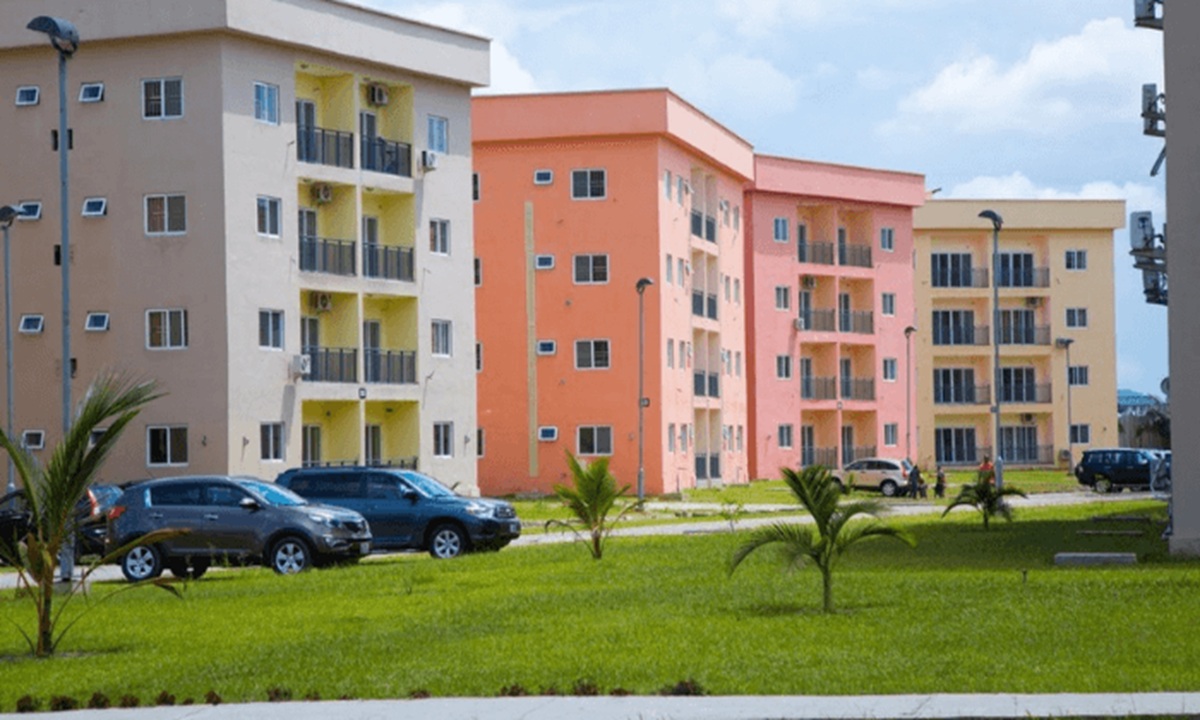
More than 700 Nigerians have successfully transitioned from renters to homeowners within six months, following the implementation of landmark mortgage reforms spearheaded by the Federal Government through the Ministry of Finance Incorporated (MOFI).

The milestone, announced on Tuesday, marks a significant shift in Nigeria’s housing sector, which has long faced challenges including high interest rates, limited financing options, slow mortgage processing, and a housing deficit exceeding 28 million units.
Central to this transformation is the MOFI Real Estate Investment Fund (MREIF), a Securities and Exchange Commission (SEC)-registered ₦1 trillion fund designed to provide long-term, affordable mortgages to ordinary Nigerians.
The fund offers interest rates as low as 9.75 percent per annum and repayment periods of up to 20 years, making homeownership more accessible than ever.
At full utilization, MREIF aims to enable at least 12,000 Nigerians to own homes, with additional refinancing support planned through the Nigerian Mortgage Refinancing Company.

For decades, many Nigerians have been trapped in a cycle of rent payments, often described as “funding their landlord’s retirement.” Now, with MREIF, homebuyers can secure loans and move into their own homes within weeks.
Since its launch, MREIF has disbursed funds to over 700 homebuyers through 11 Eligible Financial Institutions across five regions of the country.
These institutions, licensed by the Central Bank of Nigeria and preapproved by MREIF, include Abbey Mortgage Bank, Access Bank, AG Mortgage Bank, FCMB, FHA Mortgage Bank, Gateway Mortgage Bank, Globus Bank, Homebase Mortgage Bank, Imperial Homes Mortgage Bank, Infinity Trust Mortgage Bank, Living Trust Mortgage Bank, Nigeria Police Mortgage Bank, Providus Bank, Stanbic IBTC, and Union Bank. Each mortgage represents a family moving from rent into ownership, building equity, stability, and generational wealth.
The Federal Government committed ₦150 billion under Series 1 funding, fully subscribed in December 2024, while private sector investors added another ₦100 billion under Series 2. Additional tranches could scale the fund to ₦1 trillion, ensuring long-term sustainability.
The fund is professionally managed by ARM Investment Managers, with a structure anchored in public–private collaboration to ensure affordability, transparency, and efficiency.
Wale Odutola, CEO of ARM HoldCo, said MREIF embodies the kind of partnership Nigeria has long needed—government resolve combined with private sector rigour.
He added that together with MOFI, they are laying the structural foundation for a housing sector that rewards citizens, unlocks investor confidence, and drives inclusive growth.
Beyond individual mortgages, MREIF also offers offtake guarantees to developers, encouraging new construction projects, creating jobs, and strengthening the housing supply chain. Nigerians in the diaspora now have a transparent, government-backed platform to invest in secure homeownership.
Despite challenges such as inflation, forex volatility, and high construction costs, MREIF’s long-term financing model is designed to withstand economic shocks. As more financial institutions, pension funds, and developers join the initiative, thousands more Nigerians—both at home and abroad—are expected to benefit.
The message is clear: the era of affordable homeownership has arrived in Nigeria. With Federal Government backing and private sector management, MREIF is not just a housing scheme—it is a national economic reform poised to reshape lives and communities across the country.



David Adedeji Adeleke, known professionally as Davido, has shared his past suicidal thoughts as he dropped Oriadé, his sixth studio album yesterday.

Davido
Davido said he chose the date on purpose as it marks exactly 15 years since he began his professional music career.
Oriadé is a Yoruba word combining “Ori,” meaning destiny, and “Adé,” meaning crown.
It translates to “the crowned head.” The album has 13 tracks and features Black Sherif, Aya Nakamura, Leon Thomas, Mayorkun, and Llona.
It follows his 2025 project, 5ive, which reached number two on the Billboard World Albums chart.
Davido also announced an international tour to support the new record.
In the days leading up to the release, Davido gave interviews that revealed personal details about his past and his current life.
Speaking to Vibe Magazine on Thursday, he described a 2014 incident in Ghana that left him feeling suicidal.
He said he invited a woman back to his hotel room after a show, and she later posted a photo of him sleeping online.
He said the fallout overwhelmed him.
“My daddy was calling me. My sisters were calling me. If I saw the balcony that day, I would have jumped,” he said.
He said he was young at the time and did not fully understand the consequences of his actions.
He described the experience as a turning point that changed how he thinks about privacy and fame.
In the same interview, he explained why he often dresses down in public despite his wealth.
He recalled a trip to the South of France where he went out in shorts and slippers without his watch.
“I’ve been on jets, I’ve been flying, I’ve been in all these places since I was a baby. I’ve been seeing money since I was a baby. So all these things don’t really excite me,” he said.
He added that he sometimes prefers to drive a Toyota to the supermarket in Atlanta instead of one of his luxury cars.
In a separate livestream with Davrel, Davido spoke about how his life has changed since marrying his wife, Chioma, and becoming a father.
He said his home no longer holds the large crowds it once did.
“I can no longer have 100 people in my house like before,” he said.
He said he speaks to Chioma every day regardless of his schedule.
He also disclosed that he spends between $200,000 and $300,000 a month on himself, not including costs for his wife, children, jewelry and cars.
He said the amount is lower when he is in the United States, where he described his lifestyle as quieter.

Africa Prudential Plc has reaffirmed its commitment to digital transformation, revenue diversification and sustainable growth after reporting a strong financial performance for the first half of 2026.

Dr Catherine Nwosu
The company made this known during its H1 2026 Investor Call, which brought together institutional investors, shareholders, investment analysts, regulators and other stakeholders to review its financial performance and strategic outlook.
Dr Catherine Nwosu, managing director and Chief Executive Officer of Africa Prudential, said the company’s performance reflected the resilience of its business model and the effectiveness of its long-term growth strategy despite prevailing macroeconomic challenges.
According to the company’s financial results, gross earnings rose by 27 per cent year-on-year to N4.28 billion, from N3.34 billion recorded in the corresponding period of 2025.
Profit before tax increased by 22 per cent to N2.41 billion, while profit after tax grew by 18 per cent to N1.59 billion.
The company also reported a 27 per cent rise in net operating income to N4.21 billion, while total assets increased by 13 per cent to N46.53 billion.
Shareholders’ funds equally rose by 13 per cent to N12.52 billion, reflecting continued financial strength.
Management attributed the performance to sustained growth in its core registrar business, increased corporate action activities in the Nigerian capital market, improved treasury earnings and rising adoption of its technology-driven solutions.
The company said it was steadily transforming from a traditional share registrar into a broader technology and business solutions provider serving Nigeria’s capital market ecosystem.
During the interactive session, investors sought clarification on the sustainability of earnings, particularly as interest rates are expected to moderate.
Responding, Nwosu said the company was deliberately expanding its recurring fee-based revenue streams to reduce dependence on treasury income.
“Interest rates influence our treasury income positively, but that is why we are deliberately diversifying our revenue streams.
“Our strategy is to grow recurring fee-based business lines such as our digital solutions, Know Your Customer (KYC) services, Annual General Meeting (AGM) technology, probate services and the SabiVest mobile app.
“Over time, this will reduce our reliance on interest income and create a more balanced and resilient earnings mix,” she said.
Nwosu noted that increasing capital market activities had created stronger demand for seamless digital investor experiences, improved operational efficiency and enhanced compliance solutions.
She said the company would continue investing in technology-enabled products capable of delivering long-term value to shareholders while strengthening its competitive position.
According to her, Africa Prudential has identified five strategic priorities for the second half of 2026.
The priorities include driving sustainable growth across its core registrar and emerging business lines, accelerating technology-led product innovation, strengthening brand leadership, investing in talent development and deepening corporate governance.
She said the investor engagement demonstrated the company’s commitment to transparency, accountability and regular engagement with shareholders and the investment community.
Africa Prudential reaffirmed its commitment to leveraging innovation, operational excellence and sound financial management to sustain growth and strengthen its leadership position in Nigeria’s capital market.


Gugu Gumede and S’Dumo Mtshali, the power couple in Netflix’s telenovela, The Polygamist, will be guest on this week’s edition of African Voices, which is sponsored by Globacom on Cable News Network (CNN).

The 22-episode sitcom focuses on the misadventures of an adulterous spouse who unknowingly entangles his family in the difficulties of polygamy.
The film depicts a series of intrigues, betrayals, and other events that shattered the harmony of a once-perfect marriage.
The fictional couple in Johannesburg are interviewed by the programme’s anchor, Larry Madowo, for a 30-minute show in which they discuss their personal experiences and the difficulties they have in the film industry, such as coping with popularity and typecasting and advocating for more actor protections.
Gumede, a 34-year-old South African who attended the American Academy of Dramatic Arts in Los Angeles to study acting, portrayed Joyce Gomora in the telenovela.
In addition to her part in The Polygamist, Gumede has portrayed Mamlambo, a prophetess on “Uzalo”, the most watched television program in South Africa, and Mandisa in “Generations”, one of the country’s most popular series.
Mtshali, a 43-year-old South African actor who portrayed Jonasi Gomora, gained notoriety in 2010 after competing in and winning the SABC1 reality program, “Class Act”. In the same year, he landed his first major part in the drama series “Intersexions” on SABC1.
Among other films, he has starred in “Inside Story” (2011), “Avenged” (2013), “iNumber Number: Jozi Gold” (2023), “Back of the Moon”, and “The Four of Us” (2025).
This special double-cast episode will feature on DSTV channel 401 on Saturday at 8a.m. It will be repeated same day at 11a.m., Sunday at 3.30a.m.,6p.m., Monday at 3a.m. and 5.45p.m. as well as on Tuesday,5.45p.m.
The repeats continue next week Saturday at 7.30a.m., 11a.m.;Sunday 3.30a.m., 6p.m.,and on Monday at 3a.m.

SERAP Asks Tinubu to Probe Alleged N6.79Bn Missing Police Funds, Firearms

FCT Court Awards Ex-Customers N15m against Stanbic IBTC over Data Privacy Breach

CBN Exposes over 13,000 BVNs Tied to Fraud as Banks Tighten Security

Atte, Nigerian Develops AI Algorithm for Hair Transplants

Dare Tackles Onaiyekan over Criticism of Tinubu, Says Economic is Working

NRC, Ponzi Scheme Collapses Resulting Loss of Billions of Naira

EFCC Busts NIS Visa Overstay Racket, Uncovers N700m in an Account

From Scarcity to Scale: What Africa Can Learn from India’s Agricultural Transformation

Tokenization, Blockchain Technology will Transform Financial Institutions – IMF

BON Establishes Six Ad Hoc Committees to Modernize Broadcasting




 Broadcasting2 days ago
Davido Shares Past Suicidal Thoughts, Drops Oriadé Album

 E-Business2 days ago
How Temu Helped a Madagascan Vanilla Family Business Sell Direct to Consumers Across Europe

 General News2 days ago
MTN Nigeria Posts N707.5bn H1 Profit, Declares N26 Interim Dividend

 News2 days ago
Cisco Explores AI for Nigeria Farmers

 General News2 days ago
Gavi Okays $500m for Vaccines, PHCs in Nigeria

 News2 days ago
AfCFTA Urges Africa to Stop Exporting Raw Materials

 E-Business2 days ago
82% of Organizations Concerned about AI Risks Even as Adoption Accelerates – Survey Reveals

 General News2 days ago
Police Uncover Fake Diplomatic Number Plate Syndicate in Abuja