

E-Financial
FG Borrows N473Bn in 4 Months to Finance Budget

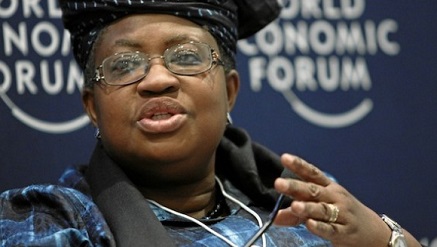
Federal government has borrowed the sum of N473 billion in the past four months to finance this year’s budget and not released any funds for capital expenditure, as lower oil prices eat into its revenues.
Dr. Ngozi Okonjo-Iweala, minister of Finance, who stated this during a media briefing on the budget, which was passed by the National Assembly last week said that despite the fact that the budget had not been signed into law by President Goodluck Jonathan, the constitution allowed the Executive to incur expenditure within the first six months into the fiscal year.
Later in an emailed statement to Reuters, the minister said that “We have serious challenges,”
“Things have been tough since the beginning of the year and they are likely to remain so till the end of the year.”
The borrowed money has been spent to cover overhead, including salaries, the minister said.

Lawmakers in Africa’s biggest economy and oil producer last week passed a 4.49 trillion naira ($23 billion) budget for 2015, 3.2 percent lower than last year’s spending plans. It was forced to cut spending after global oil prices slumped.
The budget took longer than usual getting through parliament, worsening the cash squeeze, because of the closely fought general elections in March, which saw incumbent President Goodluck Jonathan defeated.
“As a result of the 50 percent decline in oil revenues, the country has faced a difficult cash crunch … Out of the 882 billon naira budgetary provision for borrowing, the government has borrowed 473 billion naira to meet up with recurrent expenditure,” the finance ministry said.
Okonjo-Iweala had projected annual domestic borrowing last year would fall to below 500 billion naira from 577 billion naira in 2013.
The borrowing requirement this year could crowd out lending to the real economy, raising domestic interest rates and yields on government bonds, which could hurt growth. Forecasts for growth have already been lowered twice this year.
The ministry said that inflation is still in single digits and that the Nigerian economy is projected to grow by 4.8 percent this year.
Government revenues have shrunk sharply since oil sales account for up to 80 percent of them and its currency, the naira, has weakened drastically, despite the central bank’s spending billions of U.S. dollars to prop it up.
The lack of funds for capital expenditure means badly needed infrastructure development will be put on hold. Funding for large projects such as bridges and roads had already begun to dry up in 2014, forcing construction firms companies with government contracts to cut back and fire thousands of workers.


Securities and Exchange Commission (SEC) has issued an urgent directive requiring all capital market-regulated entities (CMREs) to immediately subscribe to Nigeria’s Sanctions (NigSac) Alerts system.

Effective immediately, failure to comply with this, or other AML/CFT regulations, may result in severe fines, suspension of operations, or revocation of registration.
This follows fresh designations by both local and international authorities of individuals and Bureau de Change operators for alleged direct involvement in terrorism financing and material support to the Islamic State West Africa Province (ISWAP).
The directive, according to three circulars issued by the apex capital market regulator, requires a mandatory compliance measure with threats of fines, operational suspension, or outright registration revocation for non-compliance.
The directive, pursuant to the implementation of Financial Action Task Force (FATF) statements on high-risk jurisdictions, signals an escalation in Nigeria’s anti-money laundering and counter-terrorism financing regime.
The SEC’s broader circular implementing FATF high-risk jurisdiction statements reflects Nigeria’s heightened exposure to international scrutiny. SEC, in line with directives from Central Bank of Nigeria (CBN), now requires CMREs to terminate all correspondent banking relationships with listed high-risk jurisdictions, business entities and individuals.
“In line with the provisions of the Terrorism Prevention and Prohibition Act (TPPA), 2022, the Nigeria Sanctions Committee (NSC) has designated six (6) Individuals and three (3) Entities as terrorist financiers and subsequently added them to the Nigeria Sanctions List,” SEC stated in circular to all market operators.
The circular mandated all capital market regulated entities and individuals to do the following:
“Immediately, identify and freeze, without prior notice, all funds, assets, and any other economic resources belonging to the designated persons and entities in their possession and report same to the Secretariat of the Nigeria Sanctions Committee;
“Report to the Secretariat of the Nigeria Sanctions Committee any assets frozen or actions taken in compliance with the designation, including attempted transactions;
“Immediately file a suspicious transactions report to the Nigerian Financial Intelligence Unit (NFIU) for further analysis on the financial activities;
“Report as a suspicious transactions report to the NFIU, all cases of name matching in financial transactions prior to or after receipt of this Sanctions List;
“Subsequently prohibit dealings with the designated persons and entities; and continue to check for transactions relating to the designated persons and entities and report findings to the Nigeria Sanctions Committee through [email protected]”, SEC stated.
“Take Note that at all times, any unusual or suspicious transactions shall be promptly reported to the NFIU,” SEC warned.
According to the capital market apex regulator, the circular takes immediate effect and failure to comply with the directives constitutes a violation of the Investments and Securities Act, 2025, and the SEC AML/CFT Rules and Regulations and such failure would attract appropriate regulatory sanctions, including fines, suspension of operations, or revocation of registration.
The directive implies that capital market operators should immediately audit their AML/CFT technology stacks to ensure NigSac Alerts subscription and automated flagging capability.
CMREs are required to file suspicious transactions reports with the Nigerian Financial Intelligence Unit (NFIU) for any name matching with designated individuals and entities, whether such matches occur pre- or post-transaction.
The obligation extends to reporting all funds frozen and actions taken in compliance with designations to the NSC Secretariat via [email protected].
The designations also create secondary compliance obligations: CMREs must now maintain watchlists that incorporate designations from both the NSC and US Treasury, as regulatory expectations implicitly track international sanctions coordination.
For institutional investors and fund managers, this translates to enhanced due diligence on counterparty relationships, particularly where transactions flow through informal financial infrastructure or jurisdictions flagged under FATF increased monitoring status.

The Africa Finance Corporation (AFC) has raised CHF350 million, about $430 million, through a five-year digital bond, marking a major step in the use of regulated digital financial infrastructure by an African institution.

The transaction is the first time an African institution has issued a digital bond that is listed, traded and settled on a regulated digital exchange. It is also the largest digital bond ever issued in the Swiss franc market, according to AFC.
The deal strengthens AFC’s access to international investors as the Lagos based development finance institution seeks to diversify its sources of funding and raise more long-term capital for infrastructure and industrial projects across Africa.
The bond carries a coupon of 1.4925 percent and forms part of AFC’s wider $500 million benchmark funding programme issued in June 2026. Despite a difficult global environment marked by geopolitical tensions, the transaction attracted strong investor demand.
AFC is rated A with a positive outlook by S&P Global Ratings and A3 with a stable outlook by Moody’s Ratings, giving the institution an investment grade profile in international debt markets.
Swiss investors accounted for about 90 percent of demand, while international investors made up the remaining 10 percent. Banks and other financial institutions accounted for 57 percent of the order book, followed by asset managers at 37 percent and hedge funds at 6 percent.
“This transaction is about far more than achieving competitive pricing. It marks another significant milestone in AFC’s funding journey and underscores the confidence global investors continue to place in our strategy, credit strength, and development impact,” Samaila Zubairu, President and Chief Executive Officer of AFC, said.
Zubairu said continued diversification and innovation in AFC’s funding strategy would be important to mobilising the long term capital needed to support Africa’s industrialisation and economic transformation.
The transaction is AFC’s fourth and largest Swiss franc denominated issuance. It follows a CHF150 million green bond issued in 2020, which was the corporation’s first green bond transaction.
Banji Fehintola, Executive Board Member and Head of Financial Services at AFC, described the latest issuance as an important milestone for the corporation’s funding programme.
“Pricing the largest digital bond ever issued in the Swiss Franc market reflects not only the strength of AFC’s credit but the depth of trust that Swiss and international investors have placed in our strategy over time,” Fehintola said.
The bond was issued under AFC’s $5 billion Global Medium Term Note Programme and is structured as a tokenised security using distributed ledger technology. Ownership is recorded on a regulated digital register, while settlement takes place through regulated digital market infrastructure.
The notes are listed and admitted for trading on the SIX Swiss Exchange and deposited with SIX Digital Exchange. Clearing and settlement are handled through SIX SIS AG.
The structure gives AFC access to an alternative form of capital markets infrastructure while showing how distributed ledger technology can be used in institutional debt markets under established regulatory standards.
The proceeds will be used for AFC’s general funding needs, supporting its capacity to finance infrastructure and industrial projects across Africa.
Commerzbank AG acted as technical lead for the transaction, while Deutsche Bank AG London Branch, through its Zurich branch, also participated in arranging the deal.
For AFC, the issuance adds to a series of capital markets transactions designed to broaden its funding base and reduce dependence on a narrow group of financing sources.
The strong demand also points to continued investor appetite for African development finance institutions with established credit profiles, particularly those capable of accessing international markets while using new financial technology within regulated frameworks.

KudiWave Technologies Limited has raised questions over the transfer of N750,369,439.04 from its account with PalmPay Limited, seeking clarification on the timing, destination and circumstances surrounding the transaction.

In a statement, on Tuesday, KudiWave said the disputed debit was recorded on July 15, 2026, under the narration “Judicial Adjustment”.
The company said it was not notified of, or did not authorise, the transaction.
According to KudiWave, it had already approached the Federal High Court in Lagos to challenge an earlier order affecting its account.Politics News Service
The company said its application, filed on July 3, sought to set aside the June 29 order and stay its execution.
“The motion was heard on July 13 and adjourned for ruling. Two days later, the N750.37 million was transferred out of the account,” the company said.
KudiWave further stated that PalmPay had been served with the application before the July 15 transaction and did not file a counter-affidavit opposing the application.
The company also raised questions about an earlier movement of funds on July 11, which it said became apparent after access to the account was restored.
According to KudiWave, its account records showed that the funds were moved on July 11 and returned the same day before another transfer was recorded on July 15.
“PalmPay moved the money on July 11 and sent it back that same day. They then took it out again on July 15. When the account was opened, we saw how the money had been moved around while the account was frozen and we were not aware of it,” the company said.
The dispute followed an ex parte order obtained by the Inspector General of Police through officers of the Police Special Fraud Unit in Ikoyi, which placed restrictions on accounts belonging to several parties, including KudiWave, pending investigation.
The restriction was subsequently implemented on KudiWave’s account with PalmPay.
Further proceedings were filed under Suit No. FHC/L/CS/795/2026 before Justice Ibrahim Ahmad Kala of the Federal High Court, Lagos Judicial Division, in relation to funds standing to KudiWave’s credit.
KudiWave said the court granted an application on June 29.
The company subsequently challenged the order, arguing that it had not been properly served with the processes leading to the decision and had not been effectively brought before the court when the application was heard.
According to KudiWave, Justice Kala considered the company’s subsequent application on July 22 and set aside, vacated and discharged the June 29 order.
The company said the court also directed that the restrictions placed on its account be removed.
KudiWave further stated that the court examined the circumstances surrounding the purported service of the processes and raised questions about whether leaving documents at a gate, without sufficient indication of the company’s specific address, amounted to effective service.
The company quoted the court as describing the circumstances surrounding the service as “very curious”.
KudiWave also said the ruling recognised the court’s inherent power to set aside its own decision where circumstances justify such intervention.
The July 22 ruling came after the July 15 transfer.
KudiWave, however, said the transaction should be considered in the context of the fact that the June 29 order was already being challenged and that its application had been argued before the court two days earlier.
The company has also questioned the destination of the funds.
According to KudiWave, its understanding of the June 29 order was that the identified funds were to be transferred to a designated Police Recovery Account associated with the Police Special Fraud Unit.
The company said its account records instead indicated that the N750,369,439.04 was transferred to an Access Bank business account.
KudiWave said it wants clarification on the identity of the beneficiary, the instruction that authorised the transfer and the basis for the July 11 movement of funds.
“The issue for us is simple. If the order identified a particular account for the funds, there must be a clear explanation of why our records show the money going elsewhere and who ultimately received it,” the company said.
KudiWave said it was seeking a reconciliation of transactions carried out on its account during the restriction period and was considering further legal and regulatory steps in relation to the disputed transactions.
The company also said that, during earlier efforts to resolve the restriction, Barrister Prince Oko, its Company Secretary, met with officers of the Police Special Fraud Unit.
KudiWave alleged that a request for N50 million was made in connection with efforts to remove the restriction and said the company rejected the request.
The allegation has not been independently established and has not been determined by a court.
KudiWave maintained that its concerns do not relate to compliance with lawful court orders but to whether the transactions involving its funds were carried out in accordance with the terms of the relevant judicial directive.
The company said it wants clarification on the July 11 transactions, the subsequent N750,369,439.04 transfer on July 15, the destination of the funds and the circumstances surrounding the transactions.

Nigeria Not Making Progress in Fiscal Transparency –US

NCAA to Introduce RFID Technology to Tackle Missing Luggages

SEC Directs Operators to Subscribe to NigSac Alerts, Freeze Terrorists-Linked Funds

Davido Bets $1m in Hit-for-Hit Battle with Colleagues

GSMA Industry Services Unveils Circularity Services to Help Operators Reduce E-Waste and Unlock Value

EFCC Busts NIS Visa Overstay Racket, Uncovers N700m in an Account

Fact-Check: Elon Musk’s “Tesla Pi Phone” is Internet Rumor

NBC Tasks Broadcasting Stations over 2028 DSO Global Deadline

NBC Scraps Annual Digital Access Fee on DSO

Glo Sponsored African Voices to Feature Netflix’s “The Polygamist” Stars




 News2 days ago
Moove Achieves Unicorn Status With $250m Funding

 Telecom2 days ago
MTN Nigeria Clocks 25, Connects over 90m People

 E-Financial2 days ago
FG Suspends NAICOM’s N680m Insurance Recapitalisation Fees

 E-Business2 days ago
Microsoft to Unveil Next-generation AI Chip in September

 Broadcasting2 days ago
Affordable, Flexible Streaming Platforms May Kill PAYtv – Report

 Telecom2 days ago
Subscribers to Seek Legal Redress if Poor Quality of Service Continue in September

 E-Financial2 days ago
SEC Moves to Recover Unclaimed Dividends, Inherited Investments Nationwide

 Telecom2 days ago
ipNX Collaborates with ICT Stakeholders on the Future of Fibre-to-the-Home in Nigeria @ ATCON Forum