

Telecom
FG Calls For Open, Secure Internet @Africa Internet Governance Forum


Nigerian government has subscribed to a free and secure Internet for Africa, which is capable of bridging the digital divide and creating innovative opportunities within the continent.

Dr. Bosun Tijani
Dr. Bosun Tijani, Minister of Communications, Innovation and Digital Economy who canvassed this position at the just-concluded Africa Internet Governance Forum at the Transcorp Hilton, Abuja, said the administration of President Bola Ahmed Tinubu is committed to engendering necessary collaborations and international dialogues to achieve these objectives.
The Minister, who addressed the forum virtually, said Nigeria, as the largest telecommunications market in Africa, is conscious of all the dynamics of emerging technologies around Internet usage and would continue to work with countries in Africa on different fronts to ensure that the Internet is effectively governed so its innumerable resources can be leveraged for citizens and nation’s growth.
“The need for our consistent collaboration to develop our economy collectively is preeminent in the agenda of the current administration in Nigeria. It is through this kind of forum that we can bridge the digital divides, enhance cybersecurity, ensure digital rights and foster innovation. It is, therefore, our collective duty to ensure that the Internet remains open, safe and beneficial for all,” Tijani told parliamentarians and other participants from Africa who attended the forum in Abuja.
The Minister encouraged all the stakeholders to prioritise a collaborative approach to creating policies and strategies that will shape the future of the Internet in Africa, the future that will reflect Africa’s shared values, aspirations and diversity.
Tijani specially commended the Nigerian Communications Commission (NCC) and other agencies that constituted the Local Organising Committee (LOG), on behalf of the Nigerian government as well as all sponsors, for a successful 2023 AfIGF. The Minister was delighted that their effective planning and dedication to driving change in Africa’s digital future is commendable.
Executive Vice Chairman of NCC, Prof. Umar Danbatta, who, at the opening and closing ceremony of the event as well as in panel discussions, provided insights on NCC’s commitment to driving a secure Internet ecosystem in Nigeria through various regulatory initiatives. Danbatta stated that Nigeria has attained tremendous growth in broadband penetration, basic Internet usage, and voice subscriptions and recorded impressive contributions to the nation’s Gross Domestic Product (GDP).
The NCC CEO said that, as Nigeria hosted this year’s edition of the AfIGF, the country was focused on sharing experiences with other sister nations in Africa as well as learning from the AfIGF parliamentarians from Africa who gathered at the forum to collectively drive the frontiers of the ideals of proper utilization of Internet resources to promote socio-economic development on the African continent.
Chief of the Section on Innovation and Technology at the United Nations Economic Commission for Africa (UNECA), Dr Mactar Seck, thanked the NCC and all entities of government that provided support and played a great role in ensuring the success of the event, said with a forum such as the AfIGF, African nations can continue to aggregate views that allow them to speak with one voice to get greater benefits for African economic development.
“I sincerely thank the EVC of the NCC, Prof. Danbatta, who is playing a great role in the development of digital technology in Nigeria. I also appreciate the AfIGF Secretary General, other sister agencies, and the Multistakeholder Advisory Group (MAG) that made the event successful,” he said.
Also speaking at the weeklong event, the Secretary of the African Parliamentary Network on Internet Governance, Honourable Samuel George of Ghana, called for free Internet “that is inclusive, safe and secured for all citizens of Africa.” He said this can only be achieved through collaborative effort by coming together to build an inclusive Africa.
“For Africa to be self-sufficient, it must create an enabling environment and laws and provide digital infrastructures for young innovators to strive. This will, in turn, promote indigenous and local content development in technological development,” George said.
This year’s edition of the AfIGF with the theme: “Transforming Africa’s Digital Landscape: Empowering Inclusion, Security and Innovation”, which took place at the Congress Hall of Transcorp Hilton, Abuja, provided yet another veritable platform for African countries to discuss germane issues that will pave the way for the development of a more robust digital economy in the continent.
Meanwhile, after the event, a communique was issued detailing resolutions made at the event and concrete recommendations, based on which Danbatta urged the participants to ensure effective implementations when they return to their respective countries ahead of next year’s forum.
Before the AfIGF, which started from September 19-23, 2023, the 11th Africa School of Internet Governance (AfriSIG), took place from September 13-18, 2023 and was facilitated by the Association for Progressive Communications, the Africa Union, Research ICT Africa, the Africa Parliamentary Track and the United Nations-IGF Secretariat and the Africa Youth IGF.


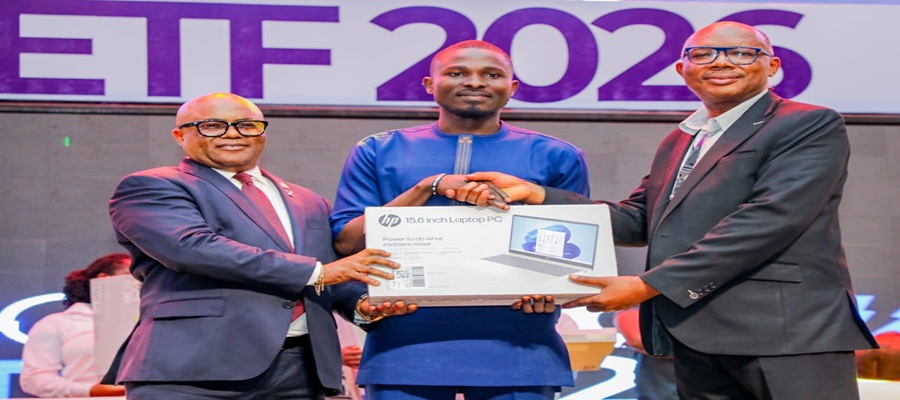
In a significant step toward deepening digital inclusion in Enugu State, the National Information Technology Development Agency (NITDA) has empowered 50 young innovators with digital tools, while commending Governor Peter Mbah for his pivotal support of the Agency’s South-East Zonal Office.

NITDA
Delivering the goodwill message at the event, NITDA Director General Kashifu Inuwa, represented by Dr. Aristotle Onumo, Director of Stakeholders Management and Partnerships, described the Governor’s commitment as instrumental to the successful launch and rapid performance of the Zonal Office, now recognised as one of NITDA’s top-performing offices nationwide.
“Inuwa noted that Enugu, historically known as Nigeria’s coal city, is undergoing a transition from natural-resource reliance to a knowledge-driven economy. ‘Enugu was once an energy capital powering industries from beneath the earth. Today, the energy driving Enugu is the creativity, talent, and determination of its young people,’” the DG’s message read.
Highlighting the role of digital technology in global economic growth, Inuwa cited projections that the digital economy could contribute up to $23 trillion to global GDP in the coming years, stressing that investment in digital skills today will shape national prosperity tomorrow.
As part of the initiative, over 900 youths registered on NITDA’s digital training platform, with 50 outstanding participants receiving digital tools to enhance their skills and foster innovation. Additionally, 250 participants were recognised for their dedication and excellence throughout the training.
“Nigeria must not only consume technology but create it. Innovation must become our currency, and digital skills must become the bridge to opportunity,” Inuwa emphasised, noting NITDA’s goal of achieving 70 percent digital literacy among Nigerians by 2027.
The initiative aligns with the Agency’s broader strategy to shift the nation from a resource-based economy to a knowledge-based economy driven by innovation, entrepreneurship, and technology.
Governor Peter Mbah, in his remarks, described the festival as more than a technology conference, calling it “a reinforcement of intent” and a validation of the state’s ambition to become a credible node in Nigeria’s growing innovation ecosystem.
Drawing a comparison between Enugu’s historic coal industry and its emerging digital future, he observed that while coal once powered industries across Europe and West Africa, the economic benefits largely left the state.
Today, he argued, Enugu’s greatest resource is its people—their creativity, skills, and innovative potential.
By investing in technology, education, and digital infrastructure, Mbah envisions a future where the state harnesses local talent to generate value, turning ideas into globally competitive solutions and establishing Enugu as a hub of knowledge and digital innovation.
Referencing global technology giants such as Apple, Microsoft, Amazon, Meta, and Tesla, he stressed that control over digital infrastructure is the key to economic leverage in the 21st century.
“Find what is broken, understand it deeply, and fix it properly,” he advised, underscoring that innovation is not about glamour but solving real problems.
He highlighted Enugu’s progress in embedding artificial intelligence in security operations, digitising core government functions, and introducing Geographic Information Systems in land administration to enhance efficiency and strengthen land rights.
Earlier, Dr. Prince Lawrence Ezeh, Enugu State Commissioner for Innovation, Science, and Technology, delivered the welcoming address, highlighting the progress made since the inaugural edition of the festival.
He noted that thousands of youths have been trained through digital skills initiatives, strategic partnerships have been launched—including Nigeria’s largest tech hub initiative—and technology clusters in blockchain and gaming have expanded, positioning Enugu as an emerging national tech leader.
Dr. Ezeh outlined the core objectives of ETF 2026: transforming businesses through innovative strategies aligned with the digital economy, and strengthening communities by fostering collaboration and resilience.
He also revealed ongoing reforms to embed technology across governance and public services, including advanced real-time security systems, smart green schools, and modernised public service platforms.
Other dignitaries in attendance included Anna Vesterholm, Ambassador of Sweden to Nigeria; Aminu Maida, Executive Vice Chairman of the Nigerian Communications Commission; alongside captains of industry and leading technology experts.

Sophos, a global leader of innovative security solutions for defeating cyberattacks, today released the 2026 Sophos Active Adversary Report.

John Shier
It reveals that 67% of all incidents investigated by Sophos Incident Response (IR) and Managed Detection and Response (MDR) teams last year were rooted in identity-related attacks.
The findings highlight how attackers continue to exploit compromised credentials, weak or missing multifactor authentication (MFA), and poorly protected identity systems, often without needing to deploy new tools or techniques.
Key findings include:
- A shift from exploited vulnerabilities toward compromised credentials, with brute-force activity (15.6%) drawing almost level with exploitation (16%) as an initial access method
- Median dwell time declined to three days. This was driven by attackers’ movements, but also by defenders reacting more swiftly. This was particularly notable in MDR environments.
- Attackers are getting faster at reaching Active Directory (AD). Once an attacker is inside an organization it takes them just 3.4 hours to get to the AD server.
· Ransomware remains a firmly off-hours activity. 88% of ransomware payloads are deployed out of hours, and 79% of data exfiltration actions take place out of hours, emphasising the continued need for 24/7 coverage.
- Lack of telemetry undermines defense efforts. Missing logs due to data retention issues doubled over last year. This rise was largely driven by firewall appliances where the default was only seven days, and in some cases, 24 hours.
Identity Attacks Accelerate While MFA Gaps Persist
The report shows a continued rise in attacks rooted in identity compromise, including stolen credentials, brute-force activity, and phishing.
While exploited vulnerabilities remain a factor, attackers increasingly rely on valid accounts to gain initial access, allowing them to bypass traditional perimeter defenses.
There was also a lack of MFA in 59% of cases, facilitating the abuse of stolen and compromised credentials to penetrate an organization.
“The most concerning finding in the report has actually been years in the making: The dominance of identity-related root causes for successful initial access.
“Compromised credentials, brute-force attacks, phishing, and other tactics leverage weaknesses that can’t be addressed by simple patch hygiene. Organizations must take a proactive approach to identity security,” said John Shier, Field CISO and lead author of the report.
More Threat Groups, Broader Risk
Sophos researchers observed the highest number of active threat groups recorded in the report’s history, expanding the overall threat landscape and increasing the challenge of attribution.
- Akira (GOLD SAHARA) and Qilin (GOLD FEATHER) were the most active ransomware brands observed, with Akira dominating across 22% of incidents
- 51 ransomware brands appeared across cases, including 27 returning brands and 24 new ones
- Only four brands or techniques, LockBit, MedusaLocker, Phobos, and abuse of BitLocker, have persisted continuously since 2020, the first year of Active Adversary Report data
“Law enforcement action continues to cause disruption in the ransomware ecosystem. Although we still see activity from LockBit, the dominance and reputation it once had has clearly been impacted.
“However, it means we are seeing a raft of other groups vying for dominance and many more emerging groups. For defenders, it’s important to understand the groups and their TTPs in order to best protect your organization,” continued Shier.
AI Hype Meets Reality
Despite widespread predictions, Sophos found no evidence of a major AI-driven transformation in attacker behavior. While generative AI has increased the speed and polish of phishing and social engineering, it has not yet produced fundamentally new attack techniques.
“AI is adding scale and noise but not yet replacing attackers. While in the future GenAI could be the next accelerator, right now the fundamentals still matter: strong identity protection, reliable telemetry, and the ability to respond quickly when something goes wrong,” said Shier.
Defensive Takeaways
Based on the findings of the 2026 Active Adversary Report, Sophos recommends organizations:
- Deploy phishing-resistant MFA and validate its configuration
- Reduce exposure of identity infrastructure and internet-facing services
- Patch known vulnerabilities promptly, especially on edge devices
- Ensure 24/7 monitoring through MDR or equivalent capabilities
- Preserve and retain security logs to support rapid detection and investigation
The 2026 Sophos Active Adversary Report analyzed 661 IR and MDR cases handled between November 1, 2024 and October 31, 2025, spanning organizations across 70 countries and 34 industries.
You can read the full report here[SE1] . https://www.sophos.com/en-us/blog/2026-sophos-active-adversary-report

Nigeria Data Protection Commission (NDPC) has urged the Federal Ministry of Education to ensure strict compliance with data privacy regulations across Nigeria’s education sector to protect personal information and bolster the nation’s digital infrastructure.

NDPC
National Commissioner and Chief Executive Officer of NDPC, Dr. Vincent Olatunji, issued the call during a working visit to the Minister of Education, Dr. Tunji Alausa, and the Minister of State, Dr. Suwaiba Said Ahmad.
Dr. Olatunji highlighted a significant compliance gap in how educational institutions manage sensitive data, noting that while data underpins President Bola Tinubu’s Renewed Hope Agenda, adherence to protection laws remains low in the sector.
“The significance of data protection cannot be overemphasized as Nigeria transitions to a digital economy,” Dr. Olatunji stated, calling on the Ministry to lead efforts in regulatory compliance.
He outlined NDPC initiatives to raise awareness, including the Digital Privacy Awareness Campaign, Data Privacy Clubs in universities, the Secondary School Data Challenge, and the Adopt-A-School programme, which reached about 8,000 students during National Privacy Week.
The NDPC boss urged the Minister to leverage his office for sector-wide enforcement.
Dr. Olatunji offered free induction training for Ministry staff, Virtual Privacy Academy (VPA) vouchers, and spots in a free certification programme. A joint working group was established to drive implementation.
In response, Dr. Alausa acknowledged that data protection has often been approached with levity but affirmed alignment with the government’s goal of producing 50 million digitally literate citizens.
“It is high time all Ministries, Departments, and Agencies prioritise data protection,” Dr. Alausa said, pledging commitment to elevate schools and educational bodies to global standards.

Conoil Bonanza Winners Emerge

PalmPay Couples Show How Love Is Funded Digitally

KPMG Strengthens Africa Leadership to Support Long‑term Growth Across the Continent

Nigeria, EU Ink Research, Innovation Deal Worth €100Bn

esentry 2025 Report Shows Healthcare, Financial Services and Telecoms as Staging Grounds for Increased Cyberattacks in Africa

NITDA, NBC Explore Strategic Collaboration on Digital Transformation, Media Regulation

Kaspersky Launches OT Calculator to Align Cybersecurity Investments with Business Goals

Accidental Billionaire Opts for Jail Instead of Returning Money Credited Him by Mistake

Why the Future of PR Depends on Healthier Client–Agency Partnerships

Kaspersky Brings more Transparency to Threat Detection with New Hunt Hub




 E-Business2 days ago
AfDB, UNDP Launch $10Bn AI Initiative for Africa

 News3 days ago
NITDA Urges Stronger State Partnerships as Key to Digital Economy Goals @ South-South Stakeholders Forum

 Telecom3 days ago
GSMA Launches Innovation Fund to Accelerate Green Transition Through Mobile Technology

 Telecom2 days ago
Grey Expands Cross-Border Banking with USD Accounts, USDC Support

 Telecom3 days ago
Prof. Adeyanju is Strengthening Nigeria’s Digital Backbone for a Connected Future in Two Years of Purposeful Leadership

 E-Business3 days ago
Firm Identifies RenEngine Loader Distributed Through Pirated Games and Software

 E-Financial3 days ago
Fidelity Bank Launches HerFidelity Apprenticeship Programme 2.0 to Boost Women Entrepreneurship

 E-Financial3 days ago
TAJBank Secures A1 Ratings from Agusto, Datapro