

News
FG Commissions Rebuilt Kano Digital Industrial Park with Support from IHS Nigeria

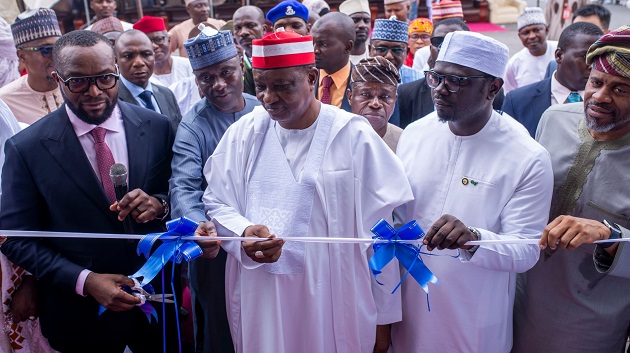
The Federal Government has commissioned the fully refurbished and restored Kano Digital Industrial Park, reaffirming its commitment to inclusive digital growth, youth empowerment, and strong private sector collaboration.

The facility, which suffered significant damage during the August 2024 protests, has now been fully restored through a generous intervention by IHS Nigeria.
The commissioning ceremony, which took place on Wednesday, July 2, 2025, was led by the President of Nigeria, ably represented by the Honourable Minister of Communications, Innovation and Digital Economy, Dr. Bosun Tijani.
The event was graced by several dignitaries, including the Deputy Governor of Kano State (representing the Governor) Aminu Abdussalam Gwarzo; the Emir of Kano, represented by His Highness, Jarman Kano, Amb. Ahmed Umar OON; the Executive Vice Chairman/CEO of the Nigerian Communications Commission Dr Aminu Maida; the Minister of State for Youth Development; representatives from IHS Nigeria; and other senior government officials.
Delivering his opening remarks, the Executive Vice Chairman of the NCC, Dr. Aminu Maida, emphasized the strategic importance of the park and reaffirmed the Commission’s commitment to enabling Nigeria’s digital future.
“The recommissioning of the NCC Digital Industrial Park in Kano is a landmark moment in our journey to accelerate ICT innovation and empower the next generation of digital pioneers.
“This facility will serve as a catalyst for digital inclusion, economic transformation, and youth empowerment not just in Kano, but across the entire Northwest region. We remain committed to creating a thriving digital ecosystem where innovation can flourish and no one is left behind in Nigeria’s digital revolution.” He said.
Speaking on behalf of the Executive Governor of Kano State, the Deputy Governor, Comrade Aminu Abdussalam Gwarzo, reaffirmed the state’s digital ambition and expressed deep appreciation for the partnership that made the park’s restoration possible.
“This commissioning marks more than the unveiling of a refurbished structure, it represents Kano’s bold vision to lead Northern Nigeria’s digital transformation. “We are grateful to IHS Nigeria for their swift response and unwavering support following the vandalization of this facility. Their commitment goes beyond corporate responsibility, it reflects a shared vision for a digitally inclusive Nigeria. He said.
Also speaking at the commissioning ceremony, the Chief Operating Officer of IHS Nigeria, Kazeem Oladepo, who represented the CEO of IHS Nigeria, reaffirmed the company’s commitment to advancing Nigeria’s digital future.
“Our decision to sponsor the refurbishment of the Kano Digital Park is rooted in our commitment to supporting Nigeria’s digital economy and empowering young Nigerians with the skills to thrive in the digital age,” he said.
“This partnership with the Ministry of Communications, Innovation and Digital Economy is a clear demonstration of the power of public-private collaboration in addressing national challenges.
“We are proud to contribute to the 3MTT program and help restore this park as a hub of innovation and opportunity for the Kano community. Supporting initiatives like this and others such as the Ilorin Innovation Hub is how we aim to foster long-term digital growth, create jobs, and drive inclusive development across Nigeria.” He added.
Capping off the event, the Honourable Minister of Communications, Innovation and Digital Economy, Dr. Bosun Tijani, highlighted the significance of public-private collaboration in shaping Nigeria’s digital future.
“The recommissioning of the Kano Digital Industrial Park is a powerful demonstration of what is possible when public and private sector actors unite behind a shared vision. This facility is more than just infrastructure, it is a beacon of innovation, resilience, and opportunity for Northern Nigeria.
“IHS Nigeria’s swift intervention following the vandalism of this park reflects true partnership and corporate citizenship. Together, we are laying the foundation for a future where young Nigerians, especially those in underserved communities, have the tools and training to thrive in a digital economy.” He highlighted.
The Kano Digital Industrial Park forms a key part of the 3 Million Technical Talent (3MTT) initiative, a flagship government program aimed at equipping Nigerians with globally competitive digital skills.
The renovation includes fully equipped training labs, power and connectivity infrastructure, upgraded learning spaces, and restored digital equipment to support thousands of learners across Northern Nigeria.
The commissioning of the Kano Digital Industrial Park comes just weeks after Ilorin Innovation Hub, the largest innovation hub of its kind in West Africa, which is also sponsored by IHS Nigeria, kicked off its incubation and acceleration programs. These interventions highlight IHS Nigeria’s continued commitment to fostering innovation, creating jobs, and driving the growth of Nigeria’s digital economy.
By bringing the Kano Digital Industrial Park back on stream, IHS is reinforcing its pledge to support impactful initiatives at both the federal and sub-national levels, particularly those that provide opportunities for young Nigerians, who represent the future of the nation.


The Lagos State Government, through the Ministry of Agriculture and Food Systems, has launched TELE-VET, Nigeria’s first Tele-Veterinary Call Centre, marking a groundbreaking milestone set to transform access to expert animal healthcare using mobile technology.

Speaking at the event held at the Lagos State Ministry of Agriculture and Food Systems, Animal Hospital, Oko-Oba, Agege, the state’s Commissioner for Agriculture and Food Systems, Ms. Abisola Olusanya, described TELE-VET as a transformative initiative that strengthens animal health systems, improves food safety, and accelerates agricultural innovation across the state and beyond.
She stated that technology continues to redefine global food systems, and Lagos, under the leadership of Governor Babajide Olusola Sanwo-Olu, remains committed to deploying digital solutions that enhance efficiency, empower farmers, and safeguard public health. The Commissioner explained that TELE-VET addresses long-standing challenges faced by farmers and pet owners, especially limited access to timely and professional veterinary care.
Ms. Olusanya highlighted that TELE-VET builds on the existing mobile platforms, M-Agric and M-Health, available on MTN and Glo networks, which provide daily expert tips, mentorship, and animal-care guidance. By dialing *20791#, users can subscribe for ₦100/day, ₦300/week, or ₦500/month, gaining instant access to a variety of services, while all active subscribers can access the Call Centre free of charge.
She added that the Call Centre will deliver emergency support, first-aid guidance, disease-prevention information, and livestock and pet care assistance, noting that the platform helps farmers reduce costs, save time, and access expert care without traveling long distances. She emphasized that TELE-VET will also enhance surveillance and early detection of zoonotic diseases, aligning with the One World, One Health framework that integrates human, animal, and environmental health.
The Commissioner further mentioned that TELE-VET sets the stage for future innovations, including livestock and pet health insurance, e-commerce for veterinary products, improved mobility for safe animal transport, and enhanced financing opportunities for farmers, positioning Lagos as a national leader in technology-driven agricultural transformation.
Earlier, the Permanent Secretary, Ministry of Agriculture and Food Systems, Mr. Emmanuel Audu, commended the initiative as a groundbreaking intervention that will significantly improve service delivery within the State’s veterinary ecosystem. He stressed that TELE-VET responds to the evolving needs of farmers and pet owners who require swift and professional support to enhance productivity and ensure animal well-being.
Mr. Audu noted that the Ministry has invested extensively in strengthening the infrastructure, technical systems, and human resources needed to operate a world-class veterinary call centre. He stated that the service is a strategic investment in Lagos State’s food security architecture, enabling efficient livestock health management and timely response to potential disease outbreaks.
The Permanent Secretary explained that the Call Centre will minimize animal losses, improve farm management practices, and provide timely advisory services to farmers, aligning with the Ministry’s mandate to promote sustainable agricultural practices across all 57 LGAs and LCDAs. He praised the collaboration among veterinary professionals, ICT partners, and technical teams that made the initiative possible.
Mr. Audu reaffirmed the Ministry’s commitment to continuously upgrading the TELE-VET platform to accommodate innovations that improve efficiency and expand service offerings. He encouraged residents to adopt the platform fully, noting that its success depends on widespread participation.
In his remarks, the Director of Veterinary Services, Dr. Rasheed Macaulay, stated that the launch of TELE-VET marks a new era in veterinary care delivery in Lagos State. He explained that the platform provides a practical solution to challenges such as limited manpower, delayed emergency response, and difficulties reaching farmers in remote areas by connecting residents directly to certified experts.
Dr. Macaulay added that TELE-VET will strengthen disease surveillance and reporting across the State, aiding early detection of animal diseases and preventing zoonotic infections. With real-time consultations, improved documentation, and faster escalation processes, the platform will support frontline veterinarians and promote safer, healthier food systems for all Lagos residents.

Manufacturers and small businesses are set to benefit from a new era of seamless cross-border payments, thanks to the launch of the Pan-African Payment and Settlement System- PAPSS Cowry, a game-changing payment platform.

This cutting-edge platform, backed by Afreximbank, the AU and AfCFTA, and recently launched in Lagos, promises to increase efficiency, reduce costs and boost trade across the continent as it connects 160 banks across 19 countries and positions Africa for a bigger share of its $329 cross-border market.
The platform delivers 120-second local currency settlement, removing USD bottlenecks, cutting FX friction and strengthening the African Continental Free Trade Area (AfCFTA) driven trade flows.
Mike Ogbalu, CEO of PAPSS, in his keynote address at the platform launch themed ‘Building an Interoperable and Sovereign Africa Payment Ecosystem for Trade and Economic Growth,’ explained that AfCFTA has provided a single market for the continent’s 1.9 billion people that needs a seamless cross-border payment platform to trade.
“We have created it as an ecosystem that will pack all of us together in a way that we are able to empower each other rather than compete,” he said.
“Create a centralised value that everybody can leverage without affecting the individual value proposition of all the entities that leverage this way,” he added.
He stated that the Pan-Africa payment rail has connected 19 countries and plans to expand to 40, adding that 160 leading commercial banks across the continent are connected to the platform.
“We are also now enabling fintech companies across the continent to be able to originate payments in one market and terminate them in another market,” he explained.
“PAPSS is that financial market infrastructure that allows for the processing of cross-border payments in local currencies and is able to do that in no more than 120 seconds,” he added.
He appreciated central banks across the continent for their support, saying that a governance infrastructure has been created to make sure the payment system continues to operate in the right way. He stressed that sovereign payments are critical for the continent’s survival.
Haytham EI Maayerigi, executive vice president – global trade bank, Afreximbank, stressed that African businesses still face real barriers, whose border payments remain slow, expensive, and impossible sometimes, with $5 billion lost yearly to third-currency routing.
He explained that the situation has made it difficult for small businesses to find trusted partners, affordable finance and adequate market information, noting that with AfCFTA advancing, it must be easy for firms to trade with each other.
He said Afrexim, which is a promoter of PAPSS, works daily to remove these obstacles. “Together with AfCTA and the African Union, we are building the institutional foundation of a truly integrated market, supporting a lot of the initiatives.”
“Through advisory, guarantees, certification and project preparation, we mobilise the capital that builds factories, logistic hubs, processing plants, energy systems, the backbone of African industrialisation.”
He stressed that capital alone will not deliver integration and that the African continental trade also needs a digital spine, a system that connects markets, trust, information, logistics, finance and payments.
Experts say Africa requires a better business environment to unleash its potential and drive intra-African trade. The experts noted that the PAPSS Cowry platform will help improve the ease of doing business across the continent.
Wamkele Mene, secretary general, AfCFTA Secretariat, described the platform as a key enabler of AfCFTA, giving its practical effect on the continent’s vision of a fully integrated African market.
“It operationalises financial sovereignty by enabling the seamless flow of funds needed to sustain the world’s largest free trade area, and by reducing the friction that has historically held back intra-Africa trade,” Mene said.
He noted that the continent has 42 currencies, which alone creates structural barriers, saying that when two African traders rely on a third-country currency to trade, the cost of doing business rises sharply.
“Our continent loses an estimated $5billion annually in currency conversion.” PAPSS addresses this bottleneck directly by enabling instant settlement in local currencies and reducing reliance on expensive corresponding banking corridors.”


Africans are better educated today than they have been at any other time, with many African nations making strides towards ensuring access to quality education and lifelong learning for their citizens.

Afrilearn
UNESCO’s report on Transforming Learning and Skills Development notes that delivering education well is not only a fundamental human right, it is also a critical ingredient of building solid foundations for the future, empowering people not just to develop the skills they will need for the workplace, but also ensuring that they can unlock their potential as members of society.
UNICEF estimates that there are 450 million school-age children in Africa in 2025, and this population is predicted to swell to over 600 million by 2050. However, although 75 million more African children are enrolled in school today compared to 2015, the number of out-of-school children has increased by 13.2 million to over 100 million during the same period. For Africa to actively participate in the global digital economy, it’s a continent-wide imperative to unlock not just access to education, but access to the resources that will help children thrive in education.
Harnessing technology to provide educational resources
Millions of children across the continent are eager but struggling to learn or are dropping out due to the high cost of quality education, outdated materials, and overburdened teachers. Schools also struggle with reliable web access – the Global Education Monitoring Report found that Africa has the lowest school connectivity globally, with most schools lacking even basic electricity, making reliable internet rare. Mobile penetration in Africa is far higher, yet many learning platforms are built for the web.
In 2020, frustrated by their own experiences, and tired of witnessing how young Africans were held back by a lack of access to quality education, a group of entrepreneurs started Afrilearn International Limited. Their goal was simple, but ambitious: to democratise access to quality education across Africa using a mobile-first solution.
The company started with ClassNotes.ng, which quickly became the #1 education platform in Nigeria, empowering students with curriculum-based class notes. By July 2022, Afrilearn had reached 1 million learners across Nigeria and Africa, a major step in delivering quality education to undeserved communities.
Now, this AI-powered K-12 learning platform is on a mission to make world-class education freely available to all African children by making learning fun, using gamified experiences to engage school learners with their studies.
The Afrilearn App for Students provides a comprehensive library of study materials and homework help. Learners can master a subject using the class notes, video lessons, quiz materials and games on the app, earning coins, and winning rewards along the way, while parents can track their children’s progress through learning reports. Afrilearn also provides adaptive practice for local and international exams through Exambly.com, which provides free exam practice for entrance, admission and matriculation exams across Africa.
Supporting educators is part of the process
To support educators, Afrilearn has built and refined its new AI-powered School Management Software, which is a smart platform for learning, administration, and managing school fees, reports and results.
The company collaborates with Schoolinka, a leading African teacher-training organisation, to co-create and distribute professional development resources, onboard teachers onto Afrilearn, and support schools with continuous training. This has significantly improved teacher adoption and classroom impact across the schools Afrilearn serves.
A constant evolution
The School Management Software offering was developed as part of the first cohort of the Microsoft and NVIDIA African GenAI Accelerator Programme. The collaboration allowed Afrilearn to leverage Azure AI and cloud infrastructure to enhance automation, learning personalisation and school analytics on the platform.
The company created a rebuilt, AI-powered SMS programme during the Accelerator Programme, and plans to introduce upgrades including adaptive learning profiles, predictive analytics and automated fee management for schools, and offline-first learning flows. Teachers will soon benefit from enhanced AI tools for lesson preparation and assessments.
With Microsoft’s support, Afrilearn uses GitHub for its engineering workflow, enabling the company to release updates faster and with fewer errors. Visual Studio Code is the team’s preferred integrated development environment, as its integration with Axure extensions, debugging tools and GitHub repository reduce friction across engineering tasks. Collectively, these tools, alongside Azure, have improved delivery speed, strengthened reliability and enabled the team to build a more stable, scalable AI education platform. And for a distributed team working in multiple countries, Microsoft’s collaboration tools, Teams and Sharepoint, have proven invaluable for daily contact and communication.
Broadening access to education across Africa
To date, Afrilearn has reached more than 4 million learners and more than 800 schools across more than 10 countries. More than 80% of users report achieving improved learning outcomes within a week of consistent usage, while the AI-powered personalisation improves learners’ grades by up to 52 percent within eight weeks of consistent study. Schools implementing the Afrilearn management software have saved more than 10 administrative hours per week and have boosted their fee collection by 35 to 40 percent.
The Afrilearn team has big ambitions to scale into additional countries across Africa, deepening partnerships with UNICEF and the African Union to scale their impact. In addition to Nigeria, Afrilearn serves learners in Ghana, Liberia, Sierra Leone, Gambia and the wider diaspora.
“At Afrilearn, we’re the ecosystem closing the gap between Africa’s potential and its future, where no child is left behind because of where they live or how much their parents earn. We’re especially excited about our upcoming product upgrades that make personalised learning even more accessible to children at home and in school,” says Isaac Oladipupo, CEO at Afrilearn. “Our goal is to reach 10 million learners across 12 African countries in the next 36 months. We believe that every child deserves a quality education that positions them for future success.”

FG, SEC, NGX Group Agree on Capital Gains Tax Reform

Airtel Africa Foundation Celebrates International Volunteer Day, Honours Employee Volunteers

Report Reveals Half of 2025’s Compromised Passwords were Already Leaked

EFCC Arik Case: Witness Testifies on Receiver Manager Nominee’s Role in NG Eagle Shareholding

Nigeria Dominates 2025 TikTok Sub-Saharan Africa Awards with Six Wins

Kaspersky Introduces Cyber Pathways to Support Career Development in Cybersecurity

NITDA DG Tasks Youths to Drive Africa’s Digital Transformation

Firm Urges Organizations to Check Protection of their Websites Amid Search Engine Optimisation Attack Schemes

Hackers Breach Phones of Dangote and Otedola, Demand Ransom

FCCPC Sets Deadline for Digital Lending Regulatory Compliance




 Telecom1 day ago
Nigeria Lacks AI-Ready Data Centres, Trails in Capacity – Nnamani

 E-Financial1 day ago
CAC to Shut Down Unregistered PoS Operators by January 2026

 Telecom1 day ago
Anambra Leads Southeast in Digital Governance Under Soludo’s ICT Agenda

 General News1 day ago
Optimus AI LABS CEO Showcases AI Breakthroughs in Nigeria’s Financial Sector

 General News1 day ago
NiDCOM Launches Diaspora Startup Challenge to Boost Nigerian Talent

 General News1 day ago
PromoPrint Rekindles Nigerian Resilience @ 25th Anniversary

 News19 hours ago
Lagos Launches Tele-Vet, Nigeria’s First Veterinary Call Centre

 E-Business39 minutes ago
UBA Wins Africa’s Bank of the Year for Third Time in Five Years