

General News
FG Drops Merger of NCAA, NAMA


The Minister of Aviation and Aerospace Development, Festus Keyamo has disclosed that President Bola Tinubu has stepped down the merger of the Nigeria Civil Aviation Authority (NCAA) and the Nigerian Airspace Management Agency (NAMA) as recommended by the Steve Oronsaye report.

He also revealed that the aviation industry was exempted from the foreign travel ban placed on federal government officials last year. The President announced the ban which took effect from April last year.
Keyamo disclosed that the aviation sector was exempted from the ban because President Tinubu is desirous of change and growth in the sector.
The ban was placed following the rising cost of travel expenses by Ministries, Department and Agencies of Government.
The memo released last year stated: “Considering the current economic challenges and the need for responsible fiscal management, I am writing to communicate Mr Presideni’s directive to place a temporary ban on all publicly funded international trips for all federal government officials at all levels, for an initial period of three months from 1st April 2024.
“All government officials who intend to go on any publicly funded international trips must seek and obtain Presidential approval at least two weeks before embarking on any such trip, which must be deemed necessary”.
The Minister disclosed the reasons for the exemption in Abuja at the 25th anniversary celebration of the Nigeria Civil Aviation Authority (NCAA).
On the merger of NCAA and NAMA, he said: “From modest beginnings, we have witnessed remarkable transformations in our sector, ranging from enhanced supervisory measures and policies formulation, safety and security oversight, robust legislative and regulatory frameworks, advancements in air traffic management, development, expansion and certification of airports, accurate meteorological services, timely accident investigations, manpower development, and indeed, the growth of indigenous airlines.
“These achievements have not come without challenges. However, with the efforts of past administrations and the total support of the present administration under the dynamic leadership of His Excellency President Bola Tinubu through the Renewed Hope Agenda and the five focus areas of the ministry, we have overcome challenges and reached new heights.
“NCAA is a child of God, and despite turbulent waters and attempts sometimes to kill the NCAA, the NCA has survived 25 years. And I’m sure you know that any child that is born at the age of 25, of course, is undoubtedly an age of maturity.
“The Oronsanye reports also recommended the merger of NCAA and NAMA. And so that was also another attempt to kill the NCAA. That report was passed from Jonathan’s government to Buhari’s government, and then to the present government.
“It was one of the first items we considered in this government. So the Oronsanye reports came up that day, and the president went on and on, considered every item in the Oronsanye report, and asked the council to vote. And for each item, they would listen to the ministers and so the president came to the merger of NCAA and NAMA as one body.
“I raised my hand, I spoke for about five minutes and because we have a wonderful president who listens to good counsel and good arguments, after I finished speaking, he said, an item dropped, the merger of NCAA and NAMA would not remain”.
On the reasons for the exemption, he said: “It is a fact that the aviation sector remains a pillar of national development, facilitating trade, tourism, investment, and cultural exchange. Whilst it is yet to realize its true potential in terms of contribution to our nation’s Gross Domestic Product (GDP), we must renew our commitment to ensuring a more progressive, sustainable, inclusive, innovative, and prosperous aviation industry.
“This necessitates the continuous adoption and integration of emerging technologies, enhancing infrastructure, and investing in human capital development to keep our skies safer and secure and attain cohesive and efficient air transportation services.
“The President directed that foreign travels should stop, except in exceptional circumstances. Last year, there was a memo around March that said it was for three months, and the President, because of his desire to ensure that we are frugal in our spending; there was another memo again in December reiterating that memo last year we should cut down on foreign travels, except by direct presidential approval.
“But let us also give particular thanks to Mr. President, because despite that memo, since last year, he has made an exception for the aviation industry. I wrote a memo to him after that directive on behalf of the entire agency that says; Sir, we respect your directive; yes, we need to be frugal because the Nigerian people have also tightened their belts in the face of the economic reforms that are taking place.
“However, because of the safety of this sector, Sir, we need to make some exceptions for this sector. And the President graciously granted this for the aviation sector”.


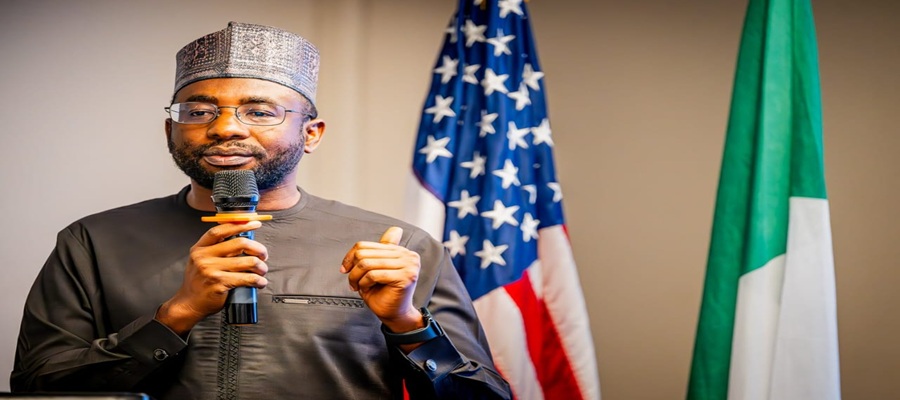
Kashifu Inuwa Abdullahi, Director General of the National Information Technology Development Agency (NITDA), has reaffirmed Nigeria’s commitment to strengthening collaboration with the United States in building a secure, trusted, and resilient digital ecosystem, with a particular focus on data privacy, artificial intelligence, cybersecurity, and capacity building.

NITDA
He stated this while delivering an address at the Nigeria Data Privacy Capacity Building Workshop organised by the United States Department of State, in collaboration with the Nigerian Mission and relevant stakeholders in the digital ecosystem.
Expressing his excitement at the engagement, Inuwa described the workshop as a strong revalidation of the long-standing partnership between Nigeria and the United States in advancing the country’s technical and digital systems.
According to him, the collaboration is not a new initiative but part of a growing and deliberate effort by both countries to jointly address emerging digital challenges and opportunities.
Inuwa recalled that in April 2024, Nigeria and the United States, through the U.S.–Nigeria Binational Commission, agreed to work together on key areas including data privacy, artificial intelligence, cybersecurity, capacity building, and other aspects of digital development.
He further noted that the same year witnessed the successful hosting of an Artificial Intelligence Conference, co-hosted by the Nigerian Government and the U.S. Mission in Nigeria, as well as Nigeria’s participation in engagements with U.S. cybersecurity companies to explore partnerships aimed at strengthening Nigeria’s technical ecosystem.
He explained that NITDA’s emphasis on data privacy, AI, cybersecurity, and policy is anchored on one central objective: building trust in the digital ecosystem, adding that trust is a critical enabler of digital transformation, as its absence slows down innovation and increases costs, while its presence accelerates progress and reduces barriers to growth.
The NITDA Boss stressed that building a prosperous digital economy requires deliberate efforts to safeguard data privacy, strengthen security frameworks, and deploy AI responsibly.
He noted that artificial intelligence relies on data, data demands privacy, and privacy can only be guaranteed through strong security, making it impossible to address these issues in isolation.
Inuwa described the workshop as the beginning of broader engagements and deeper collaboration in other strategic areas, particularly as Nigeria continues to position itself as a key player in the global digital economy.
He disclosed that following the participation of the U.S. Mission in Nigeria’s National Cybersecurity Conference last year, plans are underway to expand the conference into an international cybersecurity platform this year.
According to him, the international conference will provide an opportunity for U.S. cybersecurity companies to showcase their technologies, explore partnerships with Nigerian firms developing local cyber solutions, and jointly strengthen Nigeria’s cybersecurity ecosystem.
Inuwa also reassured partners and stakeholders of NITDA’s commitment to building the right policies and enabling environment for innovation to thrive.
He noted that Nigeria, alongside Africa, represents the next frontier of the digital economy, driven by a young, digital-native population and a large, expanding market.
He said that while many public and private sector organisations in Nigeria rely on U.S. technologies to build their digital systems, the country also possesses significant local talent capable of developing homegrown solutions to address national and regional challenges.
He added that NITDA remains committed to working with international partners to build local capacity and promote Nigeria’s digital self-determination.
According to the DG, digital technology is no longer optional, as it represents the future of economic growth and development, and no nation can afford to be left behind.
He emphasised that the only way to fully harness the opportunities of the ongoing AI revolution is by safeguarding privacy, establishing sound policies, and laying a strong digital foundation capable of supporting rapid technological advancement.
He appreciated the U.S. Department of State and the U.S. Mission in Nigeria for their continued partnership and support, expressing optimism that the collaboration will be further strengthened to explore new areas of cooperation, particularly in cybersecurity and artificial intelligence, for the mutual benefit of both countries.

Lagos High Court at TBS has awarded $25,000 in damages in favour of Mr. Femi Falana (SAN) in his $5 million lawsuit against Meta Platforms Inc., the US-based technology company owned by Mark Zuckerberg, over the alleged invasion of his privacy.

Early in 2025, a video was published on Facebook claiming that Falana was suffering from a terminal illness, which prompted the suit
Delivering judgment on Tuesday, January 13, Justice Olalekan Oresanya held that a global technology company such as Meta, which hosts pages for commercial benefit, owes a duty of care to persons affected by content disseminated on its platform.
Falana, through his lawyer, Mr. Olumide Babalola, accused Meta of publishing motion images and voice captions titled “AfriCare Health Centre” on its platform, suggesting that he suffered from a disease known as prostatitis.
He argued that the publication constituted an invasion of his privacy as guaranteed under Section 37 of the Constitution of the Federal Republic of Nigeria, 1999 (as amended).
Falana said the false video about his health status had tarnished his image and reputation built over the years.
He also contended that the publication, which he described as false, offensive and disturbing, painted him in a false light and caused him mental and emotional distress.
In its judgment, the court rejected the argument that digital platforms can rely solely on “hosting” or “intermediary” defences where the platform monetises content and the harm arising from misinformation is reasonably foreseeable.
Falana’s lawyer said the decision reinforces a standard of platform accountability under Nigerian law, aligning with emerging global jurisprudence.
The court further held that “the fact that the applicant is a public figure does not rob him of his right to privacy.” It found that the publication of false medical information intruded into the claimant’s private life, regardless of his public standing.
Babalola said the finding settles an important misconception in Nigerian legal practice and affirms that health data enjoys heightened protection, even for public figures.
The court also held that Meta determines the means and purposes of processing content, monetises pages, and controls distribution algorithms, thereby acting as a joint data controller with page owners.
Consequently, Meta was held vicariously liable for the offensive video.
Babalola said: “This is a major development under the NDPA and weakens the ‘mere platform’ defence traditionally relied upon by Big Tech.”
The court further ruled that Meta breached Section 24 of the NDPA by processing personal data that was inaccurate, harmful, lacked a lawful basis and was unfair to the learned Senior Advocate. The false health information was held to amount to unlawful processing per se.
It emphasised that where the risk of inaccuracy is foreseeable, particularly in relation to sensitive personal data, a platform owes a heightened duty to ensure accuracy and integrity.
The court held that Meta failed to deploy adequate safeguards to prevent or mitigate the harm.
As a global technology company with vast resources, Meta was expected to implement effective content-review mechanisms, rapid takedown processes and safeguards proportionate to the risks posed by misinformation. Its failure to do so, the court held, amounted to regulatory non-compliance.
General News
Paradigm Initiative Condemns the Internet Shutdown and Media Restrictions in Uganda Ahead of the 2026 General Election


Paradigm Initiative (PIN) strongly condemns the internet shutdown implemented in Uganda ahead of Thursday’s general election, as well as the restrictions placed on media coverage of protests and demonstrations. These actions constitute serious violations of digital rights, media freedom, and democratic principles at a critical moment in the country’s electoral process.

Internet Shutdown
Evidence indicates that internet access across Uganda has been disrupted, affecting social media platforms, messaging services, and online news outlets.
This development comes despite earlier public assurances by the Uganda Communications Commission that the government did not intend to shut down the internet during the elections.
The shutdown represents a troubling reversal of that commitment and raises serious concerns about transparency, accountability, and respect for fundamental rights.
Uganda has a well-documented history of internet shutdowns during elections, including during the 2016 and 2021 general elections. In 2021, a near-total internet blackout lasted several days, severely undermining freedom of expression, access to information, election observation, media reporting, and economic activity.
Repeating these measures despite widespread national, regional, and international condemnation demonstrates a continued pattern of using digital restrictions as a tool of election management.
Paradigm Initiative further condemns directives preventing media houses from covering protests or demonstrations during this period. Such restrictions violate media freedom and the public’s right to receive information, and undermine the role of the press as a democratic watchdog. Suppressing coverage of protests fuels misinformation, heightens tension, and erodes public trust in the electoral process.
Article 29 of the Constitution of the Republic of Uganda guarantees the rights to freedom of expression, freedom of the press and other media, and access to information. Uganda is also a State Party to the International Covenant on Civil and Political Rights (ICCPR) and the African Charter on Human and Peoples’ Rights, which protect these rights under Articles 19 and 9, respectively.
Any restriction on these rights must meet the strict tests of legality, necessity, proportionality, and legitimate aim. Blanket internet shutdowns and platform restrictions fail these tests and are incompatible with Uganda’s constitutional and international obligations.
At the international level, the United Nations Special Rapporteur on the promotion and protection of the right to freedom of opinion and expression, together with other UN Special Procedures mandate holders, has consistently affirmed that internet shutdowns are inherently disproportionate and can never be justified under international human rights law, including during elections, protests, or periods of political tension.
The African Commission on Human and Peoples’ Rights has recently issued a specific call urging the Government of Uganda to keep the internet on and to respect freedom of expression and media freedom during the current electoral period.
This call builds on established African human rights standards, including Resolution 580 on Internet Shutdowns and Elections in Africa and Principle 38 of the Declaration of Principles on Freedom of Expression and Access to Information in Africa, which prohibits States from interfering with access to digital technologies.
Internet Service Providers and technology companies operating in Uganda also bear responsibility under the UN Guiding Principles on Business and Human Rights to respect human rights, ensure transparency, and avoid complicity in unlawful or disproportionate restrictions on connectivity.
Paradigm Initiative calls for:
The immediate restoration of full internet access across Uganda and an end to all forms of digital disruption during and after the electoral period.
The withdrawal of all directives restricting media coverage of protests, demonstrations, or political developments during elections.
Accountability from Internet Service Providers, including the publication of transparency reports to users detailing government orders affecting internet access.

Angst as FG Demands 7.5 Percent VAT on Mobile Bank Transfers, USSD

Glo Unveils Immersive Gaming Experience, Travel Saga

Half of Global Companies Build SOCs to Enhance Cybersecurity, with a Focus on Human Expertise

Moniepoint Launches Second Cohort of DreamDevs Initiative to Double Down on Africa’s Tech Talent Pipeline

NITDA DG Reaffirms Nigeria–U.S. Partnership on Data Privacy, AI and Cybersecurity

Banks quietly move to enforce new ₦50 transfer levy from Jan. 1

FIRS says NIN, CAC Numbers to Serve as Tax IDs from 2026

Nigeria Takes the Lead in the Global WSIS+20 Digital Agenda

Nigeria Police Arrest Okitipi, Nigerian Allegedly Linked to Microsoft 365 Hack

PalmPay Launches N400 Million World Travel Carnival, Rewarding Users with Free Global Trips




 E-Financial2 days ago
Wema Bank Upgrades ALAT Banking App

 General News2 days ago
Firm Launches AI-powered Platform to Simplify New Tax Laws

 Telecom2 days ago
X Suspends Twitter Account for Rules Violation

 E-Business2 days ago
Study Reveals 88.5% of Phishing Attacks Focus on Stealing Account Credentials

 News2 days ago
Nigeria, Others Lag Behind as Egypt Tops Africa in AI Readiness

 General News1 day ago
PalmPay, Premier Cool to Reward 10,000 Nigerians with ₦100m in “10k for 10k Campaign”

 E-Business1 day ago
Kaspersky Warns Telecom Threats from 2025 will Carry into 2026 as New Technology Adds New Risk

 E-Financial1 day ago
Ecobank Joins Trillion-naira Club for the First Time in 20 Years