

News
FG Lauds Shittu, Pantami as 81Techpreneurs Get N756.3m


Federal government has applauded the roles played by Adebayo Shittu, minister of Communications and Dr. Isa Pantami, director general of National Information Technology Development Agency (NITDA) for their roles during the Aso Villa Demo Day (AVDD) 2016.
Similarly, the FG disclosed the approval of N756.3 million for disbursement to 81 young Nigerian innovators as part of the government’s economic empowerment initiatives.
Professor Yemi Osibanjo, Vice President of Nigeria, disclosed this during the grant award ceremony on Tuesday in Abuja, stated that the journey of the empowerment initiative started last year as part of government efforts to positioning Nigeria and Nigerians to take advantage of the opportunities in Technology to provide local solutions to local problems.
He noted that, “today with the injection of over N750 million naira into 81 Tech SMEs in the country, I want to thank the Minister of Trade and Investment for his support and provision of these funds via the GEM project domiciled in his ministry”.
“I also want to thank the Minister of Communications for the role he played, and the leadership he provided through the National Information Technology Development Agency (NITDA) during the Aso Villa Demo Day (AVDD) 2016.”
The Vice President stated that the participants at the AVDD have shown that the future is bright for Nigerian technology.
“One of the participants, Ifedayo Oladapo, is the founder of Grit Systems, an internet-enabled technology that offers a simple way to quantify power consumption from multiple power sources, letting Nigerians make informed data driven decisions about power consumption.
Another participant, Dimgba Kalu, a 28-year old Nigerian, runs a venture that trains software engineers and deploys them to businesses. These are clear indications that we are on the right path” he said.
Osibanjo stated that at the AVDD finale, Mr President welcomed the top 30 participants in the State House.
“I also attended the ceremony thereafter in the company of the Facebook CEO Mark Zuckerberg. At that event, we listened to Iyin Aboyeji’s take on growing local Tech companies, Iyin is one of Nigeria’s shining stars and the founder of Andela – a Tech Training firm and Mark Zuckerberg’s first big investment in Africa with an investment of $24 million by the Mark Zuckerberg and Priscilla Chan Foundation”.
“Today, with government’s first major investment in Technology Start-Up companies, I am confident that we have started the journey to building many more Andelas, Yusufs and Venture Garden Groups. Congratulations to all the grantees and I wish you the best in your endeavors.”
According to the Vice President, “The GEM-AVDD partnership demonstrates Government commitment to celebrate and empower the most promising and highly scalable indigenous technology start-ups who are providing innovative solutions to local challenges in Nigeria” he stated.
On his part, Okechukwu Enelamah, minister of Industry, Trade and Investment, stated that the grant is made possible through the Growth and Employment Project (GEM) financed by the World Bank IDA Credit.
He noted that the young innovators were selected following a rigorous technological innovation competition organized by the Presidency called Aso Villa Demo Day, which targets young Nigerian entrepreneurs with innovative business models that could contribute to the growth of the economy.
According to him, “having awarded grants to the best three innovators that emerged winners from the 2016 AVDD national competition, the Presidency engaged GEM to scale up the programme for wider impact”.
“GEM-AVDD Project invited business plan submissions from 289 shortlisted candidates that participated in the regional AVDD pitch screening events that took place in Lagos, Port-Harcourt and Abuja in 2016. After a rigorous evaluation process, 81 of these candidates met all required eligibility and selection criteria and were selected as beneficiaries” Enalamah said.
The Minister said the beneficiaries were drawn from the six geo-political zones based on registrations to date on GEM’s Business Innovation and Growth (BIG) portal and the grants will be disbursed in two separate tranches, after the grant award.
“GEM is about igniting businesses and building their capacity to grow and employ Nigerians. Above all, it helps solve the problem of funding faced by many of our MSMEs” Enelamah noted.
Andrew Gartside, representing the World Bank country Director to Nigeria, said that the country needed to create jobs through the Small and Medium Enterprises as way of ensuring inclusive economic growth.
“If the economy of Nigeria is to grow and the desired diversification of the FG must succeed, the SMEs will have to grow and succeed to harness the economy” he noted.
The GEM Project is a $160m World Bank IDA Credit with a Project Implementation Unit at the Federal Ministry of Industry, Trade and Investment. The Project Development Objective is to increase growth and employment in participating firms in Nigeria through provision of technical assistance and grants to qualified existing firms/businesses across Nigeria, operating in five high growth sectors namely: Information and Communication Technology (ICT), Hospitality, Entertainment, Light Manufacturing, and Construction.
Over the life of the grant, the GEM Project would verify the achievement of set milestones by beneficiaries and monitor project progress as condition for the second disbursement. Impact evaluation surveys would also be conducted subsequently.



The National Information Technology Development Agency (NITDA) and the Corporate Affairs Commission (CAC) have initiated coordinated measures to strengthen cybersecurity following recent concerns affecting aspects of CAC’s digital systems.

Both agencies said they have activated response and assurance mechanisms in line with national cybersecurity frameworks to safeguard critical infrastructure and maintain service integrity.
NITDA reiterated that all Ministries, Departments, and Agencies (MDAs) must adopt proactive cybersecurity measures in compliance with the National Cybersecurity Policy and Strategy (NCPS) 2021.
The agency directed all MDAs to immediately review and reinforce their cybersecurity architecture to address emerging threats targeting government systems and sensitive data.
As part of the directive, MDAs are required to conduct comprehensive security assessments, remediate identified vulnerabilities, and strengthen access controls across critical platforms.
They are also expected to enhance data protection mechanisms, maintain effective backup and disaster recovery systems, and improve monitoring capabilities to detect and respond to suspicious activities.
In addition, there is the need for functional incident response frameworks, including prompt reporting of cybersecurity breaches for coordinated intervention.
Detailed cybersecurity guidelines have already been issued to MDAs for implementation as part of ongoing efforts to strengthen resilience across public sector digital infrastructure.
The measures are aimed at improving the overall security posture of government institutions and ensuring the continued protection of national digital assets.
NITDA reaffirmed its commitment to supporting government agencies in safeguarding digital systems and advancing cybersecurity best practices across the public sector.

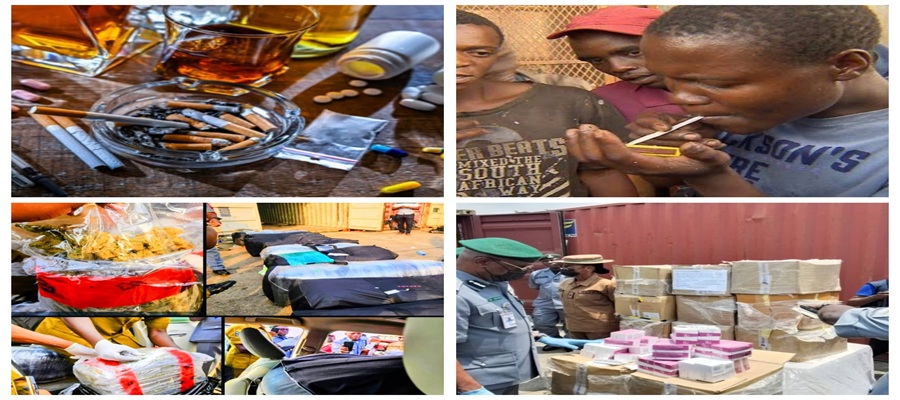
By Blaise Udunze
This piece speaks directly to the current consciousness of many Nigerians as some crises erupt with noise, explosions of violence, economic shocks, political upheavals and then some unfold quietly, steadily, almost invisibly, until their consequences become impossible to ignore. Nigeria today is living through the latter. Today, this hardly or rarely dominates the front pages of newspapers with the same sustained urgency. Still, the truth is that it depends on whether it is reshaping communities, distorting futures, and hollowing out the very foundation of the nation’s promise.

With the rate at which drug abuse has festered among young Nigerians, it is no longer a social concern. It is a national emergency, silent, systemic, and dangerously underestimated.
The big picture of a bright future led by the youth of today and leaders of tomorrow is gradually fading away, thanks to the menace of drugs. Unfortunately, it is a national problem linked to all other criminal activities, but the system does not consider it critical. A generation of people is gradually being wiped out. The implications of these are too dire even to contemplate.
It is now alarming, as the numbers alone are staggering. Looking closely at the report by the United Nations Office on Drugs and Crime reveals that 14.4 percent of Nigerians between the ages of 15 and 64, roughly 14.3 million people, use psychoactive substances, nearly three times the global average. Even more troubling, which calls for public concern, is that one in five of these users suffers from drug-related disorders requiring urgent treatment. The implication is clear since this is not casual use; it is a deepening public health crisis.
To many Nigerians, these statistics, as revealed, appear alarming, but the underlying fact is that they are only a scratch on the surface of a much darker reality, which the eyes cannot see.
Across Lagos, Kano, Onitsha, and countless towns in between, drug abuse is no longer hidden. It is visible in motor parks where tramadol is sold as casually as bottled water, in university hostels where “home mixes” circulate as social currency, and in street corners where teenagers inhale toxic concoctions in search of escape. Substances that were once tightly regulated, codeine, opioids, and benzodiazepines, are now frighteningly accessible. Others, far more dangerous, are improvised through mixtures of gutter water, chemicals, and pharmaceuticals designed not for healing, but for oblivion.
What is emerging is not just a culture of drug use, but an ecosystem of addiction.
Let us consider the disturbing normalisation of concoctions like “Omi Gutter” (gutter water) or “Jiko”, lethal blends of tramadol, codeine, cannabis, and other substances, just to mention a few. The fear in all of this is that these are not isolated experiments; they are part of a growing subculture among young people seeking relief from pressures they can neither articulate nor escape. Let us see the irony from the point that the deaths incurred from overdoses, seizures, and organ failure are increasingly reported, yet rarely provoke sustained national outrage.
This silence is part of the problem and what society has failed to recognize is that they are yet to understand the scale of the crisis; one must go beyond the streets and into the systems that have failed to contain it.
What must be known today is that Nigeria’s drug epidemic is deeply intertwined with a mental health crisis that remains largely unaddressed, which appears difficult to deal with because the system’s attention is divided by other trivialities. According to the World Health Organization, one in four Nigerians, an estimated 50 million people, suffer from some form of mental illness. This is such a fearful trend, whilst among adolescents, the situation is even more fragile. Today to the trend in Nigeria, globally, is also on record that 14 percent of young people experience mental health challenges, with suicide ranking among the leading causes of death for those aged 15 to 29.
In Nigeria, however, these issues are compounded by stigma, neglect, and systemic absence.
A study conducted in a Borstal Institution in North-Central Nigeria found that 82.5 per cent of adolescent boys had psychiatric disorders. The breakdown actually revealed that disruptive behaviour disorders accounted for 40.8 per cent, substance use disorders 15.8 per cent, anxiety disorders 14.2 per cent, psychosis 6.7 per cent, and mood disorders five per cent. These are not marginal figures; they point to a generation grappling with profound psychological distress.
Many of these boys, according to the timely warning from Professor Olurotimi Coker of the Lagos State University Teaching Hospital, which he revealed, is that they suffer in silence. This, he discloses, is constrained by societal expectations that equate vulnerability with weakness. In a culture where young men are expected to “be strong,” emotional struggles are buried, not addressed. Drugs, in this context, become both refuge and rebellion, a way to cope, to escape, and sometimes, to belong.
The tragedy is that what begins as coping often ends in captivity. The clear fact, which the system must not ignore is that the crisis does not exist in isolation, yes! because it feeds into and is fed by Nigeria’s broader challenges of insecurity and alongside economic instability. Research by scholars from Chukwuemeka Odumegwu Ojukwu University highlights a dangerous nexus between substance abuse and national security. Drug trafficking networks do not merely distribute substances; they sustain criminal economies, fund violent groups, and perpetuate cycles of instability.
A review of some of the developments will drive us to the activities in the Lake Chad Basin, for instance, an open secret is that insurgent groups such as Boko Haram and Islamic State West Africa Province have been linked to drug trafficking operations. According to regional security analyses, these groups rely on narcotics, from tramadol to cocaine, to finance operations, recruit fighters, and embolden combatants. The use of drugs to suppress fear and heighten aggression among fighters underscores a chilling reality, which obviously shows that Nigeria’s drug crisis is not just a health issue; it is a security threat. To confirm this, only recently, during an interview with Arise TV, General Christopher Musa, the Minister of Defence, concurred that when many of these terrorists are arrested, they are often found to be under the influence of drugs.” He stated that they use different substances, including injectables, which affect their thinking and reduce their fear or sense of pain. In General Musa’s words: “You are dealing with somebody whose mind is made up that if he dies, he doesn’t care. Most times when we arrest them, they are on drugs, so they don’t care, they don’t even feel it, they have Injectables, you get them with all those drugs. So that is how they operate.”
This convergence of addiction and violence creates a vicious cycle. History has shown that drugs fuel crime; crime sustains drug networks and for this reason, young people, caught in the middle, are both victims and instruments, recruited as couriers, enforcers, and, in some cases, political thugs. One recent example that occurred earlier this month is that of a teenager aged 15 named Tijjani. He was arrested by the Nigerian Army in connection with the Boko Haram deadly attack on military positions in Borno that claimed the life of Brigadier-General Oseni Braimah and other soldiers.
In the political space, history offers a warning because this brings to mind the scenario that played out during the 2011 post-election violence in Nigeria, which claimed over 800 lives in just three days, with the same pattern occurring in the 2023 elections. What Nigerians must know is that these trends expose how easily unemployed, disillusioned youths can be mobilized for violence. In most cases, this happens under the influence of substances and of concern is that similar patterns are re-emerging currently, raising urgent questions about the future of Nigeria’s democracy.
At the same time, economic realities continue to deepen vulnerability. Youth unemployment and underemployment remain persistently high despite the official rate currently at 5 percent, which appears to be low under the newer methodology, while the alternative estimate was around 22 percent in 2025, leaving millions in limbo today. The fact is that, regrettably, for many, the promise of education has not translated into opportunity. As a matter of fact, in many homes, degrees hang on walls, but jobs remain elusive. And that is why, in this vacuum, drugs offer something the system does not in the case of temporary relief from frustration, anxiety, and stagnation.
Even more alarming is how early exposure begins.
A quick look at some reports in Nigeria reveals that hardly any month passed in 2021 without any significant cases of vast amounts of drugs seized at the import gateways in Nigeria or a Nigerian caught abroad with a large consignment of drugs being smuggled into another country. These seizures have shed light on how the work of trafficking networks is facilitated by a range of actors, including alleged businesspeople, politicians, celebrities, and students. Nigeria’s porous borders, weak institutions, corrupt practices, political patronage, poverty, and ethnic identities enable traffickers to avoid detection by the formal security apparatus. There are even times when the conventional security apparatus itself provides cover for traffickers, giving rise to legitimate concerns about the ability of criminal networks and illicit drug monies to infiltrate security and government agencies, transform or influence the motivations of its members, reorient objectives towards the spoils of drug trafficking activity, thus undermining the democratic processes. Still on the supply side is the new availability of cheap opioids in the open market under different brands names.
In Lagos State alone, a 2024 study by the combined team of the National Drug Law Enforcement Agency (NDLEA) and the Federal Ministry of Education found an alarming fact that 13.6 per cent of secondary school students had experimented with drugs, while 6.9 per cent were active users. Unbeknownst to most Nigerians is the fact that these figures represent not just experimentation, but a pipeline into long-term dependency.
This is also confirmed by the Chairman/Chief Executive Officer of the National Drug Law Enforcement Agency (NDLEA), Buba Marwa, who said substance abuse had moved beyond the streets and was now a growing problem within lecture halls and campuses when he spoke on “High Today, Lost Tomorrow: The Real Cost of Drug Abuse on Campus.” Marwa, who further raised concerns over the increasing use of social media platforms for drug distribution, as well as the involvement of students in trafficking, stated that the drug scene had evolved from the use of traditional substances, like cannabis, to more dangerous synthetic opioids and designer drugs, such as Colorado, Loud, and Methamphetamine.
It is more fearful to know that beyond the university students, children as young as 12 are being introduced to substances not through sophisticated cartels, but through peers, neighbourhood influences, and easy market access. Drugs that require prescriptions are sold openly in markets and motor parks, often cheaper than a soft drink. A sachet of tramadol can cost as little as N100.
One surprising revelation is that some of the more dangerous substances, such as petrol fumes, glue, sewage mixtures, are used freely because they are costless. It is now understood that this is not merely a matter of accessibility, but a systemic failure.
Law enforcement efforts, while significant, remain insufficient relative to the scale of the problem as large-scale numbers of drugs have found their way into society. They can still claim to have succeeded as the National Drug Law Enforcement Agency said to have recorded notable successes, though, with over 57,000 arrests, more than 10,000 convictions, and nearly 10 million kilograms of seized drugs in recent years. Even with these records, it is glaring that society has continued to witness thousands of addicts being rehabilitated, and millions of students have been reached through advocacy campaigns.
Yet, as described earlier, these achievements, though commendable, are dwarfed by the magnitude of the crisis, which gives no room for law enforcement to make any holistic claims of sanitizing the system. Seeing the sheer volume of drug inflows, from heroin in Asia, cocaine from South America, cannabis from North Africa, and synthetic drugs from Europe, suggests a system under siege. Enforcement alone cannot outpace demand.
And demand, in Nigeria today, is expanding. Nowhere is the human cost more visible than among the homeless youth population. Along the Oshodi rail corridor in Lagos, thousands of young people live in precarious and questionable conditions, sleeping under bridges and railway platforms, exposed daily to drugs, violence, and exploitation, as they carelessly lose their lives, and some have spent years, even decades, in these environments. Sincerely, there must be this understanding that for many, addiction is both a cause and a consequence of their circumstances.
Some struggling segments of people in society can be linked to broader socio-economic and systemic failures that are associated with widening inequality, lack of social housing, inadequate education, and the absence of structured rehabilitation programs. Another aspect of this that can’t be left out and should be addressed expediently is that these vulnerable youths are reportedly recruited into political violence, reinforcing a dangerous cycle of neglect and exploitation, and it must be established that it has become a norm in society.
This is where the conversation must shift, from individual responsibility to systemic accountability.
Drug abuse in Nigeria is not simply about bad choices, as most people perceive it; it is about limited choices if properly looked into. Just as well said, the trend shows that it is about a young man who takes tramadol to endure the physical strain of daily labour, and continues using it long after the pain is gone because addiction has taken hold. Sometimes, it can also be about a teenager who experiments out of curiosity and eventually finds herself trapped in dependency. It is about a boy who cannot and is unable to express or confront his emotional pain, so he copes by suppressing or numbing it instead, while also looking at a society that has normalized survival at the expense of well-being.
The policy response, however, has yet to match the urgency of the crisis and with this challenge, it will be said that Nigeria lacks a fully integrated national strategy that connects drug prevention, mental health care, education reform, and economic inclusion.
The consequence is a reactive system in a crisis that demands prevention. What would a meaningful response look like?
First, it would reframe drug abuse as a public health emergency. This means prioritizing treatment, rehabilitation, and prevention alongside enforcement. Addiction must be treated as a medical condition, not merely a criminal offense.
Second, it would integrate mental health into primary healthcare. Access to counseling, therapy, and early intervention must be expanded, particularly for young people. Schools, communities, and digital platforms should become entry points for support, not just discipline.
Third, it would invest in education reform that goes beyond academics. When this is done, life skills, emotional intelligence, and drug awareness must be embedded in curricula. Students need tools to navigate pressure, not just pass exams.
Fourth, it would address economic exclusion. Job creation, vocational training, and entrepreneurship support must be scaled to match the size of Nigeria’s youth population. Opportunity is one of the most powerful antidotes to despair.
Fifth, it would strengthen community-based interventions. Families, religious institutions, and local leaders must be empowered to recognize early warning signs and provide support. Addiction is rarely an individual battle; it is a collective one.
Finally, it would demand accountability. Data must guide policy, and outcomes must be measured. Good intentions are no substitute for measurable impact.
Nigeria stands at a defining moment and must be aware that its youth population remains its greatest asset but also its greatest risk. The fear today that should be in the heart of many and must suffice as a warning is that a generation lost to addiction is not just a social tragedy; it is a national failure.
The warning signs are already here in the statistics, in the streets, in the stories that rarely make headlines. The question is whether the country is willing to listen. Because silence, in this case, is not neutrality. It is complicity.
And if this silent emergency continues unchecked, Nigeria may soon discover that what it is losing is not just its youth but its future.

The Nigeria Customs Service (NCS) has rolled out an artificial intelligence (AI) driven capacity-building programme to improve revenue generation and reconciliation across its operations.

The initiative, unveiled during a three-day training event in Abuja, aims to transition the agency toward data-driven administration as Nigeria seeks to boost non-oil revenue.
The adoption of AI will enable the service to better manage complex trade systems, detect anomalies and reduce revenue leakages, says Bashir Adewale Adeniyi, comptroller-general of the NCS.
AI-powered tools are already being integrated into risk management and cargo scanning systems to allow for real-time analysis of trade patterns.
The technology marks a transition from manual, reactive processes to predictive and automated decision-making, Adeniyi adds.
The programme also reflects a shift in the relationship between the NCS and the National Assembly toward a collaborative framework focused on transparency and efficiency.
The training is a strategic intervention to address persistent gaps in revenue management, says Kikelomo Adeola, deputy comptroller-general of the NCS.
AI applications, ranging from automated data analysis to predictive intelligence, will significantly enhance the integrity of public financial systems, she says.
The initiative aligns with broader efforts to modernise governance and improve compliance across revenue-generating agencies, says Bamidele Salam, chairman of the House Public Accounts Committee.
Lawmakers and fiscal authorities at the event underscored the urgency of adopting advanced technologies amid rising budgetary pressures.
This move comes as the federal government increases scrutiny over revenue leakages and audit discrepancies.
The partnership between the NCS and the legislature is critical to strengthening fiscal discipline and ensuring all revenue due to the federation is accurately captured, Adeniyi concludes.

FCCPC Denies Banning Airtime Borrowing, Blames Cartel for Misinformation

Court Suspends Enforcement of FCCPC’s Reform on Loan Apps

FG Rules Out Borrowing from IMF’s $50Bn Support Fund

CBN Introduces Overnight Financing Rate to Compete with US, EU

AfriStakes Unveils Platform to Connect SMEs with Investors

NBC Boss Urges Content Ceators to Participate in DSO

NITDA Takes Over National Digital Architecture System

DLM SPV PLC Lists ₦9.00bn AAA-Rated Medium-Term Notes on FMDQ Exchange, Sets Benchmark in Corporate Bond Market

FG Shifting Focus to “Meaningful Connectivity” to Drive Inclusion – Minister

Jury Finds Meta, Google Liable for Woman’s Social Media Addiction



 Telecom3 days ago
MTN Suspends Data, Airtime Borrowing Service over New FCCPC Lending Rules

 General News3 days ago
NiRA Unveils DNSSEC to Tackle Rising Cyber Threats, Strengthen Digital Trust

 E-Business3 days ago
NDPC Issues Critical Advisory as Hackers Target Nigeria’s Key Digital Systems

 General News3 days ago
NiRA Charges Media to Drive Nationwide Adoption of .ng Domain

 News3 days ago
Nigeria Customs Deploys AI to Cover Revenue Leaks

 Telecom3 days ago
Nokia, Orange Partner on AI-native 6G Networks

 General News3 days ago
Top 7 Reliable Virtual Cards for Running Ads in Nigeria

 Telecom2 days ago
Airtel Nigeria Suspends Airtime and Data Credit Services