

E-Business
FG Mulls Creation of ‘Nigerium’ Blockchain to Enhance Data Security

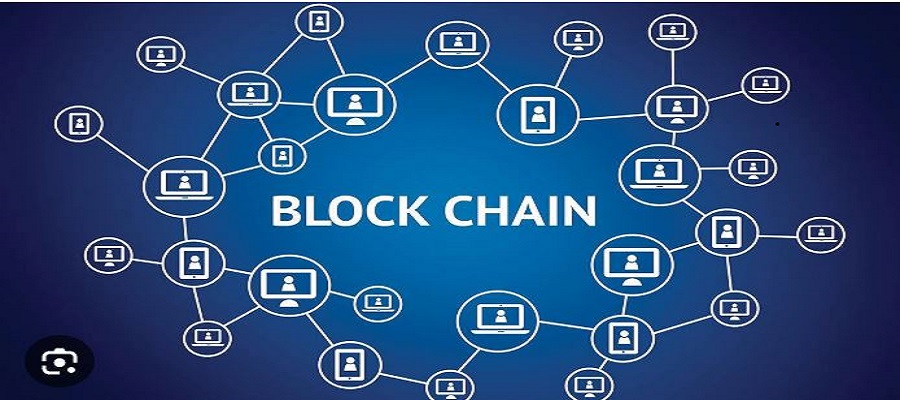
National Information Technology Development Agency (NITDA) will develop the “Nigerium” indigenous blockchain to safeguard national security, according to Kashifu Abdullahi, director general, NITDA.

Abdullahi who stated this when he welcomed a delegation from the University of Hertfordshire Law School, in Abuja, said that the ultimate goal is to unite the public and private sectors to develop a domestic blockchain.
This announcement arrives shortly after NITDA’s recent disclosure of its intention to set up research centers dedicated to blockchain and other cutting-edge technologies across Nigeria’s six geopolitical zones.
Blockchain technology is an advanced database mechanism that allows transparent information sharing within a business network.
Following the Nigerian government’s approval of a national blockchain policy in 2023, which established a legal framework for blockchain adoption within the country, there is now a proposal advocating for the development of a domestically engineered blockchain platform.
It is noteworthy that Nigeria introduced the eNaira, its digital currency, in 2021, utilizing a private blockchain based on Hyperledger Fabric. Despite concerted efforts and partnerships to promote the eNaira, the digital currency has faced challenges in gaining widespread acceptance.
The delegation from the University of Hertfordshire Law School, led by Chanu Kuppuswamy, underscored the significance of Nigeria developing its own blockchain technology. They argued that an indigenous blockchain would ensure that Nigerian data and personal information remain under local control, rather than being managed by international co-developers who may not prioritize Nigeria’s interests.
According to Kuppuswamy, reliance on established blockchain platforms such as Ethereum places Nigeria at the discretion of international developers who do not operate under Nigerian law.
The delegation thus suggests the creation of a Nigerian-specific blockchain, enabling the country to retain autonomy over its digital infrastructure. This approach would necessitate proactive measures to prevent potential issues, ensuring the security and sovereignty of Nigerian data.
The delegation also proposed the establishment of a “data embassy” for Nigeria—a server situated in a foreign country dedicated to backing up and safeguarding Nigerian data. This measure is deemed essential for maintaining digital continuity, as data is susceptible to various threats, including cyber-attacks, natural disasters, and other risks. The data embassy would operate under Nigerian legislation, with the host nation collaborating to guarantee the security and governance of the data.
Furthermore, the delegation underscored the importance of collaborative efforts among government departments to integrate blockchain services and enable interagency dependency.
Despite Nigeria’s strides in blockchain technology, the government has enacted rigorous regulations on the cryptocurrency sector, which have impacted service providers.
he government’s ongoing legal issues with Binance over currency concerns and KuCoin’s recent implementation of a 7.5% VAT on cryptocurrency transactions on its platform are indicative of the challenging regulatory climate.
Concurrently, Ghana is advancing towards becoming the first government in Africa to fully embrace blockchain technology, with plans to digitize government services and secure government data against unauthorized alterations.


Microsoft is stepping up its push to expand artificial-intelligence adoption across Africa as competition intensifies with Chinas DeepSeek for influence in one of the worlds youngest and fastest-growing digital markets.

The company plans to train 3 million Africans on its AI technologies this year through partnerships with schools, universities and other institutions, with a focus on South Africa, Kenya, Nigeria and Morocco.
The effort reflects Microsofts broader attempt to accelerate adoption of its AI ecosystem across emerging markets where developers and enterprises are increasingly experimenting with generative AI tools.
Alongside the training initiative, Microsoft is working with MTN Group (MTNOY), Africas largest telecommunications company, to distribute Microsoft 365 and its Copilot digital assistant to about 300 million subscribers.
The Elevate program is designed to expand AI literacy and reduce cost barriers that might otherwise limit adoption, according to regional leadership.
The push comes as Chinese technology firms expand their footprint across the continent, with DeepSeeks open-source models accounting for roughly 11% to 14% of chatbot use in several African markets and reaching about 20% in countries such as Ethiopia and Zimbabwe following investments tied to digital infrastructure and telecom networks.
Microsoft is also increasing its infrastructure investment in the region.
In South Africa, the company plans to invest 5.4 billion rand, or about $330 million, to expand its cloud and AI capacity by the end of next year, while it is also exploring plans for a geothermal-powered data center in Kenya.
Early corporate adoption is emerging across the continent, with South African grocer Spar Group using Copilot in ways that save more than 700 employee hours annually and Nigerias Access Holdings integrating AI into daily workflows.
Regional leadership has suggested broader AI adoption could potentially contribute up to $1.5 trillion to Africas gross domestic product by 2030 if governments and businesses continue investing in digital infrastructure and AI skills.


Kaspersky Global Research and Analysis Team (GReAT) has uncovered a new Android malware campaign in which cybercriminals distributed the BeatBanker Trojan under the guise of the Starlink application for Android.

Threat actors primarily target users from Brazil; nevertheless, Kaspersky experts don’t rule out that users from other countries may also face this threat.
The Trojan employs a Monero cryptocurrency miner and additionally installs a BTMOB remote administration tool (RAT) on the infected devices. To maintain its persistence, BeatBanker uses an uncommon mechanism involving a nearly inaudible looped audio file.
“At first we saw BeatBanker being distributed under the guise of a public services app; it installed a banking Trojan in addition to a cryptocurrency miner. However, our recent detection efforts uncovered a new campaign with another BeatBanker variant that deploys the BTMOB RAT instead of the banker module.
The attackers appear to be using a fresh lure with the Starlink app to reach more victims from different countries. Therefore, it is important for users to stay vigilant and use advanced solutions to protect their smartphones,” comments Fabio Assolini, Head of the Americas & Europe units at Kaspersky GReAT.
Initial vector of infection
Kaspersky experts believe that cybercriminals distribute a fake Starlink application containing the BeatBanker Trojan through phishing pages that mimic the Google Play Store. After execution on a compromised device, the Trojan displays a user interface that also mimics Google Play. Cybercriminals trick victims into granting installation permissions, thus allowing the download of additional hidden malicious payloads.
Crypto mining and BTMOB RAT module
When a user clicks UPDATE on the fake Google Play page, a Monero cryptocurrency miner deploys. BeatBanker monitors battery percentage and the temperature of an infected smartphone, as well as user activity after which a hidden cryptocurrency miner is started or stopped.
The Android Trojan also installs a BTMOB RAT on the compromised device. BTMOB enables full remote control and is sold as Malware-as-a-Service.
It is capable of automatic granting of permissions, hide system notifications and has mechanisms designed to capture screen lock credentials, including PINs, patterns and passwords on compromised devices. The malware also gives cybercriminals access to the front and rear cameras, GPS location monitoring and constant collection of sensitive data.
To ensure persistence and hinder uninstallation, BeatBanker maintains a fixed notification in the foreground and activates a foreground service with silent media playback. This tactic is designed to prevent the operating system from removing the malicious process.
Kaspersky’s products detect this threat as HEUR:Trojan-Dropper.AndroidOS.BeatBanker and HEUR:Trojan-Dropper.AndroidOS.Banker.*.

By Shameel Joosub
For centuries, Africa has powered global economic growth through its resources, labour, and human potential, yet too little of that prosperity has been realised on the continent itself. Today, artificial intelligence presents a rare opportunity to change that trajectory.

As the global economic order undergoes its most significant transformation since the end of the Second World War, Africa stands at a decisive inflection point.
With the world’s youngest population, rapidly expanding digital adoption, and vast untapped potential, Africa is uniquely positioned not just to participate in the AI era, but to help shape it.
Realising this opportunity, however, will require deliberate investment, enabling regulation, and a commitment to ensuring that the benefits of AI reach all 1.5 billion people across the continent.
When I reflect on AI, what strikes me most is that it is enabled by humanity.
Intelligence is fundamentally human, and AI is an extraordinary amplifier of human creativity and capability.
It is not about replacing people. It is about empowering them to do more, faster, and better.
While this progress is remarkable, our responsibility as African businesses is to extend these capabilities beyond our corporate walls so that AI can unlock Africa’s underutilised potential and drive inclusive growth.
Unlocking Africa’s Potential Across Industries
As a purpose-led African connectivity and digital services company serving 223.2 million customers across South Africa, the DRC, Egypt, Ethiopia, Kenya, Lesotho, Mozambique, and Tanzania, Vodacom has invested strategically in AI across multiple sectors.
Our mobile networks reach a population of 588 million people. That reach must translate into opportunity.
Consider agriculture. One of our subsidiary companies, Mezzanine, leverages AI to unlock previously invisible insights into soil composition, empowering farmers to make data-driven decisions that improve crop yields and profitability.
When farmers thrive, food security strengthens and rural communities prosper. That is inclusive growth in action.
In financial services, AI is strengthening trust and security. In Kenya, Graph Network Analytics enhances M-Pesa fraud detection by mapping money movements in real time, helping protect more than 37 million customers who rely on the service in their daily lives.
As criminals target digital payment platforms, AI helps predict and prevent fraud scenarios, including SIM swap fraud and identity theft.
AI is also supporting national infrastructure. In South Africa, connectivity and IoT solutions monitor coal transport in real time from pit to port to power station.
This improves operational efficiency and supports energy security, addressing critical infrastructure challenges that have constrained economic growth.
These are not isolated examples. They represent a broader truth. Technology delivers its greatest value when it solves real problems for real people.
The Infrastructure Imperative: Modernising Regulation
Yet none of this is possible without one fundamental prerequisite: connectivity. Connectivity requires sustained investment in infrastructure, supportive policy environments, and regulatory frameworks that enable innovation.
If Africa is serious about universal access, modern and enabling regulation is essential. Spectrum licensing must be efficient and predictable. Infrastructure sharing must be supported. Universal service funds must be effectively deployed. Administrative barriers to infrastructure rollout must be reduced. Cloud and data platforms, which power AI capabilities, must be supported through enabling policy environments. These are not peripheral issues. They are fundamental to accelerating Africa’s digital and economic transformation.
These challenges represent only a portion of the regulatory barriers that must be addressed to deliver affordable, reliable connectivity to all Africans.
Pan-African Coordination: Our Collective Responsibility
Africa’s greatest advantage is its youth, but demographics alone will not deliver growth. To realise this potential, we must actively skill up young people in our schools and universities so they can take full advantage of an AI-driven future.
That requires modernising education curricula to embed AI literacy, data capability and practical problem-solving at scale. Companies like Vodacom are investing in digital skills development, but unlocking Africa’s potential will require coordinated action across government, academia and industry.
This is why governments and intergovernmental institutions such as the African Development Bank Group, the African Union, SADC, ECOWAS, and other regional bodies play a critical role in harmonising regulatory frameworks across the continent. Greater coordination can accelerate investment, enable scale, and support the development of an integrated digital economy.
Pan-African alignment of telecommunications regulation is not merely a technical objective. It is essential to unlocking inclusive growth and ensuring that Africa can compete effectively in the global digital economy.
Our Moment
Africa has long contributed to global progress. In the AI era, it has the opportunity to define its own future as a creator of innovation, productivity, and inclusive growth. The foundations are already in place. Our young population, expanding connectivity, and accelerating digital adoption position the continent to lead in ways that were not previously possible.
But this outcome is not guaranteed. It depends on the choices we make now. By modernising regulation, investing in connectivity as foundational infrastructure, and ensuring that AI empowers individuals, businesses, and communities, Africa can secure its place as a central force in the global digital economy.
That is the Africa I believe in. That is the Africa we are building at Vodacom, connecting people, enabling opportunity, and ensuring that technology serves the progress of society as a whole
Shameel Joosub, is group Chief Executive Officer, Vodacom Group
Source: Tech Africa News

Court Freezes Bank Accounts of Petrocam, Founder over Alleged N9Bn Zenith Bank Debt

FG Approves First National Policy on Cosmetic Safety, Health

FCCPC Says Telcos, Energy Firms Lead Consumer Complaints in Nigeria

Microsoft Expands Africa AI Push while DeepSeek Gains Users

Mobile Phones Used by Food Vendors Could Spread Infections- Experts

Dr. Cairo Ojougboh Foundation Bolsters Nigeria’s Education Drive with ₦2.7m Student Support

Kaspersky Brings more Transparency to Threat Detection with New Hunt Hub

Kaspersky Discovers New Phishing Campaign Exploiting Google Tasks Notifications to Steal Corporate Credentials

esentry 2025 Report Shows Healthcare, Financial Services and Telecoms as Staging Grounds for Increased Cyberattacks in Africa

AfDB, UNDP Launch $10Bn AI Initiative for Africa




 Telecom3 days ago
China Threatens to Shut Nigeria’s Satellite Over $11.44m Unpaid Debt

 Telecom3 days ago
US Court Dismisses All Claims Against Binance in Major Anti-Terrorism Lawsuit Victory

 Telecom3 days ago
TikTok Pumps $200k into AI Media Literacy for Sub-Saharan Africa at Nairobi Summit

 General News3 days ago
More Nigerians Emerge Millionaires in Week 9 of NIVEA’s Consumer Campaign

 E-Business3 days ago
NITDA, Nkenne AI Seek to Localise AI for Nigerians

 E-Business2 days ago
FG Moves to Strengthen Children’s Online Safety

 Telecom3 days ago
NCC Orders Telcos to Report Cyberattacks Within 4 Hours from 2027

 E-Business3 days ago
Meta to Charge Location Fees on Ads to Six Countries from July 1, 2026