

E-Financial
Fidelity Bank Seeks Supreme Court Judgement Interpretation, Condemns Malicious Publication

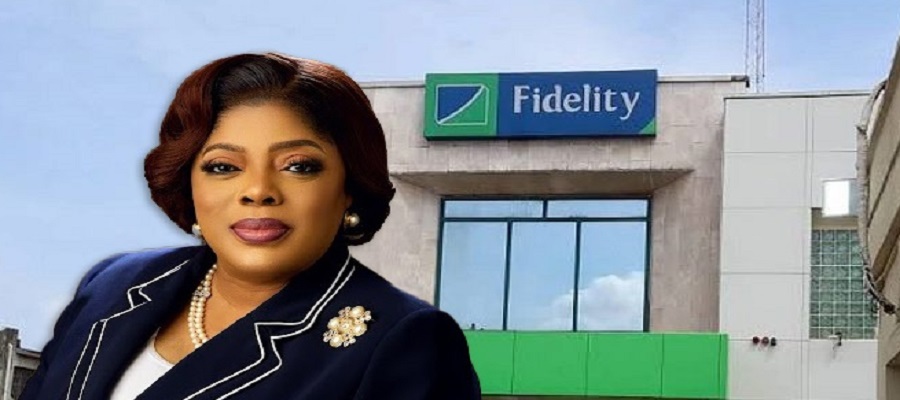
Fidelity Bank has applied for the interpretation of a Supreme Court judgement on a legacy transaction between the defunct FSB International Bank and Sagecom Concepts Limited.

FSB International Bank had granted a credit facility to G. Cappa Plc in 2002 for the sum of USD3 million.
The facility was secured with a mortgage on a property located in Ikoyi.
In a statement on Monday, Meksley Nwagboh, head of Brand & Communications, Fidelity Bank, said a publication on the Supreme Court judgement, and the claim of imminent bankruptcy was done in bad faith.
Nwagboh said G. Cappa defaulted on the loan repayment and in a bid to prevent FSB from selling the mortgaged property to repay the loan, it filed a lawsuit against FSB at the Federal High Court, Lagos, seeking inter-alia to restrain the Bank from selling the property.
The spokesperson noted that the Federal High Court, in its judgment, ruled that the Bank as legal mortgagor rightfully sold the leased interest in the property to Sagecom in 2011.
“The Court, however, declined to order vacant possession of the property and directed the issue of vacant possession to the Lagos State High Court. In the meantime, G. Cappa remained in possession of the property and kept collecting rents therefrom,” the statement reads.
“Sagecom then instituted an action against the Bank and G. Cappa at the Lagos State High Court in 2011, seeking damages against the Bank for breach of contract and for possession of the property. Sagecom’s claim against the Bank was essentially for liquidated damages calculated as rentals on the several component apartments in the property plus interest on the same over different time frames.
“In 2018, the Lagos High Court awarded judgment in favour of Sagecom against G. Cappa and the Bank, which judgment was challenged by the Supreme Court. The Bank is convinced that by remaining in possession of the property and continuing to collect rents therefrom, G. Cappa orchestrated all the losses suffered by Sagecom.
“However, having exhausted the appeal process, the Bank is willing to settle the obligation. Unfortunately, there are significant ambiguities in the judgment resulting in difficulties in calculating the actual financial liability to the G.Cappa and the Bank which is about N14billion from our computation based on the exchange rate as of 2005 when the incident and cause of action arose.
“Meanwhile, the Supreme Court in the case of Anibaba v Dana Airlines Limited delivered in January 2025 has clarified that foreign currency judgment debt must be converted to Naira at the exchange rate obtainable at the date of judgment of the trial Court which in this case was 30 January 2018.
“Even if the 2018 exchange rate supported by the Supreme Court is applied, the judgment debt will just be under N30.7 billion payable G.Cappa plc (who delayed delivery of possession of the apartments from 2005 till June 2018 when possession was eventually delivered) with contribution from the Bank.
“Consequently, the Bank has applied to the Court for a clarification and inquiry into the proper interpretation of the judgment and the computation of the actual quantum properly and lawfully payable by G.Cappa and the Bank.
“The Court has accordingly ordered Sagecom to maintain status quo pending the determination of pending motions and restrained Sagecom and all persons from publishing any material in the media as the matter is still pending in court.
“The implication of this order is that the instant publication by Peoples Gazette and any other media platform or persons contain false information and are wrongful, unlawful, and constitute a contempt of court. It is unfortunate that the above clear position and injunctive order made by the Court since 7th May 2025 were not adhered to.”
Nwagboh emphasised that Fidelity Bank remains a very strong and profitable financial institution and currently amongst the most capitalized banks in Nigeria with international operations.
The official insists Fidelity Bank is under no bankruptcy and has always been in a position to discharge its obligations, assuring depositors, customers, investors and the general public of its strong financial position as shown in the Q1 2025 financial results already made public.
The statement added that all necessary steps are being taken to “apprehend and prosecute any persons or platform directly or indirectly responsible for this wicked, malicious and sponsored publication aimed at embarrassing the Bank and causing panic to its stakeholders.”



Federal court in Lagos has suspended the enforcement of Nigeria’s most comprehensive framework for regulating digital lending apps.

On April 15, Justice Ambrose Lewis-Allagoa of the Federal High Court in Lagos granted an interim injunction blocking the enforcement of the Digital, Electronic, Online, or Non-Traditional Consumer Lending Regulations 2025, better known as the DEON Regulations.
The order followed an urgent ex parte application filed the previous day by the Wireless Application Service Providers Association of Nigeria (WASPA Nigeria), the industry body representing wireless application service providers operating mainly within the telecoms ecosystem.
The suit targets twelve specific provisions of the text, covering licensing, sanctions, compliance obligations and data-handling rules, according to court documentation published by Lawyard.
Until the next hearing on April 27, 2026, the regulator cannot impose sanctions, enforce compliance directives, or issue new instructions to WASPA members.
The judge also barred the Federal Competition and Consumer Protection Commission (FCCPC) from interfering with the ongoing commercial operations of association members.
The case pits two actors whose respective mandates the Nigerian legal framework has never clearly separated.
On one side stands the FCCPC — the federal agency established in 2018 to enforce consumer protection and competition — which gazetted the DEON Regulations on July 21, 2025, under sections 17, 18 and 163 of its founding Act.
In a press statement dated September 3, 2025, Tunji Bello, executive vice chairman, FCCPC, justified the rules by citing “a long history of complaints” involving exploitative practices, data breaches, abusive debt recovery, and harassment.
On the other side, WASPA Nigeria contests the very legitimacy of the FCCPC’s intervention, arguing that services tied to telecoms — airtime credit, data loans, mobile-financing products — fall exclusively under the Nigerian Communications Commission (NCC), the telecoms regulator created by the Nigerian Communications Act of 2003.
In the affidavit deposed by Ayo Stuffman, the association contends that the FCCPC is acting ultra vires and creating a regulatory regime parallel to the NCC’s.
A jurisdictional war that stretches far beyond a procedural dispute
The conflict is not limited to a question of legal boundaries. It strikes at the commercial core of the market: who collects the licensing fees, who sets the operational conditions, who governs the financial products embedded in telecom networks.
Nigeria’s consumer credit stock reached 3.82 trillion naira at the end of December 2024, up 21.27% on September, according to Central Bank of Nigeria (CBN) data relayed by The Cable and AFP.
In the fourth quarter of 2024 alone, personal loans disbursed amounted to approximately 470 billion naira.
A growing share flows through mobile applications and telecom-embedded lending products — including MTN’s MoMo Airtime Lending, operated by the country’s largest telecom operator.
If the court validates WASPA’s position, these products fall outside the FCCPC’s scope and come under the sole authority of the NCC, a regulator historically less active on consumer protection issues.
Available data on demand illustrate the social stakes. Between 2021 and 2023, the FCCPC recorded more than 11,000 consumer complaints for harassment, data abuse and unethical debt recovery practices, according to the agency.
The number of lending applications approved by the FCCPC rose from 269 in September 2024 to 408 in March 2025, while 47 apps were delisted and 88 were placed on the watchlist, according to data compiled by AFP and OneSafe.
The DEON Regulations were meant to introduce interest-rate caps, precontractual disclosure obligations, continuous supervision of recovery practices and fines of up to 100 million naira per violation, according to Legit.ng. The compliance deadline was set for January 5, 2026, and the FCCPC had issued written compliance notices to operators with an April 16 deadline, according to WASPA’s affidavit.
It is precisely this enforcement pressure that triggered the legal challenge.

Federal government has said that Nigeria has no plans to seek a loan from the International Monetary Fund’s proposed $50 billion support package for economies hit by the Middle East crisis.

Wale Edun, minister of Finance, who stated this, said that Nigeria’s current reliance on domestic economic reforms and fund mobilisation was working.
Edun gave these insights during the African Finance Ministers’ briefing, on Thursday, at the ongoing IMF/World Bank annual meetings, in Washington, DC.
He noted that for over two years, Nigeria’s investment in economic reforms have begun to yield results, restoring policy credibility and strengthening the country’s resilience against global economic shocks.
Edun told the global west and the rest of the world that Nigeria now prioritises market-based adjustments, avoiding administrative controls, particularly in foreign exchange and petroleum pricing mechanisms.
His assertion follows the disclosure by the IMF that a possible $50 billion support to cushion vulnerable economies against the crisis in the Middle East, was on the pipeline.
Despite clarifying Nigeria’s lack of interest in borrowing, Edun, urged the IMF to ensure faster financial assistance for African countries who will need help from the $50 billion global support package.
“Nigeria has no plans at the moment to approach the IMF or any other such body,” Edun said, emphasising that Nigeria’s reliance on market mechanisms had led to smoother economic adjustments, reduced disruptions and is sustaining the country’s macroeconomic trajectory.
“The IMF talked about $50 billion and we all know that the funding will largely go to Africa, because those are the most vulnerable countries. And the reality is that what we’re asking for in this instance, is that the funds and the support be released quickly and at scale.

Central Bank of Nigeria (CBN), in collaboration with financial market dealers, has introduced the Nigerian Overnight Financing Rate (NOFR), a standardized benchmark designed to enhance transparency and strengthen monetary policy transmission.

Olayemi Michael Cardoso, CBN gov
Hakama Sidi Ali, spokesperson of the CBN in a statement on Friday, said that the the NOFR is expected to improve price discovery and transparency, while promoting consistent pricing of money market instruments across Nigeria’s financial system.
The regulator noted that the new benchmark positions Africa’s most populous country alongside leading global reference rates such as SOFR in the United States, SONIA in the United Kingdom, €STR in the Eurozone, and TONA in Japan.
“It also complements African benchmarks such as JIBAR (South Africa). Following a stakeholder engagement session held on February 27, 2026, where market participants formally adopted the benchmark, and subsequent regulatory approval, NOFR is now in use, with the CBN serving as the benchmark administrator.
“The bank will ensure governance, transparency, and regular publication of the rate,” CBN stated.

FCCPC Denies Banning Airtime Borrowing, Blames Cartel for Misinformation

Court Suspends Enforcement of FCCPC’s Reform on Loan Apps

FG Rules Out Borrowing from IMF’s $50Bn Support Fund

CBN Introduces Overnight Financing Rate to Compete with US, EU

AfriStakes Unveils Platform to Connect SMEs with Investors

NBC Boss Urges Content Ceators to Participate in DSO

NITDA Takes Over National Digital Architecture System

DLM SPV PLC Lists ₦9.00bn AAA-Rated Medium-Term Notes on FMDQ Exchange, Sets Benchmark in Corporate Bond Market

FG Shifting Focus to “Meaningful Connectivity” to Drive Inclusion – Minister

Jury Finds Meta, Google Liable for Woman’s Social Media Addiction



 Telecom3 days ago
MTN Suspends Data, Airtime Borrowing Service over New FCCPC Lending Rules

 General News3 days ago
NiRA Unveils DNSSEC to Tackle Rising Cyber Threats, Strengthen Digital Trust

 E-Business3 days ago
NDPC Issues Critical Advisory as Hackers Target Nigeria’s Key Digital Systems

 General News3 days ago
NiRA Charges Media to Drive Nationwide Adoption of .ng Domain

 News3 days ago
Nigeria Customs Deploys AI to Cover Revenue Leaks

 Telecom3 days ago
Nokia, Orange Partner on AI-native 6G Networks

 General News3 days ago
Top 7 Reliable Virtual Cards for Running Ads in Nigeria
 E-Financial2 days ago
Court Suspends Enforcement of FCCPC’s Reform on Loan Apps