

E-Financial
First Bank Denies Reports of Otedola Takeover

FBN Holdings Plc Friday denied claims by online media that Femi Otedola, business mogul, has acquired majority stake in the bank.

Femi Otedola
In a statement signed by Seye Kosoko, company secretary, obtained from Nigerian Exchange Limited (NGX), the bank is yet to receive any notification from the individual mentioned on such acquisition.
FBN Holdings insisted it operates in a regulated environment which required notifications of significant shareholding by shareholders to the company where shares are held in different vehicles.
It further stated that the bank will always notify the appropriate agencies and authorities whenever it receives any notice of significant shareholding by the shareholder and the company registrars.
“The attention of FBN Holdings Plc has been drawn to media reports purporting that a certain individual has acquired significant shareholding interest in FBN Holding Plc, therefore making him the majority shareholder in the company.
“As a listed company, the shares of FBN Holding Plc are publicly traded and sale and acquisition of shares is expected in the normal course of business.
“We operate in a regulated environment which required notifications of significant shareholding by shareholders to the company where shares are held in different vehicles, further to which the company will notify the regulators and public as appropriate,” it added.
There are online reports that Femi Otedola, billionaire businessman, , is coming back into the capital market on a big scale a few years after he offloaded his 75 per cent stake in Forte oil which later became Ardova Plc under its new owners.
The report stated that the business mogul has allegedly acquired majority stake in FBN Holdings, which also recently had a board crisis, to take over the company.
According to reports, Otedola, is now the single majority shareholder of the first generation lender in Nigeria with the acquisition of N30 billion worth of the bank’s equities at the NGX.
In recent times, there has been an upward movement in the share price of FBN Holdings at the stock market and this has raised many eyebrows as some investors were asking what was driving the hike.
Some months ago, many were shocked when the Central Bank of Nigeria (CBN) sacked the boards of First Bank Nigeria Limited and its holding company, FBN Holdco, citing insider abuse and corporate governance breakdown as reasons.
The apex bank also set up interim boards, reinstalling Dr. Sola Adeduntan, ousted managing director/ chief executive.
The interim board chairman of the bank, according to CBN, will be Tunde Hassan-Odukale.
Other members of the bank subsidiary are Tokunbo Martins, Uche Nwokedi, Adekunle Sonola, Isioma Ogodazi, Ebenezer Olufowose, Ishaya Elijah Dodo, Gbenga Shobo, Remi Oni and Abdullahi Ibrahim.
The board of the holding company is chaired by Remi Babalola while the managing director is U.K. Eke.
Other members are Dr. Fatade Abiodun Oluwole, Kofo Dosekun, Remi Lasaki, Dr. Alimi Abdulrasaq, Ahmed Modibbo, Khalifa Imam and Peter Aliogo.
The change was the climax after hours of horse-trading and corporate war over the appointment of a new managing director.
The board of directors of First Bank within the period announced the appointment of Gbenga Shobo as its managing director/chief executive.
Shobo was to replace Adeduntan, who was appointed in 2016.
Following the appointment, the CBN made futile efforts to compel the board to reverse its decision and reinstate the ousted chief executive. The apex bank issued a query to the board when it failed to heed its advice.
CBN said the board’s move had a dire consequence for the bank and “portends significant risks to the stability of the financial system” in the query letter.
“The CBN notes with concern that the action was taken without due consultation with the regulatory authorities, especially given the systemic importance of First Bank Ltd.
“The CBN was not made aware of any report from the board indicting the Managing Director of any wrong-doing or misconduct; there appears to be no apparent justification for the precipitate removal.
“We are particularly concerned because the action is coming at a time the CBN has provided various regulatory forbearances and liquidity support to reposition the bank, which has enhanced its asset quality, capital adequacy and liquidity ratios amongst other prudential indicators,” the regulator said.



Nigeria Deposit Insurance Corporation (NDIC) has declared a second liquidation dividend of ₦24.3 billion for depositors of Heritage Bank Limited (in liquidation) whose account balances exceeded the statutory insured limit of ₦5 million at the time of the bank’s closure.

Heritage Bank’s operating licence was revoked by the Central Bank of Nigeria (CBN) on June 3, 2024, after which the NDIC was appointed liquidator in line with the Banks and Other Financial Institutions Act (BOFIA) 2020 and the NDIC Act 2023.
In a statement signed by Hawwau Gambo, head of the Communication and Public Affairs Department, the Corporation said “the second liquidation dividend would be paid at a rate of 5.2 kobo per ₦1.00 on outstanding uninsured balances. This brings the total liquidation dividend paid so far to 14.4 kobo per ₦1.00.
“The NDIC has now declared a second liquidation dividend of ₦24.3 billion. This amount, derived from debt recovery, sale of physical assets, and realisation of investments, will be applied to the payment of uninsured balances for depositors with funds exceeding the ₦5 million insured limit. The second liquidation dividend is payable at a rate of 5.2 kobo per ₦1.00 on outstanding balances, in accordance with Section 72 of the NDIC Act 2023. This brings the cumulative liquidation dividend declared to date to 14.4 kobo per ₦1.00”.
The NDIC recalled that it had earlier paid a first liquidation dividend of ₦46.6 billion in April 2025, representing 9.2 kobo per ₦1.00, following the reimbursement of insured deposits of up to ₦5 million per depositor from its Deposit Insurance Fund.
According to the Corporation, the second tranche was made possible through sustained recovery of debts and continued asset disposal.
“This payment is in furtherance of our statutory responsibility to ensure that depositors of closed banks are reimbursed promptly as assets are realised,” the NDIC said.
The Corporation explained that payments would be made automatically to eligible depositors using existing records. Depositors who have already received their insured deposits and the first liquidation dividend will have their alternative bank accounts credited automatically through their Bank Verification Numbers (BVN).
However, depositors without alternative bank accounts or BVNs, as well as those who have not claimed their insured deposits or the first liquidation dividend, were advised to visit the nearest NDIC office nationwide or complete the e-claim form on the Corporation’s website for verification and processing.
The NDIC noted that liquidation dividends are paid only to depositors with balances above the insured limit and are sourced from asset sales and recoveries. Other creditors and shareholders will be considered only after all depositors have been fully reimbursed and subject to the availability of funds.
The Corporation assured the public that the ₦24.3 billion payment represents only the second liquidation dividend, adding that further payments would be made as additional assets are realised and outstanding debts recovered.
Depositors were advised to contact the NDIC Claims Resolution Department at any of its offices nationwide or through the Corporation’s official email addresses and helplines for further enquiries.


KPMG Nigeria has identified what’s described as “errors, inconsistencies, gaps and omissions” in Nigeria’s tax laws that came into force at the beginning of this year.

The professional services company warns that these issues could undermine the attainment of the tax reforms’ stated objectives if left unaddressed.
The reforms, anchored on the Nigeria Tax Act (NTA) and the Nigeria Tax Administration Act (NTAA), alongside the Nigeria Revenue Service (NRS) Establishment Act and the Joint Revenue Board (JRB) Establishment Act, are aimed at improving revenue generation, simplifying tax administration, and enhancing competitiveness.
Authorities have repeatedly described the overhaul as critical to strengthening Nigeria’s weak tax-to-GDP ratio and adapting the tax system to changing economic realities.
Capital gains, inflation, and market behaviour
One of the most far-reaching concerns relates to the computation of chargeable gains under Sections 39 and 40 of the Nigeria Tax Act, which require capital gains to be calculated as the difference between sale proceeds and the tax-written-down value of assets, without any adjustment for inflation, analysis by KPMG revealed.
This approach has attracted attention largely because of Nigeria’s inflation environment. Headline inflation has remained in double digits for eight consecutive years, averaging above 18 percent between 2022 and 2025, according to data from the National Bureau of Statistics. Over the same period, asset price movements have been heavily influenced by currency depreciation and general price increases.
Actual market behaviour shows a mixed reaction to tax policy expectations, despite a strong full‑year rally, with the NGX All‑Share Index up more than 50 percent and market capitalisation near N99.4 trillion, the equities market saw significant sell‑offs in late 2025, including a N6.5 trillion drop in market value in November amid uncertainty over the new capital gains tax rules, underscoring investor sensitivity to tax policy shifts.
In its review of the law, KPMG Nigeria noted that taxing nominal gains in a high-inflation environment could result in taxpayers being assessed on inflationary gains rather than real economic value. The firm recommended the introduction of a cost indexation allowance to adjust asset values for inflation when computing chargeable gains.
According to the analysis, such an adjustment would reduce distortions in effective tax rates while still allowing the government to generate additional revenue from genuine capital appreciation.
Indirect transfer rules and foreign investment risks
Another provision drawing scrutiny is Section 47 of the Nigeria Tax Act, which subjects gains from indirect transfers of shares or assets by non-residents to Nigerian tax where such transfers result in changes in ownership of Nigerian companies or assets located in Nigeria.
The provision is being introduced amid weak foreign investment inflows. Data from the United Nations Conference on Trade and Development shows that foreign direct investment into Nigeria remains below pre-2019 levels, reflecting broader investor caution.
While similar indirect transfer rules exist in other jurisdictions, analysts note that such regimes are typically supported by detailed guidance and clear thresholds to reduce uncertainty.
KPMG’s analysis recommended that Nigerian tax authorities issue clear administrative guidance defining the scope, thresholds, and reporting obligations associated with indirect transfers. The firm noted that clarity would reduce the risk of disputes, improve compliance, and mitigate potential negative effects on foreign investment flows.
FX deductions clash with economic realities
Section 24 of the Nigeria Tax Act limits businesses from deducting foreign-currency expenses beyond their naira equivalent at the official CBN rate.
In practice, this means a company importing goods, paying foreign software subscriptions, or settling overseas vendor invoices cannot claim as tax-deductible any amount they spent above the official exchange rate.
For many companies, this is a real problem. Access to official foreign exchange is limited, forcing businesses to pay higher rates on the parallel market. Under the law, the extra cost becomes non-deductible, effectively increasing taxable profits and raising their tax bills.
KPMG warns that while the rule aims to curb speculative foreign exchange activity, it fails to account for supply shortages. The firm recommends that deductibility should reflect the actual cost incurred, provided proper documentation, so businesses aren’t penalized for circumstances beyond their control.
VAT-linked expense disallowances
Section 21(p) of the Nigeria Tax Act disallows deductions for expenses on which value-added tax has not been charged, even where such expenses were incurred wholly for business purposes.
This intersects with Nigeria’s VAT compliance challenges. The informal sector accounts for a significant share of economic activity, and VAT compliance gaps remain wide, according to assessments by tax authorities and development institutions.
Analysts note that the provision effectively transfers part of the VAT enforcement burden to compliant taxpayers, who may be penalised for supplier non-compliance.
KPMG recommended that Section 21(p) be deleted or substantially modified, arguing that deductibility should depend solely on whether an expense was wholly, exclusively, and necessarily incurred for business purposes. The firm noted that VAT compliance should instead be enforced directly through audits and penalties on defaulting suppliers.
Non-resident taxation and compliance ambiguity
Uncertainty also surrounds the compliance obligations of non-resident companies. While Section 17 of the Nigeria Tax Act provides that withholding tax constitutes final tax for certain non-resident payments where there is no permanent establishment or significant economic presence, the Nigeria Tax Administration Act does not clearly exempt such entities from registration or filing requirements.
Nigeria has signed over a dozen double taxation treaties (DTTs), including the UK, South Africa, Canada, and France, which align with the principle that final WHT extinguishes further tax obligations in the absence of a taxable presence. Experts say harmonizing the NTA and NTAA with these treaties is critical to avoid conflicts and deter foreign investors.
KPMG recommended that the relevant provisions of the Nigeria Tax Act and the Nigeria Tax Administration Act be harmonised, with explicit exemptions for non-resident companies whose Nigerian tax obligations have been fully discharged through withholding tax. According to the firm, such alignment would reduce compliance friction and improve Nigeria’s attractiveness for cross-border transactions.
As Nigeria enacts its most comprehensive tax overhaul in decades, the path to success will depend on clarity, alignment with international best practices, and swift adoption of recommended amendments. Without these measures, businesses may face higher costs, non-residents could be discouraged from investing, and capital markets may remain volatile. For policymakers, the challenge is not just raising revenue but ensuring that the reforms strengthen competitiveness and sustainable economic growth.

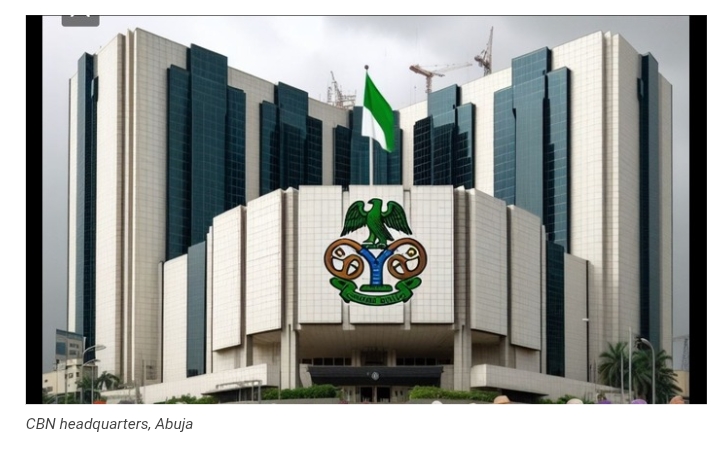
Nineteen Nigerian banks have fulfilled the Central Bank of Nigeria’s (CBN) recapitalization requirements as of January 6, 2026, six weeks before the March 31 deadline, according to data from The Cable Index.

CBN
Access Bank, Fidelity Bank, First Bank, GTBank (GTCO), UBA, and Zenith Bank—holders of international licenses—lead compliance among six major players.
National and regional licensees Citibank Nigeria, Ecobank Nigeria, Globus Bank, Stanbic IBTC, Sterling Bank, Wema Bank, PremiumTrust Bank, and Providus Bank have also hit the benchmarks.
Two non-interest banks, Jaiz and Lotus, alongside merchant banks FSDH, Greenwich, and Nova, round out the compliant group, meeting thresholds of N10-N20 billion for non-interest, N50 billion for merchants, N200 billion for nationals, and N500 billion for international banks as set in March 2024.
Approximately 14 banks remain non-compliant, underscoring urgency ahead of the deadline despite broad progress.

SERAP Sues INEC Over Alleged ₦55.9Bn Election Funds Diversion

NDIC Declares Second Liquidation Dividend for Heritage Bank Depositors

FG Inaugurates N40Bn CCTV Control Centre for Third Mainland Bridge

Ministry of Finance Leads FG-Backed Deal to Deliver Quality Homes and Boost Agriculture in Niger State

FG Plans to Invest $460m World Bank Loan in Fibre Infrastructure

Banks quietly move to enforce new ₦50 transfer levy from Jan. 1

FIRS says NIN, CAC Numbers to Serve as Tax IDs from 2026

Nigeria Takes the Lead in the Global WSIS+20 Digital Agenda

PalmPay Launches N400 Million World Travel Carnival, Rewarding Users with Free Global Trips

Check Point Reveals Nigeria as Second Most Targeted African Country for Cyberattacks in November




 E-Financial3 days ago
19 Nigerian Banks Meet CBN Recapitalization Targets Ahead of March Deadline

 E-Financial3 days ago
KPMG Identifies ‘Flaws, Inconsistencies, and Omission’ in New Tax Law

 Telecom3 days ago
Nigeria, Egypt to Lead Africa’s Data Center Boom

 General News3 days ago
FG to Empower Artisans for Global Value

 General News3 days ago
Bill Gates Pays Ex-Wife $8Bn Charity Payout in Divorce Settlement

 Telecom3 days ago
Court Dismisses N1Bn Suit against MTN, Awards N3m Costs

 General News3 days ago
FG Introduces Reusable Textbooks, Uniform School Calendar to Cut Education Costs

 General News3 days ago
CBN Projects Petrol to Hover around N905/Litre this Year