

General News
Five Ways To Maximize Your Mobile Data Usage

By Gideon Ayogu
Detailed analysis of mobile data usage suggests that connectivity rates remain comparatively pricey in Nigeria.
According to the Research and Development Unit of Yudala, Nigeria’s pioneer online and offline e-commerce outfit, data has thus become a very critical commodity that must be efficiently maximized, especially in view of the tiered data plans currently used by service providers.
With the growing popularity of social media, we are in age of information overload; one in which content is not only king but also predominantly ubiquitous.
In addition to music streaming, watching videos online and other activities that drain your data, most smartphones are also loaded with tons of data-hungry apps.
If not checked, you might find your mobile data bills burning a huge hole in your expense sheet on a monthly basis. The following tips from Yudala will come in handy for maximizing data usage on your smartphone:
Monitor Your Data Usage
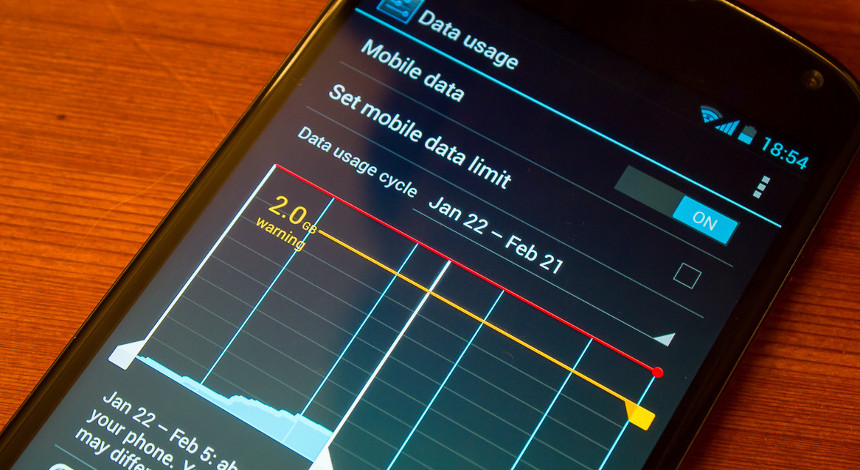
Most users live in fear of exhausting their mobile data before the expiration date, but with the help of some useful apps, you can now monitor and limit the amount of data used.
The best way to save data is to be aware of the activities or applications that drain your cellular data. Most smartphones are equipped with data usage setting that enable you manage your data. Usually located in the Settings menu, you can set up alerts for when you exceed data usage for your most notoriously data-consuming apps.
Exercise Caution with Online Video Streaming
This is a known fact. But as much as we hate to admit it, the fun things consume most of your mobile data.
Excessive streaming of videos, music, high quality images or GIF files, are things you need to avoid if you really want to maximize your internet usage.
While we know these things are not entirely avoidable, there are some other ways to stay entertained responsibly. If you can’t avoid the entertainment your smartphone brings, you can set the quality at lower rates or decrease resolution in the settings menu of your smartphone.
Use Wi-Fi Connection For Updates or Downloading Heavy Content
Wi-Fi is often regarded as a blessing by most smartphone users. While access to unlimited Wi-Fi connection is still rather limited in Nigeria, there are certain locations you can count on for free Wi-Fi.
One of the most sensible ways of maximizing your mobile data usage is by setting up your smartphone for automatic updates only when on Wi-Fi connection.
This way, you get to save some significant volume of the data drain that comes with auto-updates. Furthermore, downloads of heavy contents such as videos, high-resolution images and music files should also be done when on a secure Wi-Fi connection.
Restrict Background Data
Some applications use up a lot of data even when the phone is not in use. This is a brilliant feature of the smartphone: allowing background data to keep the applications on your phone updated. However, not every app needs to stay active at all times.
You can stop the constant update by going to your settings option to select the app you want restricted or simply disable background app refresh in your settings. This helps reduce data consumption and also preserves the battery life of your device.
1Q: Despite the anxiety over cellular data, developers have made things easy and included options that make smartphone apps less demanding.
A very good example is a cache, a hardware or software component that stores data so future requests for that data can be served faster.
The data stored in a cache might be the result of an earlier computation, or the duplicate of data stored elsewhere
These days, certain apps allow you to store data temporarily so you can cache as much content as possible. Caching is enjoyable on a Wi-Fi network which enables you enjoy preloaded content at any time, without using your cellular data.



Federal government, The European Union (EU), and the United Nations Industrial Development Organisation (UNIDO) have called for urgent and coordinated action to curb food waste and promote sustainable consumption and production practices.

They warned that when food is wasted, the water, energy, and labour invested in its production are also lost, accelerating climate change and undermining global efforts to build a zero-waste, circular economy.
Speaking in Abuja at the commemoration of this year’s International Zero Waste Day, themed “Food Waste Reduction: Minimisation and Valorisation,” Zissimos Vergos, deputy Ambassador of the EU Delegation to Nigeria and ECOWAS, disclosed that Nigeria wastes approximately 38 million tonnes of food annually, more than any other country in Africa.
He further noted that globally, in 2022 alone, nearly one billion tonnes of food—almost one-fifth of all food available to consumers—was wasted.
“This is not just a loss of food; it is a squandering of precious resources, a missed opportunity to combat hunger, and a direct threat to our planet’s health,” he said.
Vergos stressed that food loss and waste are major drivers of environmental degradation, contributing up to 10 per cent of global greenhouse gas emissions—nearly five times the emissions of the entire aviation sector—and accounting for as much as 40 per cent of global methane emissions.
Highlighting Nigeria’s ongoing efforts, he said: “The Nigeria Circular Economy Roadmap, the establishment of the Interministerial Circular Economy Committee, the push to develop a National Plastic Waste Management Regulation, these are not small gestures. These are structural shifts.
“They signal that Nigeria is not waiting for someone else to solve its problem; it is building the system to solve it from within. Now, today’s theme: food waste reduction, minimisation and valorisation, is the right conversation at the right moment.”
Vergos also shared three key lessons from the EU’s experience to support Nigeria’s efforts. First, he urged investment in rural infrastructure, including roads, storage, and cold chains, to address post-harvest losses beyond the farm gate. Second, he emphasised the need to promote agro-processing by converting fresh produce into value-added products such as tomato paste and cassava flour, while linking smallholder farmers to processors and markets.
Third, he called for embedding zero-waste principles, recycling, and resource efficiency into school curricula from the primary level to foster a culture of sustainability among future generations.
Reaffirming the EU’s commitment, he stated, “The EU stands ready to be your partner in that work, through funding, through technical cooperation, and through genuine solidarity.”
In his keynote address, Balarabe Abbas Lawal, minister of Environment, reiterated the Federal Government’s commitment to environmental protection and sustainable practices aimed at safeguarding the health and well-being of Nigerians.
“Food waste remains a significant challenge that affects not only our environment but also our economy and society. Every discarded meal represents wasted resources such as water, energy, labour, and capital, while Nigerians continue to face food insecurity.
Addressing food waste is therefore central to sustainable development and ensuring a healthier future for all,” he said.
He added: “The Federal Ministry of Environment, in this year’s national appropriation, has developed projects on food waste elimination in major markets around Nigeria. And this is to show you that the Federal Ministry of Environment is tackling the issues of food waste at its core, especially post-harvest losses.”
Stressing the broader impact, he noted that addressing food waste aligns with the Ministry’s core objectives. “Reducing food waste will not only help to lower pollution and greenhouse gases, but also conserve valuable resources and promote more efficient and responsible consumption patterns across households, businesses, and institutions,” he added.
Also speaking, Amb. Philbert Johnson, Director and Representative of UNIDO’s Sub-Regional Office in Nigeria, emphasised that food must not be wasted, especially in a country grappling with food insecurity and malnutrition.
“Food is far more than a commodity: it is a foundation of wealth, a driver of health, and a pillar of security. It sustains our homes, supports industries, and underpins the stability of our societies.
“When food systems function efficiently, they generate income, enhance resilience, and improve well-being. When food systems fail, when food is lost or wasted, the consequences ripple across our economies, our environment, and our communities.”
He reaffirmed UNIDO’s commitment to supporting Nigeria in building resilient, inclusive, and sustainable agro-industrial systems.

President Bola Ahmed Tinubu has directed the immediate installation of 5,000 CCTV cameras across identified flashpoints in Plateau State as part of urgent measures to address the worsening security situation in the state.

The President gave the directive during an emergency visit to Plateau on Thursday, where he held a brief stakeholders’ meeting at the Yakubu Gowon Airport following the recent killings in Angwan Rukuba, Jos, where at least 28 persons were killed by unidentified gunmen.
Tinubu also approved the formation of a delegation of key stakeholders to engage in further deliberations on lasting solutions to the security challenges in the state.
He condoled with families of the victims and directed that support be provided to cushion their losses.
President Bola Tinubu while expressing deep sympathy to families of victims said the installation of surveillance cameras was part of a deliberate move towards addressing the kind of attacks that befell residence of the recent attack in the State.
In his remarks, Governor Caleb Mutfwang appreciated the President’s visit and show of concern, but expressed worry over the recent wave of attacks in the state, describing the situation as disturbing and requiring urgent attention.
The meeting had in attendance, former Governors, serving and former National and State Assembly members, traditional rulers, government appointees as well as relatives of those killed in the Angwan Rukuba attack.

Federal Government yesterday unveiled a N12 billion investment in digital economy research, marking a strategic shift towards knowledge-driven development as Nigeria positions itself as a key player in the global digital landscape.

Declaring the launch of the National Digital Economy Research Clusters under the Building Resilient Digital Infrastructure for Growth (BRIDGE) project, Minister of Communications, Innovation and Digital Economy, Dr Bosun Tijani, said the initiative mobilises over 200 researchers from universities and research institutions nationwide to produce data-driven solutions for pressing national challenges.
Speaking at a press conference in Abuja, Tijani described the programme as an essential complement to infrastructure expansion, including the ongoing deployment of 90,000 kilometres of fibre optic cable across the country.
He stressed that sustainable growth in the digital sector now hinges on robust research, innovation and evidence-based policies rather than infrastructure alone.
“As Nigeria expands its digital economy, attention is shifting from infrastructure to the knowledge that drives it,” the minister stated, adding that the sector was emerging as a major contributor to national GDP.
The research clusters will tackle critical areas including connectivity, digital public infrastructure, skills development, job creation, online safety and emerging technologies such as artificial intelligence.
Tijani explained that the project aims to bolster Nigeria’s research capacity while ensuring local insights guide policy and technology adoption.
The Federal Ministry of Education is collaborating to synchronise academic research with national priorities and advance specialised training.
Minister of Education, Dr Tunji Alausa, underscored universities’ evolving role as hubs of innovation and problem-solving beyond traditional learning.
The BRIDGE project aligns with broader government strategies to promote digital inclusion, spur economic growth and elevate Nigeria’s competitiveness in the global digital economy.
Observers note that the programme’s impact will depend on effectively converting research findings into implementable policies across sectors.
For the administration, the message is clear: a resilient digital economy demands not just infrastructure, but the intelligence to power it.

FG, Others Say Nigeria Wastes 38m Tonnes of Food Annually

Ecobank Assures of Seamless Easter Banking Services

Anchor Gets Nigerian, Canadian Licences as Transactions Crosses $2.5Bn

CycleFlow, IFC Launch Supply Chain Finance Platform in Nigeria

NITDA Strengthens Collaboration with NIPSS to Drive Digital Innovation, Orange Economy Growth

Spotify’s Loud & Clear Report Reveals Over ₦60Bn Revenue for Nigerian Artists in 2025

Madonna University Taps Tech Guru Adote for Strategic Board Role

China Threatens to Shut Nigeria’s Satellite Over $11.44m Unpaid Debt

FCCPC Bans Lagos ‘No Refund’ Policy, Vows Fines and Shutdowns for Traders

Healthcare Under Attack: Why Cybersecurity is Now Critical Care




 E-Financial2 days ago
CBN Says 33 Banks Raise Fresh N4.65 Trillion in Recapitalisation Exercise

 Telecom2 days ago
NITDA Urges Joint Action to Drive Nigeria’s Digital Innovation

 Telecom2 days ago
NCC Insists Telcos Must Compensate Subscribers for Poor Quality of Service

 E-Business2 days ago
Cybersecurity Firm Uncovers CrystalX RAT which Steals Data, Mocks its Victims

 E-Business2 days ago
Oracle Sacks 12,000 in India, Begins Shift to AI

 Telecom2 days ago
Oracle Corporation Axes 30,000 Workers in Brutal AI Shake-Up

 E-Financial2 days ago
Nigeria, Others Lose $88bn Yearly to Illicit Flows —Edun

 E-Financial1 day ago
UBA Beefs Up Mobile App Security to Stop Fraudulent Debits, Withdrawals