

/home/kenneth/web/nigeriacommunicationsweek.com.ng/public_html/wp-content/themes/zox-news/parts/post-single.php on line 153
">
Warning: Undefined array key 0 in /home/kenneth/web/nigeriacommunicationsweek.com.ng/public_html/wp-content/themes/zox-news/parts/post-single.php on line 153
Warning: Attempt to read property "cat_name" on null in /home/kenneth/web/nigeriacommunicationsweek.com.ng/public_html/wp-content/themes/zox-news/parts/post-single.php on line 153
Forum to Organize Export Promotion Enlightenment

Airfreight Stakeholders Forum is set to organize an export promotion enlightenment programme, to educate operators in the industry on new innovations and increase cargo movement in the export sub-sector of the economy.
The programme which is being organized by the Airfreight Stakeholders Forum, will be coordinated by the Nigerian Shippers’ Council (NSC).
The forum consists of Association of Nigeria Courier Operators (Anco), Association of Nigeria Customs Licensed Agents (Ancla), Air line operators, National Association of Chambers of Commerce, Industries, Mines and Agriculture, and National Agency for Food, Drug, Administration and Control.
The NSC, was established in 1978 by decree 13 NSC Act cap. N133LFN2004.
It is vested with the responsibility of protecting the interest of Nigerian Shippers i.e. importers and exporters.
Investigations revealed that the period before the formation of Nigerian Shippers’ Council in 1978 was characterized by deterioration in the quality of shipping services and unmitigated increases in ocean freight rates by foreign ship owners who operated scheduled liner services to Nigerian ports.
Acting under a powerful cartel of conference arrangement, Shipping Companies unilaterally imposed freight rate increases, which averaged between 25 and 30 percent per annum notably along the United Kingdom West African Line (UKWAL), Continental West African Lines Conference (COWAC), American West Africa Freight Conference (AWAFC) etc. shipping ranges.
These increases without exception were in addition to stifling port surcharges that the conference equally imposed on the nation’s economy. For example, at the peak of the infamous cement armada in mid 1974, daily demurrage of 4,000 US dollars were charged per vessel on over 600 vessels waiting for months to berth, a development that created unpleasant consequences for the economy.
As the huge foreign currency outflows arising from the carriage of our sea-borne trade in foreign lines continued to impoverish the Nigerian economy and other developing countries, with attendant adverse consequences on balance of payment in favour of developed countries, a debate aimed at addressing the problem of trade imbalance was voiced at the United Nations Conference on Trade and Development (UNCTAD).
From this debate, there emerged a new World Maritime Order in 1965 encapsulated in the UN Liner Code for Liner Conferences document which strongly recommended the formation of National Shippers’ Councils in developing countries also referred to as Group of 77. UNCTAD confirmed this new order by endorsing the formation of Shippers’ Councils in its 1968 meeting in New Delhi, India. Thereafter Shippers’ Councils sprang up in various parts of the world including the developed countries. The first Shippers’ Council in Africa was set up in 1968 in Cote D’ Voire .
Therefore, to all intents and purposes, the formation of national shippers’ organizations in the developing countries was to act as a countervailing force against the excesses of foreign ship owners and other service providers.


Warning: Undefined array key 0 in /home/kenneth/web/nigeriacommunicationsweek.com.ng/public_html/wp-content/themes/zox-news/parts/post-single.php on line 493
Warning: Attempt to read property "cat_ID" on null in /home/kenneth/web/nigeriacommunicationsweek.com.ng/public_html/wp-content/themes/zox-news/parts/post-single.php on line 493


United Bank for Africa (UBA) Plc, Africa’s Global Bank, has rewarded thousands of customers with over ₦400 million in anniversary bonuses under its flagship UBA Bumper Account, reaffirming the Bank’s unwavering commitment to rewarding customer loyalty and promoting a strong savings culture.

The payout, one of the largest loyalty rewards under the Bumper Account initiative since its launch, saw qualifying customers receive anniversary bonuses directly into their accounts, demonstrating UBA’s resolve to create lasting value for customers who consistently save with the Bank.
The UBA Bumper Account is a unique savings product that rewards customers simply for maintaining and growing their savings. Every year an eligible account reaches its anniversary, customers receive a cash bonus, making disciplined saving both rewarding and beneficial over time.
Speaking on the milestone, UBA’s Head, Retail Products, Tomiwa Sotiloye, said the Bank remains committed to ensuring that customers benefit directly from their relationship with UBA.
“At UBA, we believe customer loyalty deserves meaningful recognition. Every bonus paid is our way of saying ‘thank you’ to customers who continue to trust us with their financial aspirations. Surpassing the ₦400 million milestone reflects our commitment to creating products that not only help customers save but also reward them in tangible ways. It is another demonstration that when our customers grow, we grow with them.”
He added that both new and existing customers can open a UBA Bumper Account seamlessly through https://on.ubagroup.com/bumper-tc, any any UBA branch, the UBA Mobile Banking App, by dialing *919#, or online, positioning themselves to qualify for future anniversary rewards.
Also speaking, UBA’s Group Head, Brands, Marketing and Corporate Communications, Alero Ladipo, said the Bank’s customer-centric philosophy continues to shape its product offerings.
“The UBA Bumper Account reflects our unwavering commitment to putting customers first. We deliberately design products that reward responsible financial behaviour while delivering real value. Crediting over ₦400 million directly into customers’ accounts is not just a payout; it is evidence of our promise to make banking more rewarding and to continually appreciate the confidence our customers repose in us.”
The UBA Bumper Account remains one of the Bank’s flagship retail savings products, combining competitive savings benefits, digital convenience and attractive loyalty rewards. It forms part of UBA’s broader strategy to deepen financial inclusion by encouraging sustainable savings habits while delivering exceptional customer experiences.
United Bank for Africa Plc is Africa’s Global Bank, serving over 45 million customers across 20 African countries, as well as the United Kingdom, the United States, France and the United Arab Emirates. Through innovative technology and customer-focused solutions, UBA provides retail, commercial and institutional banking services while driving financial inclusion across the continent.

Lebara Nigeria has become a member of the Global System for Mobile Communications Association (GSMA) as it expands operations in the West African country.

The membership places Lebara Nigeria within a global network of more than 1,000 mobile operators, device manufacturers, technology companies and digital service providers.
Through the GSMA, the company will have access to industry research, technical standards, policy engagement and industry initiatives.
Lebara Nigeria said the move reflects its participation in the wider telecommunications ecosystem as it develops its operations in Nigeria’s mobile market.
Nigeria’s telecommunications sector plays a central role in the country’s digital economy, with more than 170 million active mobile subscriptions supporting services such as digital payments, e-commerce, education and healthcare.
Industry analysts say participation in international bodies such as the GSMA supports knowledge sharing and the adoption of industry standards.
Lebara Nigeria said GSMA membership will support its engagement with industry developments and policy discussions in the telecommunications sector.
The company said it remains focused on operating in Nigeria’s mobile telecommunications market as demand for connectivity continues to grow.
GSM Association is the advocacy and lobbying organization for the mobile communications industry, representing more than 1,000 mobile operators as full members and a further 400 companies in the broader mobile ecosystem as associate members.
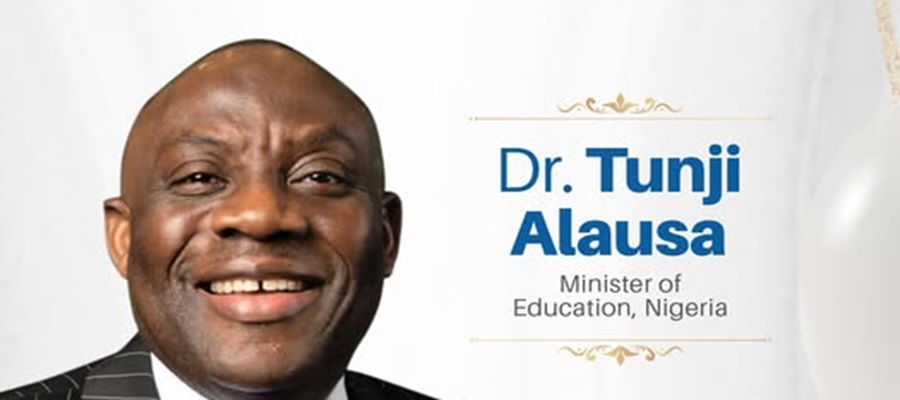
Federal government has announced plans to end the separation between Junior Secondary School (JSS) and Senior Secondary School (SSS) as part of efforts to improve school retention and reduce the high number of pupils dropping out before completing secondary education.

Tunji Alausa, minister of Education
Tunji Alausa, minister of Education, announced the proposal on Tuesday during the inauguration of the Ministerial Implementation and Monitoring Committee of the Universal Basic Education Commission (UBEC) in Abuja.
Alausa said the existing “disarticulation policy,” which requires junior and senior secondary schools to operate independently with separate principals, management structures and facilities, has failed to achieve its intended objectives and has instead worsened access to education.
According to him, the Federal Government will present a proposal to abolish the policy at the next meeting of the National Council on Education (NCE), the country’s highest education policymaking body.
“We have 20 million dropouts from primary school to JSS. Where are those students?” the minister queried.
“We also found we have 80,000 public primary schools and only about 15,000 junior secondary schools. That’s a one-to-eight ratio.”
He explained that the mismatch between the number of primary and junior secondary schools has created severe bottlenecks in the education system, leading to overcrowded classrooms at the junior secondary level while many senior secondary school facilities remain underutilised.
Alausa cited Kaduna and several northern states as examples where the policy has contributed to poor transition rates between basic and secondary education.
“This disarticulation policy has failed. We will phase it out. We can’t be creating positions because we want to create director-level appointments for people while we harm our education system. It’s about doing what is best for every Nigerian child,” he said.
The minister said the proposed reform forms part of broader efforts by the Tinubu administration to improve access to education, increase retention rates and enhance learning outcomes across the country.
He acknowledged previous shortcomings in tackling the out-of-school children crisis but expressed confidence that the current administration would reverse the trend.
“This government will not fail. We are fixing it,” Alausa declared.
At the ceremony, the minister also inaugurated the UBEC Ministerial Implementation and Monitoring Committee, chaired by Prof. Rashid Aderinoye, to supervise the execution of UBEC-funded Smart Schools, Bilingual Schools and Alternative Schools nationwide.
He said the committee had been tasked with ensuring that the projects are completed, handed over to state governments and opened for teaching and learning.
Although UBEC has invested in hundreds of Smart Schools and related educational projects across the country, Alausa lamented that many remain abandoned, unfinished or yet to admit pupils, describing the situation as an unacceptable waste of public resources.
He stressed that improving education requires more than constructing schools, insisting that completed facilities must become fully operational and accessible to learners.

UBA Surprises Thousands of Customers with Over ₦400 Million Cash Bonus

Lebara Nigeria Becomes Member of GSMA Network

FG to Abolish JSS-SSS Separation Policy after 20m Pupils Drop Out

Vitel Wireless Warns Public, Says it Not Running any Investment Scheme

Army Says Terrorists Now Recruiting, Raising Funds Online

Mobile Internet Gender Gap Widest in Africa – GSMA

London Strengthens Global Investment Ties with Africa @ First Ever London-Africa Business Summit

FG Targets Alleged N3tn Capital Flight, Opens Airtime Credit Market to Nigerian Fintechs

Japan, UNESCO Boost Digital Learning in 15 CoEs with Donation of ICT Equipment

Good News for DStv Users: Watch over 160 Channels Without Paying Extra




 E-Business3 days ago
LG Showcases AI-Powered Smart Living Innovations @ Africa Technology Expo 2026

 Telecom3 days ago
OADC Reaffirms Abundant Capacity in Data Centres in Nigeria to Host Financial Data

 E-Financial3 days ago
UBA mobilises employees across Africa for environmental clean-up, wellness campaign

 General News3 days ago
LASTMA Launches 3367 Toll-Free Hotline for Emergency Response, Traffic Management

 E-Financial3 days ago
PalmPay Calls for Trust, Infrastructure and Responsible AI to Drive Payment Ecosystem Innovation

 E-Business3 days ago
Want a Business Loan Without Interest? SMEDAN Launches N500m Fund

 Telecom3 days ago
ALTON Backs NCC’s Local Smartphone Manufacturing Drive to Widen Digital Access

 E-Financial3 days ago
ngCERT Raises Alarm over Surge in Banks’ ATM Cyberattacks