

/home/kenneth/web/nigeriacommunicationsweek.com.ng/public_html/wp-content/themes/zox-news/parts/post-single.php on line 153
">
Warning: Undefined array key 0 in /home/kenneth/web/nigeriacommunicationsweek.com.ng/public_html/wp-content/themes/zox-news/parts/post-single.php on line 153
Warning: Attempt to read property "cat_name" on null in /home/kenneth/web/nigeriacommunicationsweek.com.ng/public_html/wp-content/themes/zox-news/parts/post-single.php on line 153
Freight Forwarders Fight Corruption with Multi-User Card

The wind of ePayment system is blowing across the length and breadth of Nigeria’s economic courses with the maritime sector not left behind as the Council for the Regulation of Freight Forwarding in Nigeria (CRFFN) will by March 2012 unveil a multi-user payment card for her members Nigeria CommunicationsWeek can reveal.
CRFFN Act No. 16 of 2007 was enacted into law on 30th of April, 2007. The council was formally inaugurated on 18th of August, 2008 and charged with, among other responsibilities, to regulate and control the practice of freight forwarding, and to promote the highest standard of competence, practice and conduct among members of the profession.
The regulatory body is also responsible for determining the standards of knowledge and skill to be attained by persons seeking to be registered as freight forwarders in the country and raising those standards from time to time in accordance with international practice.
Mr. Olayiwola Shittu, member, CRFFN Governing Council, at a stakeholders meeting on ePayment put together by Intermarc Consulting limited, exclusively told Nigeria ComunicationsWeek that the multi-user card “works as an identity card for our members. It also works as an ATM card for transaction including payments of charges through PoS terminal.”
Apart from serving as a-cash-less economic tool, Shittu affirmed that the card operates as a data bank for the holder, “where the identity of the individual can be downloaded. And it also works as a Pass-ID into the control areas in the customs terminals.”
The role of operators in the maritime sector in raising the stake of corrupt practices in Nigeria following the United Nations/World Bank reports that with corruption, Nigeria’s economy as a nation has been wasted and drained to the tune of $350 billion or more through fraud and mismanagement since independence, Shittu, was optimistic that the introduction of multi-user card fort the freight forwarders would not only reduce movement of cash in the nation’s ports but would help track fraud in the system.
“If we get it right in the maritime industry through ePayment other sector in Nigeria will feel the impact, because people do not know the volume of cash that moves in the maritime industry. Our international frontiers via cargo clearance, is indeed a major contributor, as evidenced in the Corrupt Index study by Transparency International, 2008.
Speaking on measures adopted by the council to checkmate breaches of ethical conduct by practitioners, he said CRFFN set up an investigating panel last year as appropriate sanctions would soon be enforced on defaulters.
“Freight forwarding is a noble profession; nevertheless, there is a need to ensure compliance with standards in the freight forwarding business in the country. Before now, touting had been the order of the day at the ports. But owing to the fact that freight forwarding is an international business, there is the need for practitioners to imbibe international best practices in their respective businesses.”
“With the inauguration of the investigating panel, we have laid a solid foundation to re-position the freight forwarding business and profession in Nigeria,” he said.
Shittu also opined that freight forwarding could be used to boost employment and wealth creation in the country.


Warning: Undefined array key 0 in /home/kenneth/web/nigeriacommunicationsweek.com.ng/public_html/wp-content/themes/zox-news/parts/post-single.php on line 493
Warning: Attempt to read property "cat_ID" on null in /home/kenneth/web/nigeriacommunicationsweek.com.ng/public_html/wp-content/themes/zox-news/parts/post-single.php on line 493


Lebara Nigeria has become a member of the Global System for Mobile Communications Association (GSMA) as it expands operations in the West African country.

The membership places Lebara Nigeria within a global network of more than 1,000 mobile operators, device manufacturers, technology companies and digital service providers.
Through the GSMA, the company will have access to industry research, technical standards, policy engagement and industry initiatives.
Lebara Nigeria said the move reflects its participation in the wider telecommunications ecosystem as it develops its operations in Nigeria’s mobile market.
Nigeria’s telecommunications sector plays a central role in the country’s digital economy, with more than 170 million active mobile subscriptions supporting services such as digital payments, e-commerce, education and healthcare.
Industry analysts say participation in international bodies such as the GSMA supports knowledge sharing and the adoption of industry standards.
Lebara Nigeria said GSMA membership will support its engagement with industry developments and policy discussions in the telecommunications sector.
The company said it remains focused on operating in Nigeria’s mobile telecommunications market as demand for connectivity continues to grow.
GSM Association is the advocacy and lobbying organization for the mobile communications industry, representing more than 1,000 mobile operators as full members and a further 400 companies in the broader mobile ecosystem as associate members.
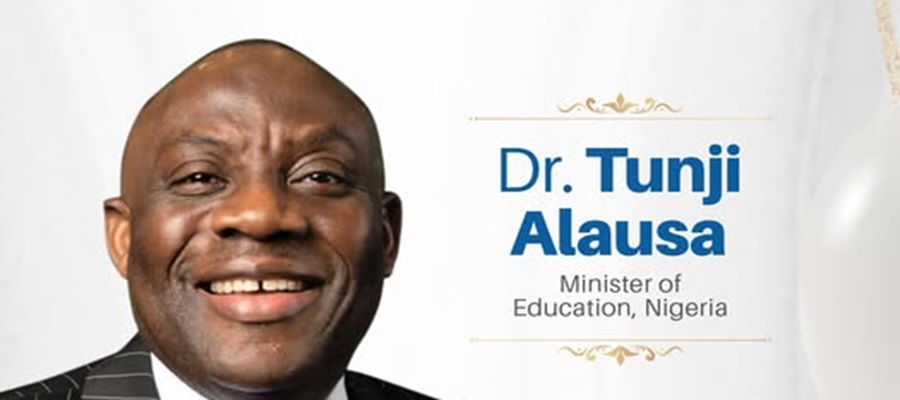
Federal government has announced plans to end the separation between Junior Secondary School (JSS) and Senior Secondary School (SSS) as part of efforts to improve school retention and reduce the high number of pupils dropping out before completing secondary education.

Tunji Alausa, minister of Education
Tunji Alausa, minister of Education, announced the proposal on Tuesday during the inauguration of the Ministerial Implementation and Monitoring Committee of the Universal Basic Education Commission (UBEC) in Abuja.
Alausa said the existing “disarticulation policy,” which requires junior and senior secondary schools to operate independently with separate principals, management structures and facilities, has failed to achieve its intended objectives and has instead worsened access to education.
According to him, the Federal Government will present a proposal to abolish the policy at the next meeting of the National Council on Education (NCE), the country’s highest education policymaking body.
“We have 20 million dropouts from primary school to JSS. Where are those students?” the minister queried.
“We also found we have 80,000 public primary schools and only about 15,000 junior secondary schools. That’s a one-to-eight ratio.”
He explained that the mismatch between the number of primary and junior secondary schools has created severe bottlenecks in the education system, leading to overcrowded classrooms at the junior secondary level while many senior secondary school facilities remain underutilised.
Alausa cited Kaduna and several northern states as examples where the policy has contributed to poor transition rates between basic and secondary education.
“This disarticulation policy has failed. We will phase it out. We can’t be creating positions because we want to create director-level appointments for people while we harm our education system. It’s about doing what is best for every Nigerian child,” he said.
The minister said the proposed reform forms part of broader efforts by the Tinubu administration to improve access to education, increase retention rates and enhance learning outcomes across the country.
He acknowledged previous shortcomings in tackling the out-of-school children crisis but expressed confidence that the current administration would reverse the trend.
“This government will not fail. We are fixing it,” Alausa declared.
At the ceremony, the minister also inaugurated the UBEC Ministerial Implementation and Monitoring Committee, chaired by Prof. Rashid Aderinoye, to supervise the execution of UBEC-funded Smart Schools, Bilingual Schools and Alternative Schools nationwide.
He said the committee had been tasked with ensuring that the projects are completed, handed over to state governments and opened for teaching and learning.
Although UBEC has invested in hundreds of Smart Schools and related educational projects across the country, Alausa lamented that many remain abandoned, unfinished or yet to admit pupils, describing the situation as an unacceptable waste of public resources.
He stressed that improving education requires more than constructing schools, insisting that completed facilities must become fully operational and accessible to learners.

Management of Vitel Wireless, mobile virtual network operator (MVNO), has distanced the company from a fraudulent scheme operating under the name: “Vitel Shares Services.”

In an official statement, the management clarified that Vitel Wireless is not selling shares or running any investment schemes.
They warned that the operators of “Vitel Shares Services” are using unauthorised websites, mobile applications, social media promotions, and bank accounts falsely linked to Vitel Wireless to mislead the public.
The statement reads: “The attention of Vitel Wireless has been drawn to a fraudulent scheme operating under the name ‘Vitel Shares Services.’
“We wish to state clearly that Vitel Wireless has no affiliation with Vitel Shares Services, or any platform claiming to offer Vitel shares, investments, or financial products through unofficial channels.
“We do not solicit investments through agents, social media, websites, apps, or third parties. Any platform claiming to offer Vitel Wireless shares or investments outside our official channels is fraudulent and should be treated as such.
“We urge the general public to remain vigilant and verify all information through official Vitel Wireless communication channels before making any payments or sharing personal data.”

Lebara Nigeria Becomes Member of GSMA Network

FG to Abolish JSS-SSS Separation Policy after 20m Pupils Drop Out

Vitel Wireless Warns Public, Says it Not Running any Investment Scheme

Army Says Terrorists Now Recruiting, Raising Funds Online

FG Mulls National Skills Database to Tackle Unemployment

Mobile Internet Gender Gap Widest in Africa – GSMA

London Strengthens Global Investment Ties with Africa @ First Ever London-Africa Business Summit

FG Targets Alleged N3tn Capital Flight, Opens Airtime Credit Market to Nigerian Fintechs

Japan, UNESCO Boost Digital Learning in 15 CoEs with Donation of ICT Equipment

Good News for DStv Users: Watch over 160 Channels Without Paying Extra




 E-Business2 days ago
LG Showcases AI-Powered Smart Living Innovations @ Africa Technology Expo 2026

 E-Financial2 days ago
UBA mobilises employees across Africa for environmental clean-up, wellness campaign

 Telecom2 days ago
OADC Reaffirms Abundant Capacity in Data Centres in Nigeria to Host Financial Data

 General News2 days ago
LASTMA Launches 3367 Toll-Free Hotline for Emergency Response, Traffic Management

 E-Financial2 days ago
PalmPay Calls for Trust, Infrastructure and Responsible AI to Drive Payment Ecosystem Innovation

 Telecom2 days ago
ALTON Backs NCC’s Local Smartphone Manufacturing Drive to Widen Digital Access

 E-Business2 days ago
Want a Business Loan Without Interest? SMEDAN Launches N500m Fund

 E-Financial2 days ago
ngCERT Raises Alarm over Surge in Banks’ ATM Cyberattacks