

E-Financial
FXTM Launches School of Financial Investing and Trading in Nigeria

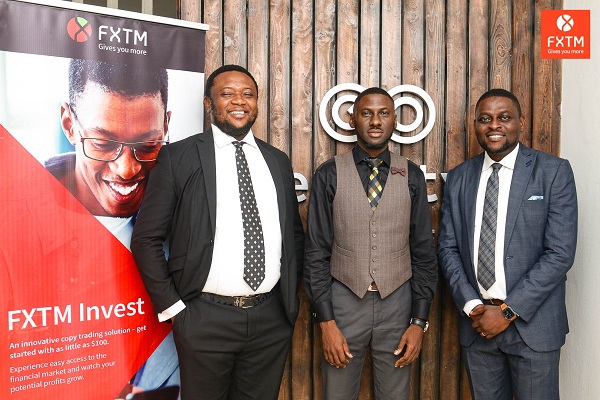
FXTM, part of the Exinity Group, has announced the launch of its FXTM School of Financial Investing and Trading (FIT).
FIT is a comprehensive knowledge and skills building program designed for traders seeking financial inclusion through the world of trading.
Participants in the FIT program will enjoy interactive learning sessions delivered by market experts through a mix of face-to-face and online sessions.
Through a four-course module, both novice and more experienced traders will be able to build the know-how needed to succeed in trading the financial markets:
First phase, The Beginner. This kick-off course covers the basics of the financial markets and how trading works.
Second phase, The High-School. Attendees will learn simple trading strategies and the importance of risk management.
Third phase, The Undergraduate. Practical workshops to apply knowledge gained to date as well as a deep-dive into technical trading covering Pivot Points, Indicators, and Oscillators.
Fourth phase, The Graduate. The final module offers students the chance to choose an elective course such as Trader Psychology, Harmonic Patterns, or Eliot Wave Theory and more.
Abiola Akinyele, country director of FXTM Nigeria, said: “By working closely with our clients we have observed that, despite the abundance of trading information available online, many of our clients are looking for more personalised and interactive learning experiences”.
“Over the last few years we have seen huge growth in FX trading, and a corresponding demand for support and coaching from traders who want to build their knowledge and skills.
“In 2019, Nigerian traders delivered $314 million of daily turnover in the global forex market, and with the global pandemic of 2020 driving even more interest in financial markets we expect this growth to continue”, adds Akinyele.
A pilot of the FIT program was launched in November, welcoming over 800 attendees to take one of the FIT course across three of Exinity’s training centres in Lagos, Port Harcourt and Abuja.
Commenting on the interactive FIT sessions, Felix Appah, a participant from Abuja said: “After attending the Financial Fitness Seminar, I got inspired to learn about forex trading to use it as a means to earn additional income and decided to join the Get Market FIT workshop.
“The sessions helped with learning more strategies to improve our trading capabilities”.
Similarly, Anyagu Johnson Chijioke, another FIT attendee said his motivation to join was to improve “knowledge on forex trading and control losses”. Upon completion, Chijioke commented:
“I can boldly say I have acquired a basic knowledge in trading strategies and risk management to test the market.
“I hope for more seminars where FXTM’s experienced and professional trainers can continue to disseminate and transfer knowledge to us”.
Phase two of the FIT programme will begin next year, followed by phase three and four.
Interested attendees can register through the MyFXTM client portal.


By Blaise Udunze
Governance is not complicated. It is about people and the resources entrusted to serve them. When resources are managed wisely, the people prosper, and prosperity spreads. Mismanage them, and poverty multiplies. Nigeria’s tragedy is not scarcity. It is stewardship.

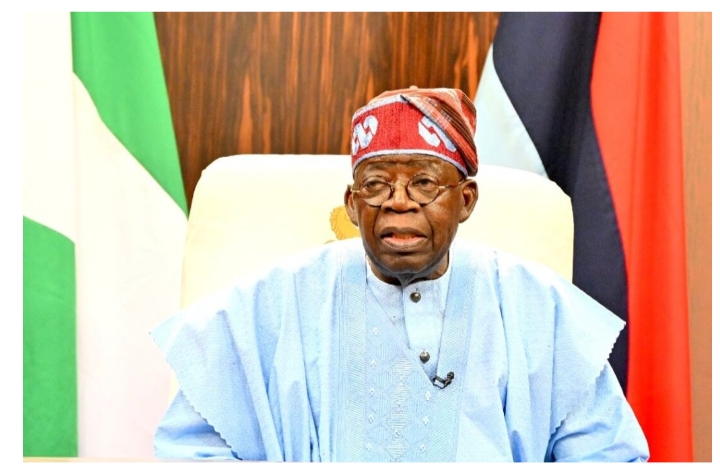
President Tinubu
For decades, Nigeria, described as Africa’s largest oil producer, has earned hundreds of billions of dollars, yet remains home to some of the world’s poorest citizens. That contradiction is not accidental. It is systemic. It reflects policy distortion, institutional weakness, and a culture of impunity that has too often treated public wealth as political spoils rather than a national trust.
The Abuja-based Independent Media and Policy Initiative (IMPI) recently captured this paradox bluntly by saying, Nigeria’s poverty crisis is not the result of inadequate resources, but of persistent failure to manage them prudently and sustainably. It described the crisis as a “self-inflicted economic malady.” That phrase should trouble every public official.
Between 1980 and 2015, Nigeria rode multiple oil booms. Instead of converting windfalls into diversified productivity, the country succumbed to what economists call the Dutch disease. Oil revenues surged. The naira appreciated. Imports became cheaper. Domestic production became uncompetitive. Agriculture declined. Manufacturing withered.
IMPI’s analysis shows that between 1980 and 1986, exchange rate appreciation crippled local industries and turned Nigeria from a major agricultural exporter into a net food importer. Cocoa, palm oil, and rubber, once pillars of export strength, gave way to dependency. A parallel distortion emerged, the so-called “Nigerian disease.” Rural labour migrated to cities in search of oil-fueled wage spikes. Farming declined. Food insecurity deepened, which has continued to linger each day. Over-mechanised and poorly coordinated agricultural investments, uncompleted irrigation projects, and subsidies skewed toward politically connected elites widened inequality. Oil wealth created the wrong impression of prosperity while hollowing out the economy’s productive core.
Former Vice President Yemi Osinbajo once framed the issue plainly: Nigeria’s challenge is not geographical restructuring but resource management and service delivery. After decades of vast oil earnings, the uncomfortable question remains. Where is the infrastructure?
If mismanagement were purely historical, recovery might simply require time and discipline. But the problem is not confined to the past, and this is because between 2010 and 2026, an estimated $214 billion, roughly N300 trillion, has been flagged as missing, diverted, unrecovered, irregularly spent, or trapped in non-transparent fiscal structures. These figures reveal that they are not speculative but arise from audit reports, legislative investigations, civil society litigation, and investigative findings across administrations.
The oil sector alone provides sobering examples. In 2014, unremitted oil revenues triggered national outrage. Years later, audit queries continue to trail the Nigerian National Petroleum Company Limited. The names of institutions change. The pattern persists. The Central Bank of Nigeria has also faced audit alarms over trillions in unremitted surpluses and questionable intervention facilities. Auditor-General has flagged failures to remit operating surpluses into the Consolidated Revenue Fund, alongside hundreds of billions allegedly disbursed to unidentified beneficiaries under intervention schemes, which is alarming and a common fraudulent practice.
Across ministries, departments, and agencies, trillions have been cited in unsupported expenditures, unremitted taxes, procurement irregularities, and statutory liabilities left unrecovered. The institutions differ. The language of audit reports varies. The years change. The pattern does not.
A natural occurrence, which is the plain truth, and unarguably, is that when electricity funds disappear, the grid collapses. Also, when agricultural loans remain unrecovered, food prices surge. The same goes when social investment programmes stall due to bureaucratic lack of transparency; the vulnerable remain exposed. Nigeria borrows not only because revenue is insufficient but because leakage is persistent.
The 2026 fiscal projections sharpen the dilemma. This has continued to raise concern as seen in the proposed N58.47 trillion budget, which carries a N25.91 trillion deficit, with N15.9 trillion allocated to debt servicing. What signifies a systemic failure is that nearly half of the projected federal revenue will service past loans before development priorities are funded. The truth be told, borrowing is not inherently destructive. Economies such as the United States deploy deficit financing strategically to expand productivity. The difference lies in what the borrowing finances.
To date, Nigeria’s deficits are increasingly funded by recurrent obligations rather than productivity-enhancing infrastructure. This is why Nigeria’s domestic borrowing persistently crowds out private-sector credit, driving up interest rates and stifling enterprise. Time after time, the nation has continued to witness how weak revenue mobilisation, overt oil dependence, and institutional inefficiencies compound the strain, and for these reasons, public debt is projected to has surpass N177.14 trillion by the end of 2026, which is driven by the budget deficit in 2026 Appropriation Bill.
Based on what is obtainable in other advance country, debt becomes sustainable only when borrowed funds are channeled into growth-enhancing investments, institutions ensure transparency and value for money, and economic expansion outpaces debt accumulation. When these conditions weaken, deficits evolve into a fiscal trap.
Despite some of the challenges occasioned by mismanaged resources and leakages, policymakers project cautious optimism. The Central Bank forecasts GDP growth of approximately 4.49 percent, moderating inflation, and foreign reserves exceeding $50 billion. On paper, stability appears to be returning. But stability is not prosperity.
Take, for instance, between 2006 and 2014, Nigeria recorded average GDP growth rates of six to seven percent, peaking near eight percent. Yet poverty remained stubbornly high, judging by the lived experience of the populace. This shows that growth without inclusion is only an arithmetic, not development. Today, households confront elevated food prices despite the report that food inflation fell from 29.63 per cent in January 2025 to 8.89 per cent in January 2026, energy costs, and unemployment. Yes, one may say that the exchange-rate unification and fuel subsidy removal were economically rational reforms. However, without aggressive domestic production expansion and credible social safety nets, adjustment costs fall heavily on citizens.
The concept of the “resource curse,” coined by Professor Richard Auty, explains why resource-rich nations often experience weaker institutions and lower long-term growth than resource-poor peers. Nigeria truly exemplifies that irony. Yet the curse is not inevitable. This is because countries such as Norway and Botswana transformed natural resource wealth into long-term prosperity through disciplined institutions, sovereign wealth management, and uncompromising transparency, which happens to be foreign to Nigeria’s system. The difference was not geology. It was governance.
Former President Olusegun Obasanjo has never been quite over resource plundering as he lamented that Nigeria has squandered divine gifts. The same lies with the former Minister George Akume, who warned that no nation grows if a quarter of its resources are consistently mismanaged. The former Anambra governor, Peter Obi, observed bluntly that wealth cannot be entrusted to those without integrity. The United Nations is also amongst those who have repeatedly warned that mismanaged natural resources fuel instability and conflict. Where institutions are weak, resource wealth becomes combustible. Nigeria has navigated that edge for decades.
Nigeria does not suffer from a shortage of reform announcements. It suffers from a gap between announcement and enforcement. The Treasury Single Account was designed to consolidate public funds under constitutional oversight. Yet significant funds have periodically remained outside complete transparency. The problem is that audit findings often accumulate without visible recovery, prosecution, or systemic reform.
The reality is that if every naira saved from subsidy reform is not transparently reinvested in infrastructure, healthcare, education, and productivity, public trust will erode further. If intervention facilities are not tracked and repaid, agriculture will stagnate. If oil revenues are not fully remitted and independently audited, diversification will remain rhetorical, just as they have defined the system today. What will definitely propel a change when visible enforcement, recoveries, prosecutions, and institutional strengthening must replace quiet reports and circular memos.
President Bola Ahmed Tinubu stands at a consequential intersection due to the critical issues unfolding. His administration has initiated painful but necessary reforms in the areas of fuel subsidy removal, exchange-rate unification, and fiscal restructuring. One stands to say that these measures aim to restore macroeconomic order. But for a fact, macroeconomic stability is a foundation, not a destination. His presidency will either mark the beginning of Nigeria’s fiscal rescue or consolidate a system that mortgages tomorrow to survive today.
Human capital cannot remain peripheral. Education aligned with labour-market needs, vocational capacity, healthcare access, and social protection are economic multiplier, not welfare indulgences. Capital expenditure must prioritise integrated infrastructure like power transmission, logistics corridors, and digital connectivity, that unlocks productivity. Every earned naira must enter the Federation Account transparently. Every statutory surplus must be constitutionally remitted. Every diversion must carry a consequence.
One thing that must be understood today is that Nigeria’s future will not be determined solely by oil output or GDP growth percentages. It will be determined by whether resources translate into reliable electricity, functioning roads, expanding industries, competitive exports, and rising household incomes. A nation can borrow to build bridges. Or it can borrow to pay salaries. The former compounds growth. The latter compounds debt.
If deficits translate into visible infrastructure, industrial expansion, thriving private enterprise, and strengthened revenue generation, history will record this era as a bold recalibration. If not, it will be remembered as deferred reckoning.
Nigeria has been wealthy for decades. What it has lacked is disciplined guardianship of that wealth. End the era of systemic leakage and institutional silence, or preside over its continuation. The choice is stark but clear. The point is, this is not just about one leader’s legacy; it is about the future of over 200 million Nigerians and generations.
And for nearly 200 million Nigerians, the outcome will define not just a presidency, but a generation.
Blaise, a journalist and PR professional, writes from Lagos and can be reached via: [email protected]
Union Bank of Nigeria has reaffirmed its status as a going concern with stable operations, responding to media queries sparked by Central Bank Governor Olayemi Cardoso’s remarks at the 304th Monetary Policy Committee (MPC) briefing.

Union Bank
Cardoso clarified that banks under regulatory intervention face unique recapitalisation timelines due to their circumstances, distinct from others with more preparation time.
Union Bank’s Chief Brand and Marketing Officer, Mrs. Olufunmilola Aluko, said the Governor’s comments align with the bank’s messaging.
“The Governor’s remarks reinforce what has consistently been our position. Union Bank remains under strong regulatory oversight with a resilient franchise, stable operations, and uninterrupted service delivery,” Aluko stated.
She stressed that all customer deposits remain safe and secure, with the bank operating transparently within the regulatory framework and collaborating with the CBN on recapitalisation.
Union Bank pledged updates as engagements progress, prioritising customer protection, financial stability, and service continuity amid the system-wide strengthening programme.
Flutterwave has transformed from a modest Lagos venture into one of Africa’s most valuable fintech firms, processing billions in transactions yearly across 30+ countries and 150+ currencies.

Flutterwave
Founded in 2016 by Iyinoluwa Aboyeji, Olugbenga “GB” Agboola, and Adeleke Adekoya, it tackled Africa’s fragmented payments—siloed banks, mobile money gaps, and unreliable cross-border flows—with a unified API for seamless collections, payouts, and settlements.
Founding Vision
The trio spotted the pain: Aboyeji’s Andela faced border delays; Agboola drew from PayPal/Google; Adekoya handled compliance. Early wins included Uber Nigeria payouts from a Lekki co-working space, proving scalability amid lean ops.
Growth Milestones
2017–2020: $10M seed/Series A fueled West Africa push; Agboola took CEO helm post-Aboyeji; COVID boosted e-commerce volumes.
2021–2022: Unicorn at $1B+ (Series C, $170M); $3B+ valuation (Series D, $250M); partnerships with Microsoft, Uber; Send App for US diaspora.
2025–2026: Profitability focus yields better margins; 34 US licenses; Mono acquisition ($25–40M) bolsters open banking.
Challenges Overcome
Regulatory hurdles hit: Kenya 2022 freeze (cleared); Nigeria fraud claims (resolved, controls enhanced); culture probes led to reforms with ex-Mastercard/Stripe hires. These underscore multi-jurisdiction risks like FX curbs and cyber threats.
Nigeria’s Fintech Role
Flutterwave anchors alongside Paystack (Stripe-owned), Moniepoint, amid CBN cash curbs and AfCFTA trade boosts. Dual HQ in Lagos/SF eyes IPO post-profitability, cementing it as Africa’s payments backbone.

Galaxy Backbone Confirms Over 150,000 Active Official Government Email Accounts, Clarifies Status of GOVMAIL

More 14m Farmers to Benefit from AfDB-backed Initiative

Dimension Data Nigeria Secures ₦20Billion Funding to Strengthen Digital Infrastructure

Newmark Webinar Explores How AI Could Transform Healthcare in Africa

Alerzo Liquidates Delivery Fleet as N4.38bn Moniepoint Loan Row Deepens

Kaspersky Launches OT Calculator to Align Cybersecurity Investments with Business Goals

Accidental Billionaire Opts for Jail Instead of Returning Money Credited Him by Mistake

Why the Future of PR Depends on Healthier Client–Agency Partnerships

New Horizons Nigeria Breaks Ground: First to Fuse Mandarin into ICT Curriculum

Kaspersky Brings more Transparency to Threat Detection with New Hunt Hub




 General News3 days ago
KPMG Strengthens Africa Leadership to Support Long‑term Growth Across the Continent

 News2 days ago
NITDA Equips Federal Character Commission with Data Tools to Drive Public Sector Reform

 E-Business3 days ago
esentry 2025 Report Shows Healthcare, Financial Services and Telecoms as Staging Grounds for Increased Cyberattacks in Africa

 E-Financial2 days ago
History is Watching: Tinubu’s Moment to Rescue Nigeria’s Stolen Future

 Telecom2 days ago
Telecom Giant MTN Injects N1.0 Trillion CAPEX into Network Expansion

 E-Financial3 days ago
Flutterwave Rises from Lagos Startup to Africa’s Fintech Powerhouse

 News3 days ago
Nigeria, EU Ink Research, Innovation Deal Worth €100Bn

 E-Business2 days ago
Kaspersky Discovers New Phishing Campaign Exploiting Google Tasks Notifications to Steal Corporate Credentials