

News
Gates Foundation Announces $30m AI Investment for Africa


Bill Gates, co-chair, Bill & Melinda Gates Foundation, has announced that the foundation will invest $30 million in a new artificial intelligence platform in Africa.

Gates made the announcement, yesterday, at the Grand Challenges annual meeting, hosted by the Bill & Melinda Gates Foundation and its partners, in Senegal.
Attending the meeting were more than 1,400 scientists, policymakers, and donors.
Grand Challenges, the foundation’s flagship innovation programme, was launched in 2003 and focuses attention and funding on major global health and development issues affecting the world’s poorest people, using open calls for proposals to crowdsource potential solutions.
At this year’s gathering in Dakar, several new efforts to assist Africa-led innovation were unveiled, including an investment in an AI platform.
The platform will provide technical and operational assistance to African scientists and innovators, so they can turn potential ideas into scalable health and development solutions.
According to Gates, it is a step towards ensuring that the advantages of artificial intelligence are relevant, inexpensive, and accessible to everyone – particularly those in low- and middle-income countries – and that key technologies are produced safely, ethically, and fairly.
The foundation will continue to collaborate closely with technical partners and governments to expand the platform and seek possibilities to collaborate on AI for health and development.
According to the foundation, the investments announced at the meeting come with an urgent call for countries to increase funding to make health and development innovation research and development (R&D) easier and faster, and to make the next generation of scientific and technological breakthroughs relevant and accessible to all.
The Bill and Melinda Gates Foundation said while overall health R&D funding is increasing, just two percent of such funding is dedicated towards diseases affecting the world’s poorest people.
In 2020, the foundation said, that the annual funding gap for product development targeting poverty-related and neglected diseases was estimated at $2.6 billion.
At the meeting in Dakar, Gates called for the world to spend at least $3 billion more on global health and development R&D each year in order to close critical funding gaps for neglected diseases.
“New health technologies have the potential to save millions of lives, but R&D funding is going in the wrong direction,” he said. “Donors need to step up their commitments to ensure health innovations reach those who need them more quickly, so more lives can be saved.”
Moussa Balde, Senegal’s Minister for Higher Education, Research and Innovation, added: “Over the past two decades, global investments in a pipeline of innovative solutions helped reduce childhood deaths under five by half.
“But lifesaving innovations still take too long to reach those who need them and are not always designed with equity from the start.
“Grand Challenges Senegal continues to invest in the country’s brightest scientists and innovators, and we are pleased to be part of this global network of Grand Challenges partners investing in locally led solutions to ensure innovations, including in health, education, and agriculture, benefit everyone equally.”


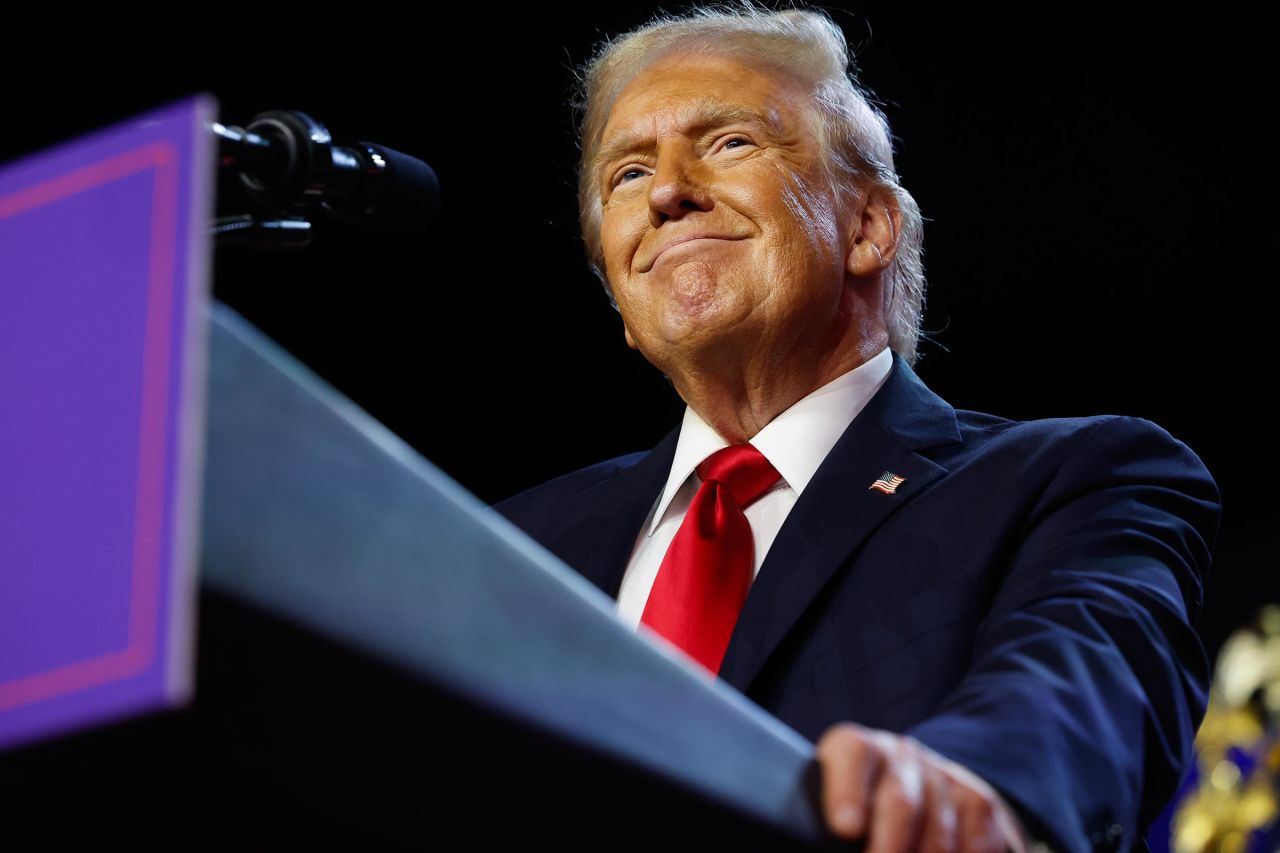
President Donald Trump has warned that the United States could carry out further military strikes in Nigeria if Christians continue to be killed, reigniting a sensitive debate over religious violence and foreign intervention in Africa’s most populous nation.

President Donald Trump
Trump made the remarks in an interview with The New York Times, published on Thursday, while responding to questions about a US military strike carried out in Nigeria on Christmas Day.
At the time, the US military said the operation targeted Islamic State militants in north-west Nigeria and was conducted at the request of the Nigerian government.
Nigeria, however, described the operation as a joint counterterrorism effort, stressing that it was aimed at armed groups designated as terrorists and “had nothing to do with a particular religion”.
“I’d love to make it a one-time strike,” Trump was quoted as saying. “But if they continue to kill Christians, it will be a many-time strike.”
Pressed on comments by his own Africa adviser that extremist groups such as Islamic State and Boko Haram have killed more Muslims than Christians in Nigeria, Trump acknowledged that Muslims were also victims but insisted that Christians were being targeted disproportionately.
“I think that Muslims are being killed also in Nigeria. But it’s mostly Christians,” he said.
Trump has repeatedly raised alarms about the safety of Christians in Nigeria, beginning in late October when he warned that Christianity faced what he described as an “existential threat” in the country. He has accused Nigerian authorities of failing to adequately protect Christian communities and has openly threatened US military intervention if the violence continues.
Nigeria has firmly rejected claims of systematic persecution of Christians. The government maintains that the country’s security challenges are complex and largely driven by insurgency, banditry and criminal violence rather than religious targeting.
With a population of more than 230 million people, Nigeria is almost evenly divided between Christians, who are concentrated mainly in the south, and Muslims, who predominate in the north. Islamist insurgencies, particularly Boko Haram and its offshoots, have plagued parts of northern Nigeria for more than a decade, killing thousands and displacing millions.
Nigerian authorities have repeatedly pointed out that militant attacks have claimed the lives of both Muslims and Christians, arguing that framing the violence along religious lines oversimplifies the crisis and risks inflaming tensions.
Following Trump’s earlier threats, the Nigerian government said it was willing to continue cooperating with Washington in combating terrorism but rejected language suggesting that Christians alone were under threat.
The latest comments are likely to strain diplomatic relations further, as Nigeria balances its partnership with the United States against concerns over sovereignty, security cooperation and the portrayal of its internal conflicts on the global stage.

OpenAI maker of ChatGPT is rolling out a health-focused feature to the generative artificial intelligence (AI) tool that’s used by nearly a billion users.

Named ChatGPT Health, the new feature aims to provide users with health and wellness information. This, as health is one of the most common ways people use ChatGPT, according to OpenAI.
In a blog post, Microsoft-backed OpenAI says de-identified analysis of conversations show that over 230 million people globally ask health and wellness-related questions on ChatGPT every week.
ChatGPT Health will also “securely” connect medical records and wellness apps to ground conversations with a user’s own health information, making responses more relevant and useful.
“Designed in close collaboration with physicians, ChatGPT Health helps people take a more active role in understanding and managing their health and wellness – while supporting, not replacing, care from clinicians.”
According to OpenAI, health information is often scattered across portals, apps, wearables, PDFs, and medical notes making it hard to see the full picture, and people are left to navigate a complex healthcare system on their own.
“ChatGPT Health builds on these so responses are informed by your health information and context. You can now securely connect medical records and wellness apps – like Apple Health, Function, and MyFitnessPal – so ChatGPT can help you understand recent test results, prepare for appointments with your doctor, get advice on how to approach your diet and workout routine, or understand the trade-offs of different insurance options based on your healthcare patterns.”
According to the company, ChatGPT Health is designed to support, not replace, medical care, adding that it is not intended for diagnosis or treatment. “Instead, it helps you navigate everyday questions and understand patterns over time – not just moments of illness – so you can feel more informed and prepared for important medical conversations.
“To keep your health information protected and secure, Health operates as a separate space with enhanced privacy to protect sensitive data. Conversations in Health are not used to train our foundation models. If you start a health-related conversation in ChatGPT, we’ll suggest moving into Health for these additional protections.”
OpenAI adds that access to ChatGPT Health has started with a small group of early users to learn and continue refining the experience, adding that users with ChatGPT Free, Go, Plus, and Pro plans outside of the European Economic Area, Switzerland, and the UK are eligible.
“As we make improvements, we plan to expand access and make Health available to all users on web and iOS in the coming weeks.
“Medical record integrations and some apps are available in the US only, and connecting Apple Health requires iOS.”
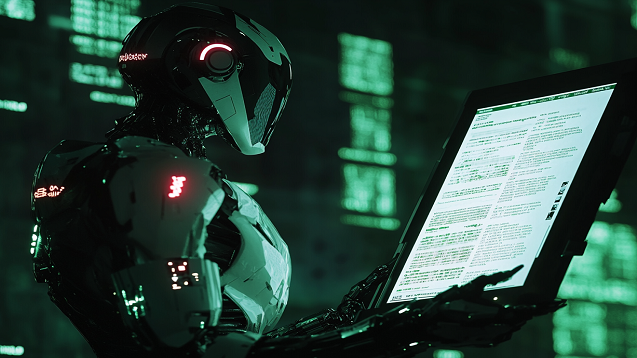
Kaspersky experts outline how the rapid development of AI is reshaping the cybersecurity landscape in 2026, both for individual users and for businesses. Large language models (LLMs) are influencing defensive capabilities while simultaneously expanding opportunities for threat actors.

Deepfakes are becoming a mainstream technology, and awareness will continue to grow. Companies are increasingly discussing the risks of synthetic content and training employees to reduce the likelihood of falling victim to it. As the volume of deepfakes grows, so does the range of formats in which they appear.
At the same time, awareness is rising not only within organisations but also among regular users: end consumers encounter fake content more often and better understand the nature of such threats. As a result, deepfakes are becoming a stable element of the security agenda, requiring a systematic approach to training and internal policies.
Deepfake quality will improve through better audio and a lowering barrier to entry. The visual quality of deepfakes is already high, while realistic audio remains the main area for future growth.
At the same time, content generation tools are becoming easier to use: even non-experts can now create a mid-quality deepfake in just a few clicks. As a result, the average quality continues to rise, creation becomes accessible to a far broader audience, and these capabilities will inevitably continue to be leveraged by cybercriminals.
Online deepfakes will continue to evolve but remain tools for advanced users. Real-time face and voice swapping technologies are improving, but their setup still requires more advanced technical skills. Wide adoption is unlikely, yet the risks in targeted scenarios will grow: increasing realism and the ability to manipulate video through virtual cameras make such attacks more convincing.
Efforts to develop a reliable system for labelling AI-generated content will continue. There are still no unified criteria for reliably identifying synthetic content, and current labels are easy to bypass or remove, especially when working with open-source models. For this reason, new technical and regulatory initiatives aimed at addressing the problem are likely to emerge.
Open-weight models will approach top closed models in many cybersecurity-related tasks, which create more opportunities for misuse. Closed models still offer stricter control mechanisms and safeguards, limiting abuse.
However, open-source systems are rapidly catching up in functionality and circulate without comparable restrictions. This blurs the difference between proprietary models and open-source models both of which can be used efficiently for undesired or malicious purposes.
The line between legitimate and fraudulent AI-generated content will become increasingly blurred. AI can already produce well-crafted scam emails, convincing visual identities, and high-quality phishing pages.
At the same time, major brands are adopting synthetic materials in advertising, making AI-generated content look familiar and visually “normal.” As a result, distinguishing real from fake will become even more challenging, both for users and for automated detection systems.
AI will become a cross-chain tool in cyberattacks and be used across most stages of the kill chain. Threat actors already employ LLMs to write code, build infrastructure, and automate operational tasks.
Further advances will reinforce this trend: AI will increasingly support multiple stages of an attack, from preparation and communication to assembling malicious components, probing for vulnerabilities and deploying tools. Attackers will also work to hide signs of AI involvement, making such operations harder to analyse.
“While AI tools are being used in cyberattacks, they are also becoming a more common tool in security analysis and influence how SOC teams work. Agent-based systems will be able to continuously scan infrastructure, identify vulnerabilities, and gather contextual information for investigations, reducing the amount of manual routine work.
“As a result, specialists will shift from manually searching for data to making decisions based on already-prepared context. In parallel, security tools will transition to natural-language interfaces, enabling prompts instead of complex technical queries,” adds Vladislav Tushkanov, Research Development Group Manager at Kaspersky.

CBN Projects Petrol to Hover around N905/Litre this Year

Court Dismisses N1Bn Suit against MTN, Awards N3m Costs

Nigeria, Egypt to Lead Africa’s Data Center Boom

FG to Empower Artisans for Global Value

KPMG Identifies ‘Flaws, Inconsistencies, and Omission’ in New Tax Law

Banks quietly move to enforce new ₦50 transfer levy from Jan. 1

FIRS says NIN, CAC Numbers to Serve as Tax IDs from 2026

PalmPay Launches N400 Million World Travel Carnival, Rewarding Users with Free Global Trips

Nigeria Takes the Lead in the Global WSIS+20 Digital Agenda

Check Point Reveals Nigeria as Second Most Targeted African Country for Cyberattacks in November




 E-Financial2 days ago
19 Nigerian Banks Meet CBN Recapitalization Targets Ahead of March Deadline

 E-Financial3 days ago
BVN Enrollment Up 6.87 Percent to 67.84m in 2025 – NIBSS
 E-Financial2 days ago
KPMG Identifies ‘Flaws, Inconsistencies, and Omission’ in New Tax Law

 General News3 days ago
Pawnith Appoints Martina Ogbebor as Managing Director to Lead Strategic Launch into Nigeria’s Fintech Ecosystem

 E-Business3 days ago
Study Reveals Majority of IT Professionals Show Openness to Cyber Immunity

 News3 days ago
OpenAI Launches ChatGPT Health

 Telecom3 days ago
NCC, CBN Unveil Refund Framework for Failed Airtime, Data Transactions

 General News2 days ago
Bill Gates Pays Ex-Wife $8Bn Charity Payout in Divorce Settlement