

Telecom
Giving Telephone Access to Rural Dwellers

The developmental history of telephony in Nigeria shows that the telephone service had always being targeted at the urban dweller to the exclusion of the rural dweller that forms a major thrust of the economy. Rather than being conceptualized as a tool for economic development, the telephone at inception in Nigeria was a tool in support of colonial administration.
At post-independence in 1960, there were a total of 18,724 lines to a population of 40 million. This translated to a teledensity of 0.5 telephone lines per 1,000 people. The telephone network consisted of 121 exchanges of which 116 were manual (magneto type).
The situation challenged post-independence governments, desirous of socio-economic developments. Several steps had to be taken at different stages; including segmented development plans and finally liberalization of the industry in 1992. All of these were aimed at increasing teledensity, modernizing the system and increasing the geographical coverage. In spite of all of these efforts, the gap between demand and supply remained embarrassingly wide in favour of demand.
Opening up the rural communities through integration into the national and global telephone networks will enhance exploitation of the economic potentials of the communities, improve the standards of living of the rural dwellers reduce, significantly, the level of poverty and improve the national income profile. Viewed from the fact that about 70% of Nigeria is rural and agrarian, this scheme is considered necessary and urgent, a fact that makes the use of easily deployable facilities necessary. It is appreciated that the rural communities may not be attractive to the private investor who is out to make profit; the scheme can be driven by government through legislations, inducements to private investors and possibly by forming partnerships with them.
ITU statistics show that there are 3.3 billion telephone subscribers in Africa, which is equal to about 40% of the population. It has been shown that up to 15 different people with different SIM cards in some villages may be using a single mobile handset, and that low income households are willing to spend 4-8% of their income on mobile-related costs. The London School of Economics alleges that 10 additional mobiles per 10,000 people improve GDP by 0.5%.
Benefits of Mobiles to dwellers
Farmers and other rural people have rapidly learned how to use their mobiles in various ways apart from phone calls. Farmers use SMS in relation to market access, interacting with traders and middlemen to distribute and receive information about products, prices, and availability. Some examples of concrete evidence were offered in reference to the direct benefits to farmers from telephony in rural sectors found in some IFAD projects:
In Zambia, farmers’ productivity has greatly increased along with their income. More so, in Tanzania, fishermen on the Great Lakes are able to communicate with one another and share information about the demand of fish and the prices in the various markets in which they sell. In this way, their productivity and income have increased, while they have avoided over-fishing and are protecting the natural resources.
Against this backdrop that federal government conceived Rural Telephony project geared towards affording dwellers access to communications tools which private operators may not afford them basically because such areas are not commercially viable, especially when there are no incentives to attract such investment.
Government’s aim of the project is to provide the nation’s rural communities with access to information and communication as a way of bridging the digital divide. The 218 LGAs benefiting from the project, in the phase I cover two local governments in each Senatorial District. The remaining phases II and III of the project, is being built by three vendors : Huawei Technologies, ZTE Corporation and Shangai Bell (all of China ) It is expected to provide 638,000 subscriber lines spread across 556 LGAs. The first phase of the NRT project, which was financed by the Chinese Government through a US$200 million concessionaire loan to Nigeria, is made to create in the rural areas, a critical infrastructure with which to build a development oriented information society where every one has access to a facility to share information and knowledge. The project is being supervised by federal ministry of information and communications.
The implementation of the project, a mix of technology was adopted involving Fixed Wireline and fixed Wireless Code Division Multiple Access, (CDMA), both of which are expected to provide Voice, Data, Internet and other value added services.
“The fixed Wire-line (Exchange) System provides such services as voice, facsimile and Dail-up connections at data rate of up to 64 kbps (Internet). Transmission to the switch/exchange is by two types of technologies namely, through Optic Fibre Cable (OFC) where there are short distances involved and, through Micro wave Radio system, where long distances are involved.”
Rural Telephony Project
The first phase of Rural Telephony Project (RTP), which Federal Government embarked upon in 2002, has now been handed over to some Private Telecommunication Operators (PTOs).
Prof. Dora Akunyili, Minister of Information and Communications, said Federal Government has transferred the project to PTO’s to ensure sustainability of the networks and achieve government policy objectives of universal access to telecommunications. The five companies are Key Communications Limited, Suburban Broadband Limited, Voicewares Network Limited, Gicell Wireless Limited and Hezonic Limited.
The project failed to deliver and government in 2008 went finding who could handle it within the private sector. All the five companies which bided and got the projects are not known to have installed telephones for rural usage anywhere in the world, said telecom industry experts.
According to industry watchers, chances are that one or two of the companies may just be able to do a few locations while others may never even take off ground going by the cost-and-effect analysis of the kind of fees government said they have offered to take over the remnants of the failed project and challenging issues of interconnection and cost of doing business at that level. This is happening as none of the five companies can boost of operating its won rural telephony network for the realization of the intensions of government to give communications access to the rural areas.
It is not unusual for governments in developing economies to use the argument that their citizens must be accessible to telephony to go into wild expenditure on grandiose projects without good technical or business plans. Forces of incapacity and corruption have their ways of making such plans turn out to be wastes in all places where they happened, the experts maintained.
They added that it is also not unusual for smart equipment vendors to talk corrupt governments into signing deals, which on the surface appear patriotic, but which really are ab initio designed to help such vendors to dump their untested technologies in rural communities of developing economies only to send the latter into several years of debt and confusion.
USPF effort
Apart from the positive bust in communications which has seen the country increasingly connected, the efforts of the Nigerian government in spreading modern communications growth and development to the far ends of the country which house the unserved and underserved population, is to say the least, insignificant.
However, the government had deliberately created the Universal Service Provision Fund (USPF), putting it in an auspicious position to serve as a vehicle for this essential service delivery.
Created under the Nigerian Communications Act (NCA) 2003, USPF is designed to promote widespread availability and usage of network services throughout the country by encouraging the installation of network facilities and the provision of network services to institutions and to unserved and underserved areas and groups in the country.
In brief, on behalf of the Nigerian government, USPF has the mandate to interface with the Nigerian people, facilitating and enhancing network availability and service quality where otherwise it would have been impossible.
Unfortunately, industry observers had expressed worry that 7 years down the line, the Fund as a body, was almost lacking in most of these functions.
USPF however, thinks otherwise, defending its position stoutly that it has been implementing strategies that can give teeth to rural telephony in the country.
But a USPF source said that with government providing a special vehicle in USPF which has further made it possible to quickly access far ends of the country and primary and higher institutions, it means therefore that a steady seed of progress has to be sown to make creation of those jobs possible.
Presenting a roadmap to this seed of progress, Mr. Funso Fayomi, USPF Secretary, said that "in trying to carry out its mandate of providing universal access to ICT to all Nigerians, the USPF has found that collaboration between government, community based organisations, the private sector and other stakeholders is the best approach. The public sector will typically provide the financial backbone while the communities and the private sector will remain primary drivers for the implementation and sustenance of services".
Giving what looks like a situation report but on which other development modules will be built, Fayomi said that across the different geopolitical zones of the country, USPF has 115 Community Communications Centres (CCC) and 76 subsidized Base Transceiver Stations (BTS) at different levels of completion.
In addition, the USPF has also provided 476 government secondary schools with 100 computers, a 5KVA generator and broadband connectivity, per school, under the School Access Programme (SAP), 68 Tertiary Institutions with 100 desktops and broadband connectivity (per school) under the TiAP Project.
In all of these what makes meaning to rural dwellers is availability of telecommunications tools necessary to facility their means of livelihood as well as better their live which will invariably reduce rural to urban drift. Observers are yet to see any evidence to shown that Rural Telephony Project of the federal government which its first phase has being completed is working, as no community as at today can make come out to attest that it is using the service in spite of the fact that it has been handed over to private operators.
What these communities need is functional network that will deliver the required communications tools at reduced cost and not media hype by various agencies saddled with the responsibility of providing them with such service.



Banks and telecommunications operators in Nigeria have ended a four-year dispute over nearly N300bn owed for Unstructured Supplementary Service Data services (USSD), with the debt now fully cleared, according to Association of Licensed Telecommunications Operators of Nigeria (ALTON).

Gbenga Adebayo, chairman, announced the resolution on Thursday during an official visit to Idris Olorunnimbe, chairman, Nigerian Communications Commission (NCC).
He credited the intervention of the NCC, led by Dr Aminu Maida, executive vice chairman of the commission, with bringing the long-standing dispute to a close.
“When Dr Maida assumed office, he inherited significant industry challenges,” Adebayo said.
“One of the most difficult was the USSD debt crisis, a debt burden that grew over four years to nearly N300bn. It had become a systemic risk to our sector and the digital financial ecosystem.
Through firm leadership, structured engagement, and decisive coordination, Dr Maida and his team resolved this issue.
Today, there is no outstanding USSD debt. The ecosystem has fully migrated to end-user billing. What was once a looming crisis has been converted into a sustainable framework.”
The clearing of the debt ends years of accusations and counter-accusations between banks and telecom operators, which had threatened the stability of digital financial services in the country.
Adebayo praised the NCC’s leadership for steering the telecom sector through one of its most delicate periods, noting other interventions, including last year’s approval of a 50 per cent USSD tariff.
He described the resolution of the debt crisis as a milestone for the telecom and digital finance ecosystem, ensuring sustainability and predictability for operators and service providers.
Nigeria’s telco and bank billing for USSD services transitioned to the end-user billing model in mid-2025, moving charges from bank accounts to customers’ mobile airtime, which is deducted directly by telecom operators.
This shift resolved the long-standing dispute in which banks owed operators up to N300bn in unpaid USSD fees.
The transition arose from years of tension between telecom operators, including MTN and Airtel, and banks over USSD revenue sharing, with debts peaking at N250–300bn by 2024.
The NCC, in collaboration with the Central Bank of Nigeria, developed the EUB framework to standardise billing, enhance transparency, and support financial inclusion for unbanked users who rely heavily on USSD codes.
Under the EUB system, charges are now deducted directly from mobile airtime at N6.98 per session lasting up to 120 seconds, with user consent prompts issued before each deduction. Banks no longer bill for USSD services; telcos handle them exclusively, with regulatory safeguards preventing double-billing. Users can opt in or out of the service, and banks are required to notify customers in advance of any USSD session charges.
Migration to the EUB model began between June 3 and 18, 2025, following partial debt repayments amounting to N171bn. By February 19, 2026, banks had fully cleared the remaining debt, solidifying the EUB rollout.
The model improves user control through immediate airtime deductions and session notifications, similar to voice and SMS billing. While some critics have expressed concern over potential burdens on low-income users, the transition strengthens telecom revenue sustainability and contributes to the stability of Nigeria’s digital financial ecosystem.
Credit: Punch

Federal Airports Authority of Nigeria (FAAN) and MTN Nigeria have launched free, high-speed WiFi services for passengers at the international wing of the Murtala Muhammed Airport in Lagos and the Nnamdi Azikiwe International Airport in Abuja.

The partnership, both bodies explained, will be followed up with similar development taking place at the airports in Kano, Port Harcourt and Enugu within the next few months.
Mrs Olubunmi Kuku, managing director of FAAN, officially unveiled the internet service at MMIA Terminal two.
Kuku, who was represented by Capt. Abdullahi Mahmood, director of Airport Operations, described the initiative as a major milestone partnership for the aviation ecosystem.
The FAAN boss said the milestone marked a new benchmark in digital infrastructure and passenger experience across Nigerian airports.
According to her, the free WiFi service will be extended to the MMIA Temporary Terminal within weeks, before extension to Enugu, Port Harcourt, and Kano international airports over the next three months.
“In 21st century Nigeria, no Nigerian airport should be an offline island.
“This collaboration with MTN Nigeria demonstrates how effective Public-Private Partnership (PPP) alignment can modernise infrastructure and strengthen the country’s digital economy,” she said.
Kuku assured travellers that FAAN was committed to closing service gaps and enhancing operational efficiency across airports nationwide.
“This WiFi is our promise that FAAN is listening. We have turned on the signal today, but the signal we are truly sending is this: Nigerian aviation is writing a new chapter; one of innovation, partnership, and unwavering commitment to excellence,” she said.
Kuku said the project was a key component of the digital economy agenda led by President Bola Tinubu and the transformative vision of Mr Festus Keyamo, minister of Aviation.
She commended MTN Nigeria for its technical expertise and investment in the project, describing the partnership as purpose-driven and transformative.
On his part, Mr Karl Toriola, chief executive officer of MTN Nigeria, who was represented by Lynda Saint-Nwafor, chief enterprise business officer, assured passengers that the service would be reliable, secure and efficient.
“We are proud to announce the launch of a free WiFi service across major airports in Nigeria in partnership with FAAN.
“This initiative reflects a shared commitment to improving passenger experience and enhancing digital accessibility,” Toriola said.
He noted that airports served as critical gateways for business travellers, tourists, airport personnel and service providers, all of whom required seamless connectivity.
“With this service, travellers waiting to board, in transit, or upon arrival can now stay connected freely and effortlessly,” he added.
MTN Nigeria also announced plans to activate on-ground engagement campaigns at the Lagos and Abuja airports over the next month to drive awareness and encourage usage.
According to the telecom giant, the project reinforces its commitment to national infrastructure development and expanding digital access in public spaces.

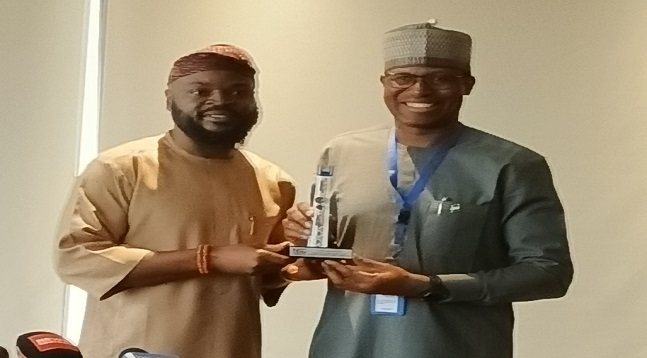
Nigerian Communications Commission (NCC) is considering imposing sanction on any road contractor that destroys telecommunications metro fibre across the country.

Idris Olorunnimbe, chairman, Board of Commissioners, NCC, stated this at congratulatory visit to the Chairman by members of Association of Licensed Telecommunications Operators of Nigeria (ALTON) in Lagos yesterday.
According to him, “I think what we need to do to address the damage of metro fibre by government contractors is simply. He who cuts It must fix it, and we’ll take this message to our state governments.
If any contractor knows that if they damage that critical national infrastructure, their work is going to stop and they are going to be the ones to fix it, they will not destroy it.
Responding, Engr. Gbenga Adebayo, chairman, Association of Licensed Telecommunications Operators of Nigeria (ALTON), said up until now, there are no consequences for those infractions, and if there are no consequences, the tendency to continue to do bad is very high.
“Contractors of government carrying out roadworks, whether road maintenance or road expansion, and their machines destroy communications super highway at will, if there are consequences, or if there were consequences some of those actions will not have escalated to the level that we are in.
“What the chairman has said today is very important, if you destroy it you fix it. What we are expecting now is that the consequence of managing those problems will be a lot more, and there will be legal deterrent for people from destroying operators’ fibre. I must emphasize the communication super highway. That’s the highway by which all the signals are carried.
“When this highway is broken, it’s like you have a major bridge that’s broken. You can’t reach east, neither can you reach west. And until we take it as the major super communications highway and so protective, we will continue to be where we are.
“That’s actually what it is. When this highway is broken, we are all affected. So, it’s no longer an infrastructure that is for operators, but it belongs to all of us. If I don’t have service on my phone, some of these are the consequence of this violation that we are seeing.
Earlier in his welcome address, Engr. Adebayo highlighted some of the key challenges in the sector which includes: Daily fibre cuts — often caused by federal and state road construction contractors — are creating enormous economic losses.
- Nationwide service disruptions
- Destruction of critical digital infrastructure
- Loss of assets without compensation
- Banking, education, and security interruptions
There is currently insufficient institutional recourse for operators when these damages occur. A structured pre-construction fibre mapping and mandatory coordination framework is urgently required.
Key Regulatory Priorities for Sector Stability
- Independence of the Regulator
He said regulatory independence ensures:
- Credible oversight
- Investor confidence
- Transparent decision-making
- Long-term sector stability
Independence must not only exist in law — it must be visible in practice.
“We recommend: Legislative reinforcement explicitly affirming NCC independence
- Clear codification of interaction boundaries between the regulator and supervising authorities
- Operational safeguards insulating regulatory processes from undue influence
Multiple Regulation
Overlapping regulatory interventions by various MDAs on matters already within NCC jurisdiction create:
- Duplicative investigations
- Conflicting directives
- Increased compliance costs
- Regulatory uncertainty
“We recommend structured inter-agency coordination frameworks and legislative clarification reaffirming NCC’s exclusive jurisdiction over telecommunications matters.
Multiple Taxation
Adebayo stated that operators continue to face excessive sub-national taxes and levies.
Enforcement tactics such as site shutdowns directly affect Quality of Service and national connectivity.
A harmonized national telecom taxation framework is essential for broadband expansion and digital inclusion.

Banks, Telcos Settle Four-Year Dispute over N300Bn USSD Debt

NITDA Warns Nigerians of Actively Exploited Microsoft Office Vulnerability

INTERPOL Arrests 651, Recovers $4.3m from Cybercrime in Nigeria, Others

NDPC Investigates over 1,000 Schools over Data Privacy Compliance

Court Freezes MCSN Copyright Levies amid Record Label Legal Battle
Nigeria’s 9 Top FinTech Firms Valued at $10.6Bn in January 2026

DG NCC Tasks University Dons on Research Commercialization, IP Management to Build Global Competitive Ecosystems

Firm Detected a Fivefold Surge in QR Code Phishing Attacks in the Second Half of 2025

Kaspersky Launches OT Calculator to Align Cybersecurity Investments with Business Goals

Firm Detected a Scam Exploiting OpenAI’s Teamwork Features




 Telecom2 days ago
Terra Moves to Expand in African Drone Sector, Secures $22m Funding

 Telecom2 days ago
Temu Assures Compliance Amid Nigeria Data Privacy Probe

 E-Financial2 days ago
DMO Offers ₦800bn FGN Bonds in February Auction Surge

 E-Financial2 days ago
Danjuma, Taj Bank Staff Jailed for 5 Years over N22m Fraud

 E-Financial2 days ago
KPMG Outlook Reveals Financial Services CEOs Double down on AI, Resilience and Growth in 2026

 Telecom3 days ago
MTN Group Announces Proposed Full Acquisition of IHS Towers

 News2 days ago
Chianugo, Nigerian $150m suit Against Google, GoDaddy.com Stalled due Judge’s Absence

 General News2 days ago
FG to Review MTN’s $6.2Bn IHS Acquisition — Tijani