

Telecom
Glo Adopts ForgetMeNot Africa’s Job Xpress

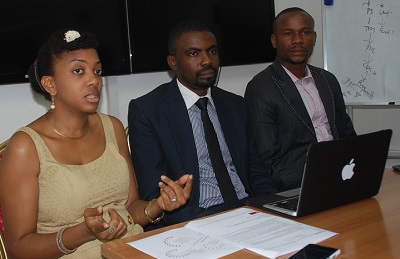
Nigerians can now apply for jobs via SMS on any mobile phone with the launch of a new internet-free app. Glo Mobile, part of the Globacom network – Nigeria’s largest independent mobile phone network – are the first African network to adopt SMS-based Job Xpress, the new internet-free app from ForgetMeNot Africa.
The app enables Glo Mobile’s 25 million subscribers to attach their CVs and job applications to mobile email messages via SMS. Job Xpress will be free to all Glo Messenger subscribers for a limited launch period.
Recent OECD figures revealed that 40 million African youths are currently unemployed, representing 60 per cent of Africa’s jobless.
The OECD claims the problem is particularly prevalent in middle income countries like Nigeria, which currently suffers from an unemployment rate of 23.9 per cent according to Nigeria’s National Bureau of Statistics. Youth unemployment currently stands at 41.6 per cent, according to a recent statement by Lamido Sanusi, Governor of the Central Bank of Nigeria.
Jeremy George, ForgetMeNot Africa’s Chief Executive Officer, said: “The recent OECD findings are extremely troubling, particularly for middle income economies like Nigeria. Only 5 per cent of Nigerian households have a computer, which makes it difficult for young, tech-savvy Nigerians to get online and apply for jobs. The OECD’s research showed that a major concern for many young Africans is that jobs are only given to people with connections or relatives. Job Xpress helps to level the playing field by giving job applicants a direct method of application, and is a step towards tackling barriers to employment that currently affect young, bright and eager to work Africans.”
Job Xpress joins Glo Mobile’s existing Glo Messenger service – which already provides access to internet-free Facebook, email and online chat apps to Glo Mobile’s entire 25 million subscriber base. These apps enable subscribers to send and receive emails and online chat messages, update their Facebook profiles, comment on and ‘like’ their friends’ Facebook statuses and send and receive Facebook Chat messages, all via SMS. The Job Xpress app is also available to Glo Mobile’s data plan users, saving them time and money as they no longer have to go online to attach their CV to emails via data connections that can often time out.
Glo Messenger subscribers can login to www.glomessenger.com at an internet caf? Or university and upload their CV under the Job Xpress tab. To apply for a job subscribers simply send an SMS from their mobile phone via the Job Xpress app, which attaches their CV using ForgetMeNot Africa’s award-winning Optimiser Platform technology. Thereafter job applications can be made without fixed telephone line Internet access, PCs, expensive subscriptions, smartphones, Java downloads or data connections.
George said: “As the OECD recognises, Africa needs to move swiftly to make youth employment a priority, turning its human capital into economic opportunity, particularly in middle income countries like Nigeria. A common perception is that Africa needs aid when in fact what it really needs is a boost in business and jobs. Job Xpress is one way of the mobile industry contributing to the economies it operates in. It provides African mobile subscribers with an internet-free app that gives them a simpler, cheaper and faster way to kick-start their career by making job applications as easy as sending a text message.”
Samson Isa, Globacom’s Head of Valued Added Services, said: “ForgetMeNot Africa has already helped to bridge the digital divide in Nigeria by enabling people to easily keep in touch with their friends and family at home and all over the world with access to internet-free Facebook, email and online chat apps through the Glo Messenger service. Now the addition of the Job Xpress app will help plug the socioeconomic gap, making job applications easier for every one of Glo Mobile’s subscribers regardless of the make and model of their mobile phone. The app vitally helps young people in their efforts to get their foot on the first rung of the career ladder and is a contribution to reducing the dreadful levels of unemployment amongst young Nigerian people.”



Amazon, the world’s largest e-commerce and cloud computing powerhouse, announced plans Wednesday to eliminate 16,000 jobs globally, escalating a restructuring drive first flagged in October with 14,000 earlier cuts.

Amazon
The layoffs, hitting corporate ranks across multiple divisions, aim to slash management layers, boost accountability, and dismantle bureaucracy, Senior Vice President Beth Galetti stated in an internal memo. Despite booming holiday sales and $21 billion quarterly profits on $180 billion revenue, Amazon seeks to redirect resources toward massive artificial intelligence investments amid slower post-pandemic growth and rising costs.
Galetti explained that while some teams finalised October adjustments, others required extended reviews, pushing total reductions toward 30,000—the firm’s largest ever. CEO Andy Jassy, pursuing leaner operations since 2021, has long signalled AI’s role in shrinking white-collar headcount, with corporate staff—about 350,000 of 1.5 million total—bearing the brunt, sparing warehouses.
The move mirrors Big Tech’s broader belt-tightening as firms recalibrate pandemic-era hiring binges against economic headwinds, AI disruption, and policy uncertainties under President Donald Trump. Amazon’s October cuts struck 2,000 in Washington state—including engineers, recruiters, analysts—and 1,500 in California, with fresh impacts undisclosed by location.
Jassy emphasised culture over pure finances in prior notes, blaming rapid expansion for excess layers after workforce doubling during COVID lockdowns fueled online shopping surges. Recent U.S. hiring slowdowns—to 50,000 jobs in December—underscore corporate caution amid AI’s job-shifting potential and tariff worries.
Analysts note the cuts free capital for AI dominance, pitting Amazon against rivals in generative tools despite no immediate financial distress. Ex-workers have decried impersonal processes, often learning via media leaks, highlighting tensions in Earth’s “best employer” shedding talent en masse.
As tech pivots to AI frontiers, Amazon’s aggressive pruning signals a new era: fewer bodies, sharper focus, betting machine smarts eclipse human scale in the post-boom landscape.

Operatives of the Nigeria Police Force smashed a sophisticated cybercrime ring Wednesday, arresting six suspects accused of hacking a major telecommunications company and looting airtime and mobile data worth a staggering N7.7 billion.

The Force Public Relations Officer, CSP Benjamin Hundeyin, disclosed in a statement that the suspects breached the telecom giant’s core billing and payment systems by compromising internal staff login credentials, enabling them to siphon off vast quantities of airtime and data for illicit resale.
Named in the arrests are Ahmad Bala, Karibu Mohammed Shehu, Umar Habib, Obinna Ananaba, Ibrahim Shehu, and Masa’ud Sa’ad – a mix of northern and southern names hinting at a cross-regional fraud network that preyed on Nigeria’s digital backbone.
Police swooped on the gang’s hideouts in coordinated raids across Kano and Katsina states in October 2025, with a final takedown in the Federal Capital Territory, recovering two mini-plazas masquerading as legitimate retail outlets stocked with over 400 laptops, about 1,000 mobile phones, and a Toyota vehicle.
Investigators also froze substantial sums in the suspects’ bank accounts, tracing the dirty money trail back to the diverted resources that left the unnamed telecom firm reeling from unauthorised activities reported in a desperate petition.
The breach, described by police as a “calculated assault on critical infrastructure,” allowed the hackers to manipulate the company’s systems undetected for months, offloading billions in airtime and data bundles through underground channels and raking in illicit profits.
Hundeyin vowed that the net was widening, with forensic experts combing through digital footprints and financial ledgers to expose any remaining accomplices or beneficiaries in what he called “one of the largest telecom heists in recent Nigerian history.”
Inspector-General of Police, IGP Kayode Adeolu Egbetokun, praised the crack team from the National Cybercrime Centre for their “relentless professionalism,” urging telecom firms to bolster cybersecurity amid a surge in digital predation.
As the suspects cool their heels awaiting arraignment under the Cybercrimes (Prohibition, Prevention) Act, the case underscores Nigeria’s growing battle against tech-savvy fraudsters targeting the N1.7 trillion telecom sector that powers millions of daily transactions.
Industry watchers warn that such breaches erode investor confidence and hike operational costs, ultimately passed onto consumers already grappling with soaring data tariffs in Africa’s most populous nation

As Africa and MENA’s startup ecosystems transition from post-correction resilience into a new phase of disciplined growth, the Africa Startup & VC Landscape Preview (ASVLP 2026) will convene leading founders, investors, policymakers, and ecosystem builders on January 29, 2026, for its second annual, agenda-setting virtual forum.

Following a challenging global venture cycle, 2025 marked a notable rebound across the African ecosystem, with startups raising an estimated $3.2–$3.3 billion over the full year.
The recovery was accompanied by significant structural shifts: Kenya emerged as the leading destination among Africa’s “Big Four” markets for the first time, while Nigeria recorded a year-on-year funding decline, reflecting changing investor preferences, macroeconomic pressures, and a broader recalibration toward capital efficiency and sustainability.
Sectorally, fintech remained the most funded vertical, while climate & energy, AI-enabled solutions, healthtech, and infrastructure-adjacent businesses gained increasing attention. Across Africa and MENA, development finance institutions (DFIs) and family offices played a more pronounced role in anchoring funds, deploying catalytic capital, and supporting blended-finance structures, reshaping how early-stage and growth capital is mobilized.
ASVLP 2026 is designed to translate these data points into forward-looking strategy.
The forum will bring together venture capitalists, angel investors, LPs, DFIs, family offices, founders, corporate leaders, and regulators from Africa, MENA, Europe, and North America to assess 2025 outcomes and chart priorities for 2026.
The program will feature keynotes, fireside chats, panels, and deep-dive roundtables, including discussions on:
· The 2026 Africa & MENA FinTech Landscape, focusing on security, profitability, regulation, and growth frontiers
· Emerging Fund Managers, capital formation, and LP alignment
· Talent, operator depth, and institutional capacity as constraints to scale
· Regulatory evolution and cross-border market integration
A major highlight of ASVLP 2026 will be the Final DealRoom Pitch Session, where a curated group of high-potential startups will present to an experienced panel of investors.
• Founders can apply to pitch via: bit.ly/ASVLP-DR-Founders
• Investors seeking DealRoom access can request entry via: bit.ly/ASVLP-DR-Investors
Confirmed speakers for ASVLP 2026 include Khaled Ismail (HIMangel), Idris Ayodeji Bello (LoftyInc Capital), Zachariah George (Launch Africa), Tosin Faniro-Dada (Breega), Selma Ribica (FirstCircle Capital), Maha Mandour (COREangels MEA), Joe Kinvi (Borderless), Remi Prunier (Orange Ventures MEA), Karima El Hakim (Plug and Play Tech Center), Souheil Guessoum (President, The Confederation of Citizen Employers – Algeria (CAPC)), Remi Prunier (Partner, Orange Ventures, MEA), Maha Mandour (COREAngels MEA), Ali Hussein (President, Kenyan FinTech Association), Patrick Okebu (CIO, Interswitch Group) among other leading voices shaping capital, policy, and innovation across the region.
“The conversation has shifted,” said Uche Aniche, Convener of ASVLP. “It’s no longer about whether capital will return to Africa and MENA, but what kind of capital, deployed with what discipline, and in service of which long-term outcomes. ASVLP exists to help the ecosystem make sense of that transition.”
Participation in ASVLP 2026 is free but strictly by invitation.
Interested participants are encouraged to repost the official announcement on LinkedIn and comment #ASVLP2026 to receive a private registration link. They could also email [email protected] and request invite.

Firms Commit to Boost African Robotics Market

Kaspersky Reveals How Digitalisation is Influencing Family Life

NCC Slaps ₦250,000 Fee on Trial Licences to Spur Telecom Innovation

Amazon Axes 16,000 Jobs Worldwide in Major Restructuring Push

UBA launches instant digital platform for seamless account opening across Africa, diaspora

19 Nigerian Banks Meet CBN Recapitalization Targets Ahead of March Deadline

Jumia CEO says Black Friday Signals Nigeria’s E-Commerce Maturity

Galaxy Backbone Celebrates the Federal Government’s Paperless Civil Service Milestone

DStv Offers Instant Package Upgrade for Customers from January to February

Banks to Impose N50 Stamp Duty on Transfers of N10,000 and Above from January 1




 E-Financial3 days ago
CBN Upgrades Licences of Opay, Moniepoint, Kuda, Palmpay, Paga to National Status
- E-Financial3 days ago
Nigeria’s 9 Top FinTech Firms Valued at $10.6Bn in January 2026

 News3 days ago
Tech Executives Double Down on AI, Talent and Adaptive Strategies to Lead in the Intelligence Age

 E-Financial3 days ago
NIBBS to Boost Financial Inclusion with Offline Payment Solutions

 News3 days ago
DHQ Indicts Brigadier General Abubakar Sadiq, 15 Others in Alleged Coup Plot againt Tinubu

 E-Business3 days ago
Firm Identifies AI as Common Denominator in Entertainment Industry’s 2026 Security Threats

 E-Financial2 days ago
PayPal Goes Live in Nigeria through Paga

 News3 days ago
Court Fines Airtel N210m for Unauthorised Use of ‘Nigeria Go Survive’ Song