

Telecom
Glo Laffta Fest Thrills Aba Residents


It was fun all the way last Sunday as residents of Aba, Abia State, converged at Binez Hotel, Umungasi, to watch their favourite comedians perform at the Glo Laffta Fest comedy show which arrived at Enyinmba City after delighting the people of Nsukka, Enugu State.
The Laffta Fest fever had engulfed Aba since it was announced that the city would host the show. The arrival of Nigeria’s top comedians had been the subject of discussions among the resident for about a week before the event was held on Sunday.
The residents, including traders, Keke Napep and commercial bus drivers, on sighting the branded Glo bus conveying the comedians, followed the vehicle, hailing and ushering them to the venue, reminiscent of the Biblical triumphant entry into Jerusalem.
As early as 1 p.m on Sunday, the auditorium of Binez Hotel had been filled for a show scheduled to begin at 4 p.m. Many entertainment lovers decided to switch to the Glo network when they were informed of the prerequisite for admission into the event, while those who did not have a Glo line immediately bought Glo SIMs and the required airtime needed to be admitted.
Adaeze Odumkwe, who also switched her line before the show, said, “we’ve been hearing of this show in the last two weeks. The news is everywhere. I couldn’t afford to miss it, that’s why I had to purchase a Glo SIM and recharge cards immediately”.
A staff member of one of the new generation banks, Kenneth Idika, who said he heard about the Laffta Fest comedy show three weeks ago, added that he realised later that he could not attend since he was not a Glo subscriber hence his decision to go to a Glo World shop to subscribe to the network.
“My friend told me about the event when they went to Awka, and he has not stopped talking about it. I saw the road show here in Aba, but because I didn’t have a line and needed to attend, I had to visit the Glo World shop to purchase a Glo SIM and register it. With that, I was able to attend the show and I can now also enjoy other benefits on the network”.
The event paraded Bovi, De-Don, Funny Bone, Senator, 2CanTalk and Arinze Baba as well as Burna Boy and M.I who all delighted the mammoth crowd .
Makurdi, Benue State will host the last edition of the show on Sunday, December 13.
Subscribers who wish to attend the show in Makurdi have been advised by Globacom to use up to N3,000 before the show and send ‘LOL MAKURDI’ to “33001”.


Telecom
Airtel Nigeria CEO Urges Adoption of Intelligent Technology Platforms to Accelerate National Growth


Dinesh Balsingh, Airtel Nigeria’s Chief Executive Officer, has called on business leaders to accelerate Nigeria’s digital future by embracing intelligent technology platforms that drive innovation, productivity, and sustainable economic growth.

Speaking at the Lagos Business School (LBS) Breakfast Club on the theme, “From Telco to Techno,” Balsingh said the telecommunications industry is evolving beyond connectivity to become the foundation for enterprise transformation and the country’s digital economy.
Balsingh explained that while previous generations of mobile technology connected people through voice, internet access, and mobile broadband, the future lies in intelligent ecosystems powered by artificial intelligence (AI), the Internet of Things (IoT), satellite connectivity, and integrated enterprise solutions.
“The role of telecommunications has fundamentally changed. Businesses are no longer asking only for connectivity; they want solutions that improve productivity, strengthen security, and accelerate digital transformation. That is the journey Airtel is leading. We are evolving from a telecommunications company into a technology partner that helps organisations unlock growth and create long-term value,” he said.
Noting that value is no longer measured by the volume of data consumed but by the business outcomes technology delivers, he highlighted a key shift in telecommunications to AI-powered customer protections, industry-specific digital solutions, IoT platforms, and hybrid satellite-terrestrial networks that extend reliable connectivity to underserved communities and remote business locations.
“Technology should do more than connect people. It should protect them, simplify operations, and help businesses make better decisions. Investments are now focused on building smarter, more resilient digital infrastructure that supports organisations across every sector of the economy.”
He added that sectors including retail, education, healthcare, government, manufacturing, and oil and gas increasingly require integrated digital solutions that combine connectivity with cloud services, intelligent networking, surveillance, automation, and data analytics.
Balsingh also urged business leaders to rethink their digital priorities, noting that future competitiveness will depend on how connected, intelligent, secure, automated, and resilient their organisations become.
“The organisations that will lead the next decade are those that invest today in intelligent digital infrastructure. Our customers are no longer buying connectivity alone. They are investing in productivity, intelligence, and digital transformation.”
The session, which also featured the IMF Resident Representative for Nigeria, Christian Ebeke, formed part of the Lagos Business School Breakfast Club, a platform that brings together business executives and industry leaders to examine emerging trends shaping the future of enterprise and economic development.
Airtel Nigeria’s participation reinforced its commitment to supporting Nigeria’s digital transformation by enabling businesses with innovative technologies that improve efficiency, strengthen resilience, and unlock new opportunities for growth across the country’s rapidly evolving digital economy.

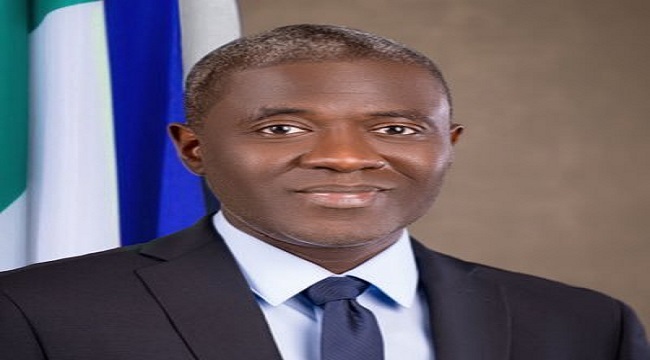
Nigerian Communications Commission (NCC) has called for accelerated deployment of Fibre-to-the-Home (FTTH) infrastructure, saying robust broadband connectivity is critical to achieving Nigeria’s ambition of building a one trillion-dollar economy.

Dr Aminu Maida, Executive Vice Chairman of the NCC, made the call while delivering a keynote address at the Association of Telecommunications Companies of Nigeria (ATCON) High-Level Industry Forum on FTTH in Lagos.
Maida said that although demand for high-speed internet continues to rise due to the growth of artificial intelligence, cloud computing, streaming services and digital businesses, fixed fibre broadband remains significantly underdeveloped in Nigeria.
According to him, the country currently has about 265,000 active FTTH subscriptions, a penetration level below the African average of 2.5 per cent and far behind the 47 per cent average recorded in more mature broadband markets.
“This low base should not discourage us. It should focus us.
“It shows the scale of the opportunity before Nigeria and reinforces the need to create the right conditions for fibre infrastructure to expand more rapidly, more sustainably and more widely across the country,” he said.
Maida said fibre infrastructure provides the speed, resilience and scalability required to support increasingly data-intensive applications and future technology upgrades.
He added that improved broadband infrastructure would enhance business competitiveness, expand digital services, improve productivity and attract greater investment into the country’s digital economy.
The NCC boss disclosed that the commission is conducting a Wholesale Fixed Broadband Market Assessment to evaluate competition in the wholesale broadband segment and identify measures to encourage infrastructure investment.
He said the assessment would also promote infrastructure sharing, strengthen open access models and improve affordability for consumers.
Maida renewed the commission’s call on state governments to remove barriers to fibre deployment, identifying Right of Way (RoW) approvals as one of the major obstacles to broadband expansion.
He said excessive RoW charges, prolonged approval timelines and multiple permitting requirements continue to increase deployment costs and delay network rollout.
According to him, 13 states have completely waived Right of Way charges, while 16 others have adopted the National Economic Council’s recommended rate of N145 per linear metre.
He said the commission would continue engaging the remaining states to eliminate impediments to broadband investment.
The NCC also disclosed that it had launched an Ease of Doing Business Portal to provide investors and network operators with state-by-state information on Right of Way charges, approval procedures and regulatory requirements.
Maida urged governments, property developers and urban planners to incorporate telecommunications infrastructure into the design of new residential and commercial developments.
He also stressed the need to enforce technical and safety standards in fibre deployment projects, warning that poor installation practices and substandard materials could lead to service disruptions and increased maintenance costs.
“Our priority is not simply that fibre is deployed quickly, but that it is built to last and capable of supporting Nigeria’s digital ambitions for decades to come,” he said.
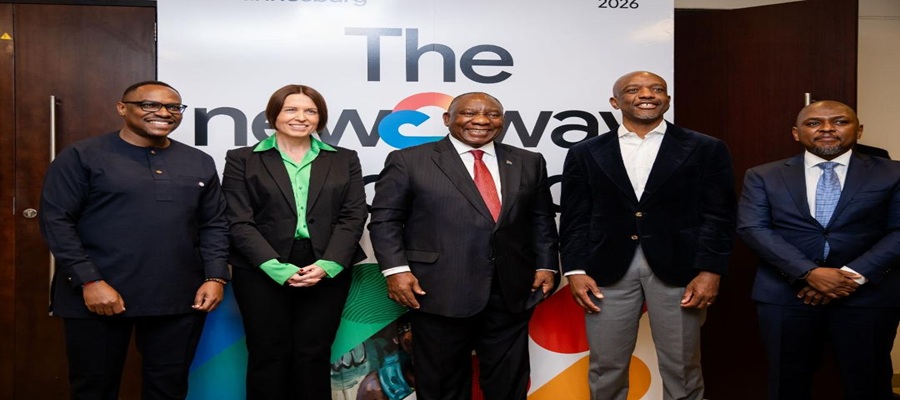
Google Cloud has unveiled a series of new artificial intelligence (AI), digital infrastructure and skills development initiatives aimed at accelerating Africa’s digital transformation.

President Cyril Ramaphosa opens inaugural Google Cloud Summit in Africa
The announcements were made at the inaugural Google Cloud Summit in Africa, held at the Sandton Convention Centre in Johannesburg, South Africa, where about 3,000 business leaders, developers, public sector officials and technology partners gathered.
The summit, themed “Building for Africa with Google Cloud,” builds on Google’s launch of its Johannesburg Cloud Region in 2025.
Opening the summit, South African President Cyril Ramaphosa said the event underscored Africa’s growing importance in the global digital economy.
“Today’s Google Cloud Summit affirms Africa’s position as a core growth region for the global cloud ecosystem.
“As we step boldly into the age of artificial intelligence, our aspiration is to anchor South Africa as a catalyst for the continent’s digital ascendancy,” Ramaphosa said.
Google announced five new initiatives under its “Building for Africa” programme to expand AI innovation, digital infrastructure and skills development across the continent.
The company disclosed plans to establish a new Digital Exchange Port in South Africa’s Eastern Cape, the first of four connectivity hubs planned for Africa.
According to Google, the facility will connect Africa directly to Australia through the Umoja subsea cable and to India via a new submarine cable route, improving internet connectivity and cloud service resilience.
Google also announced the establishment of Africa’s first Applied AI Lab in Ghana through partnerships involving Google Research, the Google AI Futures Fund and venture capital firms.
The lab, located at the Accra AI Community Centre, will provide African startups with access to Google’s latest AI models, research expertise and mentorship to develop solutions addressing local challenges.
Applications for the programme will remain open until Aug. 31, 2026.
The technology company further announced a partnership with The Akuna Group, backed by more than one million dollars in Google.org funding, to provide AI-based creative education and digital tools for underrepresented African content creators.
In South Africa, Google said it would partner with WeThinkCode to establish a three million rand Digital Innovation Centre at the George Tabor Campus of South West Gauteng TVET College in Soweto to equip young people with digital and AI skills.
The company also announced that applications for the 2026 South African cohort of the Google for Startups Accelerator would open on July 21.
The programme will select 15 startups to receive AI-focused training, mentorship and equity-free funding as part of Google’s commitment to support 50 African startups between 2024 and 2028.
Google’s Senior Vice President for Research, Labs, Technology and Society, Mr James Manyika, said Africa presents enormous opportunities for AI-driven innovation.
“The AI opportunity for Africa is significant, and Google is committed to working with Africans to help the continent realise its full potential through investments in infrastructure, innovation and education,” he said.
Also speaking, Google Cloud Vice President for the United Kingdom, Ireland and Sub-Saharan Africa, Ms Maureen Costello, said African businesses had moved beyond AI experimentation to deploying practical solutions.
She noted that Google’s Johannesburg Cloud Region is projected to contribute about 90.6 billion dollars (1.7 trillion rand) to South Africa’s economy and support more than 314,000 jobs by 2030.
According to her, the investments are expected to strengthen Africa’s digital economy while expanding access to cloud computing, artificial intelligence and digital skills across the continent.

Airtel Nigeria CEO Urges Adoption of Intelligent Technology Platforms to Accelerate National Growth

S&P Sees Increased Loan Losses for Nigerian, African Banks Amid Global Risks

NCC Raises Alarm as Nigeria Lags in Fibre Internet, Pushes for Urgent Expansion

Spotify partners Afro Nation Portugal to expand African music experience

CBN Cracks Down, Revokes Licences of 46 Microfinance Banks

Mobile Internet Gender Gap Widest in Africa – GSMA

London Strengthens Global Investment Ties with Africa @ First Ever London-Africa Business Summit

FG Targets Alleged N3tn Capital Flight, Opens Airtime Credit Market to Nigerian Fintechs

Japan, UNESCO Boost Digital Learning in 15 CoEs with Donation of ICT Equipment

African Electric Vehicle Platform Raises $215m to Scale Electric Mobility in Nigeria, Others




 Telecom3 days ago
OADC Reaffirms Abundant Capacity in Data Centres in Nigeria to Host Financial Data

 General News3 days ago
LASTMA Launches 3367 Toll-Free Hotline for Emergency Response, Traffic Management

 E-Financial3 days ago
PalmPay Calls for Trust, Infrastructure and Responsible AI to Drive Payment Ecosystem Innovation

 E-Financial2 days ago
Wema Bank Suspends Telegram Operations over Scams

 Telecom3 days ago
ALTON Backs NCC’s Local Smartphone Manufacturing Drive to Widen Digital Access

 E-Financial3 days ago
ngCERT Raises Alarm over Surge in Banks’ ATM Cyberattacks

 E-Financial2 days ago
NDIC Says 281m Depositors Protected against Bank Failure

 E-Financial2 days ago
NAICOM Moves to Deepen Penetration Through Licensing of a New Insurtech