

Telecom
Glo Xchange Agents Hail Empowerment Scheme

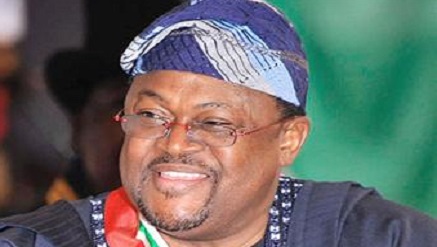
The number of mobile money agents around the country has continued to swell as the Glo Xchange train moved to Imo, Benue, Niger, Plateau and Kogi over the weekend.
In the new locations, participants joined their fellow countrymen in other parts of the country to eulogize the benefits of the mobile money super-agent network.
About 1,500 potential agents gathered in Owerri, Markurdi, Minna, Jos and Lokoja to receive orientation and information on the technical details of the Glo Xchange Network.
They included Glo trade partners, sub-dealers, retailers, pharmacists, entrepreneurs, supermarket operators, salon operators, photographers, fast-food operators, Commercial Telephone Operators and other Small and Medium Scale business operators.
To deepen the penetration of Glo Xchange in the country, the company is partnering some key players in the financial institutions including First Monie, Ecobank, StanbicIBTC Bank and Zenith Bank. The company said that more banks would join the partnership in line with the Central Bank of Nigeria regulations.

At the programme, Glo mobile money experts gave orientation to the attendees as they were eager to know more about mobile money and how to operate the Glo Xchange network business.
They also gave the participants the opportunity to ask questions for further clarifications, after which they signed up as Glo Xchange Agents.
Speaking after the training at the Owerri Centre, Njoku Chinelo from Irete said the project was a “nice one from Globacom, and will greatly enhance business growth”.
Ogbonna Chioffor and Peter Ike spoke in the same vein. Chioffor called it a wonderful and encouraging opportunity created by Globacom “…which will facilitate convenience of monetary transactions and avoidance of bank stress, delay and risk”.
Ike said it was “pure empowerment of people by Globacom whereby one can start a business with funds as little as N10, 000”.
Abichi Okeke from Makurdi welcomed the programme from Globacom and said that it will profitably engage more Nigerian jobless youths
John Iorpuu from Afia Town, Ukun LGA in Benue state hailed Glo Xchange as another first from Globacom, adding that “it will ease and make monetary transaction more convenient than ever.”
James Pilaakya from Korina, Konshisha LGA Benue state said it is an impressive grassroots-oriented platform by Globacom, saying that it will make rural financial transaction possible where there are no banks.
The attendees also said Glo Xchange will facilitate financial transaction to the remote areas where there is no financial institution.
A statement from Esaie Diei , head of Mobile Money Financial Business, Globacom, disclosed that Globacom would continue to empower Nigerians economically while also encouraging the federal government’s financial policies of financial inclusion and cashless transactions.
The training sessions have so far held in over 20 cities including, Lekki, Ikeja, Ibadan, Kaduna, Umuahia, Akure, Ilorin, Oshogbo, Onitsha, Enugu, Port Harcourt and Warri. Others are Kano, Abuja, Benin and Abeokuta


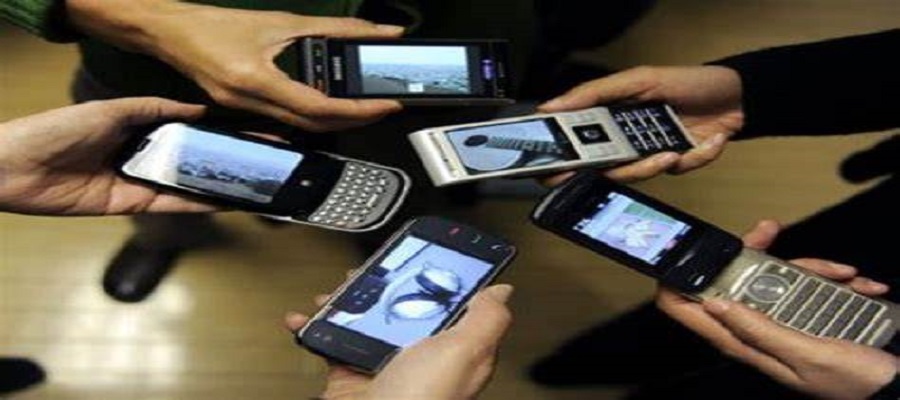
The GSM Association (GSMA) has urged African governments to reduce taxes and levies on entry-level smartphones as part of efforts to accelerate digital inclusion and ensure millions of Africans are not excluded from the emerging artificial intelligence (AI) revolution.

The association warned that about 961 million Africans who are currently covered by mobile broadband networks are not using the services due to affordability challenges, particularly the high cost of smartphones.
The call was made at the Digital Africa Summit, organised by GSMA in partnership with the African Telecommunications Union (ATU), which brought together regulators, policymakers and industry stakeholders to discuss strategies for improving connectivity and driving digital transformation across the continent.
Speaking at the event, Caroline Mbugwa, senior director, Public Policy and Communications, GSMA Africa, said affordable smartphones and reliable connectivity were essential for unlocking the benefits of AI across sectors including healthcare, education, transport and commerce.
Mbugwa noted that while mobile broadband coverage has expanded significantly across Africa, a large number of people remain unable to access digital services because they cannot afford smartphones.
She stressed that fiscal reforms, particularly the removal of taxes on entry-level devices, were urgently needed to make smartphones more accessible to low-income users.
According to her, South Africa’s decision to remove a nine per cent luxury goods tax on entry-level smartphones helped accelerate adoption of smart devices and reduce dependence on feature phones.
“We are now entering what we call the era of intelligence, and the era of intelligence requires that we have an already existing robust infrastructure, robust connectivity that can support the growth of artificial intelligence on the continent.
“We have a whole 961 million Africans that are covered by mobile broadband services but are not using the service. This is what we refer to as a usage gap. If this remains unaddressed, it means that this number will be left behind when it comes to the adoption of AI.
“This signals that there is demand for adoption of smart devices. Customers are willing to actually use the service. Affordability is the challenge,” she said.
Also speaking, Michaela Angonius, head of Global Policy and Regulatory Team at GSMA, said African countries must adopt policy reforms that encourage investment, expand connectivity and reduce barriers to digital access.
Angonius, who oversees global regulatory and policy issues covering areas such as fiscal policy, competition and network deployment, cautioned against adopting a one-size-fits-all approach to reforms across the continent.
She said findings from the Digital Africa Index showed that while some countries, including South Africa, had made significant progress, others still needed deeper regulatory reforms to improve their digital ecosystems.
She identified three major areas requiring attention: modernising licensing frameworks, improving the use of Universal Service Fund (USF) resources and adopting smarter approaches to quality of service regulation.
According to her, many African countries still operate technology-specific licensing systems, which do not align with the rapid evolution of digital technologies.
Angonius advocated for technology-neutral licensing frameworks that would allow different communication providers, including satellite operators, mobile network operators and internet service providers, to operate under the same regulatory principles.
She explained that the growth of satellite services had exposed weaknesses in existing licensing structures, as regulators often struggle to determine how to classify new technologies.
On Universal Service Funds, Angonius said the existence of unused funds in many countries effectively creates an additional tax burden on telecom operators, which eventually increases costs for consumers.
She warned that such additional costs could worsen the digital divide at a time when Africa is already struggling with smartphone affordability and connectivity challenges.
The GSMA executive also called for a review of quality of service regulations, arguing that countries with the best digital service quality are not necessarily those with the most detailed regulatory requirements.
She said governments should instead focus on policies that encourage investment, expand coverage to underserved communities and improve access for people who remain disconnected.
Angonius further advised finance ministers across Africa to remove levies placed on entry-level smartphones to lower the cost of first-time device ownership.
“Those countries with the best quality of service are not necessarily the countries that have detailed quality of service regulation. Rather, they have focused on how to get the investment right.
“If you have a levy on any handset, firstly, if you can, as a finance minister, remove it. If you can’t, at least remove it from those entry-level handsets that should be affordable for everyday users,” she said.
She added that Nigeria, like other African countries, could benefit from reforms that promote investment, address societal needs and ensure consumers gain long-term value from digital transformation.

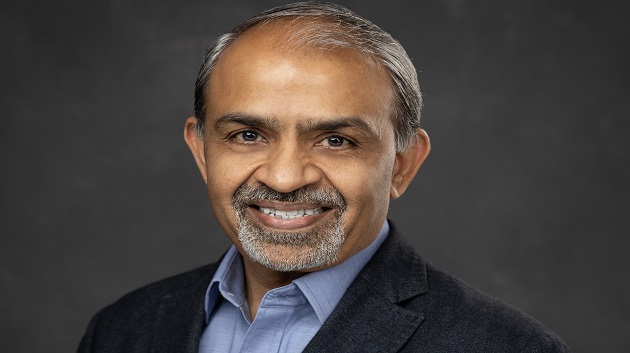
Airtel Africa has confirmed that the London Stock Exchange is its preferred listing venue for Airtel Money in 2026, as the group looks to unlock value from its fast-growing fintech business.

The highly anticipated listing aims to maximise market opportunities, with analysts reportedly anticipating a valuation of around $10 billion.
The announcement came as the telecoms operator reported strong first-quarter (Q1) results on Thursday, with surging data usage and mobile money transactions driving double-digit revenue growth across its markets.
The group reported revenue of $1.85 billion, up 31% in reported currency and 21.1% in constant currency, underscoring robust demand for digital and financial services.
Mobile money remained a standout performer, reinforcing its role as a key growth engine. Total transaction value reached an annualised $245 billion, up 51.5%, while the customer base grew 23.3% to 56.5 million users.
“Our focus on deepening financial inclusion through increased customer adoption, broader use cases and a stronger digital payments ecosystem enabled higher usage and facilitated continued average revenue per user growth, reinforcing Airtel Money’s growing role as a trusted digital financial services provider,” the company said.
Sunil Taldar, CEO of Airtel Africa, said the company is leveraging digital platforms, data and artificial intelligence to enhance customer experience and support long-term growth.
“We have started this year with another pleasing performance. Our continued focus on the customer experience translated into accelerating customer base growth across all business segments,” he said.
Taldar said a London listing would provide access to a broader international investor base and support the telco’s ambition to unlock long-term value from one of Africa’s leading fintech platforms.
Data usage per customer rose from 7.8GB to 10.6GB per month, driving a 56.3% increase in network traffic, while smartphone penetration reached 51%, reflecting continued digital adoption.
Accelerated network investment drove capital expenditure (capex) of US$389 million, up from $121 million in the corresponding period last year.
“Supported by an elevated pace of deployment, we added more than 920 sites during the quarter, our highest first-quarter site rollout, while further expanding our fibre network to 82,100km,” the company said.
Airtel’s cost-efficiency programme supported EBITDA margin resilience, with the margin remaining at 50.1% in Q1.
However, the company warned that higher energy costs linked to geopolitical developments could increase inflationary pressures and weigh on margins in the near term.
Despite this outlook, the operator said its investment programme remains on track, with spending brought forward to support demand and capture growth opportunities linked to Africa’s digital transformation.
Telecom
How a Security Guard’s Story Inspired Omolola Rebecca to Build an Award-Winning Agritech Startup


A conversation with a security guard who doubled as a farmer has earned Omolola Rebecca, founder of Agrovest, the top prize at the Abuja edition of The Gathering on 100 Pitchathon. Rebecca won ₦2.5 million after pitching Agrovest, an agritech platform that connects farmers with community funding to help them access the capital needed to expand their farms.

The Pitchathon, one of the experiences at The Gathering on 100, is an MTN Nigeria initiative that supports young entrepreneurs with funding, mentorship and business visibility.
The inspiration for Agrovest came from an encounter Rebecca never expected would shape her entrepreneurial journey. She recalled meeting a security guard who would leave his job during the farming season to return to his village and cultivate his farm.
Although he was passionate about farming, he struggled to expand because he lacked access to finance. The experience made her realise that many smallholder farmers face the same challenge.
“I met a security guard who was also a farmer. Every planting season, he would travel back to his village to work on his farm. He was hardworking and committed, but he couldn’t grow because he didn’t have the funding to scale.
“That was the moment I realised this wasn’t just his problem. It was the reality for many farmers across the country,” she said.
Determined to address the challenge, Rebecca founded Agrovest. The platform provides community-backed funding that enables farmers to access capital, improve productivity and grow sustainable agricultural businesses.
She described her victory at the Pitchathon as a significant milestone for the business. “This win means more people will notice Agrovest. It puts us in front of investors and partners who can help us grow. Beyond the funding, it gives us credibility and opens doors that will help us reach more farmers and create even greater impact,” she said.
Presenting the prize to the winner, Lanre Coker, Manager, Customer Acquisition and Compliance, North-West, MTN Nigeria, said The Gathering on 100 is designed to help young Nigerians unlock their potential by giving them opportunities to grow their ideas.
“The Gathering on 100 is about helping young Nigerians achieve the height of their endeavours, whatever they may be. Through initiatives like the Pitchathon, we are creating opportunities for innovators to access funding, mentorship and the confidence to keep building,” he said.
Rebecca’s story was one of the defining moments of the Gathering on 100 Pitchathon in Abuja. It demonstrated how everyday encounters can inspire practical solutions to real-world problems.
Her victory also reinforced The Gathering on 100’s growing reputation as a platform where promising ideas receive the support they need to become successful businesses.

Nigeria Leads Africa in Online Gambling Regulation – GCI

CBN Has Not Published Annual Financial Statements Since 2022 despite Legal Requirement

ChatPay Unveils Public Waitlist for WhatsApp-Based Banking Platform

GSMA Says High Smartphone Costs Threatens Africa’s AI Future

Dangote Refinery Completes Landmark $2.5bn Private Equity Placement

NRC, Ponzi Scheme Collapses Resulting Loss of Billions of Naira

NASENI Moves to Digitize CCB’s 5m Assets Declaration and Operations

Lebara Nigeria Launches Lebara Play, Africa’s First Telecom-Owned Micro-Drama Platform

Tokenization, Blockchain Technology will Transform Financial Institutions – IMF

EFCC Busts NIS Visa Overstay Racket, Uncovers N700m in an Account




 General News2 days ago
FG Launches C.L.I.C.K.D., Consumer Credit Scheme for Tech Devices

 Telecom2 days ago
Airtel Nigeria Expands Retail Footprint to Strengthen Customer Access Nationwide

 Telecom2 days ago
MTN Nigeria Opens Applications for Next Afrobeats Star Season 2 with Bigger Prizes

 Telecom2 days ago
Kaspersky Survey Highlights the Need for Smartphone Security

 News2 days ago
NPC Opens Nationwide Digital Birth, Death Registration Platform

 E-Financial2 days ago
CBN Retains Interest Rate at 26.5% as Cardoso Cites Global Uncertainty Despite Inflation Drop

 E-Business2 days ago
Ovaloop Technologies Unveils Digital Tools to Formalize SMEs Operations Across Africa

 Telecom2 days ago
Why Africa’s Top ICT Ministers Are Gathering in Abuja This Week