

Telecom
Globacom 5th Anniversary: Building Africa’s Biggest Network

Precisely Friday, August, 29th Globacom will be celebrating five years of its operation as a telecommunications company in the country.
Globacom, Nigeria’s Second National Operator launched its operations on August 29, 2003 two years after digital mobile telecommunication (GSM) was introduced into the country. However, with its entry into the Nigerian market with the elusion Pay by the Second Billing platform, the company has continued to dedicate the pace both in terms of services delivery, extent of coverage and innovations. It was founded, and indeed operates with the passion to re-ignite the African spirit. The network has proved, in just five years of operation, that the African can match the best anywhere in the world. Globacom is building a network that reflects the resilience, the energy, excellence and true nature of Africans; one that will make Nigerians proud and ultimately become the pride of the continent. Founded on a vision of being the largest and most successful had acquired over 17 million subscribers with coverage extending to over 50,000 cities, towns, and communities. These are records still unbroken in the history of telecommunication in Africa. It is perhaps its impact on people that resonates through out the industry. Globacom immediately forced down the cost of telephone services with the crashing of GSM tariffs and SIM costs making telephony more accessible. Nigerians have not yet forgotten how Glo gave them the golden opportunity to be charged either by the minute or by the second. Indeed, that over 30 million Nigerian students, artisans, and countryside dwellers can today use the telephone is hugely attributable to the Globacom revolution. Through its value added services, the company has brought to Africa more benefits of modern technological innovations. The handset has become a tool for empowerment, entertainment and connectivity to the worldwide web.
How fast time runs. How splendid, Globacom, the idea Otunba Mike Adenuga saw five years ago has helped Nigerian telecommunications operations in no little ways. He deserves kudos because if he were a politician, he may had ferried the idea to another country, just the same way we have read corrupt government officials fiery our money, their loot, into foreign countries, thereby resulting to the impoverishment of the citizenry.
It is believed that one thing that has brought smiles to the management of Globacom and its subscribers is the achievement that Globacom has made within five years in the telecommunications operations.
Like many entrepreneurial industries that suffer lose, Globacom has not entertained fear of such since its emergence in August 29, 2003. Rather, it is of the view of new things to be achieved, being optimistic that what it has achieved so far is the beginning of success, thereby emboldening the stoic spirit of its subscribers on high-ranked service.
In this regard as well as to prove that it is thoroughly an African network of choice that the company has started extending its operations to neighbouring African countries in line with its philosophy of bringing joy of communications required for them to rule their world as well as empower them with the tool of communications.
To this end, it has launched Global System for Mobile communications service in Republic of Benin and has won operating license in Ghana.
This feat has positioned Globacom as Africa network operator and not only Nigeria operator.
On the gateway business, Globacom declared that it is one of the largest carriers of voice traffic in Africa carrying over 3 billion international minutes annually. At the local scene, Glo is the gateway for most network operators in Nigeria and the surrounding African countries and has built strategic partnerships with 43 Tier One Carriers (35 TDM and 8 VoIP) with a total of 618 E1s. Telcos like AT&T, BT, France Telecom, Sprint use Glo to connect to their customers in Africa.
Just last week, Globacom said its 9,200 km international submarine cable, Glo 1, being configured from Portugal to Lagos, will berth in Lagos early next year.
Globacom said in a statement that the submarine cable would enhance quality of its services. It added that the cable, which had so far covered 4,500 km to Lagos, would pass through 15 countries.
According to Globacom, the submarine cable would enable Glo to provide quality service through multiple redundant and high quality direct links to various countries across the world. It would enable it to interconnect with many international networks and leading traffic carriers in the West African region.
According to the company, more countries have indicated interest in getting connected to Glo through the international submarine cable, and had already started exchanging communication with some of these countries on how they could latch on to the facility as soon as possible.
The company said that Glo 1, the first submarine cable in the world to be individually financed, was being built by Alcatel, a provider of cable.
Glo’s international roaming services involve 193 networks in 98 countries and provide services on voice, Short Message Service (SMS), General Package Radio Service (GPRS) roaming and BlackBerry services. It also provides bulk sale of bandwidth and offers access to 804 networks in 174 countries via International SMS.
With the success story of Globacom, within this short period, it has grown from an ordinary GSM company, to a giant company that its biography cannot contain in a 1000 page book. With total solution, Globacom is on the ebullient side to still empower its over 17 million subscribers as it rolls out its fixed services commercially in Abuja and Lagos. This would follow the completion of the fibre optic laying in most parts of the country.
Globacom has been ahead of completion in spite of the fact that it started behind its competitors, having acquired the Third Generation project license, otherwise called 3G, which is the advanced technology of the 2.5G technology; which is currently used by telecommunications operators in Nigeria. The company was among the first operators that demonstrated the technology explaining the capacity of its network to deliver 3G services to its teeming subscribers.
The duty of the 3G is to promote telecommunications service with capability for seamless transmission. It will as well receive high quality sound, data and picture messages by fixed and fast-moving subscribers.
Globacom’s growth in Nigeria has been phenomenal. Starting two years behind other operators in Nigeria, the network has become the fastest growing in Africa and the Middle East region and is the third fastest growing network in the world. In 2006, alone, Globacom added six million subscribers to its network.
Aside building a strong telecommunications network in Africa and Nigeria, Globacom has also exhibited that affinity with the society is the company’s second nature. It lives and breathes the people.
Although, it made business sense to launch into the market, never in the history of Nigeria has any organization displayed such deep sense of responsibility and commitment to the development of the Nigeria state. From its corporate persona through its business decisions to the huge deployment of resources; to the unbroken support for Nigeria and Nigeria’s interests, Globacom has come to represent the can-do Nigerian/African spirit.
Globacom as the foremost network in Nigeria adopted a strategic focus on people-resonant initiatives in education, health and the development of the Nigeria community. The network’s sponsorship of sports is predicated on the role of sports as a national unifier. With soccer, in particular, all the ugly characteristics of tribe favouritism and nepotism give way to unity and comradeship.
To support this national icon, Globacom has to date committed over N10 billion on football and other sports. For two consecutive years Nigerian league had no sponsors and the Nigerian Football Association, now Nigerian Football Federation was finding it difficult to organize the competition. It was in this state that Globacom gave the league the life line it required for survival. Glo signed a four year deal with the Nigerian Football league worth about N4 billion for the sponsorship of the Globacom Premier League.
Globacom recognizes that in a match, victory is not only won by the strength of the players but also by the cheers of their supporters. And to enhance the performance of Nigerian teams, the company has taken over the sponsorship of the Nigerian Supporters Club.
There has also been a major partnership between Globacom and Niger Delta Development Commission (NDDC), towards eradication of poverty in the region. The programme, tagged Self Employment Business Support provides employment opportunities for youths in the region. The initiative is to empower Nigerians and help them become self reliant. This effort is complemented with another partnership with Shell Petroleum Development Corporation (SPDC), to assist unemployed youths of the oil producing but impoverished Niger Delta region set up their own business.
Indeed, Globacom has with five years of operations achieved a lot in both its core business of building telecommunications capacity as well corporate social responsibility. As the telecommunications giant in Africa is trying to stamp its feet in world’s telecommunications landscape, Nigerians are wishing the company well and encouraging it not to relent in this effort.


The Nigerian Communications Satellite Limited (NIGCOMSAT) has unveiled Accelerator Cohort 3.0 as part of efforts to strengthen Nigeria’s space technology ecosystem and support the growth of local startups.

The initiative will be a major highlight of the 2026 Nigerian Satellite Week scheduled to hold on March 30 and 31 in Abuja, where key players in the satellite and digital infrastructure sectors are expected to converge.
In a statement signed by Stephen Kwande, the Head of Corporate Communications, the company described the new accelerator as its most direct investment in building long-term competitiveness within Nigeria’s space economy.
According to NIGCOMSAT, the programme is designed to support early-stage ventures working across satellite applications, last-mile connectivity, agriculture, logistics and other areas where space-based technology can drive impact.
The company said previous cohorts of the accelerator had already contributed to developing innovative solutions and building the human capacity needed to position Nigeria for the next phase of the global space industry.
“With Cohort 3.0, we are making it clear that the accelerator is not a pilot project but a permanent feature of how Nigeria develops its space-tech companies,” the statement said.
NIGCOMSAT noted that the Nigerian Satellite Week has grown into a major platform for policy discussions, partnerships and investment in the sector.
The 2026 edition is expected to attract top government officials, defence leaders, development finance institutions and technology entrepreneurs from across Africa.
Jane Egerton-Idehen, managing director of NIGCOMSAT, said the event also marks two decades of Nigeria’s journey in the space economy.
“Twenty years ago, Nigeria took a bold step to secure its place in space. What we are seeing today is the result of consistent effort and vision,” she said.
She added that the company is focused on shaping the next phase of growth through innovation, partnerships and investment in local talent.
NIGCOMSAT also highlighted recent milestones, including a Low Earth Orbit connectivity partnership with Eutelsat, improved revenue performance and increased global recognition in satellite operations.
Other activities lined up for the event include a Startup Demo Day, where selected African startups will pitch their ideas to investors, and a stakeholders’ forum to discuss policies and infrastructure needed to scale Nigeria’s satellite economy.
The company said the initiative reflects the growing role of satellite technology in national development, particularly in areas such as communications, security and digital services.
NIGCOMSAT, established in 2006 and wholly owned by the Federal Government, provides satellite-based services including telecommunications, broadcasting and broadband across Nigeria and parts of Africa.
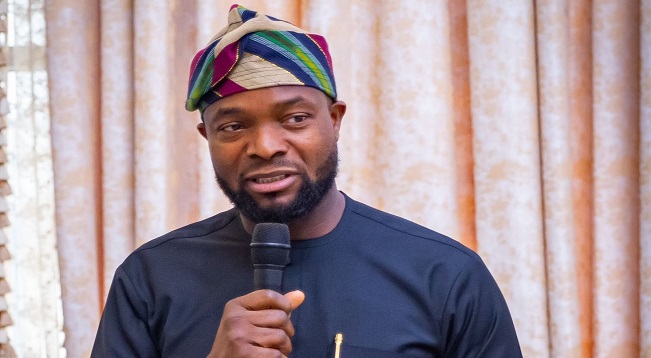
The Federal Government has unveiled a N12bn Digital Economy Research Fund aimed at strengthening evidence-based policymaking and supporting Nigeria’s long-term digital transformation agenda.

Dr. Bosun Tijani, the Minister of Communications, Innovation, and Digital Economy, disclosed this in a statement issued on Saturday, announcing the launch of an expression of interest for the National Digital Economy Research Clusters.
“Today my heart is filled with deep joy as we announce the Expression of Interest for the National Digital Economy Research Clusters, a N12bn research funding scheme designed to place ideas, evidence, and research at the centre of Nigeria’s digital transformation,” the minister said.
According to him, the programme is being funded under Project BRIDGE, a federal initiative to deploy 90,000 kilometres of fibre optic backbone infrastructure across Nigeria to expand connectivity and enable a modern digital economy.
“This programme is being funded under Project BRIDGE, our initiative to deploy 90,000km of fibre optic backbone infrastructure across Nigeria to expand connectivity and enable a modern digital economy,” he said.
The minister noted that as the government expands digital infrastructure nationwide, research-backed approaches are required to ensure inclusive benefits.
“As we deepen our digital infrastructure coverage, thoughtful, evidence-based approaches are required to be deployed in society to ensure everyone benefits from this significant investment,” he added.
He observed that digital policy decisions are often shaped by market forces and political cycles rather than rigorous research and long-term thinking. “Too often, the ideas shaping digital policy come predominantly from markets and political cycles rather than from research, evidence, and long-term thinking,” the statement said.
Under the initiative, six national research clusters will be established across key pillars of the digital economy, including connectivity and meaningful use; digital public infrastructure and government services; digital skills and human capital development; digital economy and jobs; online trust and consumer protection; as well as artificial intelligence and emerging technologies.
The clusters will be led by up to 36 professors drawn from Nigerian universities, working alongside international academic partners, with more than 200 researchers, including postdoctoral fellows and PhD candidates, expected to generate policy-relevant research.
“For me, the goal goes beyond research output. We are looking for better policies that lead to stronger institutions and a more prosperous society,” the minister said.
He described the initiative as one of the ministry’s most meaningful programmes, noting that it is intended to produce ideas that will outlast any single administration. “Because nations that lead the future are not simply those that deploy infrastructure; they are the ones that cultivate ideas,” he said.
The ministry invited academic and research institutions interested in participating to review the Terms of Reference released alongside the EOI and submit proposals to lead or collaborate within the national research clusters.
It added that a press conference would be held in the coming week to provide further details and engagement opportunities for vice-chancellors and research institutions across the country.

Nigerian Communications Commission (NCC) has directed Mobile Network Operators (MNOs) to compensate subscribers experiencing poor network service across the country.

The Commission said the directive was part of efforts to ensure that consumers are not made to bear the burden of service failures when operators fall short of required standards.
Under the new regulation, telecom operators will be required to provide compensation directly to affected subscribers for breaches of Quality of Service (QoS) Key Performance Indicators (KPIs).
According to the NCC, the compensation will be issued in the form of airtime credits, calculated based on subscribers’ average usage and their presence within specific Local Government Areas where service disruptions occur.
The Commission emphasised that telecommunications services remain critical to economic activities, social interactions, and access to digital opportunities, noting that poor service delivery negatively impacts productivity and public confidence.
It explained that while regulatory fines have traditionally been used to sanction operators, the new approach prioritises consumer protection and strengthens accountability within the telecommunications sector.
The NCC added that the measure would complement existing efforts to monitor service quality and enforce compliance with performance standards.
In addition, the Commission directed tower companies responsible for telecom infrastructure, such as network masts, to reinvest fines imposed on them into infrastructure upgrades with measurable outcomes.
The regulator reiterated its commitment to ensuring that operators invest in network resilience, expand capacity, and improve infrastructure to meet growing demand.
It also pledged to continue deploying regulatory mechanisms that promote fairness, transparency, and accountability across the industry, while ensuring that subscribers receive the quality of service they deserve.

ARN Rejects Medical Bill over Attempt to ‘Scrap’ Profession

Meningitis Kills a Quarter Million People a Year -Study

NIGCOMSAT Supports Startups Growth with the Launch of Accelerator 3.0

Stakeholder says AI is Crucial to Nigerian Data Centres Amid Persistent Grid Collapse

NFVCB Boss Urges Stronger Distribution Channels @ Coal City Film Festival 2026

Spotify’s Loud & Clear Report Reveals Over ₦60Bn Revenue for Nigerian Artists in 2025

Madonna University Taps Tech Guru Adote for Strategic Board Role

China Threatens to Shut Nigeria’s Satellite Over $11.44m Unpaid Debt

Jumia Tech Week 2026 Begins with Tech Deals on Smartphones, Electronics, and Everyday Technology

FCCPC Bans Lagos ‘No Refund’ Policy, Vows Fines and Shutdowns for Traders




 Telecom3 days ago
Google Rolls Out Search Live AI to 200+ Countries, Including Nigeria

 E-Financial3 days ago
CBN Bars Chronic Loan Defaulters from Accessing Loans

 E-Financial3 days ago
NDIC Insures 99 Percent of Bank Customers

 E-Business3 days ago
FG Shifting Focus to “Meaningful Connectivity” to Drive Inclusion – Minister

 General News3 days ago
Anti Graft Agencies Raise Alarm over Rising Crypto-Linked Financial Crimes

 E-Business3 days ago
NITDA Takes Over National Digital Architecture System

 E-Financial21 hours ago
CBN bars large‑ticket loan defaulters from banking services in tough new crackdown
 General News21 hours ago
ARN Rejects Medical Bill over Attempt to ‘Scrap’ Profession