

/home/kenneth/web/nigeriacommunicationsweek.com.ng/public_html/wp-content/themes/zox-news/parts/post-single.php on line 153
">
Warning: Undefined array key 0 in /home/kenneth/web/nigeriacommunicationsweek.com.ng/public_html/wp-content/themes/zox-news/parts/post-single.php on line 153
Warning: Attempt to read property "cat_name" on null in /home/kenneth/web/nigeriacommunicationsweek.com.ng/public_html/wp-content/themes/zox-news/parts/post-single.php on line 153
Gokeson Boss Makes Case for Courier Industry

Dele Olagoke, managing director of Gokeson Courier Services, has called on the government to help the courier sector grow by making things work for the citizenry.
He complained that courier companies and other businesses groan under a lot of foundational problems that do not dispose to making profits for the investor.
Olagoke pointed out that transportation is the backbone of the postal business but says that the road network in Nigeria is very poor and as such one finds it very difficult to interconnect.
Emphasizing that speed is the hallmark of the courier service, Olagoke said that the poor network of the roads and the present nature of the few kilometer roads we have are most of the times dotted with pot- holes and that such negates the spirit of the courier service, which is fast and prompt delivery of goods and services.
Now that a lot of people are going into logistics which in a simple language he said means transportation, Olagoke lamented the absence of rail transport system in the country which would have reduced the pressure from the motor roads.
In the area of technology, he urged government to improve our technology saying that the way we use our technology here is not the same way it is being used abroad. He said "Over there every thing works. There is availability of information and all the information you need is in the system. Even with your phone number alone, you are giving out a lot of information about yourself."
Olagoke said that information and communication technology makes things easier and that it has helped courier companies a lot as it has reduced cost of operation for them. He said that before the arrival of ICT that it was difficult communicating with his partners abroad as they were required to make telephone calls then or send fax messages but now internet has made for easy and effective communication.
However, even with this development, he still believes that not a lot of people have access to the internet and even at that the internet connections are not working very well. He said that people are supposed to use the internet to track their consignments or mails as clients are usually given the tracking number for them to monitor the movements of their goods from where ever they may be, but the level of our technology has made such service the exclusive preserve of few people who could afford the cost.
Further, Olagoke said power is a major challenge for most Nigerians. Even in the area of Information and Communication Technology, he emphasized that without power nothing can be achieved. Failure in the energy sector, he said has affected all the other sectors of the economy and he calls on the government to address the perennial energy problem once and for all.


Warning: Undefined array key 0 in /home/kenneth/web/nigeriacommunicationsweek.com.ng/public_html/wp-content/themes/zox-news/parts/post-single.php on line 493
Warning: Attempt to read property "cat_ID" on null in /home/kenneth/web/nigeriacommunicationsweek.com.ng/public_html/wp-content/themes/zox-news/parts/post-single.php on line 493

Economic and Financial Crimes Commission (EFCC) has warned of rising cryptocurrency-related crimes, revealing that illicit digital currency transactions exceeded $160 billion globally in 2025.

Ola Olukoyede, chairman, raised the concern during the inauguration of the United Nations Office on Drugs and Crime Country Programme for Nigeria (2026–2030) in Abuja.
Olukoyede, warned that digital currencies such as Bitcoin are increasingly being exploited by criminal networks to move funds across borders undetected.
According to him, advances in technology, weak regulatory frameworks, and gaps in global financial systems have created fertile ground for cyber-enabled financial crimes.
The anti-graft agency boss stressed that tackling cryptocurrency crime required coordinated national strategies, stronger institutions, and intelligence-driven enforcement.
According to him, the new UNODC programme comes at a critical time when Nigeria and the global community are facing growing threats from organised crime, cybercrime, and illicit financial flows.
Olukoyede described the initiative as a strategic platform to strengthen the rule of law, improve the criminal justice system, and protect citizens from financial and violent crimes.
Musa Aliyu, chairman of the Independent Corrupt Practices and Other Related Offences Commission (ICPC), in his comments, called for stronger inter-agency cooperation.
Aliyu said Nigeria faced interconnected threats, including violent extremism, smuggling, organised crime, and illicit financial flows, warning that no single agency could address them alone.
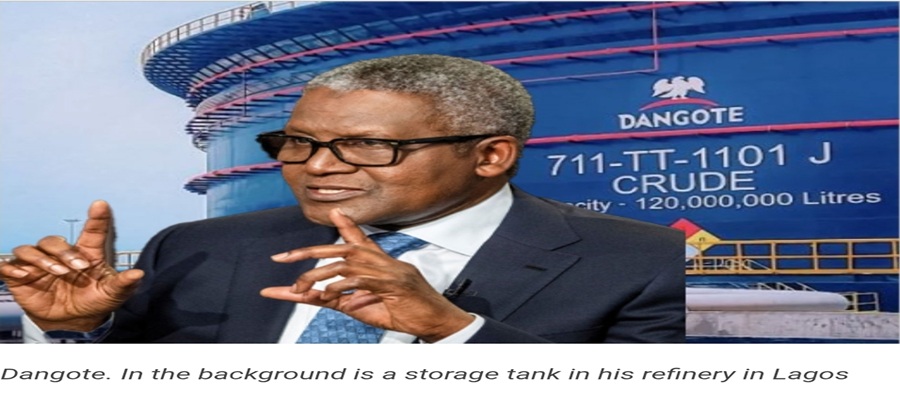
Dangote Petroleum Refinery and Petrochemicals (DPRP) has debunked recent circulation of unauthorised information regarding a potential Initial Public Offering (IPO).

In a statement, DPRP noted that several online platforms and unofficial sources have published unverified, and in some instances inaccurate, information relating to a potential offering.
“Such reports do not originate from DPRP and should be treated with caution. All official updates regarding any potential transaction will be communicated strictly through DPRP’s formal public disclosures and announcements issued by its appointed advisers, in line with applicable laws and regulatory requirements.
“Accordingly, the public, investors, and all market participants are strongly advised to disregard speculative commentary and rely solely on verified information formally issued by DPRP or its authorised representatives,” the statement said.
The firm assured stakeholders that, when appropriate, comprehensive, and accurate details regarding any proposed transaction will be made available through official channels, including regulatory filings, authorised press releases, and coordinated communications by the Enterprise and its appointed advisers.
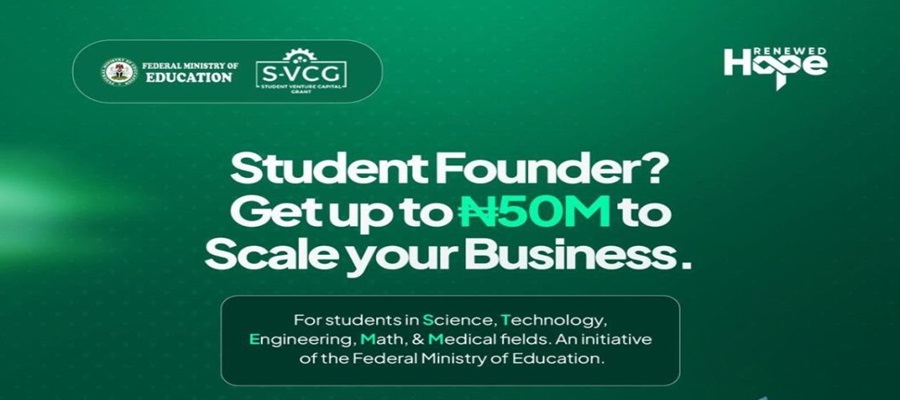
Federal government has awarded N50 million each to 45 students selected from 65 finalists drawn from public and private tertiary institutions nationwide under the Student Venture Capital Grant (S-VCG).

Tunji Alausa, minister of Education, unveiled the initiative at the weekend at the United Nations Development Programme Innovation Hub in Ikoyi, Lagos, describing it as a bold step toward positioning Nigerian youth as drivers of global innovation.
Alausa said the programme marked a significant shift in education policy, aimed at empowering students through innovation, entrepreneurship, and skills development. He noted that the grant offers equity-free funding, mentorship, incubation, and access to digital tools.
He explained that the beneficiaries emerged after a rigorous selection process involving over 30,000 applicants from more than 400 tertiary institutions across the country, culminating in a three-day bootcamp and pitch session before industry experts.
According to the minister, the initiative is designed to transform tertiary institutions into hubs of innovation and economic development, enabling students to move from ideation to commercialisation and become job creators.
“Today is not just another programme event. We are activating a new future for Nigerian students where great ideas are nurtured into impactful solutions,” he said.
Also speaking, Suwaiba Ahmad, minister of State for Education, described student entrepreneurship as a critical national strategy for job creation and economic growth. She emphasised the need for institutions to move beyond theory and support students in translating ideas into viable enterprises.
Similarly, Bosun Tijani, minister of Communications and Digital Economy, commended the initiative, urging beneficiaries to focus on building sustainable and impactful solutions rather than pursuing short-term gains.
He advised students to adopt consistency and long-term thinking, noting that small, sustained efforts could lead to meaningful innovation and societal impact.
In her goodwill message, Elsie Attafuah reaffirmed the commitment of the United Nations to supporting Nigeria’s innovation ecosystem.
She encouraged beneficiaries to refine their ideas, respond to market needs, and contribute meaningfully to national development through innovative solutions.
The minister acknowledged key partners, including the UNDP, Google, and the Bank of Industry, for their support in implementing the initiative and expanding opportunities for young innovators across Nigeria.

EFCC Waxes Worriedly over $160Bn Crypto Crime Losses

Dangote Refinery Debunks Speculations on IPO

FG Awards N50m Each to 45 Students under S-VCG

NGX REGCO Fines 5 Firms N291m for Market Manipulation

FG Launches Cross-Border Digital Payments Report

Spotify’s Loud & Clear Report Reveals Over ₦60Bn Revenue for Nigerian Artists in 2025

Madonna University Taps Tech Guru Adote for Strategic Board Role

China Threatens to Shut Nigeria’s Satellite Over $11.44m Unpaid Debt

Jumia Tech Week 2026 Begins with Tech Deals on Smartphones, Electronics, and Everyday Technology

FCCPC Bans Lagos ‘No Refund’ Policy, Vows Fines and Shutdowns for Traders



 General News3 days ago
Anti Graft Agencies Raise Alarm over Rising Crypto-Linked Financial Crimes

 E-Business3 days ago
NITDA Takes Over National Digital Architecture System

 E-Financial1 day ago
CBN bars large‑ticket loan defaulters from banking services in tough new crackdown

 General News1 day ago
ARN Rejects Medical Bill over Attempt to ‘Scrap’ Profession

 Telecom1 day ago
NIGCOMSAT Supports Startups Growth with the Launch of Accelerator 3.0

 News1 day ago
Stakeholder says AI is Crucial to Nigerian Data Centres Amid Persistent Grid Collapse

 Telecom1 day ago
FG Unveils Digital Economy Research Fund Scheme

 News1 day ago
Meningitis Kills a Quarter Million People a Year -Study