

Telecom
Google Arts & Culture Launches Mali Magic & Timbuktu Manuscripts

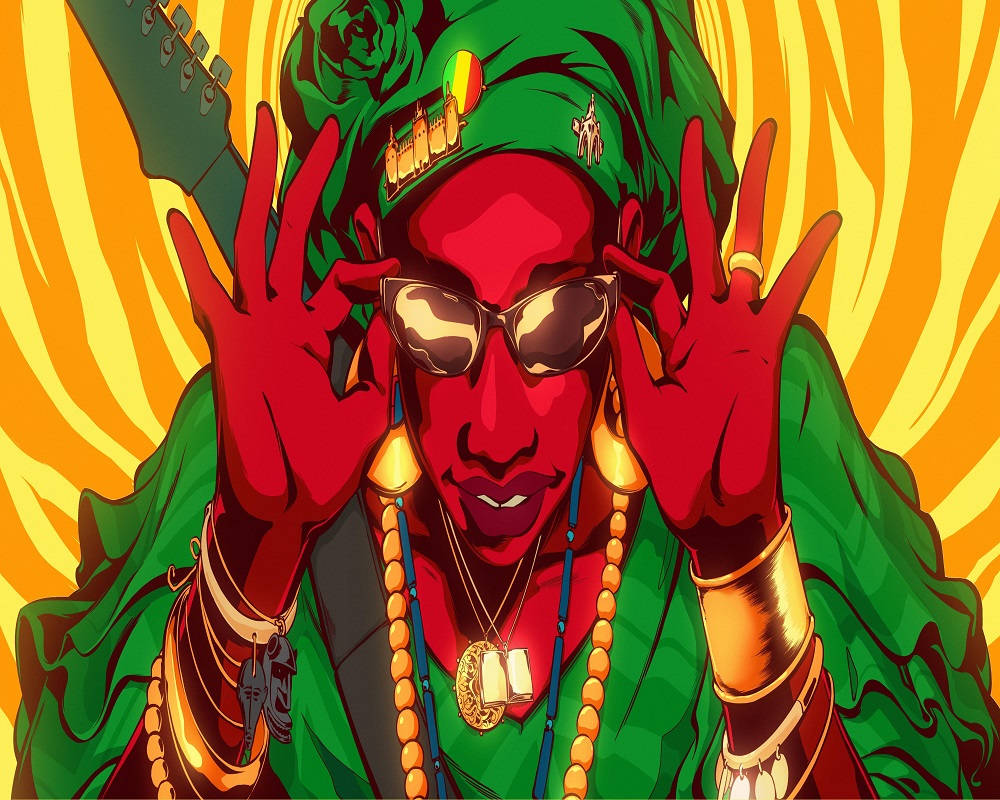
Google on Wednesday launched Mail Magic, a digital treasure trove which aims to preserve and showcase Mali’s historic and contemporary art and culture.

Since 2015, Google Arts & Culture has been working with local and international organisations (see list below) to digitise, curate and share Mali’s incredible stories and rich heritage.
Together with its local partners Google Arts & Culture identified four key pillars of Malian culture – manuscripts, music, monuments and modern art – and worked closely with local communities and experts to digitally document the country’s rich art, architecture, scholarship and musical tradition, and to share stories of its resilience in the face of political struggles with the world.
With the launch of Mali Magic, people from all over the world can view an array of manuscripts, music, art and heritage sites including over 40 000+ digitised endangered manuscripts many of which were smuggled to safety during political unrest in the country.
It also contains more than 50 exhibits which include the first online, interactive tours of some of Mali’s most significant historic sites, at-risk mausoleums and mosques including the Sidi Yahiya and Djinguereber Mosques and the Tomb of Askia, all created using Street View.
Google Arts & Culture also worked with artist and musician DJ Spooky (Paul Miller) to create short videos to explore the evolution of storytelling, from West Africa to the American blues.
An original album, Maliba, by Malian singer-songwriter Fatoumata Diawara, produced in Mali and written about the country’s cultural legacy, was created exclusively for the project. The collection also contains a wealth of videos and imagery which capture Mali’s contemporary art scene and profile some of its artists.
Says Chance Coughenour, Program Manager and Digital Archaeologist, Google Arts & Culture: “The Malian city of Timbuktu gave birth to an abundance of learning in the fields of human rights, morality, politics, astronomy and literature captured in thousands of manuscripts. When this ancient knowledge was threatened by extremist groups in 2012, local communities raced against time to preserve these treasures. This legacy is now available for people across the world to explore.”
Dr. Abdel Kader Haidara, the ‘badass librarian’ known for smuggling the manuscripts out of Timbuktu, said “[They] are more than important historical documents. Central to the heritage of the West African nation of Mali, they represent the long legacy of written knowledge and academic excellence in Africa, and hold potential to inspire global learning from the actions of the past in confronting modern day issues.”
“The preservation of global heritage is a huge endeavour, “ adds Coughenour, “Many experts, NGOs and cultural institutions work in this space and do an incredible job.
“We are honoured to support our partners with the technology to make their work accessible to people all over the world,” he concludes.
Highlight content available in the Mali Magic project:
40 000+ assets digitised manuscript pages
50+ exhibits on Mali heritage – manuscripts, music, monuments & contemporary art
First ever Street View capture in Mali of 9 heritage sites
3D model and annotated tour of Djenne Mosque
1 music album, Maliba, by Fatoumata Diawara
Organisations working in partnership with Google Arts & Culture on the Mali project include:
SAVAMA – Manuscript Digitization & Curation – which aims to preserve and enhance the Timbuktu Arabic manuscripts that constitute the Islamic cultural heritage of Mali, Africa’s collective memory and part of the world’s heritage.
Timbuktu Renaissance which aims to leverage Mali’s and Timbuktu’s heritage and living culture to promote peace and prosperity
UNESCO, which has published two stories of its efforts to reconstruct mausoleums and ancestral heritage sites targeted during the conflict,
Instruments 4 Africa a non-profit organisation committed to cultural preservation, I4A supports artists to keep their practises alive so they can continue to empower their communities
Brooklyn Public Library, which hosted the launch



Modern messengers, such as WhatsApp, Telegram, Signal and others, are often used for illicit purposes. Kaspersky Digital Footprint Intelligence has conducted an in-depth monitoring of over 800 blocked cybercriminal Telegram channels between 2021 and 2024.

While a range of illegal activities continues to be hosted on the platform, its environment has become noticeably more challenging for sustained underground operations.
Telegram’s bot framework and other built-in features make for a low-effort ecosystem for the underworld.
A single bot can simultaneously manage queries, process cryptocurrency payments, and instantly deliver stolen bank cards, info-stealer logs, phishing kits, or DDoS attacks to hundreds of buyers per day, often without operator involvement.
Unlimited, non-expiring file storage eliminates the need for external hosting when distributing multi-gigabyte database dumps or stolen corporate documents. This frictionless automation naturally favours high-volume, low-price, low-skill offerings, such as leaked bank cards or other data, hosting malware, etc.
High-value, trust-dependent deals (for instance, zero-day vulnerability information) still remain on reputation-gated dark-web forums.
Kaspersky researchers found two clear trends related to illegal activities on Telegram. The average lifespan of shadow channels has increased, with the proportion of channels surviving over nine months more than tripling in 2023-2024 compared to 2021–2022. At the same time, Telegram’s blocking activity has risen significantly.
Monthly takedown figures recorded since October 2024 – even at their lowest – are comparable to the peak levels seen throughout 2023, and the overall pace continued to accelerate in 2025. This impedes malicious activities.
Other disadvantages of Telegram for cybercriminals include the lack of default end-to-end (E2E) encryption for chats, the inability to use their own servers for communication (due to the messenger’s centralised infrastructure), and closed server-side code, which makes it impossible to verify its functionality.
As a result, several established underground communities, including the nearly 9,000-member BFRepo group and the Angel Drainer malware-as-a-service operation, have already begun shifting primary activity to other platforms or proprietary messengers, citing repeated disruptions of their activities on Telegram.
“Fraudsters find Telegram a convenient tool for many malicious activities, but the risk-reward balance is clearly shifting. Channels are managing to stay online longer than a couple of years ago, yet the dramatically higher volume of blocks means operators can no longer count on long-term stability.
“When a storefront or service disappears overnight – and sometimes reappears only to be removed again weeks later – building a reliable business becomes much harder. We’re starting to see the early stages of migration as a direct consequence,” comments Vladislav Belousov, Digital Footprint Analyst at Kaspersky.

Galaxy Backbone Limited (GBB), the Federal Government’s leading ICT infrastructure and shared services provider, will mark its 20th anniversary in June 2026 with a grand celebration that reflects two decades of innovation, resilience, and national impact.

Since its inception in 2006, Galaxy Backbone has been at the heart of Nigeria’s digital transformation journey; building the technological foundation that supports modern government operations and public service delivery. What began as a bold vision to connect government has grown into a critical national platform that drives efficiency, transparency, collaboration and innovation across the public sector.
Over the last 20 years, GBB has helped redefine how government works. By providing secure connectivity, enterprise-grade data centre services, cloud platforms, and digital collaboration tools, Galaxy Backbone has enabled Ministries, Departments and Agencies (MDAs) to move from fragmented, paper-based processes to more integrated, technology-driven systems.
This transformation has improved government-to-government coordination, strengthened engagement with businesses, and enhanced the delivery of services to citizens. Today, the digital infrastructure powered by Galaxy Backbone supports thousands of government users, hundreds of institutions, and critical national platforms that Nigerians rely on daily.
A key part of this journey has been the Federal Government of Nigeria’s investment, managed by GBB in robust national infrastructure, high-capacity and world class data centres, fibre-optic connectivity across multiple states, secure hosting services, and shared platforms that have helped government operate more efficiently and responsively. These contributions have played a pivotal role in Nigeria’s progress toward a more digital, agile and citizen-centered public service.
Galaxy Backbone’s impact has earned both national and global recognition. In 2025, the organisation was ranked first overall in the Federal Government Website Performance Scorecard, reflecting its commitment to excellence in digital service delivery. Internationally, GBB, a couple of years ago, received the prestigious United Nations Public Service Award, a testament to its leadership in promoting a whole-of-government approach to digital transformation.
As GBB celebrates two decades of service, this milestone is more than an organisational anniversary; it is a celebration of Nigeria’s digital evolution. It is an opportunity to appreciate how collaboration between government, industry partners, technology providers, and dedicated public servants has helped build a stronger, more connected nation.
The June 2026 anniversary celebration will bring together stakeholders from across the public and private sectors to reflect on the journey so far, acknowledge the partnerships that have shaped this success, and chart an ambitious course for the future. It will highlight how collective effort, shared vision, and innovation have positioned Galaxy Backbone as a strategic national asset.
Looking ahead, Galaxy Backbone remains committed to deepening digital transformation across the country; expanding infrastructure, strengthening cybersecurity, enhancing service delivery, and supporting the Federal Government’s drive for a smarter, more efficient and digitally empowered Nigeria.
At 20 years, Galaxy Backbone stands proud of its past, confident in its present, and inspired by the limitless possibilities ahead.

Galaxy Backbone Limited (GBB), Nigeria’s leading federal ICT infrastructure provider, has announced its 20th-anniversary celebration for June 2026, marking two decades since unifying government’s fragmented digital landscape into a secure national platform.

Galaxy Backbone
The announcement by Head of Media and Corporate Communications Chidi Okpala follows GBB’s top ranking in the 2025 Federal Government Website Performance Scorecard by the Bureau of Public Service Reforms, cementing its leadership in digital service delivery and transparency.
Managing Director Professor Ibrahim Adepoju Adeyanju described the milestone as celebrating Nigeria’s shift from paper-based silos to a cloud-first, integrated government. Achievements include the UN Public Service Award for 1-GOV.net, high-speed fiber deployment for G2G and G2B interactions, IPPIS payroll rollout, and pandemic-era digital support.
The June event will gather public-private stakeholders, global tech partners, and policymakers to unveil GBB’s next-decade roadmap emphasising cybersecurity, AI in public service, and rural connectivity.
GBB positions itself at the forefront of Nigeria’s 2030 digital nation drive, with 20 years of innovation signaling a smarter, connected future.

SEC Hikes Minimum Capital Requirements for Market Operators After a Decade

Study Shows Blocks in Telegram are Pushing the Underground Out

Galaxy Backbone Marks Two Decades of Powering Nigeria’s Digital Evolution

NGX Unveils Net-Zero Plan for Greener Capital Market

Galaxy Backbone Marks 20 Years, Tops FG Website Scorecard

Banks quietly move to enforce new ₦50 transfer levy from Jan. 1

FIRS says NIN, CAC Numbers to Serve as Tax IDs from 2026

FIRS Declares NIN, CAC Numbers as Tax IDs from 2026

US Begins Partial Visa Ban on Nigerians January 1

Galaxy Backbone Tops FG’s Website Performance Ranking




 E-Financial3 days ago
Paystack Expands Beyond Payments into Banking

 E-Financial3 days ago
SEC Partners Police in Nationwide Crackdown on Ponzi Schemes, Crypto Frauds

 General News3 days ago
EFCC to Use Space Technology to Boost Asset Tracking, Investigations

 E-Financial3 days ago
FG Halts Tax Guidelines Amid Uncertainty Over Final Laws – Oyedele

 E-Business3 days ago
Nigeria Targeted with 4,622 Cyber-attacks Per Week in December 2025

 E-Financial3 days ago
Paystack Buys Microfinance Bank, Enters Nigeria Banking Arena

 News3 days ago
FG Directs Banks, Fintechs to Remit VAT on Service Fees

 General News3 days ago
How to Stay Safe Online During Sales Periods