

Telecom
Google Graduates Lunchpad Accelerator Africa Programme Class 2


Google on Friday graduated Class 2 of its Lunchpad Accelerator Africa Programme in Lagos.
Launchpad is a global mentoring programme that helps startups build and scale great products by matching them with the best of Google – its people, network, and advanced technologies.
Google Launchpad Accelerator Africa is a regional Launchpad – an acceleration programme for top early-stage African startups – that was announced on 27 July 2017 at Google for Nigeria by Google CEO Sundar Pichai, It operates out of Lagos, Nigeria.

Fola Olatunji-David, Head of Startup Success and Services, Google Nigeria, speaking during the graduation ceremony, said, “Over the next three years (2018, 2019, 2020) the Google Launchpad Accelerator Africa programme will provide African startups with over $3-million in equity-free support, working space, and access to expert advisers from Google, Silicon Valley, and Africa. Participants will receive travel and PR support during each three-month program.
“Google announced the first Launchpad Accelerator Africa class on 9 November and applications closed on 10 December 2017.
“On 18 March 2018 Google announced the startups who will participate in the first Google Accelerator Africa Launchpad, including companies from Kenya, Nigeria, South Africa, Ghana, Uganda and Tanzania.
“To qualify, startups had to be a technology startup, based in Sub-Saharan Africa, targeting the African market that had already raised seed funding.
“Google additionally considered the problem the start up is trying to solve, how it creates value for users, and how they addressed a real challenge for their home city, country or Africa broadly.
He noted that Launchpad Class 1 graduated on 8 June 2018, by which time the three month programme had connected the 12 participating startups with more than 20 teams from Google as well as 40 mentors from nine countries including India, the UK, USA and Jamaica.
According to him, “Each received $10 000 in an equity-free cash grant, and between them they have raised over $7 million. The startups have directly created 132 jobs and impacted 4.5 million users.
Launchpad Accelerator Africa Class 2 applications were announced on 8 June 2018 and Google also announced it is extending the program to include startups from a further 11 African countries.
He added that they are now accepting applications from startups in 17 countries across the continent including Egypt, Tunisia, Algeria, Morocco, Zimbabwe, Rwanda, Cameroon, Botswana, Sénégal, Ethiopia, Cote d’Ivoire and the existing six – Ghana, Kenya, Nigeria, South Africa, Tanzania, Uganda.
The Launchpad Class 2 which was announced on 27 August comprises of 11 startups from six countries and they are
AppZone (Nigeria): AppZone builds Software as a service (SaaS) fintech software ecosystems for digital banks, allowing them to reduce operational costs while improving service delivery.
Chalkboard Education (Ghana): Allows educational institutions to make their curricula available via mobile devices (USSD, SMS, and internet). It also lets those institutes gather insights about student learning patterns and helps them create and adapt curricula for the mobile space.
Cloud9xp (Kenya): Cloud9xp is an online marketplace and booking service that allows people to buy and sell experiences in various locations across Africa and the Middle East.
EzyAgric (Uganda): EzyAgric is an on-demand platform that provides inclusive and data-driven access to finance, production and marketing services for farmers and agribusinesses in Uganda. It does so through a network of youth agents equipped with smartphones and other forms of agricultural technology, providing employment and helping farmers improve yields and market access in one go.
Formplus (Nigeria): Formplus allows companies to collect online and offline data through the use of customisable digital forms. The startup also provides analytics based on form answers and allows for payment collection via PayPal, Stripe and Flutterwave
Medsaf (Nigeria): Medsaf is a one-stop, curated medication marketplace for African hospitals and pharmacies.
Mintrics (Egypt): This social video intelligence platform helps brands and agencies understand how people are interacting with their social videos, giving them insight into what is and isn’t working and thereby maximising their ROI.
PayGo Energy (Kenya): PayGo’s smart meter and connected software service allows players in the LP gas (LPG) value chain to better service their customers, driving the adoption of clean cooking fuels.
Pineapple (South Africa): Pineapple’s unique machine learning technology allows users to easily insure individual items using just a mobile app.
Preeva (South Africa): Preeva is an online platform that connects students with young educators who provide tutoring help at school and university.
Thank U Cash (Nigeria): Thank U Cash is an online rewards platform that allows consumers to save and earn loyalty points that can be swapped for cash and merchants to benefit from extra spend.
Class 3 is expected to kick off in 2019.


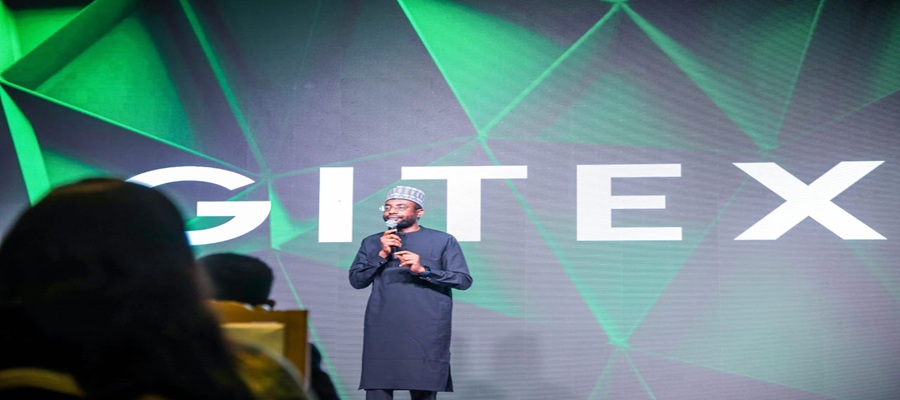
Nigeria is strengthening its position as a leading digital economy in Africa as it prepares to host the second edition of GITEX Nigeria, against projections that the continent’s artificial intelligence (AI) economy could generate up to $1 trillion in economic value by 2035.

GITEX Nigeria
GITEX Nigeria, described as West Africa’s largest technology, AI and startup event, is scheduled to hold in Abuja and Lagos from Aug. 31 to Sept. 3, under the patronage of President Bola Tinubu.
The event is supported by the Federal Ministry of Communications, Innovation and Digital Economy in collaboration with the National Information Technology Development Agency (NITDA), endorsed by the Lagos State Government and organised by KAOUN International.
With the theme, “Beyond Connectivity: The Bridge to Sovereign Innovation,” the 2026 edition is expected to bring together global technology companies, investors, policymakers, regulators, startups and other stakeholders to advance Nigeria’s digital transformation agenda.
According to the organisers, the event will focus on strengthening digital resilience, scaling AI infrastructure, attracting strategic investments and building partnerships to support digital sovereignty across Nigeria and West Africa.
Nigeria’s progress in digital skills development is expected to feature prominently at the event, with the Federal Government’s 3 Million Technical Talent (3MTT) programme highlighted as a major intervention.
The programme has recorded 1.87 million registrations across all 774 local government areas, while more than 135,000 Nigerians have been trained through three cohorts.
The programme has also extended learning opportunities to more than 300,000 people through community resources and created 15,000 job and opportunity pathways, according to figures released by the organisers.
Another key initiative, Project BRIDGE, is aimed at expanding Nigeria’s national ICT backbone and improving connectivity in underserved communities.
The project is expected to create up to 20,000 direct jobs and more than 150,000 indirect jobs, train 5,000 Nigerian youths, raise internet penetration above 70 per cent and extend high-speed connectivity to millions of households, businesses, schools and hospitality establishments.
Dr Bosun Tijani, Minister of Communications, Innovation and Digital Economy, said Nigeria’s objective was to build the foundations for digital sovereignty and a globally competitive AI-powered economy.
“Building on the momentum forged through the implementation of Project BRIDGE, our national blueprint for expanding digital infrastructure and connecting communities across Nigeria, our aspiration ahead of this year’s edition is clear: to solidify the foundations Africa needs for digital sovereignty, technological self-determination, and a globally competitive AI-powered economy,” Tijani said.
He said Nigeria was seeking to promote equitable access, accelerate cross-continental progress and position the country as a producer and exporter of digital technologies and AI solutions.
The GITEX Nigeria Government Leadership and AI Summit will open in Abuja on Aug. 31, bringing together ministers, governors and regulators to discuss digital public infrastructure and other issues shaping West Africa’s digital economy.
The GITEX Nigeria Tech Expo and Future Economy Conference, as well as the Startup Festival, will also return for the second consecutive year.
A new component, FDX Nigeria by GITEX, will focus on finance and digital asset exchange, with the organisers describing it as a platform designed to promote financial inclusion and connect emerging technology with global capital.
Gov. Babajide Sanwo-Olu of Lagos State said the state remained central to Africa’s digital transformation, noting its role in attracting talent, capital and innovation.
He said hosting GITEX Nigeria would further support Lagos’ ambition of becoming a smarter, more connected and globally competitive economy.
Kashifu Inuwa Abdullahi, Director-General of NITDA, said Nigeria’s digital future would depend not only on technology adoption but also on resilience, trust and effective governance frameworks.
“GITEX NIGERIA seamlessly complements this mandate, creating a unique environment for the dialogue needed to accelerate responsible AI adoption, develop a secure digital economy, and unlock new opportunities for innovation and economic growth,” Abdullahi said.
He said the expertise, investment and partnerships generated through the event would contribute to building an AI ecosystem that was secure, inclusive and capable of supporting Nigeria and West Africa’s long-term competitiveness.
The organisers said Nigeria’s National AI Strategy, 3MTT programme and Project BRIDGE were among initiatives strengthening the country’s capacity in talent development, digital infrastructure, investment attraction and responsible AI adoption.
They said GITEX Nigeria would provide an avenue for global stakeholders to establish partnerships and develop solutions capable of accelerating the region’s digital transformation.
Trixie LohMirmand, CEO of GITEX, said the event was intended to demonstrate that West Africa was ready to convert technological ambition into economic growth, resilience and global competitiveness.
She said GITEX Nigeria would facilitate strategic conversations and partnerships aimed at strengthening regional competitiveness and unlocking scalable growth across Nigeria and West Africa.

Nigerian Communications Commission (NCC) and the Enugu State Government have signed an agreement for the operational lease of the NCC Digital Industrial Park and NCC Learning Centre in Enugu.

The agreement was witnessed by Dr Aminu Maida, Executive Vice Chairman and Chief Executive Officer of the NCC, alongside members of the Commission’s Board and Management.
The development is expected to strengthen digital innovation, skills development and technology-driven opportunities in the state.
As part of the engagement, the NCC delegation also visited the Enugu Smart School Initiative, where technology is being integrated into teaching and learning.
The initiative is aimed at equipping young Nigerians with relevant digital skills and preparing them for future opportunities in an increasingly technology-driven economy.
The NCC said it remained committed to supporting initiatives that expand digital inclusion, strengthen innovation and develop the talent required to drive Nigeria’s digital transformation.
The Commission said partnerships with state governments and other stakeholders were critical to creating an enabling environment for digital skills development and technology adoption across the country.


Nigerian Communications Commission (NCC) has directed telecommunications operators to make dedicated budgetary provisions for cybersecurity as part of efforts to strengthen the resilience of Nigeria’s communications infrastructure against the growing wave of cyber threats.

The directive forms part of the Commission’s Cyber Resilience Framework for the Nigerian Communications Sector (CRF-NCS), which introduces new governance, risk management and operational requirements aimed at safeguarding the country’s critical telecommunications infrastructure from increasingly sophisticated cyberattacks.
Under the framework, all licensed telecom operators are expected to establish formal cybersecurity governance structures, dedicate adequate financial resources to cyber resilience programmes, and integrate cybersecurity into their enterprise-wide risk management processes.
The Commission said operators must ensure cybersecurity investments are no longer treated as optional operational expenses but as strategic business priorities necessary to protect network infrastructure, customer information and the country’s digital economy.
According to the NCC, licensees are expected to allocate sufficient budgets to support cyber risk assessments, security technologies, staff training, incident response capabilities, continuous monitoring and compliance with regulatory requirements.
The framework also requires operators to designate senior executives responsible for cybersecurity oversight.
At the same time, boards of directors are expected to provide strategic direction and ensure adequate funding for cyber resilience initiatives.
Speaking on the need for a stronger cybersecurity regime during the unveiling of the framework, Abraham Oshadami, executive commissioner, Technical Services, NCC, said, “Given the increasing digitalisation of services, the rapid growth of data exchange, and the sophisticated nature of modern cyber threats, the need for a robust, adaptive and inclusive cybersecurity framework has become more urgent.”
He added, “Both state and non-state actors are targeting essential sectors—including ours—through coordinated cyber and physical attacks. These attacks frequently target control systems and data integrity, underscoring the critical risks posed to operational technology (OT), especially in our sector.”
“As cyber threats evolve, they endanger not only system performance but also human safety, amplifying the severity and consequences of disruptions to vital communications infrastructure. Cybersecurity now encompasses human safety and must address the real risk to people’s lives when a system is attacked or compromised.”
The Commission further stated that operators are required to develop comprehensive cybersecurity implementation plans, conduct periodic risk assessments, establish business continuity and disaster recovery procedures, and regularly test their cyber defence capabilities.
In addition, the framework makes cyber incident reporting compulsory. Licensees must inform the NCC’s CSIRT of any major cybersecurity breach within four hours of discovery, and provide a thorough post-incident analysis after mitigation is complete.

World Bank Debars United Aviation Services, Owner over Fraudulent Activities

NITDA Introduces Cloud Certification Boost Data Localisation Compliance

Enugu State Approves Land for ITF’s Digital Fabrication Centre

BOI Opens N250Bn Bond Offer to Fund Businesses

Guinness Rewards Consumers with ₦17 Million in First Week of ‘Open for More’ Promo Draw

From Scarcity to Scale: What Africa Can Learn from India’s Agricultural Transformation

BON Establishes Six Ad Hoc Committees to Modernize Broadcasting

EFCC Busts NIS Visa Overstay Racket, Uncovers N700m in an Account

Fact-Check: Elon Musk’s “Tesla Pi Phone” is Internet Rumor

NBC Tasks Broadcasting Stations over 2028 DSO Global Deadline




 E-Financial2 days ago
Access Holdings Deepens Sustainable Finance Impact, Expanding Green Assets to ₦92.14 Billion

 News2 days ago
Ogbaga, Abuja Lawyer to Sue Telcos, DStv over Alleged Unfair Practices

 Telecom2 days ago
MTN Moves Closer to Full IHS Takeover

 Telecom2 days ago
Airtel Nigeria Unveils Hundreds of Retail Shops in Wide Expansion of Customer Touch Points

 News2 days ago
NAICOM Issues New Licences to 43 Recapitalized Insurers

 E-Financial2 days ago
NAICOM Revokes Nigeria Reinsurance’s Licence over Failure to Meet MCR

 E-Financial2 days ago
SEC Begins Full e-Registration for Capital Market Services

 E-Financial2 days ago
TeamApt, Awabah Partner to Bring Micro-Pension Contributions to POS Terminals Nationwide