

E-Business
Google Kicks off ‘Africa Connected’ Competition


For those who have been positively influenced by the internet, here’s a chance to share your web journey. Google is calling on entrepreneurs, creators, innovators and web-lovers in Nigeria and across Africa to share their stories of how the web has transformed their lives and work.
Whether you’re a photographer, an entrepreneur, a fashion designer or a community activist, if the internet and Google tools have played an important role in your success, Google wants to hear from you.
In the next five years, 7 out of the world’s 10 fastest growing economies are predicted to be in Africa, and the Internet is playing an important part in this.
Google’s new initiative, ‘Africa Connected: Success stories powered by the web’, aims to gather the largest collection of inspiring stories about ventures established online by Africans, in Africa. Five successful entrants will win $25,000 each, and will also have the opportunity to work with a Google sponsor over a six-month period.
“Google wants to hear from young, spirited entrepreneurial web adopters in Nigeria and other countries in Sub-Saharan Africa who have a healthy disregard for the impossible and who are using the web and technology to do cool and extraordinary things to rise above their circumstances, change their world, and achieve success. We want to showcase the amazing achievements happening in the new Africa”, said Affiong Osuchukwu, Google Lead for the Africa Connected initiative.
Aspiring filmmaker, cinematographer and editor Amuwa Oluseyi Asurf is one such example. This Nigerian videographer has gone from spending nights in internet cafes, so that he could watch YouTube to teach himself how to edit films, to running a successful film and video production company in Lagos, where he employs 10 people.
His company; Asurf Films is today courted by Nigerian celebrities such as Basket Mouth, Iyanya, Wizkid, Psquare and Bovi, to film their music/entertainment videos locally and internationally.
“My journey started with a passion to become a filmmaker. Unfortunately, even though I got admission to some good universities, I couldn’t afford to go. Luckily I was introduced to the internet and to YouTube. I discovered I could learn everything I needed to know online. It feels great to have some of the top celebrities in Nigeria inviting me to their projects. This inspires me to want to become even better. I am still on the journey to becoming one of the top names in African filmmaking, and I know the internet will still continue to play an important role.”
Chike Maduegbuna, owner and creator of Afrinolly, based in Nigeria, is another online entrepreneur. Afrinolly is a popular mobile app which lets people across the continent watch short videos on their mobile devices.
This app has transformed Nigeria’s Nollywood film industry by creating a movie trailer platform for new audiences.
With over 3 million downloads already since its launch in August 2011, Chike hopes this will create a platform that connects aspiring film professionals with global film industry veterans.
Temilola Balogun, Nigerian judge and radio personality / fashion photographer commented, “The internet is truly helping to reshape the story of Africa, and Nigerians are some of those taking full advantage of its power.
Whether you are in technology, agriculture, energy, fashion, education, or entertainment, if the web has transformed your life, and you believe your venture can be scaled up, then the judging panel is looking forward to hearing your story”.
Categories for entries include Education; Entertainment/Arts/Sports; Technology; Community and NGOs; and Small Businesses. 20 semi-finalists will be selected from initial entries to take part in an interview and to produce a short promotional video.
A judging panel made up of Googlers and external judges will then determine the 10 finalists. The 5 winners, in whose lives the web and Google have played a pivotal role, will then be selected by the online voting public. Submissions are open from August 27, 2013 to October 11, 2013. The competition will run until February 2014 when the winners will be announced.
Google’s media partners in Nigeria for the Africa Connected initiative include the Steam Broadcasting Group owners of Cool FM, Nigeria Info FM and Wazobia FM, and Thisday Newspapers.
The Nigerian representative joining the Africa Connected judging panel is Cool FM radio personality and fashion photographer Temilola Balogun.


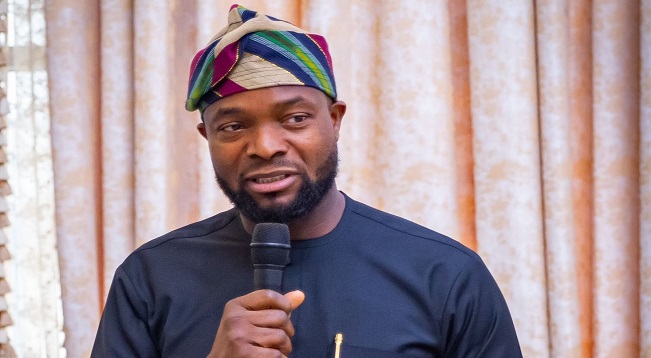
Federal Government has unveiled plans to establish a National Cybersecurity Coordination Council, signaling a shift toward a more unified, intelligence-driven approach to defending the country’s rapidly expanding digital economy.

Conceived as a non-statutory, multi-stakeholder body, the proposed Council will enhance coordination, enable trusted information sharing, and guide government strategy on cybersecurity, risk management, and national response amid increasingly complex cyber threats.
The initiative, championed by Bosun Tijani, minister of communications, innovation and digital economy, is designed to bring together government institutions, private sector players and technical experts into a single collaborative platform to strengthen the country’s cyber resilience.
Tijani noted that this initiative comes in response to a wave of recent cyber incidents that have disrupted operations across key private institutions and public sector.
In recent times, Nigeria’s financial system has faced mounting cyber pressure, reflecting global trends as cybercrime is projected to cost the world over $10.5 trillion annually, according to Cybersecurity Ventures.
Analysts say these attacks are increasingly coordinated and sophisticated, prompting the government to recognise that fragmented, institution-specific approaches can no longer manage systemic cyber risks effectively.
Under the new framework, the government aims to promote a “collective defence” model, an approach widely adopted in advanced digital economies where threat intelligence is shared in real time across institutions.
The Council is expected to include chief information security officers, cybersecurity associations, the Nigerian Computer Society, global technology providers, researchers, law enforcement agencies and civil society groups, ensuring a broad-based and technically grounded response architecture.
Key priorities will include developing national threat intelligence-sharing systems, harmonised cyber defence protocols, and coordinated incident response, while strengthening capacity to close Nigeria’s cybersecurity talent gap.


Oracle, US-based technology giant, has initiated a sweeping round of layoffs affecting thousands of employees globally, with India among the worst-hit regions, according to multiple reports.

The job cuts, which began on March 31, are part of a broader restructuring exercise that could impact between 20,000 and 30,000 employees worldwide, making it one of the largest workforce reductions in the company’s history.
While the exact number remains unconfirmed, multiple reports suggest that around 12,000 employees in India have been affected,
Employees across several geographies, including India, the United States, Canada, and Mexico, reported receiving termination emails early in the morning, informing them that their roles had been eliminated with immediate effect.
“Today is your last working day,” the email stated, citing “organisational change” as the reason for the decision. Access to company systems, including email and internal platforms, was revoked shortly thereafter.
The communication, according to Business Insider, described the move as part of a broader “reduction in force and other terminations,” and said affected employees would be eligible for severance benefits subject to company policy.
The email also instructed employees to share personal contact details to receive separation documents.
In India, impacted employees have reportedly been offered severance packages that include 15 days’ salary for each completed year of service, notice period pay, leave encashment, gratuity where applicable, and an additional two-month salary top-up in cases of voluntary separation.
The layoffs are linked to Oracle’s strategic shift towards artificial intelligence (AI) and cloud infrastructure.
The company has announced plans to invest approximately USD 50 billion in AI infrastructure and has reportedly raised an equivalent amount in debt to fund its expansion.
In a recent regulatory filing, Oracle said it expects restructuring costs for fiscal 2026 to reach up to USD 2.1 billion, largely driven by severance payouts and related expenses.
The move comes as Oracle looks to strengthen its position against global cloud competitors such as Amazon and Alphabet.
Uncertainty continues to loom over employees, with reports indicating that another round of layoffs could follow in the coming weeks. Employees who were affected described the layoffs as abrupt, with little prior indication.
Some former staff members have taken to social media to share their experiences.
Tricia S Marsh, a former Senior Principal at Oracle, said the layoffs marked the end of an important chapter in her career while urging affected colleagues to remain hopeful.
As of May 2025, Oracle had around 162,000 full-time employees globally.

Kaspersky Global Research & Analysis Team (GReAT) has uncovered an active malicious campaign distributing a previously undocumented RAT with a very broad feature set. Beyond the standard remote access trojan functionality, it combines stealer, keylogger, clipper, and spyware capabilities.

Cybercriminals are selling it to third parties as MaaS (malware-as-a-service) promoting it on YouTube and Telegram, increasing the likelihood of its use across a wider range of actors, including less-skilled operators.
Due to its stealer functionality, the malware can collect a wide range of data about its victim: it gathers system information, extracts credentials for Steam, Discord and Telegram, and also harvests data from web browsers. It also poses a threat to cryptocurrency users, as it includes a browser-based clipper that replaces crypto wallet addresses.
Beyond data theft, CrystalX RAT is capable of full-scale surveillance, with the ability to take screenshots, record audio from the microphone, and capture video from both the webcam and the victim’s screen.
Particularly notable is the CrystalX RAT “playful” Prankware feature set, which is actively promoted by the developers. These capabilities allow operators to visibly interfere with the victim’s system by shaking the mouse cursor, setting wallpapers on the victim’s screen, changing screen orientation, hiding desktop icons, forcing system shut downs, and even delivering real-time pop-up notifications and messages to the victim.
While seemingly trivial, these features introduce a disruptive and psychological dimension to the attack, making the attack both visible and distressing for the victim.
Kaspersky reports attacks targeting users in Russia, but the trojan has the potential to spread to other countries due to its sales and distribution model.
“Such a diverse feature set effectively enables a 360-degree compromise of the victim and a complete loss of privacy. Beyond gaining access to account credentials, the stolen data could potentially be used for blackmail.
“At the moment, the initial infection vector is not precisely known, but it is already affecting dozens of victims. Our telemetry is already detecting new versions of the implants, indicating that this malware is still actively developed and maintained.
“We expect the number of victims to grow significantly and its geographic spread to expand in the near future,” says Leonid Bezvershenko, senior security researcher at Kaspersky GReAT.

Union Bank Looted: How Former Directors Gambled with Billions and Nearly Destroyed a National Bank

N4.65 Trillion in the Vault, but is the Real Economy Locked Out?

FG, Others Say Nigeria Wastes 38m Tonnes of Food Annually

Ecobank Assures of Seamless Easter Banking Services

Anchor Gets Nigerian, Canadian Licences as Transactions Crosses $2.5Bn

Spotify’s Loud & Clear Report Reveals Over ₦60Bn Revenue for Nigerian Artists in 2025

Madonna University Taps Tech Guru Adote for Strategic Board Role

China Threatens to Shut Nigeria’s Satellite Over $11.44m Unpaid Debt

Healthcare Under Attack: Why Cybersecurity is Now Critical Care

Police Says Victims Enable Cyber Attacks Out of Ignorance




 E-Financial3 days ago
UBA Beefs Up Mobile App Security to Stop Fraudulent Debits, Withdrawals

 Telecom3 days ago
Bharti Airtel Crosses 650m Users

 E-Financial3 days ago
Ghana Makes History as First African Country to Integrate Payment National Identity Card

 E-Financial3 days ago
CBN Plans New Payment Systems Vision

 General News3 days ago
FG Orders Installation of 5000 CCTV Cameras for Surveillance in Plateau

 E-Financial2 days ago
CBN, Banks, Fintechs Launch PSPC to Boost Nigeria’s Payment System

 News2 days ago
NITDA Strengthens Collaboration with NIPSS to Drive Digital Innovation, Orange Economy Growth

 E-Financial3 days ago
Flutterwave Secures Nigerian Banking License, Boosts Financial Autonomy