

E-Business
Google Trains 1m Africans, Over 400,000 Nigerians Benefit


Google has given a scorecard on its digital training initiative, saying that the target to reach 1 million people was accomplished within eleven months.
The global tech giant on the 16th of April 2016, launched the Digital Skills training programme committed to training 1 million Africans on digital skills within a year.
Announcing the accomplishment on Wednesday, the Company has set itself to train even more Africans in digital skills in the coming year.
In addition to the new target, Google is extending its commitment to the Digital Skills programme by assisting local communities further in several ways.
First, Google will provide offline versions of its online training materials to reach individuals and businesses in low access areas where it is unable to hold physical training sessions. Additionally, Google will provide offline versions of the content in languages like Hausa, Swahili and IsiZulu.
The Digital Skills programme offers 89 courses through the online and Google works with 14 training partners covering more than 20 countries to offer face to face training.
The programme will also be addressing needs for small business owners, who are looking to better understand how to take advantage of the web across Africa.
Google will add web-focused skills training for SMEs across Africa as part of this initiative.
The Web is a driver of economic growth, and is transforming society as a whole. People must be equipped, through training and reskilling to make use of the tools, and take advantage of it for entrepreneurship, employment and e-inclusion,” said Google Nigeria country Manager Juliet Ehimuan-Chiazor. “Our goal with this and previous web training initiatives is to enable more people across the continent better understand how to leverage the Web tools for growth – to give them access to better employment and/or the skills to start their own businesses. A digitally skilled Africa is good for everyone – for our economy, for entrepreneurs and individuals. And yes, good for internet companies like Google.
“Having 1 million digitally skilled young people in Africa is good for everyone. If young people have the right skills, they’ll build businesses, create jobs and boost economic growth across the continent,” said Bunmi Banjo, Growth Engine & Brand Lead, Sub-Saharan Africa, who disclosed that over 400,000 Nigerians benefited from the training. “As we expand this initiative to reach more local areas across the continent, we hope to see more impact in everyday lives of Africans.”



Access Holdings Plc and Coronation Group have partnered with Tate Modern to commemorate World Art Day with a virtual session highlighting the global significance of Nigerian modernism.

Access Holdings
The event, titled “In Conversation with Osei Bonsu: Inside Nigerian Modernism,” featured a virtual tour of the Nigerian Modernism exhibition and discussions on the evolution of modern art in Nigeria.
The session brought together staff members across both organisations, reflecting growing institutional engagement with arts and culture as a driver of societal development.
Speaking at the event, Chief Communications and Marketing Officer of Coronation Group, Ngozi Akinyele, emphasised the role of art in shaping identity and national development.
She said that beyond financial capital, cultural and intellectual capital are essential in defining a nation’s prosperity and inspiring dialogue.
Akinyele noted that both organisations were committed to democratising access to art, ensuring it is accessible to a wider audience rather than a select few.
The discussion also featured insights from Tate Modern Curator, Osei Bonsu, and art expert Daniel Wallis, who examined the development of Nigerian modernism and its global relevance.
Bonsu said Nigerian modernism represents an independent reimagining of global art, rooted in the country’s diverse cultural heritage and expressed through unique visual languages.
According to him, the movement challenges narrow, Eurocentric definitions of modernism and highlights the richness of African artistic expression.
The session further underscored the growing international recognition of Nigerian art, particularly through exhibitions at Tate Modern.
Participants also reflected on the visit of Bola Ahmed Tinubu to the exhibition, described as a milestone in promoting Nigeria’s cultural heritage globally.
In his closing remarks, Chief Communications Officer of Access Holdings, Amaechi Okobi, reaffirmed the organisation’s commitment to advancing African narratives on the global stage.
He said the collaboration with Tate Modern aligns with broader efforts to promote dialogue, preserve cultural identity and support the creative sector.
The event reinforced a shared commitment by Access Holdings, Coronation Group and Tate Modern to elevate African art globally and ensure Nigerian cultural narratives continue to shape international conversations.
Nigeria Data Protection Commission (NDPC) has issued a regulatory advisory to data controllers and processors across the country following what it described as escalating threats to Nigeria’s data security architecture.

NDPC
In a statement signed by Babatunde Bamigboye, lead of Legal, Enforcement and Regulations, the commission said its technical assessment revealed that some shadowy threat actors were engaged in coordinated operations targeting financial systems and critical digital infrastructure in Nigeria.
The commission urged public institutions to comply with the presidential directive of Bola Ahmed Tinubu, which emphasises the strategic importance of data in national development.
According to the NDPC, the President had declared that “data is the new oil,” stressing the need for Ministries, Departments and Agencies (MDAs) to rigorously capture and safeguard information in line with the Nigeria Data Protection Act, 2023.
The commission therefore advised all data controllers and processors to urgently strengthen their technical and organisational measures to protect personal data and ensure compliance with the law.
It listed key measures to include the appointment of trained and certified Data Protection Officers, implementation of comprehensive privacy policies and information security standards, as well as conducting Data Privacy Impact Assessments.
Other measures recommended by the NDPC include deployment of robust identity and access controls such as Multi-Factor Authentication, adoption of zero-trust security architecture, prompt remediation of system vulnerabilities, and continuous patch management.
The commission also emphasised the need to secure cloud infrastructure, application programming interfaces (APIs), databases and access credentials, alongside real-time monitoring, logging and threat detection systems.
Further recommendations include encryption and secure credential handling, regular vulnerability assessment and penetration testing of critical systems, as well as routine backup and resilience testing.
The NDPC warned that organisations that fail to implement appropriate data protection measures in accordance with the Nigeria Data Protection Act, 2023 risk legal liabilities.
It reiterated its commitment to providing regulatory support to organisations while ensuring the protection of personal data and strengthening institutional resilience across all sectors.
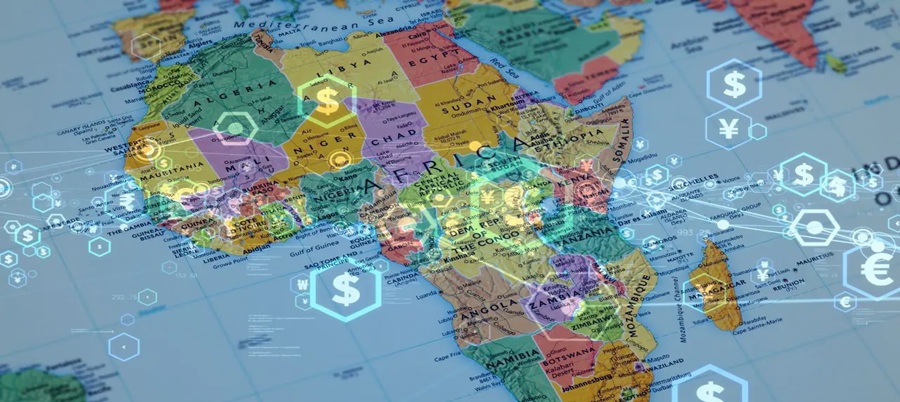
The forex market across Africa is witnessing more participants and more regulatory attention than it did just a few years ago. This growth is part of a bigger picture: Sub-Saharan Africa is expected to expand by 4.3% in 2026, while global forex turnover already hit an estimated $9.6 trillion daily in April 2025. However, there’s more to it than macroeconomic figures.

The trends reshaping the market are happening from within. Here are six worth paying close attention to.
1. Trading Has Moved to the Phone
The number of people accessing the market via mobile phones exceeds those accessing it via traditional bank systems. GSMA states that in Sub-Saharan Africa alone, there are more than 1.1 billion registered mobile money accounts.
The International Monetary Fund states that digitalisation and increased usage of the internet are changing payment systems in the Sub-Saharan Africa region.
Mobile access changes traders’ behavior. It lowers the barrier to entry and speeds up deposits and withdrawals. Therefore, brokers who can provide a quality mobile trading experience will have a huge advantage.
2. Regulators Are Watching
The market is becoming more structured and more transparent. In South Africa, the FSCA regulates market conduct for financial institutions. In Kenya, the Capital Markets Authority regulates capital markets and maintains a licensing system that includes online forex brokers.
Nigeria’s SEC has publicly warned that online retail forex trading can be subject to abuse when unregulated. It also provides tools for investors to check operators’ registrations.
As a result, in 2026, more traders are likely to favour brokers that can show clear licensing, transparent operations, and stronger investor safeguards.
3. Volatility Varies by Country
A common mistake is perceiving the African market as one entity. In reality, according to RegTech Afrika, there are 21 countries out of a total of 54 that have a chance of seeing their currencies depreciate in 2025, with some of them losing value by as much as 6% or more.
A trader watching the rand, naira, shilling, or cedi, regional headlines needs more than regional headlines. Country-level macro data, central bank moves, and the US dollar will still play a major role.
4. Cross-Border Payment Infrastructure Is Quietly Improving
Platforms like PAPSS are helping make payments across African countries faster and easier to complete in local currencies. According to official announcements of PAPSS, it has become operational in 18 countries across Africa, with its latest launch in Algeria in 2025. It has also become operational in Kenya through a partnership with KCB Group, as well as in Rwanda through a partnership with Bank of Kigali.
Step by step, Africa is becoming a more financially connected continent.
5. Execution Quality Is the New Standard
Data from the BIS shows that in April 2025, three-quarters of FX trades were intermediated by the global centers of the United Kingdom, the United States, Singapore, and Hong Kong. Therefore, the best liquidity and best prices are still linked to global conditions.
For local markets, this raises the bar. Forex traders are becoming increasingly aware that tight spreads, while important, mean little without reliable prices and execution. Brokers like JustMarkets that can bring all of these elements together are in a much stronger position than competitors.
6. Education as a Necessity
Regulatory disclosures from major global brokers illustrate how tough it is to trade without proper knowledge. According to publicly available disclosures, between 70% and 80% of retail investor accounts lose money when trading CFDs.
Forex traders who understand risk management and which financial news to follow have a better chance of surviving the market. Brokers who invest in education are more likely to be seen by traders as valuable partners rather than mere facilitators.
The Market Rewards the Prepared
Africa’s forex market in 2026 is shaped by volatility, stricter rules, and mobile-first trading. The traders who combine market knowledge with the right tools and the right broker will find real opportunity here, while those who don’t adapt will find the market increasingly unforgiving.

FCCPC Denies Banning Airtime Borrowing, Blames Cartel for Misinformation

Court Suspends Enforcement of FCCPC’s Reform on Loan Apps

FG Rules Out Borrowing from IMF’s $50Bn Support Fund

CBN Introduces Overnight Financing Rate to Compete with US, EU

AfriStakes Unveils Platform to Connect SMEs with Investors

NBC Boss Urges Content Ceators to Participate in DSO

NITDA Takes Over National Digital Architecture System

DLM SPV PLC Lists ₦9.00bn AAA-Rated Medium-Term Notes on FMDQ Exchange, Sets Benchmark in Corporate Bond Market

FG Shifting Focus to “Meaningful Connectivity” to Drive Inclusion – Minister

Jury Finds Meta, Google Liable for Woman’s Social Media Addiction



 Telecom2 days ago
MTN Suspends Data, Airtime Borrowing Service over New FCCPC Lending Rules

 General News2 days ago
NiRA Unveils DNSSEC to Tackle Rising Cyber Threats, Strengthen Digital Trust

 E-Business2 days ago
NDPC Issues Critical Advisory as Hackers Target Nigeria’s Key Digital Systems

 General News2 days ago
NiRA Charges Media to Drive Nationwide Adoption of .ng Domain

 News2 days ago
Nigeria Customs Deploys AI to Cover Revenue Leaks

 General News2 days ago
Top 7 Reliable Virtual Cards for Running Ads in Nigeria

 Telecom2 days ago
Nokia, Orange Partner on AI-native 6G Networks

 E-Business2 days ago
Africa’s Forex Market in 2026: Key Trends Every Trader Should Watch