

Telecom
Governor Sanwo-Olu’s Focus on Building Digital Infrastructure is Yielding Results–Fahn

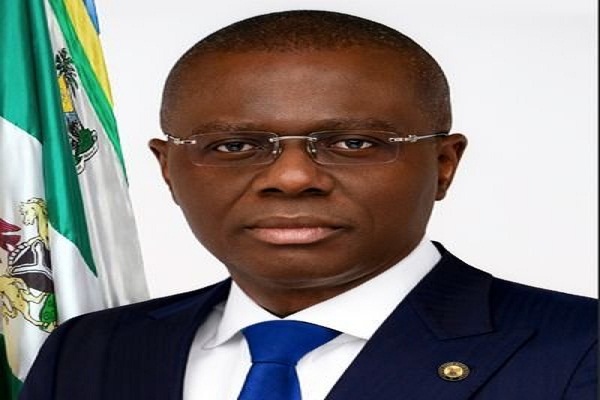
Investment into digital infrastructure and connectivity by governor Sanwo-Olu’s administration is yielding dividends, even as more concerted efforts are being put in place by the Lagos State government to increase broadband connectivity.

Commissioner of Science and Technology, Mr. Hakeem Fahn said, at the launch of the Book: Nigeria Drivers of Digital Prosperity and eWorld forum ’22, that the state’s N600 Million investment to boost technological innovation and other initiatives by the state is already yielding good results with tech start-ups developing local digital solution platforms.
Fahn added that the development has enhanced access for Micro, Small, and Medium Enterprises (MSMEs) to stress-free digital payment platforms, thereby improving the digitization of the Lagos economy.
According to him, the governor was investing in the future of technological infrastructure in Lagos State and in the future of young entrepreneurs in technological advancement.
To encourage the youths, the State government also sponsored secondary students to participate in the 774 Young Nigerian Scientist Presidential Award (774-YONSPA which has boosted their interest in Science, Technology, Engineering, and Mathematics (STEM) education, and encourage them to invent projects and programs that can resolve challenges in the State, such as infrastructure, Environment, waste management, and wealth creation.
According to him the Lagos State Science Research and Innovation Council (LASRIC), established in 2019, has funded over 70 Research, Innovation, and STEM projects in the last two years. For example, the State collaborates with the University of Lagos to develop ventilators with high commercial value for managing infectious pandemics.
He spoke of the Lagos Smart City Initiative concept premised on using modern technology to revolutionize the entire economy, an initiative.
He said would bring Lagos at par with many other economies presently enjoying profound global interests and investments, substantially investing in digital artifacts to achieve a correspondent value in their natural and human endowments.
Fahn said governor Sanwo-Olu’s plan to transform the State into a smart city and make Lagos’s economy 21st-century compliant is fully on course.
“The ongoing laying of 3,000 km fiber metro network cables and broadband infrastructure across the State is part of the comprehensive Smart City program of the government aimed at driving Lagos into a 24-hour economy.
The broadband infrastructure rollout will enable rapid commercial activities and provides instant access to healthcare, government services, and social connectivity, as the strategy is to drop high-speed Internet connectivity into all communities within the State and extend it to public schools, institutions of higher learning, health centers, markets, and all government offices and parastatals.
Fahn said the state broadband access initiative would help the government also to improve security through inter-connected Technological tools such as CCTV cameras, Internet of Things (IoT) monitoring devices, and Integrated Transport Systems (ITS).
In addition, the government has also upgraded the Alausa Secretariat campus network infrastructure to encourage the automation of business processes, and promote e-learning and virtual meetings.
The upgrade, he said was implemented with Wi-Fi 6 technology – the latest version of the wireless network.



MTN Group, the continent’s telecom behemoth, has plunged into advanced negotiations to acquire the outstanding 75 percent stake in IHS Towers for a staggering $2.76 billion, a seismic move that would hand Africa’s largest mobile operator full reins over one of the world’s premier independent tower companies and redefine infrastructure control across emerging markets.

MTN
The proposed transaction, pegged to IHS’s latest New York Stock Exchange closing price where it trades alongside a Frankfurt listing, builds on MTN’s existing 25 percent holding forged in a landmark 2014 deal that saw the operator offload most tower assets to IHS in exchange for cash and long-term leases.
Sources close to the talks confirm discussions remain fluid with no binding agreement yet inked, and both sides caution that negotiations could shift or stall entirely—MTN has signalled readiness to pivot to alternative value-unlocking strategies for its stake if a full buyout eludes grasp.
Strategically, the power play catapults MTN toward vertical integration in a sector where operators increasingly crave direct grip on passive infrastructure to slash lease bills, streamline upgrades, and rocket-roll 4G/5G amid Africa’s insatiable data deluge.
IHS Towers, MTN’s anchor tenant across swathes of Africa with tens of thousands of masts from Nigeria’s 13,500 tenancies—renewed amid naira-dollar tussles—to South Africa and beyond the Middle East into Latin America, represents a golden infrastructure war chest primed for the operator’s 20-nation blitz.
The saga traces to 2014’s seismic sale that freed MTN capital for spectrum wars while birthing enduring lease pacts, now ripe for reversal as governance dust-ups over shareholder nominations and agendas underscore the buyout’s boardroom chess.
Market tremors rippled through IHS shares post-leak, underscoring the $2.76 billion tag’s gravity as MTN eyes cost efficiencies, network agility, and expansion muscle in oil-volatile economies where tower mastery spells survival.
Should the ink dry, MTN vaults to ownership of a colossus fuelling digital bridges from Lagos megacities to rural frontiers, slashing third-party dependence while supercharging investments in fibre-deep data dreams and 5G horizons.
Analysts buzz that the mega-deal heralds telecom consolidation waves, with operators reclaiming tower turf to fortify against rivals and unlock synergies in a landscape where infrastructure crowns kings.
Neither MTN nor IHS commented officially by press time, but the high-stakes huddle spotlights Africa’s telecom arena hurtling toward an era where owning the poles decides who dominates the digital skies.
Google has flung open applications for its landmark 10th cohort of the Startups Accelerator Africa, doubling down on nearly a decade of continent-wide tech propulsion by targeting Series A pioneers wielding AI and machine learning for scientific and societal moonshots.

The 12-week “AI First” hybrid bootcamp, kicking off April 2026, equips Africa-based or Africa-centric innovators with Google’s AI arsenal, expert mentorship, technical firepower, and investor matchmaking to catapult health and deep-tech ventures into orbit—deadline March 18 at g.co/acceleratorafrica.
“Africa’s tech landscape is seeing a vibrant shift toward deep-tech innovation,” proclaimed Folarin Aiyegbusi, Head of Startup Ecosystem, Africa. “For Class 10, we are focusing on the potential of AI to drive health and societal benefits, providing the infrastructure and expertise to turn these startups into the research labs of the continent.”
Since 2018, the accelerator has turbocharged 180+ startups across 17 nations, unlocking $350 million in funding and 3,700 direct jobs, cementing Google’s role as Africa’s AI innovation forge amid a deluge of homegrown problem-solvers.
Equity-free and hybrid-powered, Class 10 promises Google’s product credits, strategic war rooms, and global networks to forge the next wave of African AI trailblazers reshaping everything from disease detection to climate resilience.
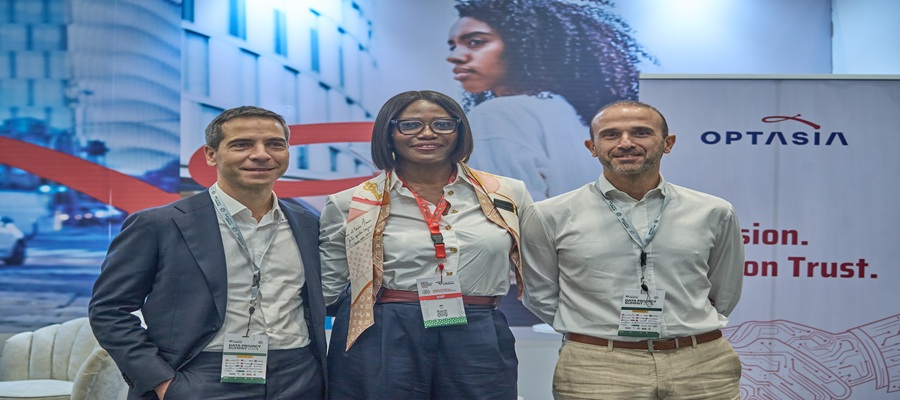
Optasia, a global AI-driven fintech platform, reinforced its commitment to privacy-by-design and responsible innovation as the official partner of Nigeria’s National Privacy Week 2026.

Optasia
Held at the Transcorp Centre in Abuja, the programme brought together regulators, financial institutions and technology leaders around this year’s theme: “Privacy in the Era of Emerging Technologies: Trust, Ethics & Innovation”.
The National Data Privacy Summit, which concluded on Wednesday, 4 February, was convened in line with the Nigeria Data Protection Act (NDPA), which safeguards personal information across the country.
Welcoming Nigeria’s National Privacy Week 2026, Dr Vincent Olatunji, National Commissioner/CEO of the NDPC, underscored the central role of privacy in building trust and unlocking sustainable digital growth.
“Privacy is not an isolated privilege; it is a fundamental right guaranteed by our Constitution. By building trust, we unlock the full potential of our digital economy and protect every Nigerian’s digital identity,” he said.
These priorities closely align with Optasia’s approach, as the company focuses on enabling inclusive digital financial services while embedding privacy, accountability and trust into its technology and partnerships.
As a company operating AI-powered financial services within highly regulated environments globally, Optasia brings practical experience in embedding governance, accountability and data protection into large-scale digital systems.
The company delivers its services exclusively through licensed financial institutions and regulated distribution partners, supporting the responsible expansion of digital financial services while maintaining robust standards of security and privacy.
Optasia’s SOC 2 Type II certification underscores its commitment to maintaining internationally recognised standards of security, confidentiality, and privacy.
Speaking during the event, Uchenna Agbo, Chief Commercial Officer at Optasia, highlighted the heightened responsibility that accompanies rapid digital growth. “As Nigeria’s digital economy expands, the data that powers innovation and inclusion must be protected with the same seriousness as financial capital,” she said.
“For Optasia, compliance, ethical data use and respect for consumer privacy are foundational to building long-term confidence across the digital ecosystem.”
Optasia’s executive leadership participated in high-level panel discussions, with Chief Technology & Innovation Officer Antoine Chatzistamatiou sharing insights on “Building trust by design: Privacy, ethics, and accountability in emerging technologies”, alongside a senior representative from GTBank.
Additionally, Chief Data & Risk Officer Stelios Lelis contributed to a session titled “Innovation without Intrusion: Balancing data-driven growth with privacy as a fundamental right”, alongside senior leadership from Microsoft and Stanbic IBTC.
Optasia’s Nigeria engagement is anchored in four operating priorities: privacy-by-design, responsible use of AI, innovation without intrusive data practices, and stronger collaboration across the licensed ecosystem.
The company’s engagement in Nigeria reflects a long-term commitment to supporting a trusted and inclusive digital economy. As data-driven services continue to expand across sectors, Optasia remains focused on contributing constructively to ecosystem conversations around privacy, accountability, and responsible innovation.

Firm Reviews the Evolution of Phishing Threats in 2025

EdTech Platform Unveils over 5,000 Self-Paced Courses for Skills, Knowledge, and Literacy

Incentives alone won’t win over Africa’s next billion fintech users — Kuda MFB MD

MTN Guns for $2.76bn IHS Towers Buyout in African Telecom Power Grab

Google Calls on Africa’s AI Trailblazers for 10th Startup Accelerator Cohort

19 Nigerian Banks Meet CBN Recapitalization Targets Ahead of March Deadline

Youth Talent Takes Center Stage as T2 Ignites High-Octane Rap Battles @ Carnival Calabar

Aig-Imoukhuede Foundation Wrapped Up 2025 with Real Change in Governance, Health, Media Across Africa

Showmax Unlocks Easier Payments for Nigerian Subscribers via Baxi

Nigerian Terra Industries Secures $11.8m for Expansion




 News2 days ago
New Study Reveals How Moniepoint Powers Nigeria’s Downstream Oil Sector with Same-Day Settlements and Working Capital Boost

 E-Business2 days ago
OADC Lagos Reinforces Commitment to Local Data Hosting and Digital Transformation @ NDPC’s National Privacy Week Summit

 Telecom2 days ago
MTN Powers 6,000 Young SMEs with Digital Skills in Economic Backbone Boost

 News2 days ago
FG Mandates Shared Funding for N1.98trn Electricity Subsidy

 News2 days ago
Spain Bars Under-16s from Social Media in Digital Safety Crackdown

 Telecom2 days ago
Onafriq, PAPSS Launch Wallet-Based Payments Pilot from Nigeria to Ghana

 E-Financial2 days ago
FG Signs MoU with ICAN, CIBN, Others to Train 10m Nigerians in Financial Literacy

 General News2 days ago
Corporate Comms in the Age of Crypto: Why Nigeria’s Digital Finance Future Depends on Trust