

E-Financial
Group Petitions US Congress, Demands Emefiele’s Sanction over Alleged Scam at CBN


Nigerian Young Professionals Forum (NYPF), global pan-Nigeria group, has petitioned the US Congress over alleged multiple scams at the Central Bank of Nigeria (CBN), under the watch of Godwin Emefiele, the incumbent governor of the bank.

Mr. Godwin Emefiele, CBN governor
The group said the litany of scandals at CBN including forex scam rubbishes all the efforts of President Muhammadu Buhari to stamp out corruption from Africa’s most populous nation.
The petition which was addressed to Speaker Nancy Pelosi, Leader McConnell, Leader McCarthy and Leader Schumer was titled: Corruption, Looting In Central Bank Of Nigeria: A Call For A Special Congressional Hearing, Investigation, Sanctions On Godwin Emefiele And Others.
The petition which also copied the US State Department, Department of Justice, Central Intelligence Agency, CIA, and Federal Bureau of Investigation, FBI, was signed by Mr. Jackson Ude, a Nigerian-American media specialist, activist, good governance advocate and recipient of the Peace Ambassador Award of the Centre for Peace Studies (CPS), Sri Lanka who is also the Coordinator of NYPF, U.S/Caribbean chapter.
The petitioners alleged that between 2015 and 2016, under Emefiele’s watch, CBN conspired with Nigeria’s oil corporation, Nigerian National Petroleum Corporation (NNPC), to illegally divert $24,263,008.56 meant to be shared to 36 states of the federation, the Federal Capital Territory, FCT, and the 774 local councils.
Referring to a leaked tape obtained by Saharareporters.com, one of Nigeria’s leading Investigative news websites, in which Emefiele and some officials of the CBN were caught discussing how to cover up the loss of over N500bn (an equivalent of $1.2billion) stolen from the CBN and diverted to a private investment that failed, the NYPF wondered why till date, no one, including Emefiele, has been held accountable.
The group also accused the CBN of allegedly awarding a contract for the expansion of its parking lot to Bulet International Limited, a company owned by Ismaila Isa Funtua, an ally and confidant of President Muhammadu Buhari at a whopping sum of N30 billion (the equivalent of $77.5million) in 2019; stressing that no parking lot extension contract costs that much in the United States. The NYPF alleged that the said contract violated Nigeria’s procurement laws.
The petitioners alleged that Emefiele has been running the CBN with top members of the Buhari cabal led by Isa Funtua, and the recently deceased Chief of Staff to President Buhari, Abba Kyari, Attorney General and Minister for Justice, Abubakar Malami, Mamman Daura, Lawan Daura, Babagana Kingibe, Nasir Danu and a few others who are all from the Northern part of Nigeria.
The group which is affiliated to global anti-corruption networks alleged that Isa Funtua and the cabal have been running a black-market forex cartel worth $800 million every week since the beginning of the Buhari administration in 2015.
“This continued until late 2017 when Vice President Yemi Osinbajo scaled it down to $500 million when the President was away for medicals,” the petition alleged.
The petitioners urged the US Congress to:
- Convene a Special Congressional Hearing on Corruption in Nigeria and the Central Bank of Nigeria under President Muhammadu Buhari;
- Place Godwin Emefiele, Abubakar Malami, Nasir Danu, Babagana Kingibe, Samaila Isa Funtua, Abubakar Isa Funtua and all those linked with the corruption in CBN on the U.S watch-list;
- Invoke the Mutual Legal Assistance Treaties (MLATs) with Nigeria and obtain banking and other financial records on the dealings involving Emefiele, Bulet International owned by Samaila Isa Funtua and Abubakar Isa Funtua;
- Invoke the Global Magnistky Act and place visa restrictions on Godwin Emefiele, Abubakar Malami, Ismaila Isa Funtua, Abubakar Isa Funtua, Mamman Daura, Lawan Daura, Babagana Kingibe and Nasir Danu, their families and others linked with the corruption in CBN.
The group said they had established all necessary contacts within the US Congress and are prepared to testify under oath in Congress and provide all necessary documents to aid the speedy investigations of all the claims, adding, we are “willing to use all legal means necessary in bringing an end to corruption in Nigeria to give her young population a new lease of life for a better future.”


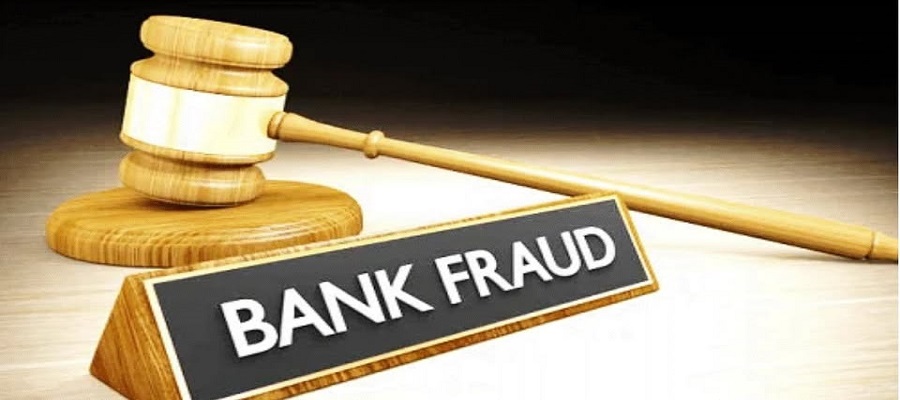
Benedict Ikechukwu Anekwe, an Enugu-based lawyer, and C.K.C. Idu, a magistrate, have been accused of allegedly conspiring to fraudulently withdraw ₦3.5million from the corporate account of Ohha Microfinance Bank Limited through what the bank described as a manipulated garnishee court process.

Ohha Microfinance Bank is a financial institution based in Enugu, Nigeria, committed to providing accessible and reliable banking services to individuals and small businesses
Ohha Microfinance Bank in a petition dated March 6, 2026 and submitted to the Chief Justice of Nigeria and Chairman of the National Judicial Council, demanded disciplinary action against the lawyer and the magistrate.
In the petition signed by Philip Onwukwe, managing director of the bank, the institution accused Anekwe of “using the instrumentality of the court to steal” from its corporate account.
“We write to you… seeking your urgent intervention and action in respect of this complaint which borders on fraud, stealing and unprofessional conduct of Benedict Ikechukwu Anekwe Esq.,” the petition read.
According to the petition, the controversy began with a judgment delivered on July 11, 2025 by Chief Magistrate O.P. Okoro in Enugu in Suit No. CME/1087/2023, involving Okoye Sunday and Ifesinachi Nnam.
The court reportedly awarded ₦2.5 million in favour of Okoye Sunday.
To enforce the judgment, Anekwe filed garnishee proceedings against 14 banks, including Ohha Microfinance Bank, seeking to attach funds belonging to the judgment debtor, Ifesinachi Nnam.
On July 29, 2025, the court issued an Order Nisi directing banks to attach any money belonging to the debtor.
The order stated that: “All monies in possession of the Garnishees belonging to Ifesinachi Nnam… be attached to satisfy the judgment sum of ₦2,500,000 together with the cost of this garnishee proceedings.”
However, the bank said the order applied strictly to the account of the judgment debtor and not to the corporate account of the bank itself, moreover, the judgement debtor has no financial account with the bank.
“It is crystal clear from the wordings of the Order that the Order Absolute made by His Worship Okoro was made against the account of Ifesinachi Nnam… but not against the corporate account of Ohha Microfinance Bank Limited,” the bank said.
The bank alleged that instead of serving the order on the bank to verify whether the judgment debtor had an account with it, Anekwe allegedly initiated another garnishee action directly against the bank before a different magistrate.
The fresh suit, CME/1554M/2025, Okoye Sunday v. Ohha Microfinance Bank Ltd, was filed before Magistrate C.K.C. Idu, his close associate, after the judgement debtor had filed notice of appeal and got a stay of execution in the previous court.
The petitioner explained that despite the pending appeal and stay of execution, on October 10, 2025, Magistrate Idu granted another Order Nisi attaching ₦3.5 million from the bank’s corporate account held with Ecobank Plc.
The bank said neither the plaintiff nor the judgment debtor had any account relationship with the microfinance institution, wondering how a Magistrate could issue such an order.
“Ohha Microfinance Bank has no business relationship with the judgment creditor and the judgment debtor in the suit,” the petition stated.
It added that both Okoye Sunday and Ifesinachi Nnam “are not customers of Ohha Microfinance Bank Ltd.”
Upon discovering the court order, the bank’s lawyer filed a motion asking the court to set aside the garnishee order, arguing that it was obtained through misrepresentation.
The motion stated that the order wrongly targeted the corporate funds of the bank rather than the account of the judgment debtor.
However, according to the petition, Magistrate Idu refused to vacate the order.
Instead, on February 27, 2026, the magistrate reportedly made the order absolute and authorised the withdrawal of ₦3.5 million from the bank’s account.
The bank further alleged that after securing the court order, Anekwe personally served it on Ecobank and instructed the bank to transfer the funds to his personal account.
“That same day, the learned Chief Magistrate signed the Order Absolute and handed it over to Benedict Anekwe Esq., who rushed to Ecobank Plc and served the order,” the petition stated.
The lawyer allegedly followed up with a written instruction directing the bank to pay the money into his personal account at First Bank of Nigeria instead of a client account.
Ohha Microfinance Bank alleged that the magistrate and the lawyer acted in concert to perpetrate the alleged fraud.
“This is daylight stealing perpetrated by Benedict Ikechukwu Anekwe Esq.,” the petition stated.
The bank further alleged that Magistrate Idu ignored the clear wording of the earlier judgment issued by Magistrate O.P. Okoro, which targeted only the debtor’s account.
It also claimed that both men had previously worked together before the magistrate’s appointment to the bench.
“Our findings reveal that the learned magistrate C.K.C. Idu before his appointment worked together at CIDJAP Legal Department with Benedict Anekwe Esq., hence the reason he connived with him to perpetrate this fraud,” the bank alleged.
The bank has asked the National Judicial Council to investigate the matter and sanction both the lawyer and the magistrate.
It also demanded that the matter be referred to the Legal Practitioners Disciplinary Committee.
“We demand that this matter be referred to the Legal Practitioners Disciplinary Committee for immediate and necessary action,” the petition stated.
The bank further demanded an immediate refund of the ₦3.5 million allegedly withdrawn from its corporate account.
“We further demand that Benedict Anekwe Esq. refund immediately the sum of ₦3.5million he stole from our corporate account,” the petition added.
Efforts to reach the lawyer and the magistrate were unsuccessful, as both failed to answer multiple calls.
They also did not respond to text messages sent to their verified telephone numbers seeking their reactions.
Credit: SaharaReporters


Quest Merchant Bank Limited has successfully met the ₦50 billion minimum capital requirement mandated for merchant banks by the Central Bank of Nigeria (CBN) strengthening the Bank’s capital base and reinforcing its capacity to support Nigeria’s economic transformation.

This milestone reflects investors’ continued confidence in the Bank’s long-term strategy, strong governance, and sustainable growth outlook. It also marks an important step in the Bank’s post-divestment evolution under its new ownership, positioning Quest Merchant Bank with the balance-sheet strength needed to execute its next phase of growth.
With a significantly enhanced capital base, Quest Merchant Bank is now better positioned to underwrite larger transactions and expand its advisory, capital markets, and structured financing capabilities across priority sectors of the Nigerian economy.
The CBN’s recapitalisation directive, which sets ₦50 billion as the minimum capital threshold for merchant banks, is designed to reinforce the resilience, stability, and lending capacity of Nigeria’s financial system.
By meeting this benchmark, Quest Merchant Bank reinforces its standing as a trusted financial partner in infrastructure, energy, manufacturing, and corporate growth initiatives nationwide.
Afolabi Olorode, Acting Managing Director and Chief Executive Officer of Quest Merchant Bank, described the achievement as a defining moment in the Bank’s evolution: “This milestone marks a significant step forward for Quest Merchant Bank. Meeting the ₦50 billion capital requirement underscores investors’ confidence in our strategy and reflects the strength of our governance and franchise.
“With this strengthened capital position, we are equipped to play an even greater role in financing key sectors of the Nigerian economy, enabling private enterprise, and supporting sustainable economic expansion.
“Our focus remains clear. We will continue to continue to help our clients succeed, while serving as a trusted long-term partner in delivering sustainable growth.”
Quest Merchant Bank remains committed to responsible growth, innovation, and delivering strategic financial solutions that empower businesses and institutions across Nigeria.

GCR Ratings (GCR) has affirmed African Export-Import Bank (Afreximbank) international scale long and short-term issuer ratings of A and A2 respectively. The outlook was revised to “Stable” from “Rating Watch Evolving”.

GCR has also affirmed the international scale long term programme rating on the $5 billion Global Medium Term Note (GMTN) Programme of A.
The improved rating reflects GCR’s assessment of a “robust counter-cyclical mandate, underpinned by a strong track record and ongoing preferential creditor treatment (PCT) from shareholders.”
South Africa became the latest country to affirm the Bank’s Establishment Treaty and Preferred Creditor Status when it recently signed the Instrument of Accession to become a full sovereign member of the Bank.
The report continued: “The Bank’s solid capitalisation and diversified funding profile provide significant buffers against emerging credit risks.” The report also acknowledged the Bank’s diverse shareholding base.
The outlook change from “Rating Watch Evolving” to “Stable”, according to GCR, indicates that there is immaterial downside risk related to sovereign debt restructurings.
Commenting on the Rating action, Chandi Mwenebungu, Managing Director and Group Treasurer, Treasury and Markets at Afreximbank said: “We are delighted that GCR has affirmed its credit rating on the Bank and resolved the outlook to ‘stable’, particularly in the light of recent positive credit developments.
“We continue to assert that the Bank’s preferred creditor treatment is enshrined in the Bank’s Establishment Agreement, ratified by all member states. It is not a matter of opinion or convention; it is fact”.
Mwenebungu continued, “It is also pleasing to note that GCR acknowledges the Afreximbank’s strong liquidity and capitalisation, and resilient risk profile. This is testament to the Bank’s financial and operational strength and that it has been able to demonstrate firm resolve in the face of continued macro-economic pressures and a challenging environment.”

Police Says Victims Enable Cyber Attacks Out of Ignorance

Bank Accuses Magistrate, Lawyer of Using Fake Order to Steal N3.5m from Account

FG Launches NERD to Combat Certificate Fraud

NCDC Issues Public Advisory on Cerebrospinal Meningitis

Goodnews Naija Launches ‘Building in Nigeria’ Series on Entrepreneurs, Real Sector Builders

Dr. Cairo Ojougboh Foundation Bolsters Nigeria’s Education Drive with ₦2.7m Student Support

Kaspersky Brings more Transparency to Threat Detection with New Hunt Hub

PwC Reveals AI Scaling Gap Slows Africa’s Digital Transformation

Kaspersky Discovers New Phishing Campaign Exploiting Google Tasks Notifications to Steal Corporate Credentials

Firm Reviews the Evolution of Phishing Threats in 2025




 E-Financial2 days ago
Nigeria’s VAT Jumps 34%, CIT Soars 48% to ₦14trn in 9M’25 – NBS

 Telecom2 days ago
FG Approves GIS-enabled Digital Postcode to Tackle Logistics Gaps, Boost E-commerce
 E-Business2 days ago
Firm Enhances its Security Awareness Platform with SCORM and PDF Support

 E-Financial2 days ago
Binance Cuts Illicit Activity Exposure by 96%, Leads Global Crypto Compliance Push

 E-Financial2 days ago
NAICOM Signs MoU with BPP to Deepen Insurance Compliance in Public Procurement

 E-Financial1 day ago
Senate Targets Fintech Overreach, Vows Ponzi Crackdown After ₦1.3trn CBEX Scam

 Telecom2 days ago
GSMA, African Operators, Others to Launch Low-cost 4G Devices

 General News2 days ago
NERC Orders DisCos to Refund ₦20.33Bn Meter Costs to Customers