

Telecom
Group Urges Minister to Review Suspension of SIM Card Activation

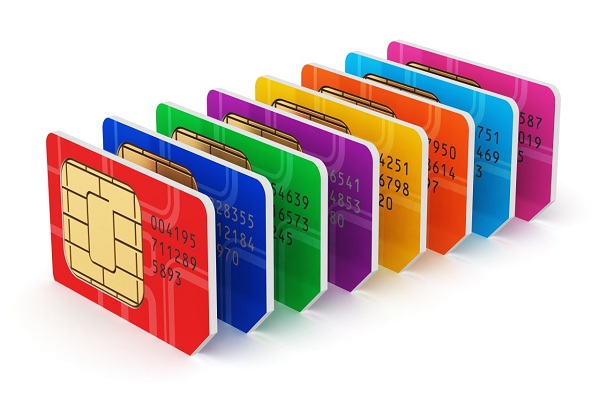
An advocacy group, the Digital Economy Media Support Volunteers Network (DEMS Volunteers Network), a non-governmental group of media practitioners, has urged the Minister of Communications and Digital Economy, Dr. Isa Ali Ibrahim (Pantami), to review the current ban on new registration or renewal of Subscriber Identification Module, (SIM), widely known as SIM card.

The digital economy advocacy group recalls that the Honourable Minister, in December 2020, directed the Nigerian Communications Commission, (NCC) to embark on another audit of the Subscriber Registration Database, wherein the Mobile Network Operators, (MNOs) were asked to suspend new Card registrations and replacement of lost SIM cards.
In a press statement issued on Wednesday, Prince Stan Okenwa, Ag. Director-General of DEMS Volunteers, said his organisation recognised the genuine interest of the Minister to verify and ensure compliance by MNOs, with the set quality standards and requirements of SIM card Registration, as issued by the Federal Ministry of Communications and Digital Economy and the Nigerian Communications Commission.
He, however, noted that with the successes recorded with regards the National Identification Number, (NIN) and SIM card integration, the Minister should consider reviewing the suspension, to give room for those with NIN to register new lines, or re-activate their lost SIM cards.
Okenwa said that the continued suspension of SIM registration, and/or renewal, has led to untold hardship on the part of individuals, Small and Medium Enterprises, (SMEs) whose means of livelihood are dependent on digital/online transactions.
“The other day, a man nearly committed suicide because; his business has almost gone down the drain. He lost his phone/SIM Card to a robbery incident and when he approached the telco, he was told ‘their hands are tied’. That is just one case out of many.
“What we are suggesting is that, the Minister issues a new directive for those with ‘credible means of identifications’, especially, NIN, to be able to register new SIM cards, or renew their old one and continue their businesses. We believe that building the digital economy is a collective effort, hence, we are making this appeal to the Minister”, Okenwa stressed.
“It is also important that the Federal Government recognizes the fact that the MNOs’ businesses are mainly Foreign Investment driven, therefore, shutting them off from selling SIM cards to potential markets, may impact negatively on their earnings and directly affect the taxes they pay to the Nigerian government.
“This will be a minus to the digital economy drive. We want the Minister to look into this”, he said.
The Group, in the statement signed by the Ag. Director of Communications, Peter Oluka, also congratulated the Minister, Dr. Pantami, and the Executive Vice Chairman of the Nigerian Communications Commission, (NCC), Prof. Umar Danbatta, over the report by the National Bureau of Statistics, (NBS), which depicts Information and Communications Technology, (ICT) as the fastest growing sector in Nigeria’s economy.
The sector recorded the highest growth rate of all the sectors, in both the fourth quarter of 2020, (Q4 2020) and the entire year 2020.
This was based on the Q4 2020 Report on Nigeria’s Gross Domestic Product, (GDP) released on Thursday, the 18th of February 2021, by the National Bureau of Statistics, (NBS).



Bosun Tijani, minister of Communications, Innovation and Digital Economy, yesterday claimed that bandits and terrorists are able to communicate and coordinate their activities with ease because they exploit gaps in the country’s telecommunications network.

Bosun Tijani, minister of Communications, Innovation and Digital Economy,
Tijani, who spoke Politics Today, a Channels Television’s programme, on Friday, Tijani said the criminals exploit gaps in the country’s telecommunications network.
He also claimed the bandits use advanced technology to bounce calls across multiple towers in areas with poor connectivity.
“They weren’t using the normal towers; they bounced calls off multiple towers, which is why they favor areas that are largely unconnected,” he said.
When asked about reports that unregistered or fraudulently registered SIM cards are still in use despite the Bank Verification Number (BVN) and the National Identification Number (NIN)–Subscriber Identity Module linkage policies, Tijani said the issue is technically complex and the reports are not fully verified.
“Whether it’s fact or not, I do not know where you’re getting that from, and I do not know who has evidence that there are people with unregistered SIMs,” he added.
The minister stated that the federal government is investing in telecom towers in underserved regions, upgrading the country’s communication satellites to improve coverage, and expanding fiber-optic networks to strengthen the country’s digital infrastructure.
“If our towers are not working, our satellites will work. Nigeria is the only country in West Africa with communication satellites, and we are bringing new satellites to upgrade their capabilities,” Tijani said.
He added that these initiatives aim to ensure better connectivity for Nigerians while closing loopholes that criminals exploit, thereby enhancing national security.
The minister’s comments come amid rising concerns over insecurity in several parts of the North, where banditry, kidnapping, and terrorism have escalated in recent years.
There are also reports of bandits flaunting ransom payments on social media platforms such as TikTok, raising alarm among authorities and the public

Sophos, a global leader of innovative security solutions for defeating cyberattacks, has announced its best-ever results in the MITRE ATT&CK Enterprise 2025 Evaluation.

MITRE ATT&CK Enterprise 2025 Evaluation
Sophos XDR detected 100% of adversary behaviors (sub-steps)1 across two complex attack scenarios: Scattered Spider, which Sophos X-Ops tracks as GOLD HARVEST, a financially motivated cybercriminal collective, and Mustang Panda, which Sophos X-Ops tracks as BRONZE PRESIDENT, a People’s Republic of China (PRC) espionage group.
The Scattered Spider scenario included activity across Windows, Linux, and AWS cloud environments, and the Mustang Panda scenario focused on Windows only.
Further, Sophos achieved the highest-possible “Technique”-level rating for 86 out of 90 total sub-steps in the evaluation, by generating high-fidelity detections with details on execution, impact, and adversary behavior, providing clear who, what, when, where, how, and why insights.
Sophos XDR achieved:
- 100% detection coverage1 for all 90 adversary sub-steps across two complex attack scenarios across Windows, Linux, and AWS cloud environments
- Highest possible (“Technique”) ratings for 86 of 90 sub-steps, demonstrating deep visibility and actionable detections
- Highest possible (“Technique”) ratings for 61 out of 62 of sub-steps in the Scattered Spider scenario involving identity abuse, cloud exploitation, and data exfiltration
“Scattered Spider and Mustang Panda represent distinct threat profiles that challenge defenders in very different ways,” said Simon Reed, chief research and scientific officer, Sophos. “Achieving full detection coverage against both validates the accuracy and depth of Sophos’ analytics and demonstrates how the company’s AI-native XDR platform converts complex telemetry into clear, actionable intelligence, helping security teams detect, understand, and stop advanced attacks with confidence.
“Sophos’ consistently strong performance in these rigorous evaluations underscores the power and precision of our threat detection and response capabilities, and our commitment to stopping the world’s most sophisticated cyberthreats.
“Over the five years that Sophos has participated in ATT&CK Evaluations, we have continually invested in strengthening our platform, and that investment has translated into stronger results year after year – both in the evaluations, and in the security outcomes we deliver for our customers.”
These results demonstrate the power of the Sophos XDR platform to defend against sophisticated cyber threats. Every day, Sophos processes 223+ terabytes of telemetry in Sophos Central, generating 34+ million detections and automatically blocking 11+ million threats.
This scale of customer insights ensures that Sophos’ detections are being tested and improved to provide continuous protection while delivering stronger outcomes for organizations worldwide.
Understanding The Threat Actors
Sophos X-Ops has tracked GOLD HARVEST (Scattered Spider) since 2022, observing a loosely affiliated cybercriminal collective driven by both financial motives and a desire to elevate their reputations on underground forums.
Despite several arrests, operators and associates continue to launch high-profile attacks across the U.K. and U.S., at times partnering with major Russian-speaking ransomware groups.
Their sophisticated social engineering capabilities enable them to compromise even well-defended organizations, underscoring the importance of strong behavioral detections within modern security operations.
In parallel, Sophos X-Ops has monitored BRONZE PRESIDENT (Mustang Panda) for many years.
This long-running PRC espionage group conducts intelligence-led operations that align closely with priorities of China’s Ministry of State Security. Recent targeting includes activity against Tibetan communities surrounding the Dalai Lama’s 90th birthday, as well as intrusions on Thai government and military offices during periods of heightened regional tension.
BRONZE PRESIDENT remains one of the most active and persistent state-aligned threat actors operating today.
MITRE ATT&CK Evaluations are among the world’s most rigorous independent security tests.
They emulate the tactics, techniques, and procedures (TTPs) used by real-world adversaries to assess each participating vendor’s ability to detect, analyze, and articulate threats in alignment with the MITRE ATT&CK Framework.
These evaluations continually strengthen Sophos’ capabilities for the benefit of the organizations it protects. This was the seventh round of MITRE’s “Enterprise” ATT&CK Evaluation, a product-focused assessment designed to help organizations better understand how security operations solutions like Sophos EDR and Sophos XDR can help them defend against sophisticated, multi-stage attacks.
When evaluating EDR or XDR solutions, Sophos recommends reviewing MITRE ATT&CK Evaluations alongside other independent proof points.

Central Bank of Nigeria (CBN) on Thursday announced plans to partner with the Nigerian Communications Commission (NCC) to develop an industry-wide short code for consumers to lodge complaints with financial institutions anytime, anywhere, even without internet access.

CBN
Dr Aisha Isa-Olatinwo, CBN Director, Consumer Protection and Financial Inclusion Department, disclosed this at a virtual Consumer Protection Town Hall meeting titled “Ask the Regulator”, organised by Enhancing Financial Inclusion and Advancement (EFInA).
She said the initiative addresses challenges faced by vulnerable consumers using feature phones who often have to visit bank branches physically to report issues amid the convergence of telecom and banking services.
Isa-Olatinwo said the CBN had achieved 94 per cent month-on-month timely resolution of consumer complaints, adding that the apex bank had streamlined processes and partnered with banks to balance consumer protection with financial system stability.
An EFInA poll presented at the event revealed that 61 per cent of respondents experienced failed transactions in the past 12 months, while 26 per cent had reversals within 24 hours and 54 per cent between 24 and 48 hours.
Other complaints included six per cent for fraud, 14 per cent for hidden charges and 15 per cent for poor customer service, with 66 per cent of respondents aware of complaint escalation steps.
President of Consumer Advocacy Foundation of Nigeria (CAFON), Mrs Sola Salako-Ajulo, lamented that consumers often feel unprotected and urged introduction of fraud insurance for instant reversals, shifting the burden of proof from customers.
She said: “What is missing in our system—unlike more developed economies—is fraud insurance, where banks reverse reported fraud immediately, refund consumers, and investigate later.”
Mr Ajibade Laolu-Adewale, Chairman of Committee of e-Business Industry Heads (CeBIH), represented by Mr Adeyemi Salisu, stressed that banks must resolve disputes between acquiring and issuing banks without redirecting customers to merchants.
The short code initiative is expected to enhance financial inclusion by providing accessible redress mechanisms in Nigeria’s evolving digital payment ecosystem.

NCC Blocks Piracy Sites as Nollywood Faces Rising Digital Theft

Minister Claims Bandits Exploit Poor Network, Bounce Calls Off Multiple Towers

FIRS says MOU with DGFIP Won’t Compromise Nigeria Tax Data Sovereignty

Top Nigerian Startups Secure Funding Boost @ iHatch Demo Day Awards

Four Must-Watch African Films Debut Free on Glo TV

Kaspersky Introduces Cyber Pathways to Support Career Development in Cybersecurity

Hackers Breach Phones of Dangote and Otedola, Demand Ransom

Nigeria Records Highest Weekly Cyberattacks in Africa — Report

Banks Lost N3.3Bn to Fraud in Q1 of 2025 – FITC

Cyber Tsunami Hits Nigeria as Breaches Surge 1,047%, esentry Q3 Report Reveals



 Telecom2 days ago
Minister Claims Bandits Exploit Poor Network, Bounce Calls Off Multiple Towers
 E-Financial2 days ago
FIRS says MOU with DGFIP Won’t Compromise Nigeria Tax Data Sovereignty

 News3 days ago
FRC, ICPC Seal Anti-corruption Alliance

 Telecom3 days ago
MoMo PSB Brings Relief to UNILAG Students with Ultra-Cheap Bus Fares

 News3 days ago
Debt Rises in AI Data Centre Boom
 General News2 days ago
Top Nigerian Startups Secure Funding Boost @ iHatch Demo Day Awards

 Telecom2 days ago
Google.org Backs CyberSafe’s Resilio Africa to Shield 2m People from Cyber Threats

 Telecom2 days ago
CBN, NCC to Launch Short Code for Swift Consumer Complaint Resolution