

News
Guinness Nigeria Partners ActionAid to support IDPs


In line with its commitment to delivering impactful social investments in host communities, Guinness Nigeria has donated relief materials to ActionAid Nigeria to support the organisation’s ongoing interventions at various camps for Internally Displaced Persons (IDPs)
Speaking at the donation, Corporate Relations Director, Guinness Nigeria, Mr. Sesan Sobowale said the gesture was in furtherance of the company’s resolve to improve the quality of life in Nigerian communities
“We are delighted that we have an opportunity to contribute in our own small way to ameliorate the conditions of our fellow citizens who are in IDP camps at the moment. We acknowledge that though this gesture may seem like a drop in the ocean, the value of what we are doing is in the hope that it encourages other corporate bodies to contribute to this noble cause, and also create awareness about the fact that there are many Nigerians today who as a result of the unfortunate circumstances are holed up in camps and make-shift shelters,”Sobowale said.
Speaking on the partnership with ActionAid, Sobowale stated, “At Guinness Nigeria, we are always looking to build strategic partnerships that can drive our various interventions. As such, we are happy that we have partnered with ActionAid in making life meaningful for these Nigerians living in IDP camps. ActionAid has very extensive experience in providing emergency response to conflict-affected persons and communities, we are confident that they would help promote the general wellbeing of the IDPs”
Receiving the relief materials, Director, Finance & Operations, ActionAid Nigeria, Oluwole Elegbede thanked Guinness Nigeria for its thoughtfulness and demonstration of goodwill towards the poor and excluded members of society. He said the gesture would go a long way in improving the living conditions of people in some of the displaced persons camps in the country.
“At ActionAid, people are at the centre of what we do. We constantly strive to empower the poor and excluded, which is why we are very pleased with the gesture extended to the IDPs by Guinness Nigeria,” he said
Elegbede, speaking on the organization’s plans, said that “ActionAid has been providing essential services to over 700 displaced people at the Nassarawa, Kaduna and Plateau IDP centres. “Since we do not know how long these people will live in displacement, we believe the provision of relief materials, psychosocial support and education in emergencies will help them regain their dignity and possibly their livelihood, if not fully but at least partially. These relief materials will go a long way in creating a wholesome environment for many of the displaced persons at the various IDP camps “.


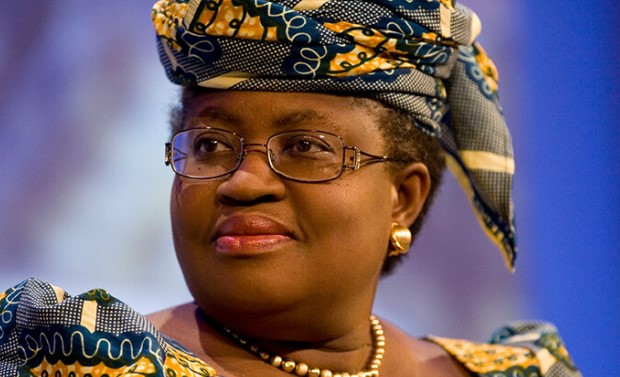
Dr. Ngozi Okonjo-Iweala, Director-General of the World Trade Organisation, WTO, has urged Nigeria to move decisively beyond importing technology to manufacturing it locally, warning that sustained dependence on foreign technology weakens the country’s industrial base and constrains job creation in the digital economy.

Speaking at Ahmadu Bello University, ABU, Zaria, Okonjo-Iweala said the current disruption of the global order, driven by technology, geopolitics and climate pressures, presents both serious risks and unprecedented opportunities for Nigeria and Africa, if they are prepared to act strategically.
“It is always a pleasure to come home to Nigeria, but it is particularly special to be here at one of the country’s most important seats of learning,” she said, stressing that universities such as ABU must remain central to Africa’s technological, industrial and economic transformation.
Tracing Nigeria’s post-independence journey, Okonjo-Iweala recalled that at independence in 1960, the country had only one degree-awarding institution, making the rapid expansion of universities a critical pillar of nation-building.
She noted that institutions such as ABU laid the foundation for Nigeria’s scientific, technological and entrepreneurial capacity.
Founded in 1962 as the University of Northern Nigeria, ABU has evolved into a multidisciplinary institution producing graduates across engineering, medicine, sciences, ICT, public administration and the humanities.
“Research conducted here has advanced the frontier of knowledge and offered practical solutions to real-world problems, from animal feed innovations during dry seasons to wind power generation in rural areas,” she said.
Turning to global trends, the WTO chief identified technology, particularly the internet and artificial intelligence, AI, as one of the most disruptive forces reshaping trade, production and employment worldwide.
“The technological shift we are experiencing has made it easier to communicate, produce and trade, but not everyone has shared equally in the gains,” she said, warning that automation and AI could deepen inequality if not properly managed.
She stressed that multilateral institutions and global trade rules must evolve to respond to emerging technologies such as AI and quantum computing.
“We need a new kind of multilateralism, one that is nimble, responsive and capable of addressing new global opportunities,” she said.
Okonjo-Iweala said Africa stands to benefit from what the WTO now describes as “re-globalisation”, the diversification of global supply chains away from over-dependence on a few countries.
She identified opportunities in labour-intensive manufacturing, critical minerals processing, renewable energy technology, pharmaceuticals, agro-processing and electric vehicle, EV, supply chains.
“Africa has the capacity to process its critical minerals all the way to EV battery manufacturing,” she said, pointing to Nigeria’s emerging lithium processing investments and vast renewable energy potential.
Reinforcing her call for local technology production, she said Nigeria must stop importing technologies it can manufacture domestically.
“Instead of importing solar panels, we should be manufacturing them here. That is how we create jobs, build resilience and grow our economy,” she said.
Okonjo-Iweala warned that Nigeria’s projected economic growth of 4.4 percent remains insufficient once population growth is factored in, calling for sustained growth of 6 to 7 per cent driven by productivity, technology and value addition.
She said achieving this would require strong digital infrastructure, skills development and innovation-friendly policies, alongside full implementation of the African Continental Free Trade Agreement, AfCFTA.
“Technology-enabled trade and deeper regional integration could increase intra-African trade by up to 45 per cent and lift millions of people out of poverty,” she said.
With Africa projected to account for about 25 per cent of the global working-age population by 2050, Okonjo-Iweala described Nigeria’s young population as one of its greatest technology assets.
“On an ageing planet, Africa’s youth represent the world’s future talent pool,” she said, urging universities, policymakers and the private sector to better align education, innovation and industrial strategy.
She, therefore, called for stronger collaboration between academia, industry and government to ensure Nigeria does not miss the opportunities created by global technological disruption.
“This country has what it takes. What we need is urgency, coordination and the courage to invest in our people and our ideas,” Okonjo-Iweala said.

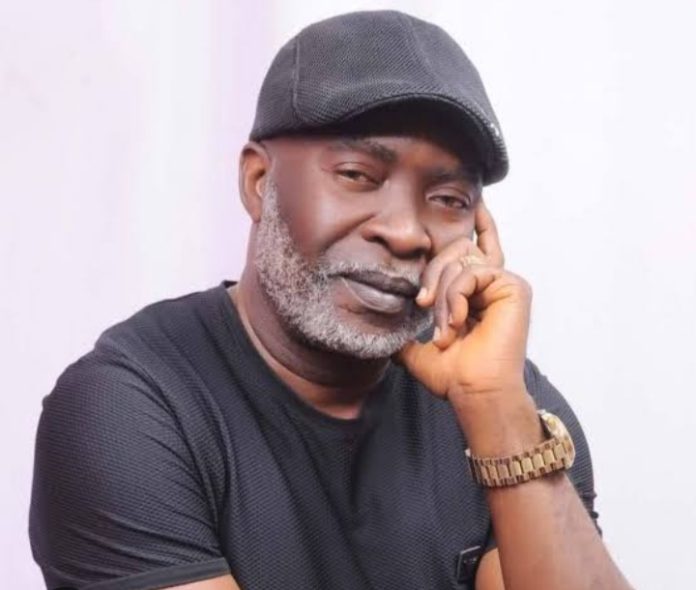
Stanley Amandi, veteran Nollywood actor and filmmaker, has been arrested by the Nigerian military over his alleged role in a foiled coup plot to overthrow President Bola Tinubu’s government, according to an exclusive report by Premium Times.

Stanley Amandi, Nollywood Actor
The filmmaker, also a former chairman of the Actors Guild of Nigeria (AGN) Enugu State chapter, was reportedly detained in September 2025 alongside several military officers accused of planning a violent overthrow, including potential assassinations of top officials, according to the newspaper’s sources.
Reports indicated that the coup plotters planned to wholesale assassination of top government officials including President Tinubu, Vice President Kashim Shettima, Senate President Godswill Akpabio, and Speaker of the House of Representatives Tajudeen Abbas, among others.
On Monday, the Defence Headquarters confirmed the plan to illegally oust the Tinubu administration, saying the indicted officers will be arraigned before military judicial panels.
In its statement, the Defence Headquarters said the investigation has been completed and forwarded to “appropriate superior authority in line with extant regulations.”
According to the military, the investigation was “comprehensive” and conducted in line with established procedures, examining “all circumstances surrounding the conduct of the affected personnel.”
The military disclosed that the findings identified “a number of the officers with allegations of plotting to overthrow the government,” describing such conduct as “inconsistent with the ethics, values and professional standards required of members of the Armed Forces of Nigeria.”
Mr Amandi has featured in many Nollywood movies and is known for his work as an actor, production manager and director.
His notable works include “The Album,” where he served as director; “Tiger King,” where he also served as director and produced in 2008; “Cornerstone,” produced in 2019; and “Once Upon a Dream,” in which he appeared as an actor in 2024.
Mr Amandi’s last Instagram post was on 19 September 2025, shortly before his arrest.

AfricAI and Micropolis Robotics have signed a multi-year exclusive distribution and deployment agreement, which marks one of the continent’s most significant robotics market entries.

Micropolis AI Robotics is a United Arab Emirates-based robotics manufacturer operating in autonomous systems, while AfricAI is a company building practical, revenue-driven artificial intelligence (AI) systems for African businesses, governments, and global partners operating in emerging markets.
According to the agreement, Micropolis Robotics named AfricAI as its exclusive continental partner, prohibiting direct sales, alternative distributors, and third-party agents from operating in the territory.
The partnership establishes AfricAI as the primary execution, localisation, and go-to-market platform for intelligent robotics in Africa’s industrial, security, logistics, and infrastructure sectors.
AfricAI said this exclusive mandate positions the company as the gateway for advanced autonomous systems entering African markets, ensuring regulatory compliance, local capacity building, and sovereign control over deployment frameworks.
The partnership, according to the two parties, moves beyond software- based AI into the realm of physical AI — intelligent machines capable of operating in complex, real-world African environments.
“This is not a collaboration, it is a market-shaping mandate,” said Fareed Aljawhari, CEO of Micropolis Robotics. “AfricAI now represents the exclusive gateway through which Micropolis technologies enter Africa. Their sovereign AI vision, operational reach, and regulatory fluency make them the only partner capable of executing at a continental scale.
Furthermore, the agreement enables AfricAI to integrate Micropolis’ autonomous robotics systems with AfricAI’s sovereign AI stack, resulting in AI-powered security and surveillance platforms, robotics-enabled logistics and port operations, industrial automation, smart infrastructure, and municipal robotics tailored to African operating conditions.
Initial deployments will commence in security, smart infrastructure, and logistics, with phased expansion across multiple African states as part of AfricAI’s broader continental AI, data, and intelligent infrastructure strategy.
The agreement also includes long-term performance-linked expansion rights, automatic renewals, and a defined localisation framework to support robotics deployment, workforce training, and skills transfer across Africa.
Prince Malik Ado-Ibrahim, executive chairman of AfricAI, said: “Africa does not need imported automation — it needs sovereign, context-aware intelligent systems. This exclusive mandate allows AfricAI to industrialise robotics deployment at scale while retaining control, compliance, and value creation on the continent.”

EFCC Seeks Suspension, Prosecution of Banks for Aiding N162Bn Crypto Scams

Airtel Africa Records $586m Rise in Profit on FX Gains, Tariff Hike

Okonjo-Iweala Urges Nigeria to Shift from Importing Tech to Local Manufacturing

Fitch Downgrades Afreximbank to ‘BB+’/Stable Amid Concerns Over Ghana’s Debt

Africa’s AI Guru Abodunrin Charts Path to Continent’s Digital Dominance

19 Nigerian Banks Meet CBN Recapitalization Targets Ahead of March Deadline

DStv Offers Instant Package Upgrade for Customers from January to February

Youth Talent Takes Center Stage as T2 Ignites High-Octane Rap Battles @ Carnival Calabar

Aig-Imoukhuede Foundation Wrapped Up 2025 with Real Change in Governance, Health, Media Across Africa

FIRS Transforms into NRS as Nigeria Ushers in New Tax Era




 E-Business2 days ago
Kaspersky Launches OT Calculator to Align Cybersecurity Investments with Business Goals

 News2 days ago
Stanley Amandi, Nollywood Actor Arrested over Alleged Coup Plot against Tinubu

 E-Financial2 days ago
FBNQuest Merchant Bank Rebrands as Quest Merchant Bank

 General News1 day ago
Nigeria’s Data Privacy Economy Hits ₦16.2bn – NDPC Commissioner

 Telecom2 days ago
FG to Acquire Two Communications Satellite to Boost Digital Access

 General News2 days ago
How Plot to Topple Tinubu was Uncovered, Foiled

 General News2 days ago
Moniepoint Marks 10 Years of Transforming Nigerian Businesses

 General News2 days ago
Paradigm Initiative Hails New Data Protection Laws as World Marks Privacy Week