

News
Okonjo-Iweala Urges Nigeria to Shift from Importing Tech to Local Manufacturing

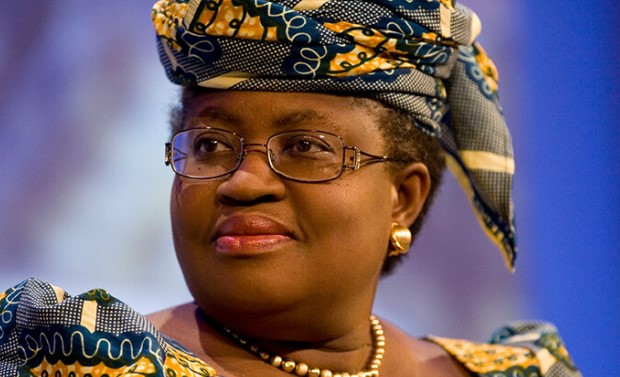
Dr. Ngozi Okonjo-Iweala, Director-General of the World Trade Organisation, WTO, has urged Nigeria to move decisively beyond importing technology to manufacturing it locally, warning that sustained dependence on foreign technology weakens the country’s industrial base and constrains job creation in the digital economy.

Speaking at Ahmadu Bello University, ABU, Zaria, Okonjo-Iweala said the current disruption of the global order, driven by technology, geopolitics and climate pressures, presents both serious risks and unprecedented opportunities for Nigeria and Africa, if they are prepared to act strategically.
“It is always a pleasure to come home to Nigeria, but it is particularly special to be here at one of the country’s most important seats of learning,” she said, stressing that universities such as ABU must remain central to Africa’s technological, industrial and economic transformation.
Tracing Nigeria’s post-independence journey, Okonjo-Iweala recalled that at independence in 1960, the country had only one degree-awarding institution, making the rapid expansion of universities a critical pillar of nation-building.
She noted that institutions such as ABU laid the foundation for Nigeria’s scientific, technological and entrepreneurial capacity.
Founded in 1962 as the University of Northern Nigeria, ABU has evolved into a multidisciplinary institution producing graduates across engineering, medicine, sciences, ICT, public administration and the humanities.
“Research conducted here has advanced the frontier of knowledge and offered practical solutions to real-world problems, from animal feed innovations during dry seasons to wind power generation in rural areas,” she said.
Turning to global trends, the WTO chief identified technology, particularly the internet and artificial intelligence, AI, as one of the most disruptive forces reshaping trade, production and employment worldwide.
“The technological shift we are experiencing has made it easier to communicate, produce and trade, but not everyone has shared equally in the gains,” she said, warning that automation and AI could deepen inequality if not properly managed.
She stressed that multilateral institutions and global trade rules must evolve to respond to emerging technologies such as AI and quantum computing.
“We need a new kind of multilateralism, one that is nimble, responsive and capable of addressing new global opportunities,” she said.
Okonjo-Iweala said Africa stands to benefit from what the WTO now describes as “re-globalisation”, the diversification of global supply chains away from over-dependence on a few countries.
She identified opportunities in labour-intensive manufacturing, critical minerals processing, renewable energy technology, pharmaceuticals, agro-processing and electric vehicle, EV, supply chains.
“Africa has the capacity to process its critical minerals all the way to EV battery manufacturing,” she said, pointing to Nigeria’s emerging lithium processing investments and vast renewable energy potential.
Reinforcing her call for local technology production, she said Nigeria must stop importing technologies it can manufacture domestically.
“Instead of importing solar panels, we should be manufacturing them here. That is how we create jobs, build resilience and grow our economy,” she said.
Okonjo-Iweala warned that Nigeria’s projected economic growth of 4.4 percent remains insufficient once population growth is factored in, calling for sustained growth of 6 to 7 per cent driven by productivity, technology and value addition.
She said achieving this would require strong digital infrastructure, skills development and innovation-friendly policies, alongside full implementation of the African Continental Free Trade Agreement, AfCFTA.
“Technology-enabled trade and deeper regional integration could increase intra-African trade by up to 45 per cent and lift millions of people out of poverty,” she said.
With Africa projected to account for about 25 per cent of the global working-age population by 2050, Okonjo-Iweala described Nigeria’s young population as one of its greatest technology assets.
“On an ageing planet, Africa’s youth represent the world’s future talent pool,” she said, urging universities, policymakers and the private sector to better align education, innovation and industrial strategy.
She, therefore, called for stronger collaboration between academia, industry and government to ensure Nigeria does not miss the opportunities created by global technological disruption.
“This country has what it takes. What we need is urgency, coordination and the courage to invest in our people and our ideas,” Okonjo-Iweala said.


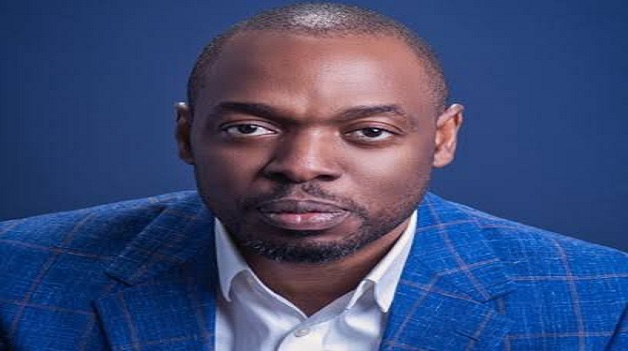
Cybervergent has launched version 3.0 of its artificial intelligence (AI)-native posture management platform and expanded operations into Kenya, Ghana, and SA.

The move, according to the company, introduces automated risk verification for enterprises and aims to position Africa as a force in digital governance technology.
It goes on to say the latest platform upgrade introduces continuous posture management, replacing traditional point-in-time governance, risk, and compliance reporting with real-time verification systems.
An AI engine independently verifies 99.9% of audit and monitoring findings before they appear on enterprise dashboards, according to Cybervergent.
It says risk management, compliance, audit, and data security operations are integrated into a unified system built for cloud and on-premise environments.
According to Cybervergent, the platform maps more than 4 500 controls across frameworks, including the Nigeria Data Protection Act (NDPA), International Organisation for Standardisation (ISO) 27001, and System and Organisation Controls (SOC) 2.
Cybervergent says the rollout of its first South African customer validates the platform’s readiness for highly regulated enterprise markets and strengthens its expansion strategy across Africa’s leading technology and financial hubs.
The company is also adopting a channel-first deployment model, working with local partners and system integrators in Lagos, Accra and Johannesburg to scale verified security infrastructure for enterprises navigating increasingly complex regulatory demands.
“We built verification into the architecture,” said Ayomide Daniels, co-founder and chief scientist at Cybervergent. “If a finding is not traceable back to source documentation, it does not reach the dashboard.”
Cybervergent rebranded from Infoprivacy in late 2023 to reflect its shift towards AI-automated cybersecurity.
The start-up previously focused on data privacy compliance in the West African market before pivoting to its current integrated posture management model.


Federal Government has directed recipients of honorary doctorate degrees to stop using the title “Dr.” before their names, as part of efforts to protect the integrity of academic qualifications and curb the misuse of honorary awards.

Minister of Education, Tunji Alausa
Minister of Education, Tunji Alausa, announced the directive after the approval of the new policy by the Federal Executive Council (FEC).
Alausa said the measure was necessary to address the growing abuse, commercialisation and politicisation of honorary degrees in some tertiary institutions across the country.
He explained that honorary doctorates are symbolic recognitions of outstanding contributions to society and do not equate to earned academic qualifications obtained through rigorous study, research and examination.
“Recipients of honorary doctorate degrees are not entitled to use the title ‘Dr.’ as a prefix to their names in official, professional or academic engagements,” he said.
According to the minister, awardees may instead indicate the honorary distinction after their names using formats such as D.Litt (Honoris Causa), LL.D (Honoris Causa) or other approved honorary designations.
Under the revised policy, only universities with active doctoral programmes will be permitted to confer honorary doctorate awards.
The government also restricted recognised honorary awards to four categories: Doctor of Laws (LL.D), Doctor of Letters (D.Litt), Doctor of Science (D.Sc), and Doctor of Humanities (D.Arts).
In addition, all honorary degree certificates must clearly carry inscriptions such as “Honorary” or “Honoris Causa” to distinguish them from earned academic degrees.
The minister warned universities against indiscriminate conferment of honorary degrees, noting that institutions found violating the directive would face sanctions from the National Universities Commission and the Federal Ministry of Education.
He said the policy was part of broader reforms aimed at restoring credibility to Nigeria’s higher education system and ensuring academic titles are not misrepresented for personal, political or financial gains.
Observers say the development could reshape the long-standing culture where public office holders, business executives and celebrities often adopt the “Dr.” title after receiving honorary awards.
African fintech revenues are projected to expand 13-fold to approximately $65 billion by 2030, marking the continent as the world’s fastest-growing digital finance market.

The “Beyond Payments: Unlocking Africa’s Second FinTech Wave ” report, released by Boston Consulting Group at the Inclusive FinTech Forum in Kigali, indicates the sector is shifting from transactional inclusion to scalable, infrastructure-driven systems.
While Sub-Saharan Africa accounts for 74% of global mobile money volume, more than 50% of lending still occurs through informal channels, representing a massive gap for B2B payments and data-driven underwriting.
The opportunity now is to convert scale into sustained, institutional-grade growth, says the report. Markets offering regulatory clarity and interoperable infrastructure are becoming increasingly attractive to long-term capital.
Rwanda is highlighted as an example of deliberate institutional coordination that lowers the cost to scale for financial institutions.
Forward-looking regulation and the License Passporting Memorandum of Understanding between Rwanda and Kenya are cited as practical steps toward easing regional expansion.
Financial centres like the Kigali International Financial Centre play a critical role in this next phase by reducing uncertainty for banks and investors.
By combining regulatory clarity and Pan-African integration, they reduce uncertainty for banks, fintechs, and investors, and help position markets as credible, long-term investment destinations.
Africa’s next fintech phase will be led by financial institutions, the report notes. It goes on to say banks and regulated entities are becoming the primary customers of digital financial infrastructure, demanding platforms that align with their risk frameworks.
The report identifies five institutional priorities to sustain momentum: interoperable infrastructure, data-driven credit, regulatory coherence, trust, and resilience.
Building seamless wallet-to-bank integration will enable more efficient value movement, while transforming transaction data into AI-enabled underwriting models will help bridge the gap in SME lending.
Proportional licensing frameworks and predictable supervisory practices will lower the cost to scale for innovators. Furthermore, expanding cybersecurity capabilities will ensure the ecosystem remains reliable as digital usage grows.
Africa has demonstrated that fintech scale is achievable, and the next decade will be shaped by those markets that strengthen their institutional foundations, the report concludes.

Police Arrest Members of N713m Bank Fraud Syndicate, Chinese Suspect at Large

CRMI Warns of Risks, Sees Gains in UAE Exit from OPEC

Reps Claim NCC’s Weak Regulatory Oversight Responsible for Poor Telecom Services

Vitel Wireless Partners Fintechs to Expand Access to Services

Kaspersky Identifies Ongoing Supply Chain Attack on Official Daemon Tools Website Distributing Backdoor Malware

Kaspersky Discovers Vulnerability in Qualcomm Snapdragon Chips that can Lead to Data Loss & Device Compromise

FG to Gift Nigerians over 100 Free TV Channels from May 15

MTN Suspends Data, Airtime Borrowing Service over New FCCPC Lending Rules

What Adekunle Gold’s Support Means for ‘The Gathering on 100

Bank Customers to Pay N1,500 for ATM Card Issuance, Replacement – CBN




 E-Business2 days ago
Firm Spots Rising Scam Activity Around the 2026 World Cup, from Bogus Tickets to $500,000 “grant” Emails

 General News2 days ago
Why 9 African Countries Are Looking to Nigeria for Data Protection Lessons

 E-Financial2 days ago
CBN to Raise N700Bn in First Treasury Bills Auction this May

 Telecom2 days ago
Telcos Recover N2 Trillion following Crackdown on Indebted Subscribers

 Telecom2 days ago
Organized Criminals Plunder Telecom Infrastructure across Nigeria, Cause Service Disruptions

 Telecom2 days ago
MTN Nigeria Remits N878.7Bn Taxes, Levies in 2025

 E-Financial2 days ago
Why African Crypto Brands must Communicate like Banks, Not Startups

 Telecom2 days ago
Soludo Reappoints Konti, Agbata, Onuko for Another Term