

News
Help! Big Telcos Killing Small Ones


Some large telecommunications companies in Nigeria are actually abusing the market power they have amassed in recent years and are emasculating smaller operators, though the Nigeria Communications Commission (NCC) thinks otherwise, Nigeria CommunicationsWeek can now reveal.
The operators hide under the absence of anti-trust law and lack of machinery to regulate monopolistic and anticompetitive practices by powerful companies.
The telecom industry is currently subsisting under the anti-trust provision enshrined in the NCC’s Act.
That provision has been found to be defective because it does not protect other sectors of the economy. Experts said that the way forward is the institution of anti-trust law.
Anti-trust law seeks to make businesses compete fairly. Premised on the belief that free trade benefits the economy, businesses, and consumers alike, the law forbids several types of restraint of trade and monopolization.
Nigeria CommunicationsWeek gathered that it falls into four main areas: agreements between competitors, contractual arrangements between sellers and buyers, the pursuit or maintenance of monopoly power, and mergers.
Adewale Jones, managing partner, Ashfield and Bowman, said the absence of anti-trust law has negative and far reaching effects on the economy.
According to him, anti-trust law can only help bolster the economy, adding that free and open competition benefits consumers by ensuring lower prices, and new and better products.
Nodding in agreement, Bayo Banjo, managing director, Disc Communications, warned against the emergence of private monopolies.
Banjo who spoke at the annual general meeting of Association of Telecommunications Companies of Nigeria (Atcon) in Lagos at the weekend, said that already smaller operators are being pushed out of the market by large operators with huge financial war chest.
Nigeria CommunicationsWeek gathered that there are occasions where entrenched operators deliberately limit the size of interconnection between it and other operators in order to attract even more customers to their own networks.
There are also cases where large operators have arm-twisted smaller players and taken their ideas and business proposals.
Jones and Banjo also agreed that there is need for smaller businesses to exist and that the only way to guarantee that is the early establishment of anti-trust law.
Nigeria CommunicationsWeek gathered that anti-trust laws protect competition. In a freely competitive market, each competing business (large or small) generally will try to attract consumers by cutting its prices and increasing the quality of its product or services. Competition and the profit opportunities it brings also stimulate businesses to find new, innovative and more efficient methods of production.
Consumers benefit from competition through lower prices, better products and services. Inefficient firms or companies that fail to understand or react to consumer needs may soon find themselves losing out in the competitive battle.
But the NCC recently said that major telecom operators either alone or collectively does not pose any major threat to the telecoms market.
Deriving from its regulatory inquest, the apex regulator said that it “has not found any conclusive evidence that any of the mobile licensees are engaging in conduct which has the purpose or effect of substantially lessening competition.”


Lasaco Assurance Plc has received formal commitment letters from shareholders following its recent Extraordinary General Meeting, strengthening confidence in the company’s plan to raise additional capital in line with regulatory requirements and ongoing insurance sector reforms.

Speaking on the development, Ademoye Shobo, acting managing director of Lasaco Assurance Plc, said the confirmation from shareholders provides clarity and certainty as the company moves to execute its approved capital-raising strategy.
“The commitment letters from our shareholders give us the confidence to proceed with our capitalisation plans in line with the Nigerian Insurance Industry Reform Act (NIIRA) 2025 and other regulatory requirements guiding the insurance industry.
“We will leverage all available opportunities to raise the approved capital, and our existing shareholders should watch out for our rights issue as part of the process,” Shobo said.
With shareholders’ backing now formally documented, Lasaco Assurance Plc plans to actively pursue available funding options to deliver the approved capital raise. The company plans to deploy a mix of market-based instruments, including a rights issue and other permissible fundraising structures, to ensure timely and effective capital mobilisation.
The Management noted that the commitment letters reinforce investor confidence in the company’s growth strategy, governance framework, and long-term outlook. The capital raise is expected to support balance sheet strengthening, improve underwriting capacity, and provide greater flexibility for business expansion across core insurance segments.
As part of the process, existing shareholders have been advised to watch out for the forthcoming rights issue, which will provide them with the opportunity to participate proportionately in capital expansion. The company reaffirmed its intention to ensure transparency and regulatory compliance throughout the fundraising exercise.
Lasaco Assurance Plc views the capitalization drive as a strategic step toward sustaining competitiveness, enhancing risk-bearing capacity, and positioning the company for future growth within Nigeria’s insurance market. The initiative also aligns with broader industry efforts aimed at strengthening the company’s financial resilience and protecting policyholders’ interests.
News
Ecobank Nigeria to Host Customer Forum on Strengthening Regional Integration for Economic Transformation

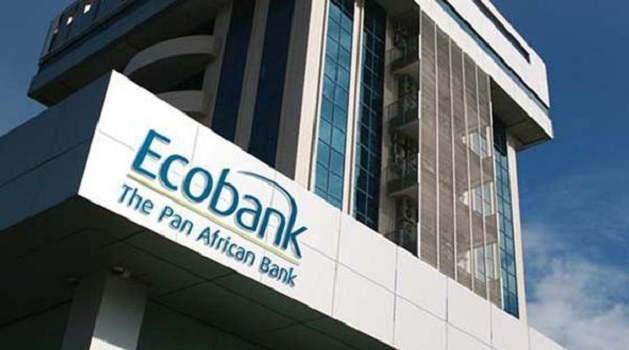
Ecobank Nigeria is set to host the second edition of its Customer Forum, at the Ecobank Pan-African Centre, Ozumba Mbadiwe Avenue, Victoria Island, Lagos.

The forum, organised by the bank’s Fixed Income, Currencies and Commodities (FICC) Business (Treasury), is themed ‘Strengthening Regional Integration for Economic Transformation.’
It is designed to examine critical issues shaping Nigeria’s and Africa’s economic outlook in 2026, with particular focus on trade, financial markets, foreign exchange liquidity and regional integration, especially as the African Continental Free Trade Area (AfCFTA) agreement enters a strategic phase of implementation.
Announcing the event in Lagos, the Regional Treasurer, Ecobank Nigeria Limited, Olumide Adebayo, said the one-day programme reinforces the bank’s role as a trusted financial partner and customer-focused institution, with intention to foster dialogue, support informed decision-making and deeper regional economic integration across Africa.
According to him, the programme will open with welcome remarks by the Managing Director/Regional Executive, Ecobank Nigeria, Mr. Bolaji Lawal, who will underscore the bank’s commitment to supporting customers and driving inclusive growth through strategic dialogue, innovation and pan-African collaboration.
The keynote address, titled ‘The Future of Trade in Africa: Harnessing the AfCFTA for Economic Transformation,’ will be delivered by the Group Chief Economist & Managing Director, Research and Trade Intelligence, African Export-Import Bank (Afreximbank), Dr. Yemi Kale.
His address will provide insights into Africa’s trade prospects and the transformative potential of the AfCFTA.
The forum will feature two high-level panel discussions: balancing the Risk between Interest Rate and Exchange Rate: Business Expectations and Outlook in 2026 and Export Proceeds, Oil Receipts and Remittances in 2026: Exploring Options that Best Support FX Liquidity and Flows in Nigeria.
The event would be moderated by Messrs. Aruoture Oddiri, Host and Producer of Global Business Report on Arise News and Barnabas Vajeh of Ecobank Nigeria Limited.
Ecobank Nigeria is a member of the Ecobank Group, the leading pan-African banking institution with operations in 33 African countries and international offices in London, Paris, Beijing and Dubai.
With over 220 branches, more than 36,000 agency banking locations, and robust digital platforms, Ecobank delivers accessible, affordable, and instant banking services. The bank is strategically positioned to support pan-African trade, particularly under the African Continental Free Trade Area (AfCFTA).

TheCityUK, in partnership with the UK Government, Lagos State Government, Lagos International Financial Centre Council (LIFCC), and EnterpriseNGR, have unveiled a landmark report, “Establishing an International Financial Centre in Lagos (LIFC), Nigeria”, outlining a strategic roadmap to transform Lagos into the West African hub for international investment capital driving innovation, and sustainable growth across the country and the wider region.

The LIFC initiative aligns with Nigeria’s Agenda 2050 and the Lagos State Development Plan 2052, to deliver long-term economic prosperity, deepen financial markets, and attract productive global investment. The project showcases the power of public-private partnership, bringing visionary leadership from the government together with private sector companies seeking to tap into Nigeria’s young, dynamic market to deliver economic growth.
The report was launched at an event at State House Marina with guests including Lagos State Governor, Babajide Sanwo-Olu, British Deputy High Commissioner Jonny Baxter, and EnterpriseNGR Board Chairman and CEO, Aigboje Aig-Imoukhuede and Obi Ibekwe.
Key Highlights from the Report:
- Strategic Vision: The LIFC will support Nigeria’s ambition to become an upper-middle-income country by 2050, driving inclusive growth, reducing poverty, and creating high-value jobs, especially for Nigeria’s talented youth.
- International Collaboration: The report highlights the benefit of strong UK-Nigerian co-operation, building on best practices and global benchmarks to align the LIFC with international standards.
- Model Recommendation: The report recommends the development of an independent IFC model for Lagos, and the steps to achieve this. An IFCwill deliver, regulatory clarity, simplified tax and policy settings and offer greater investor confidence and economic benefits for the wider Nigerian economy.
- Unique Selling Points: The LIFC should focus on areas which can deliver the greatest economic benefits matched to investor interest. Consultations have suggested three areas for its initial focus: Green and Sustainable Finance, FinTech & Innovation, and Commodities Trading & Capital Markets. These sectors are identified as key drivers for Nigeria’s future competitiveness and growth.
- Governance and Legal Reform: The report calls for robust legal and regulatory frameworks, an independent governance framework, and strong collaboration between Lagos State, Federal Government, and private sector stakeholders to drive the implementation of the IFC.
- Talent and Human Capital: A focus on developing domestic talent, easing visa regimes for international professionals, and building a pipeline of skilled workers will underpin the LIFC’s success.
- Tax and Incentives: Recommendations include competitive tax regimes, tailored incentives for investment that aligns to the national vision, and streamlined business processes to attract global capital.
On the report, Babajide Sanwo-Olu, Lagos State Governor, said, “Lagos is fully committed to the birth of the International Financial Centre. We know that it is a veritable means of supporting seamless trading and to enhance competitiveness of financial markets.
As Nigeria’s largest economic and financial centre, Lagos plays a critical role in driving the nation’s capital markets. We need to create an ecosystem that will help to facilitate investment flows, enhance market liquidity, and promote financial literacy.
“The LIFC initiative will not only strengthen our market infrastructure but also unlock new opportunities for public-private partnerships in technology and capital market development. It will support seamless trading, attract foreign investment and enhance competitiveness of financial markets.”
Jonny Baxter, British Deputy High Commissioner, commented; “The launch of the Lagos International Financial Centre report reflects the deepening of UK-Nigeria partnership, combining Lagos’s comparative strengths with UK expertise.
Anchored in clear, evidence‑based analysis and launched at a pivotal moment in Nigeria’s reform journey, the LIFC has the potential to unlock major domestic and international investment, deepen capital markets, create jobs, and drive sustainable economic growth across the country, not just in Lagos State.”
Nicola Watkinson, Managing Director, International, TheCityUK, said, “Nigeria is a high-growth, dynamic and large market and the Lagos International Financial Centre could be vital to its future.
By building a modern, integrated business and regulatory environment and financial ecosystem, the LIFC will support the attraction of global and domestic capital, deepen domestic markets, facilitate innovation in FinTech and green finance, and create high‑value jobs for Nigeria’s youth.
“Supporting the development of Lagos as an international financial centre is a clear example of how the UK and Nigeria are deepening their strategic partnership.”

PalmPay Celebrates Valentine with #LoveWithPalmPay Campaign

CBN, NCC Propose Instant Refunds for Failed Airtime, Data

NDIC Says No Customer Loses Deposits in Failed Banks

NCC Begins Overhaul of Nigeria’s Telecom Policy, 26 Years After

FG Launches the Happy Woman App Platform

Firm Detected a Fivefold Surge in QR Code Phishing Attacks in the Second Half of 2025

US invests $115m in counter-drone tech for World Cup security

Nigerian Terra Industries Secures $11.8m for Expansion

Nigeria Targeted with 4,622 Cyber-attacks Per Week in December 2025

Firm Detected a Scam Exploiting OpenAI’s Teamwork Features




 E-Financial3 days ago
Alawuba Advocates Security, Bankable Projects, Infrastructure Development to Promote South-East Vision

 Telecom2 days ago
NCC Committed to Regional Digital Integration – Maida

 General News2 days ago
Indigenous Firm Deploys 400,000 Smart Electricity Meters in 2025

 E-Financial2 days ago
CBN Expresses Concern Over Foreign Investments in Nigeria Fintechs

 E-Financial2 days ago
BOI Secures CBN Nod for Sharia Banking, Unlocks Ethical Funding Boom

 Telecom2 days ago
ITU Top Director Visits NITDA, Boosts Nigeria’s Digital Literacy Push

 E-Financial2 days ago
UBA’s Easy and Instant Account Opening Thrills Returnee

 News2 days ago
EFInA Unveils Research Fellowship Programme to Deepen Financial Inclusion Impact